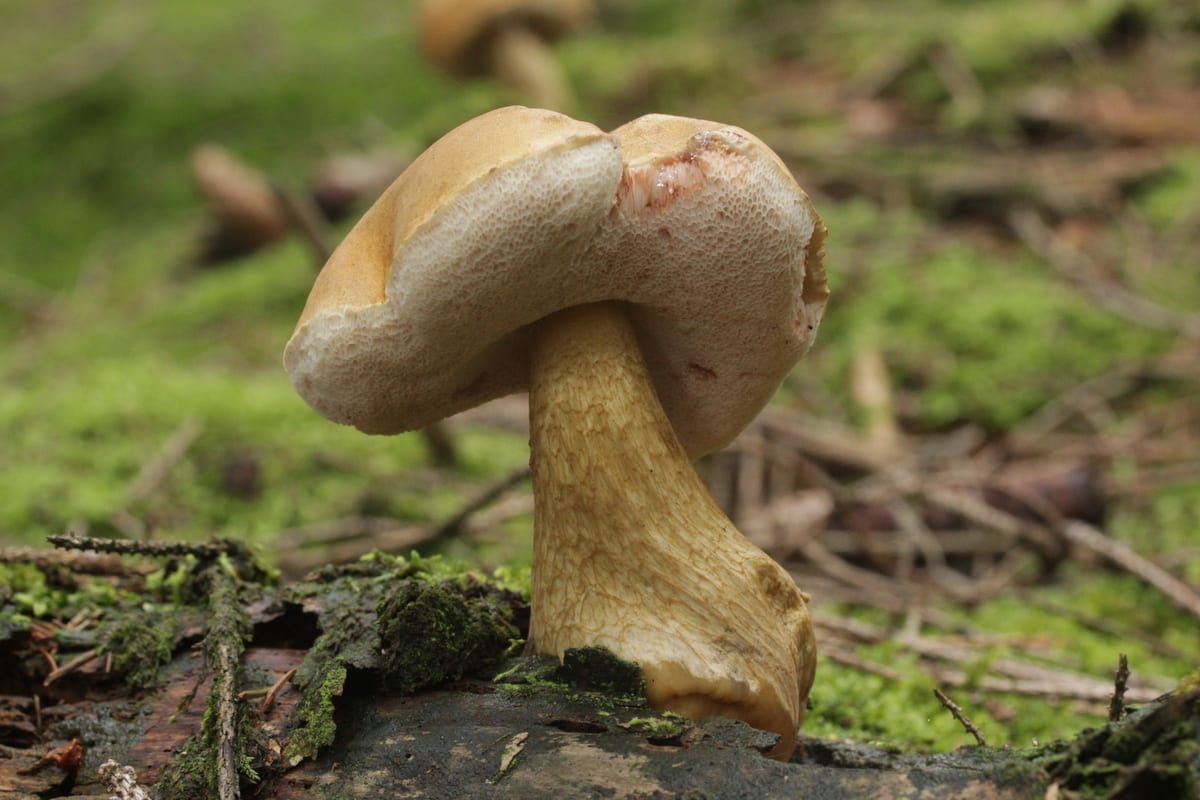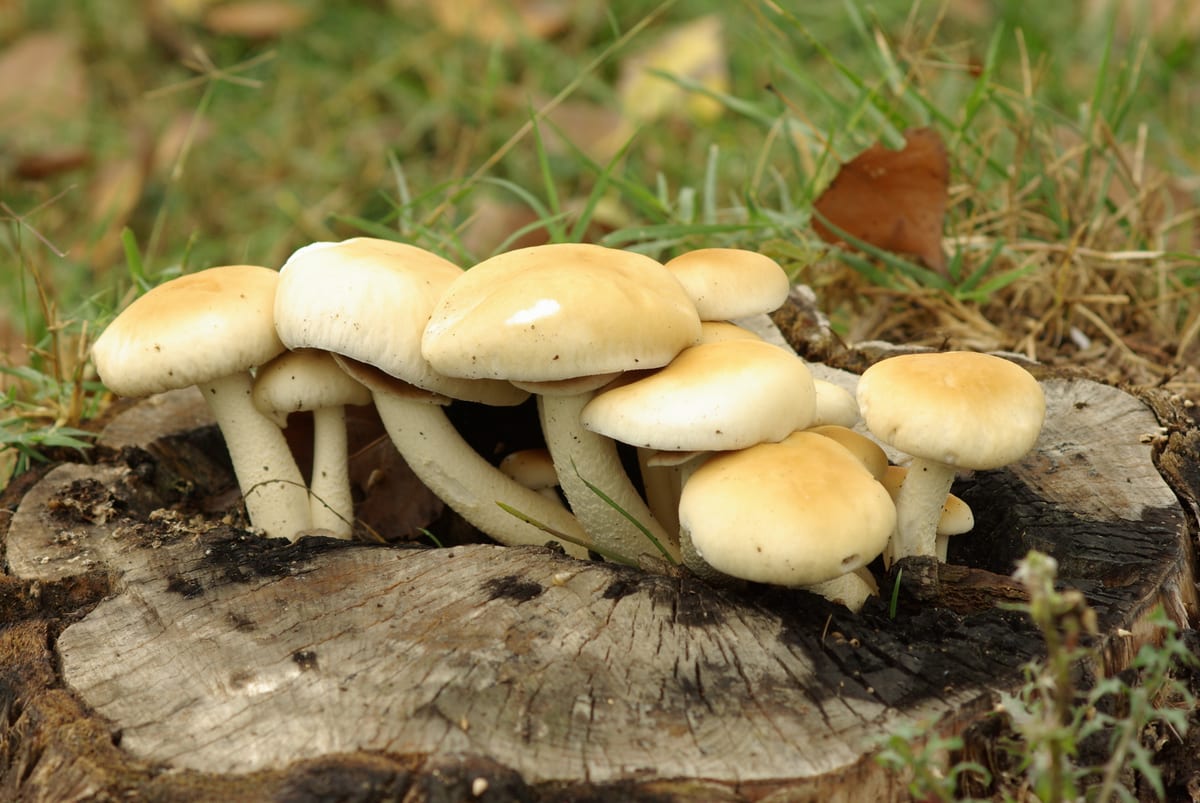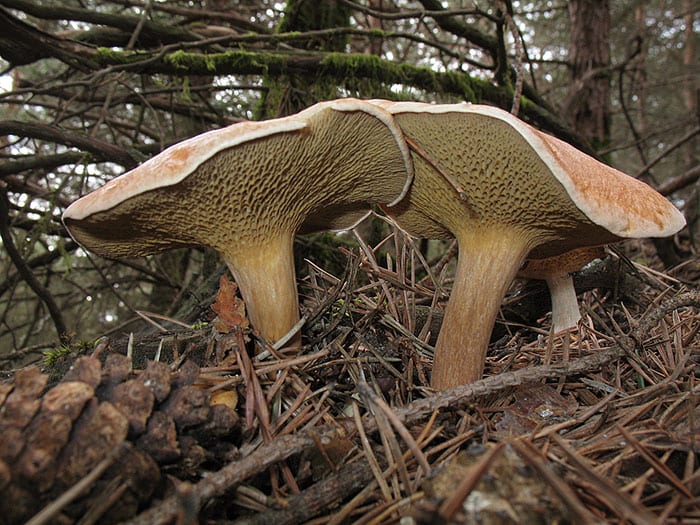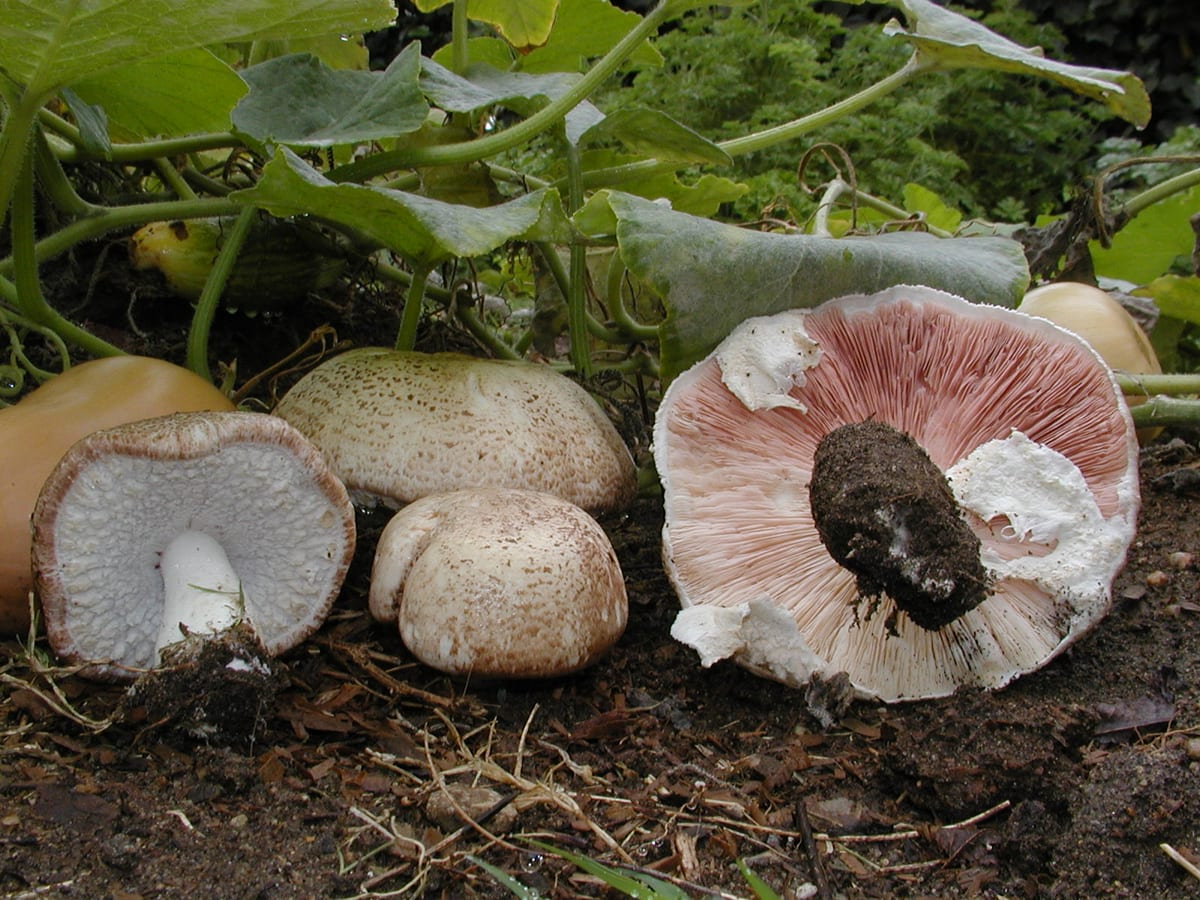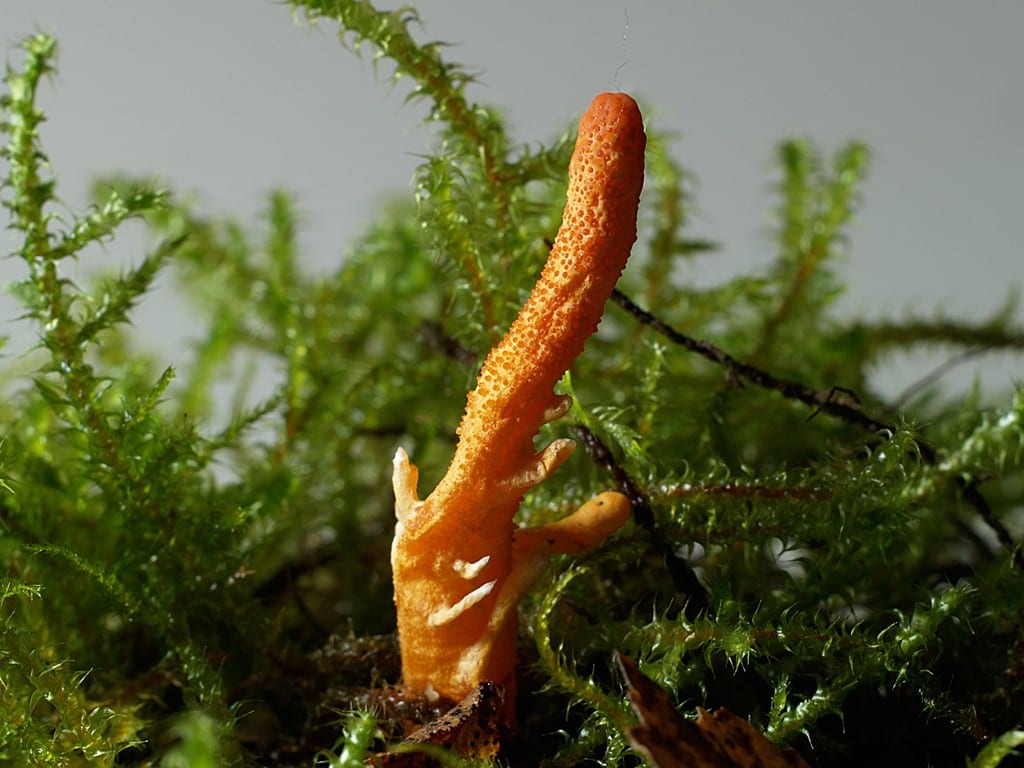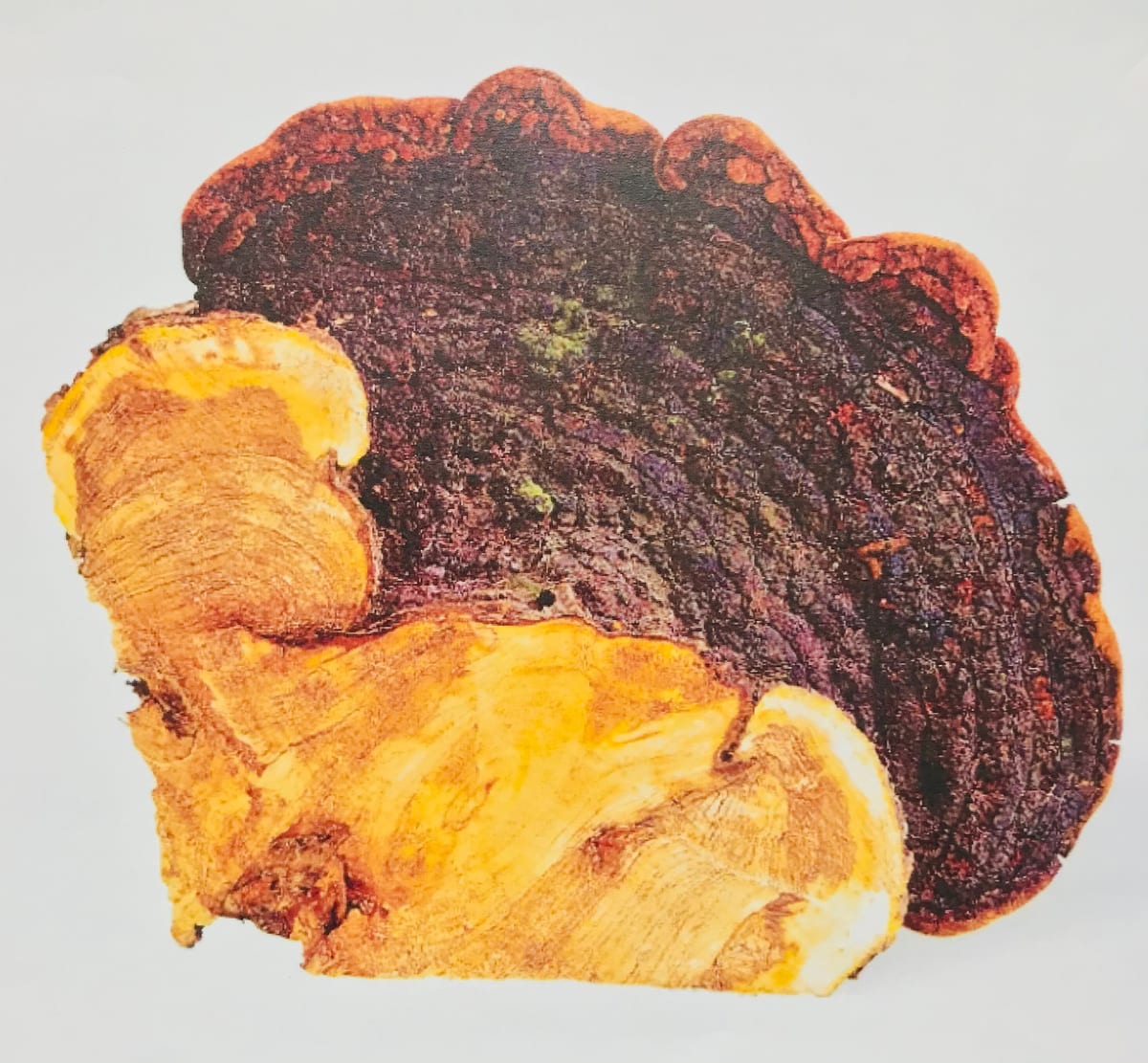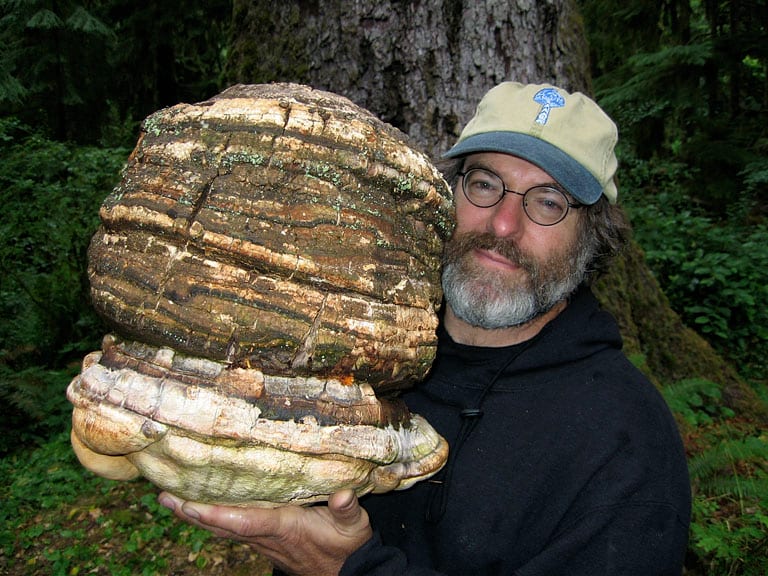
Agarikon (Fomitopsis officinalis)
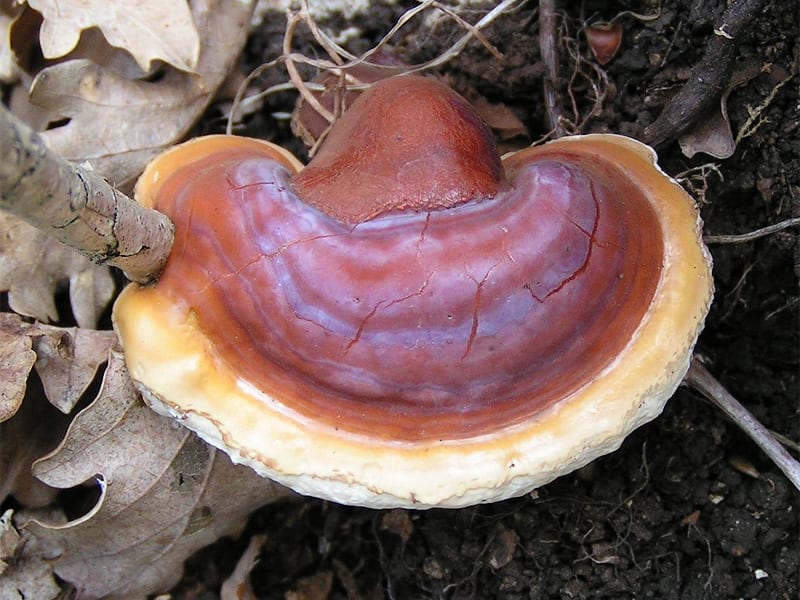
Laricifomes officinalis
A century-aged conifer conk of ancient medicine — from Dioscorides to Stamets' antiviral screens. Wild populations are rare and protected; cultivated extracts exist.
Section
Edible, conditionally edible, poisonous and medicinal species: description, habitat, season and sources. Filter by edibility, by where the mushroom grows (on wood, with trees, in meadows), and by notable features.
Edibility
Where it grows
Features
Laricifomes officinalis
A century-aged conifer conk of ancient medicine — from Dioscorides to Stamets' antiviral screens. Wild populations are rare and protected; cultivated extracts exist.
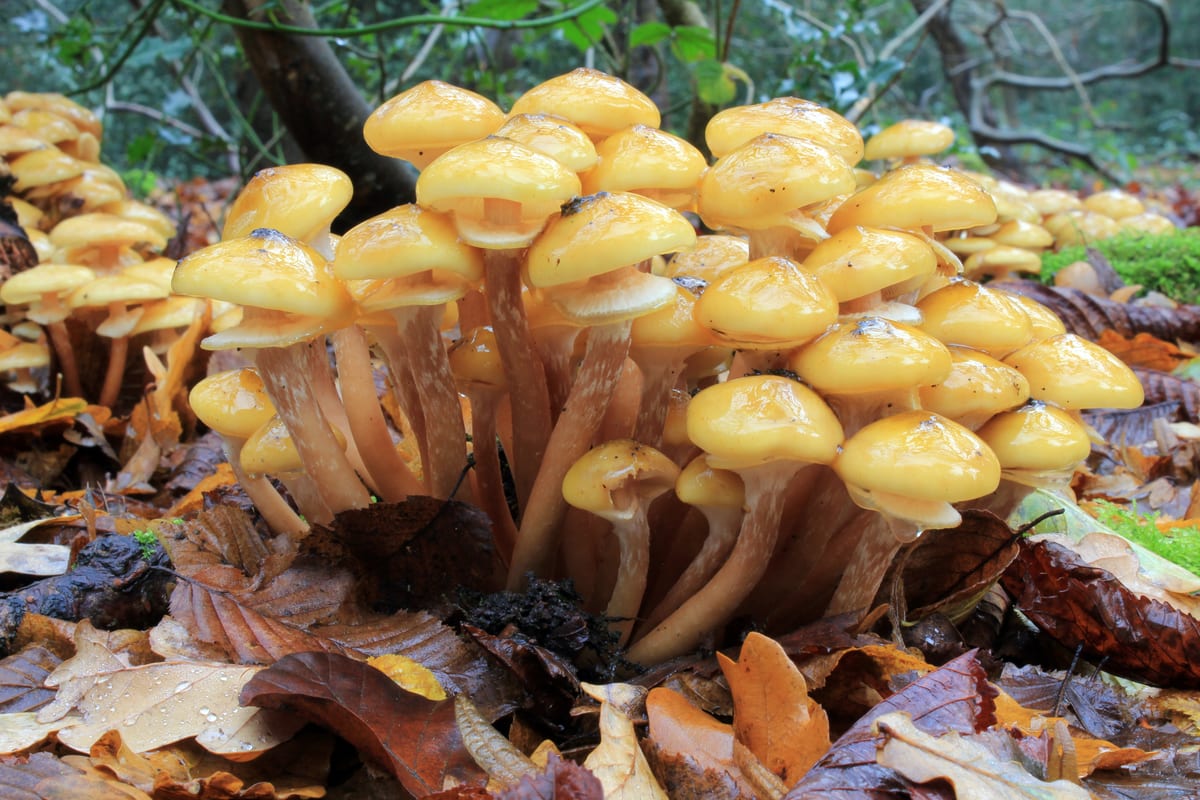
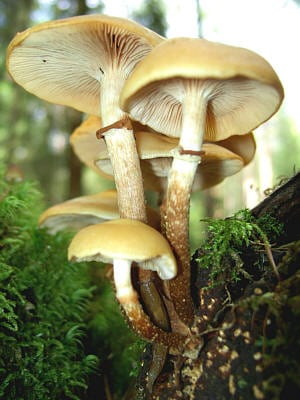
Armillaria mellea
The classic clustered honey fungus: ringed stems, brown caps on wood. Edible cooked — but raw/undercooked it poisons, and the deadly [galerina](/en/griby/galerina-okaymlennaya/) mimics it.
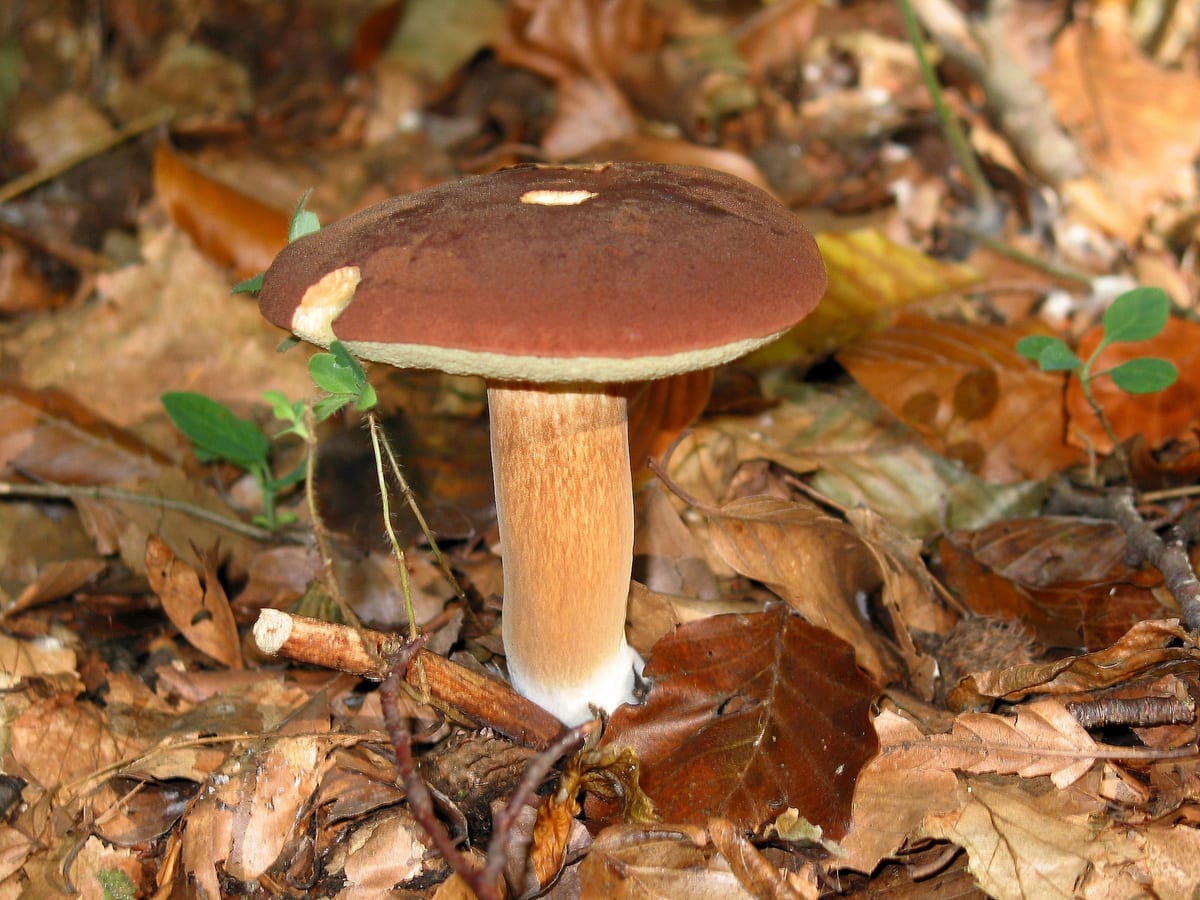
Imleria badia
Bay-brown bolete, blue-staining, mild and excellent — but a documented accumulator of radioactive caesium; Polish and Czech post-Chernobyl measurements confirmed it.
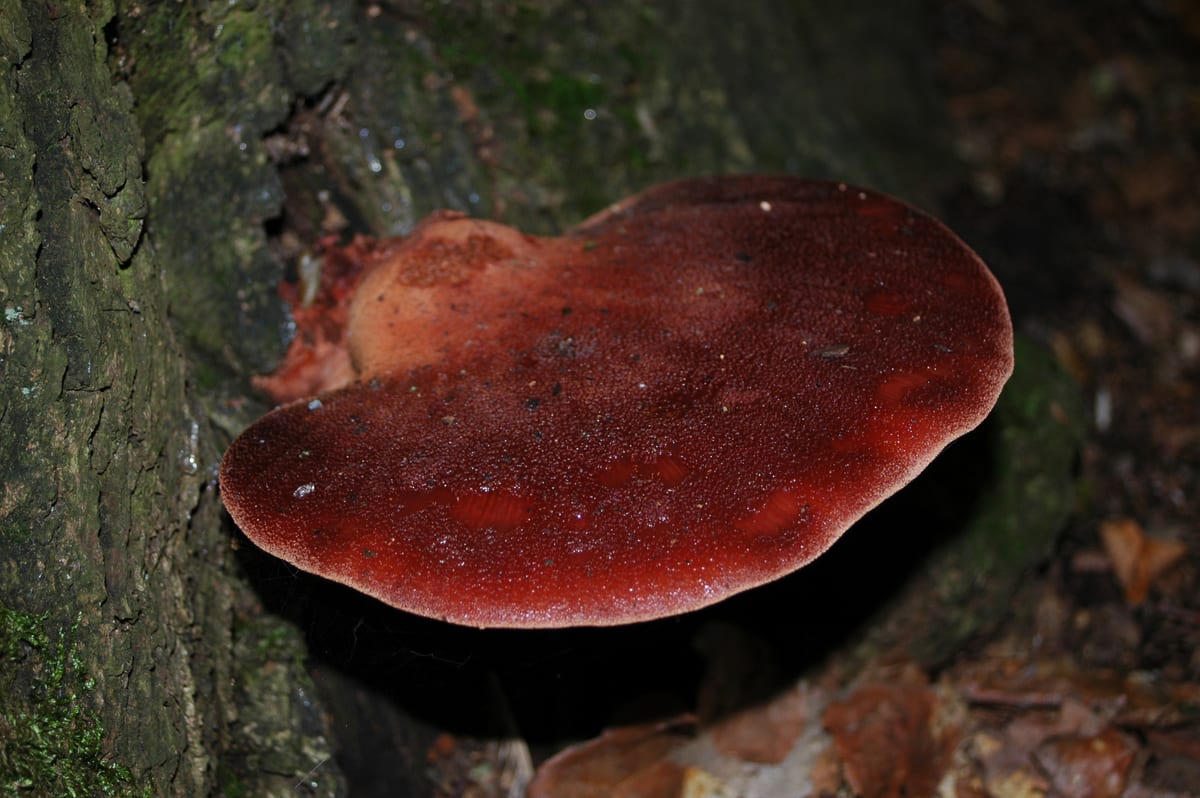
Fistulina hepatica
A red, moist, liver-like bracket that ‘bleeds’ red juice — edible, sourish, sliceable like a steak. Looks alarming; tastes unusual.
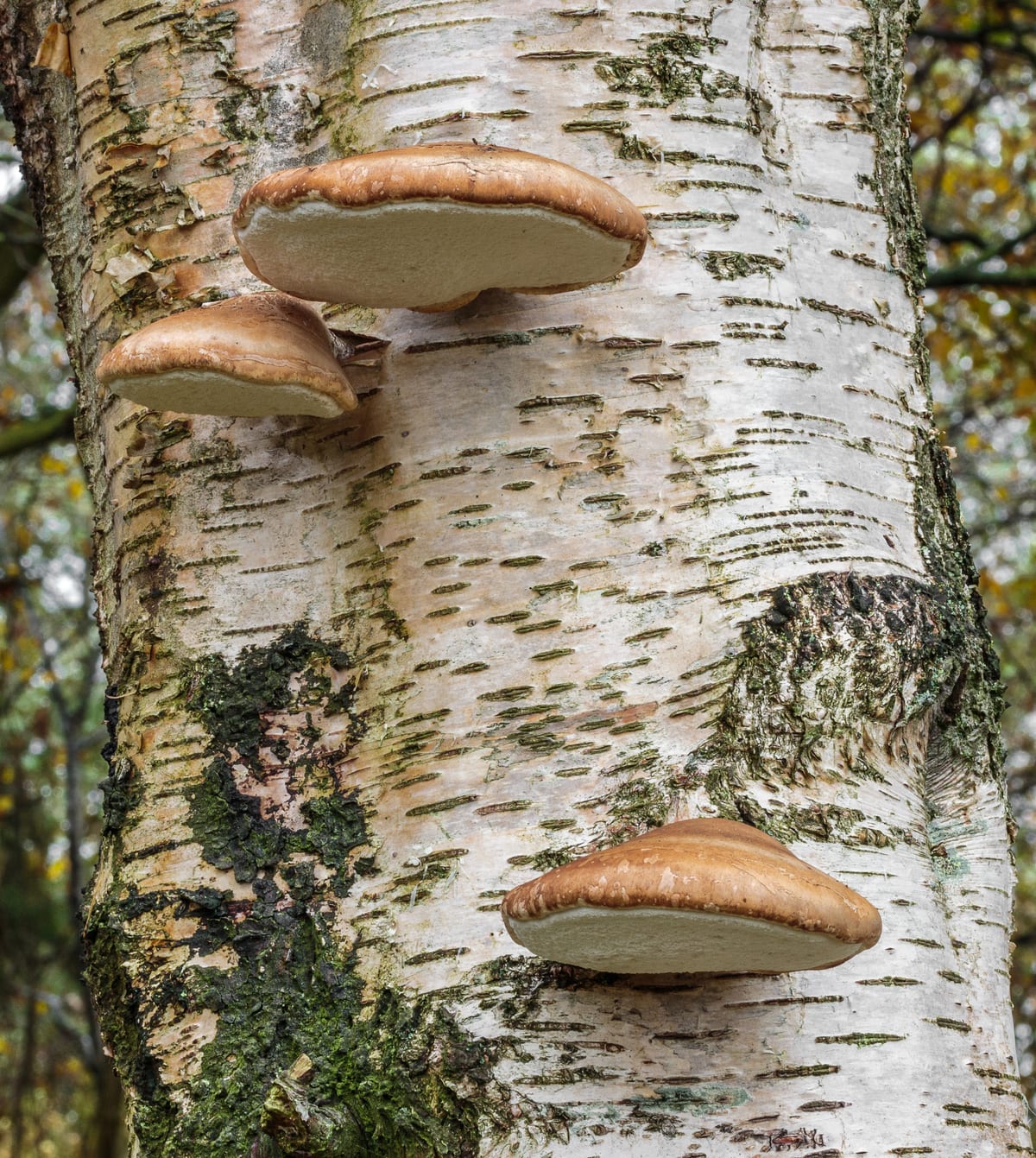
Fomitopsis betulina
The pale bracket on birch found on Ötzi the Iceman — 5,300-year-old evidence of human medicinal use; compounds include betulinic acid precursors and immune-active polysaccharides.
Tylopilus felleus
The main porcini lookalike: same bolete silhouette, but pinkish tubes and unbearably bitter flesh. Not deadly — but a single cap ruins the whole pan.
Cyclocybe aegerita
The pioppino of commerce — brown-capped clusters on poplar wood with a firm ring. A firm, nutty edible of riverside woods.
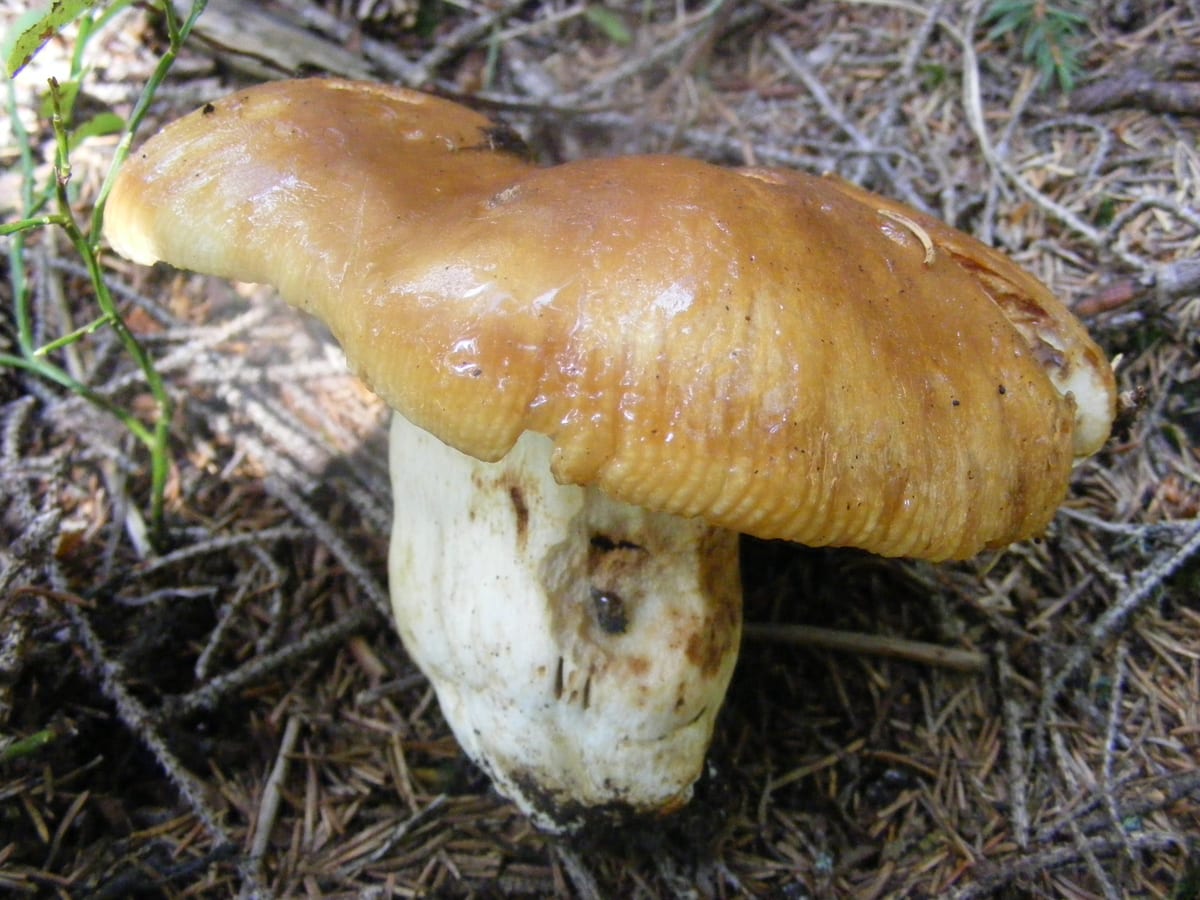
Suillus bovinus
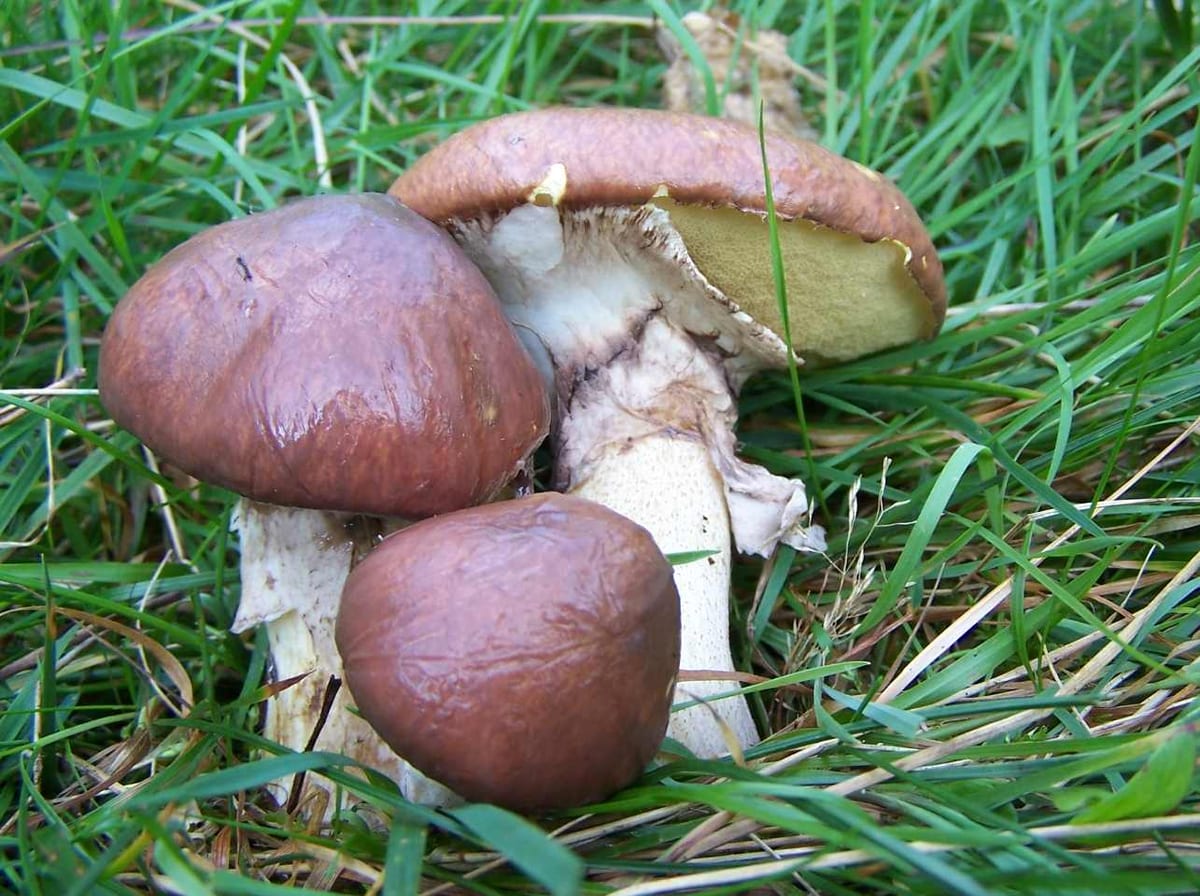
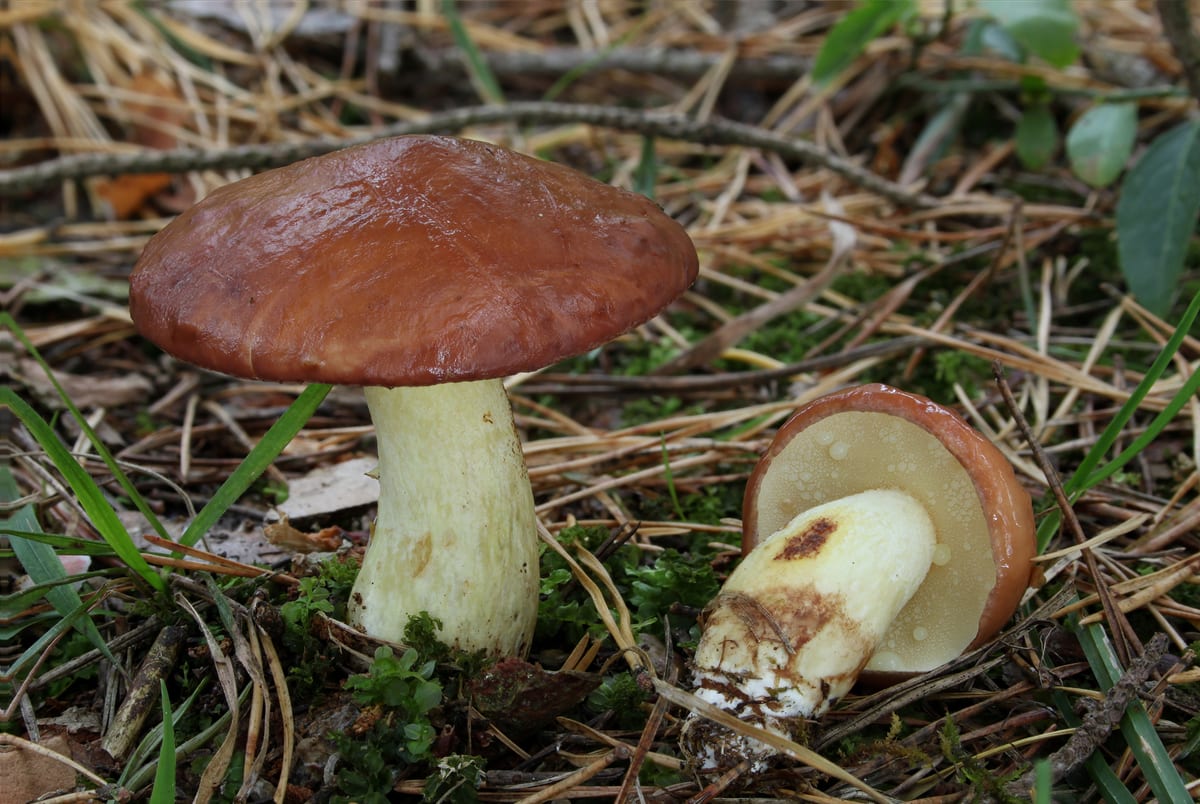
A soft brown Suillus relative of pine woods: red-brown cap, large angular pores, no ring. Edible and common, though modest in flavor.
Agaricus subrufescens
The almond-scented agaricus studied for beta-glucans in human trials on immune markers and inflammatory bowel disease — early-stage but real clinical work.
Hypholoma sublateritium
A brick-red clustered wood mushroom — long treated as edible after cooking, but western guides and case reports describe gastrointestinal poisoning. Recognize the bitter taste; not recommended.
Leccinum scabrum
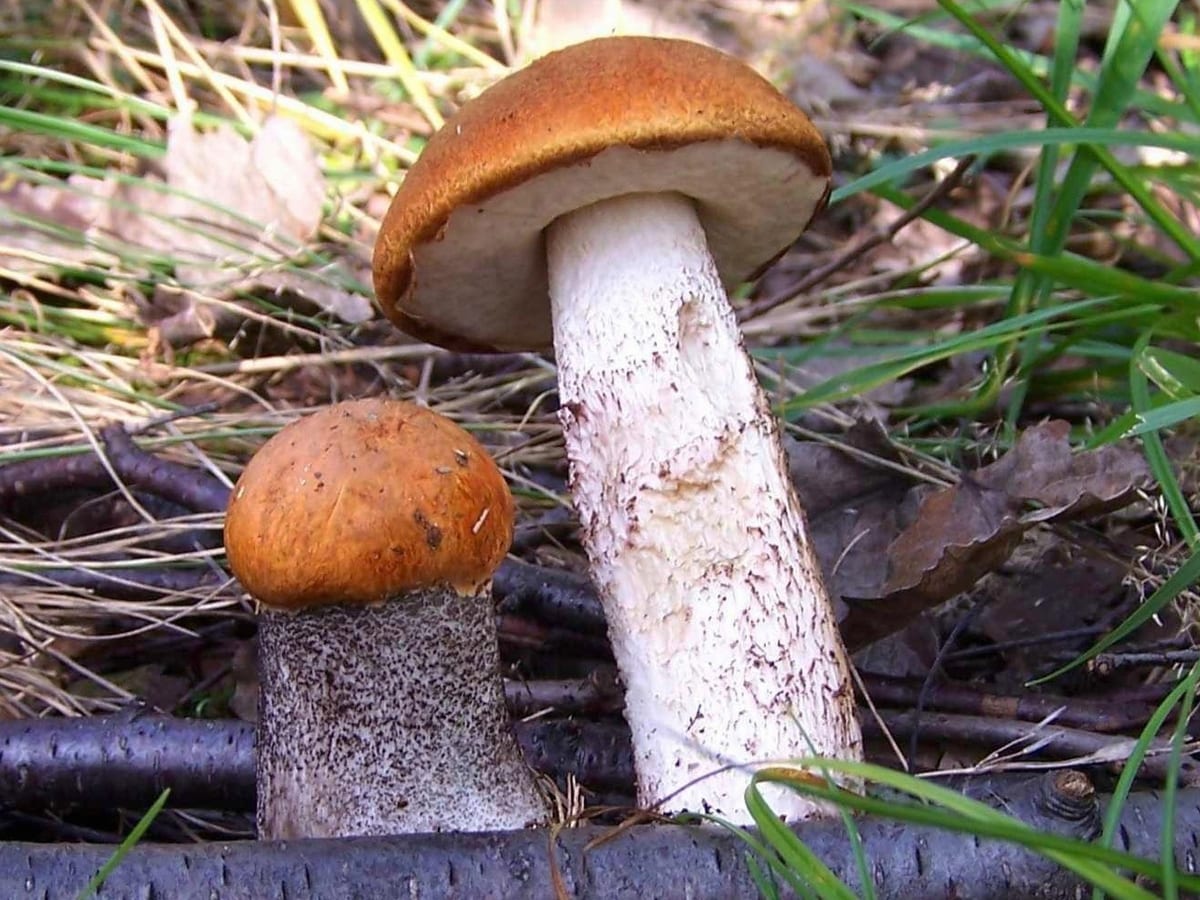
The everyday birch bolete: brown cap, scaly stem, flesh whitening or slightly pinking. Best fried and stewed; dries darker than porcini.
Paxillus involutus
Long eaten after soaking and boiling, now classed as poisonous: repeated meals can trigger immune hemolysis — described cases ended in shock and death.
Butyriboletus appendiculatus
A quality edible bolete: yellow stem covered in tiny granules, flesh yellowish and barely staining. Mild and good.
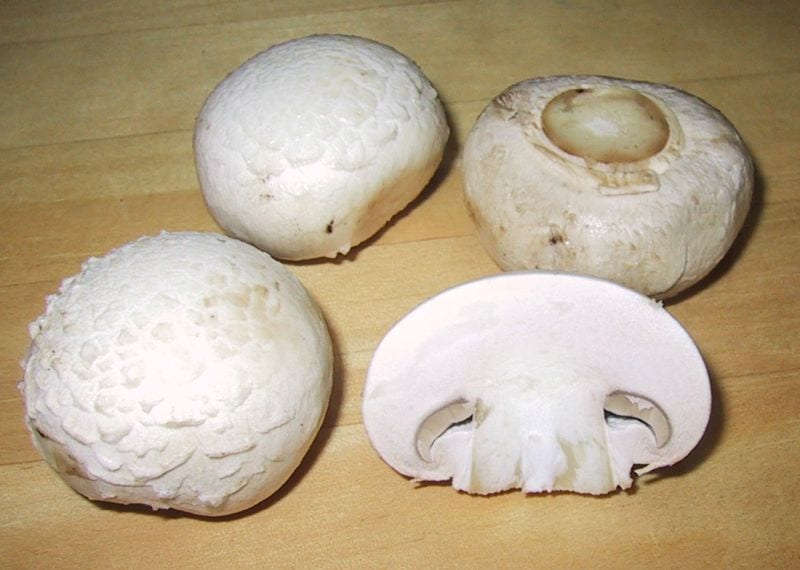
Agaricus bisporus
The world's most cultivated mushroom — the same species as cremini and portobello at different maturity. Industrially UV-treated for vitamin D.
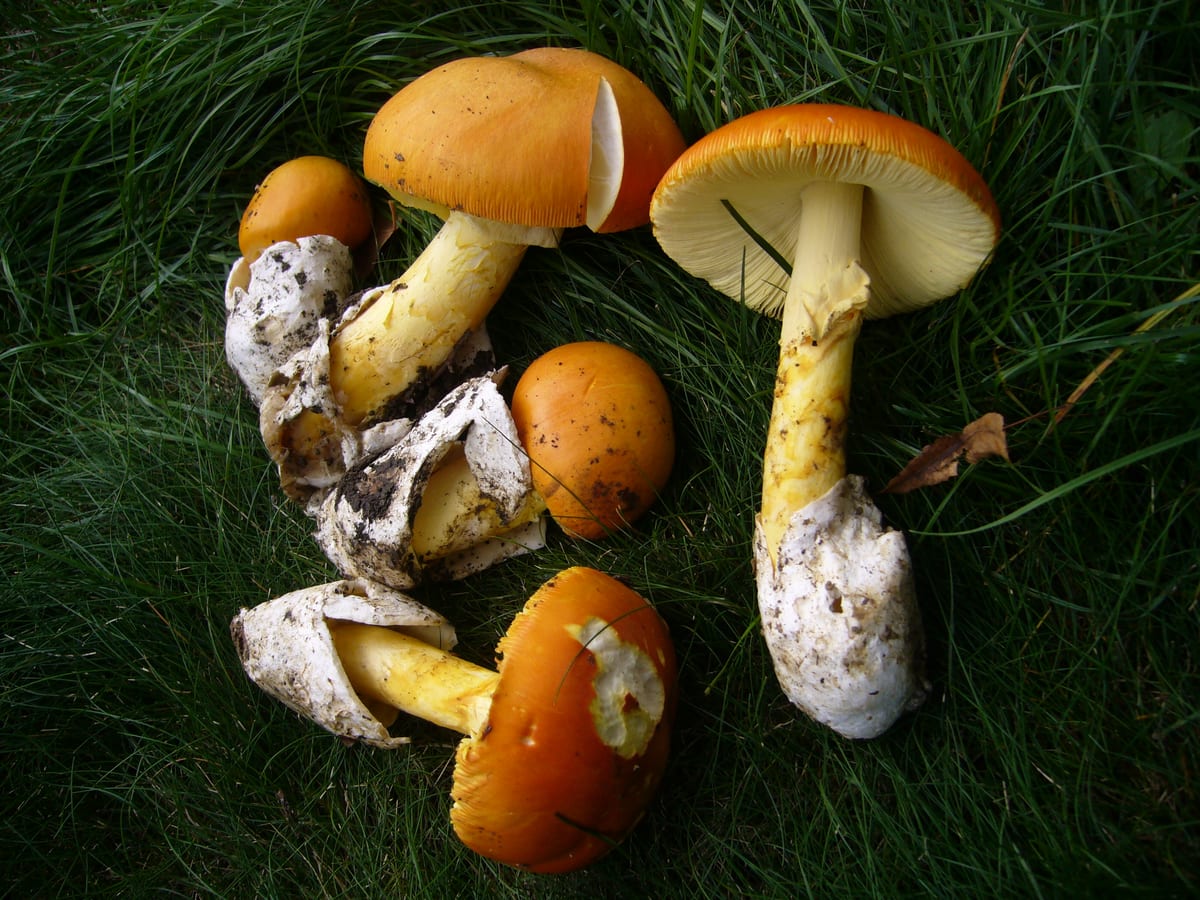
Amanita caesarea
The orange-capped amanita of the Roman emperors — a delicacy of southern Europe. Edible but demands care: amanita family, and north of its range the orange muscarias create confusion risk.
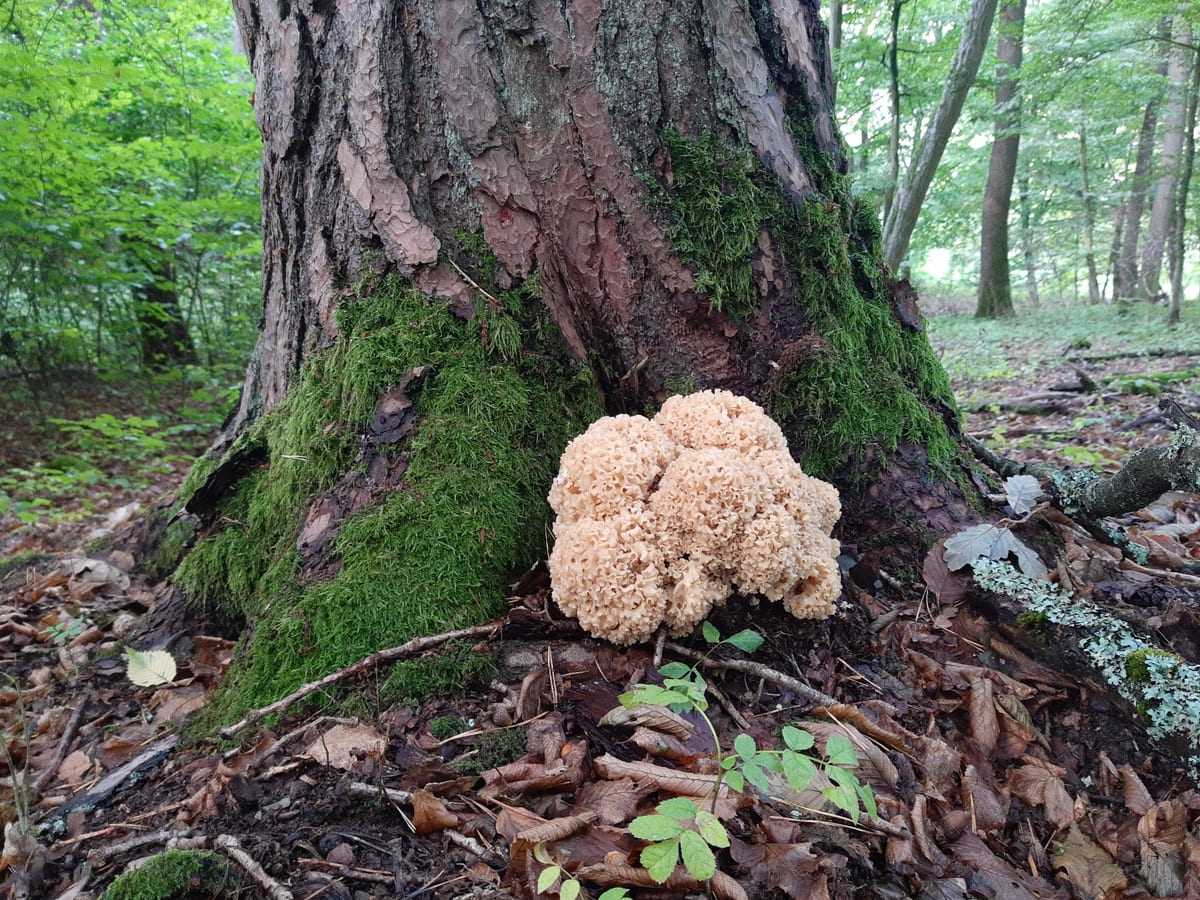
Sparassis crispa
A cream ‘cauliflower’ at the base of pines — a gourmet edible with no dangerous lookalikes at this shape. Requires thorough washing between the folds.
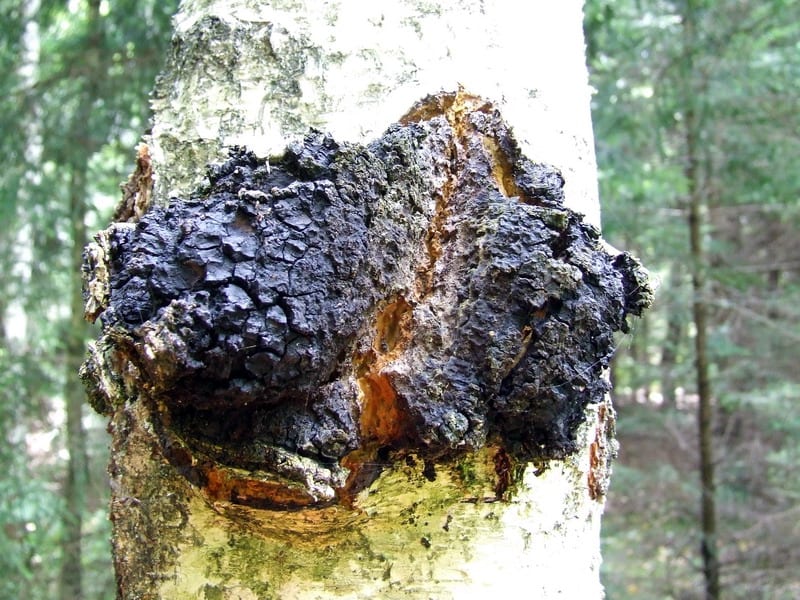
Inonotus obliquus
The black birch conk with the highest measured antioxidant content of any natural product — betulinic acid, melanin; human evidence is thin despite the hype.
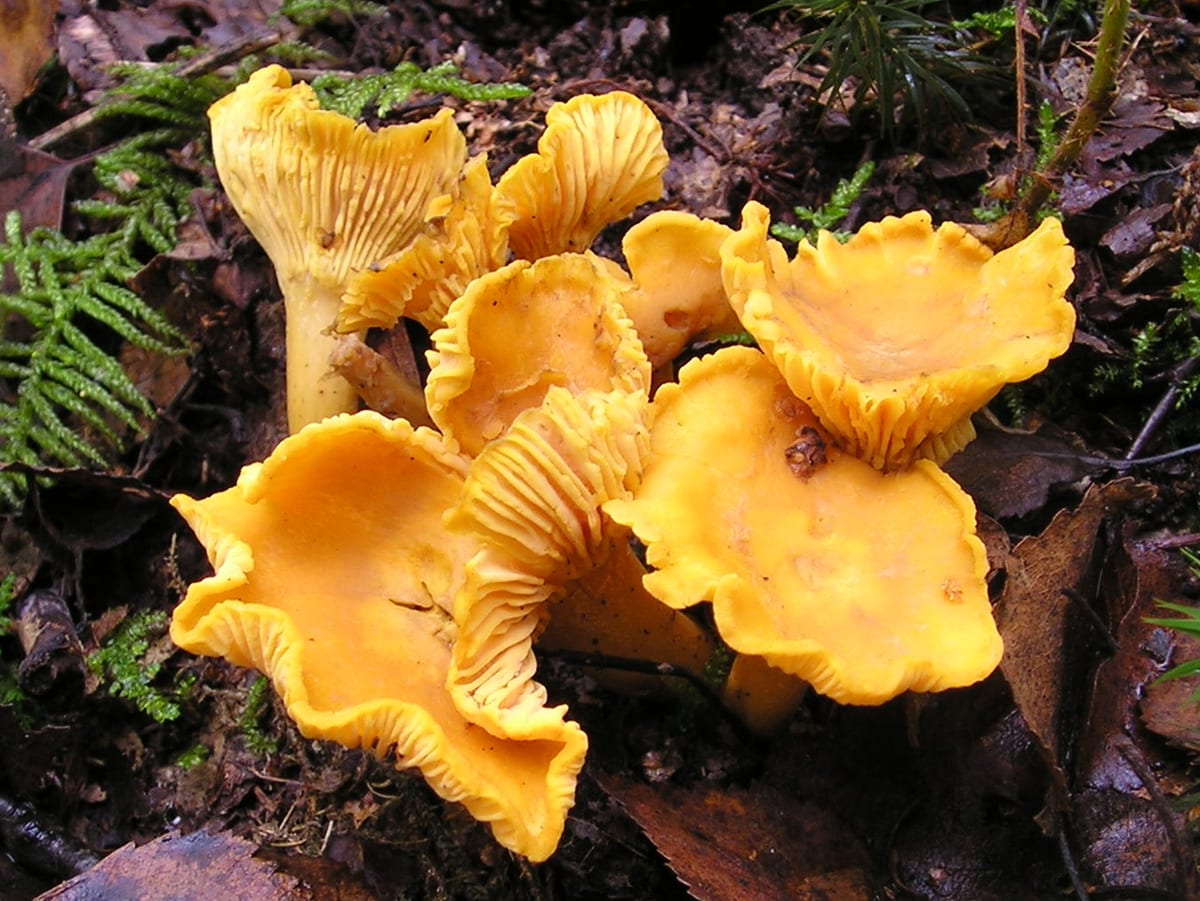
Cantharellus cibarius
The egg-yellow forest mushroom: blunt ridges instead of gills, apricot smell, worm-resistant flesh. A reliable edible even for beginners.
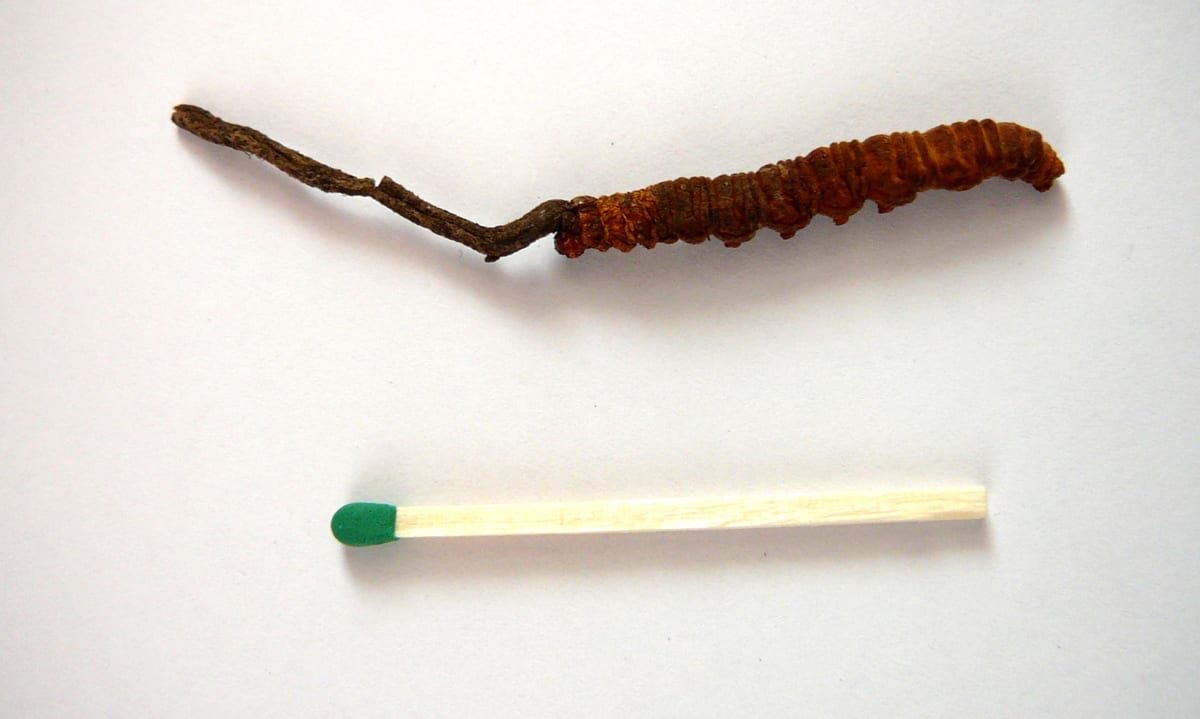
Ophiocordyceps sinensis
The world's most expensive mushroom — wild caterpillar fungus at up to $60,000/kg. Evidence for the price-tag claims is thin; arsenic content is a real concern.
Cordyceps cicadae
The cicada parasitoid — a traditional Chinese medicinal cordyceps with immunomodulatory polysaccharides in preclinical work; small human trials exist.
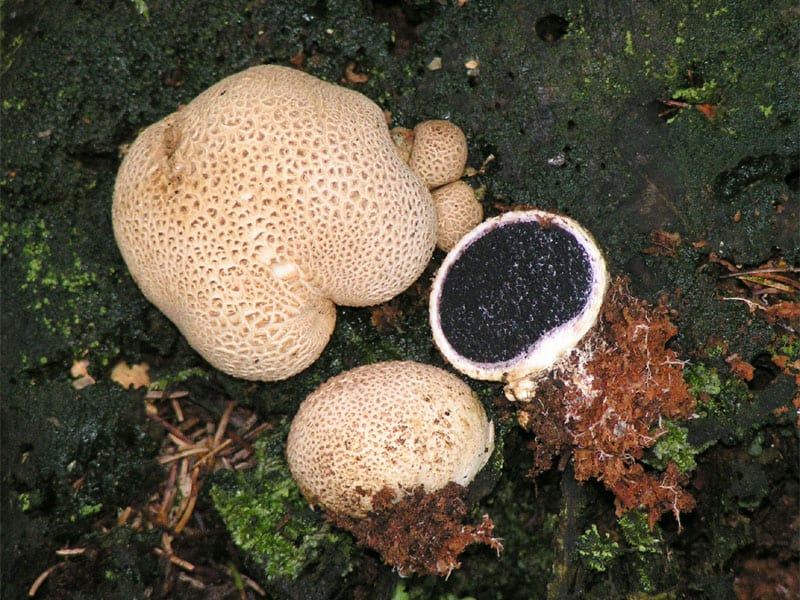
Scleroderma citrinum
A hard ‘puffball’ with dark gleba inside. In a French series of 134 cases, 7 % of poisonings were moderate or severe — do not eat.
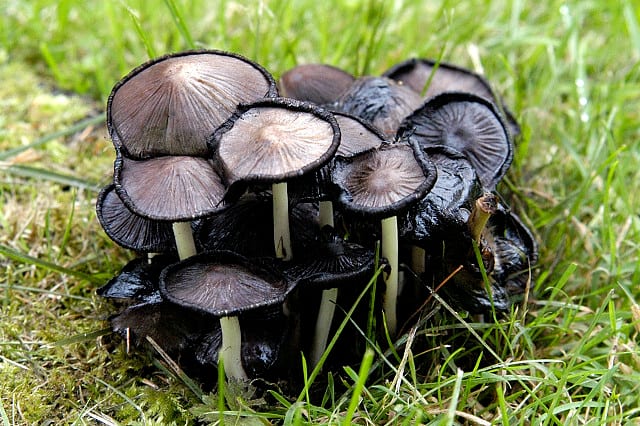
Coprinopsis atramentaria
The gray inkcap is edible young — but it carries coprine, which causes a disulfiram-like reaction with alcohol for up to 3 days after the meal.
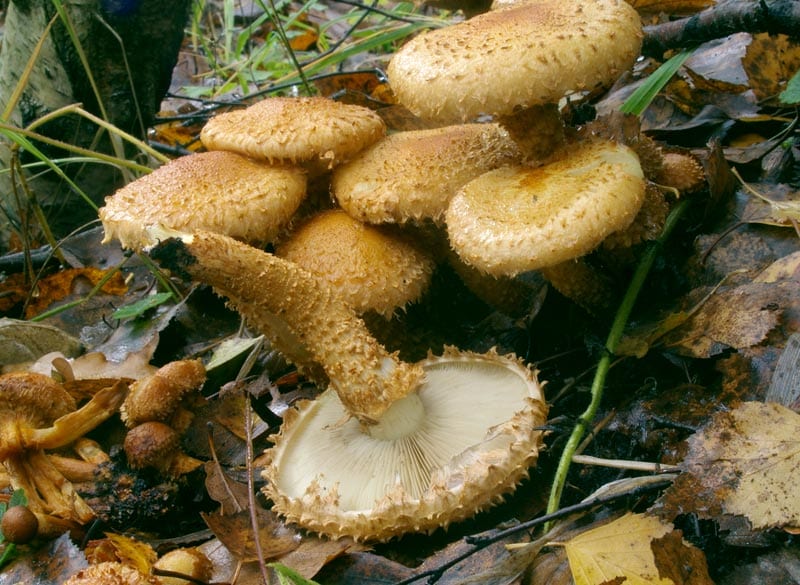
Pholiota squarrosa
The lookalike of the [golden scalycap](/en/griby/chesuichatka-zolotistaya/) and of honey fungi: clustered, scaly, greenish-olive. Gastrointestinal poisoner — and bitter besides.
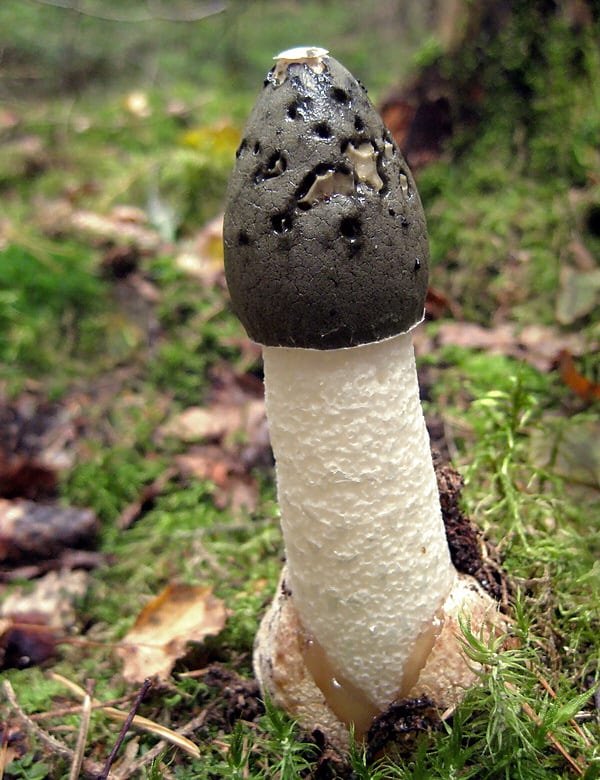
Phallus impudicus
The phallic stinkhorn with a foul-smelling gleba — flies spread its spores. The white ‘egg’ stage is edible and traditionally eaten; the smelly mature form is not.
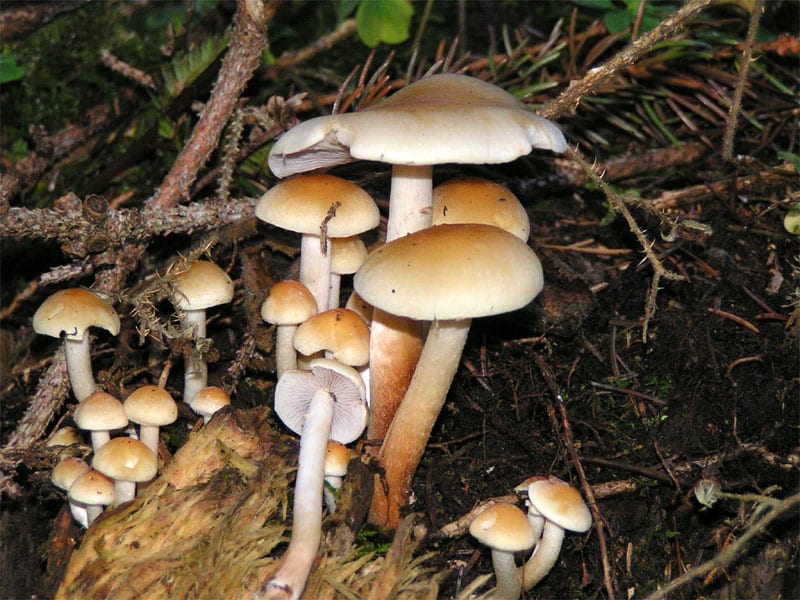
Hypholoma capnoides
A conifer-wood edible with smoky-gray mature gills — the yellow-gilled [sulphur tuft](/en/griby/lozhnoopyonok-sernozhyoltyj/) is the poisonous double on the same substrate.
Cordyceps militaris
The cultivatable cordyceps — orange clubs on pupae, source of cordycepin. Human studies on VO2max and fatigue exist; results are mixed.
Inocybe erubescens
A spring–summer mushroom that tears like a russula and ‘blushes’ where broken. Contains muscarine: poisoning starts within minutes.
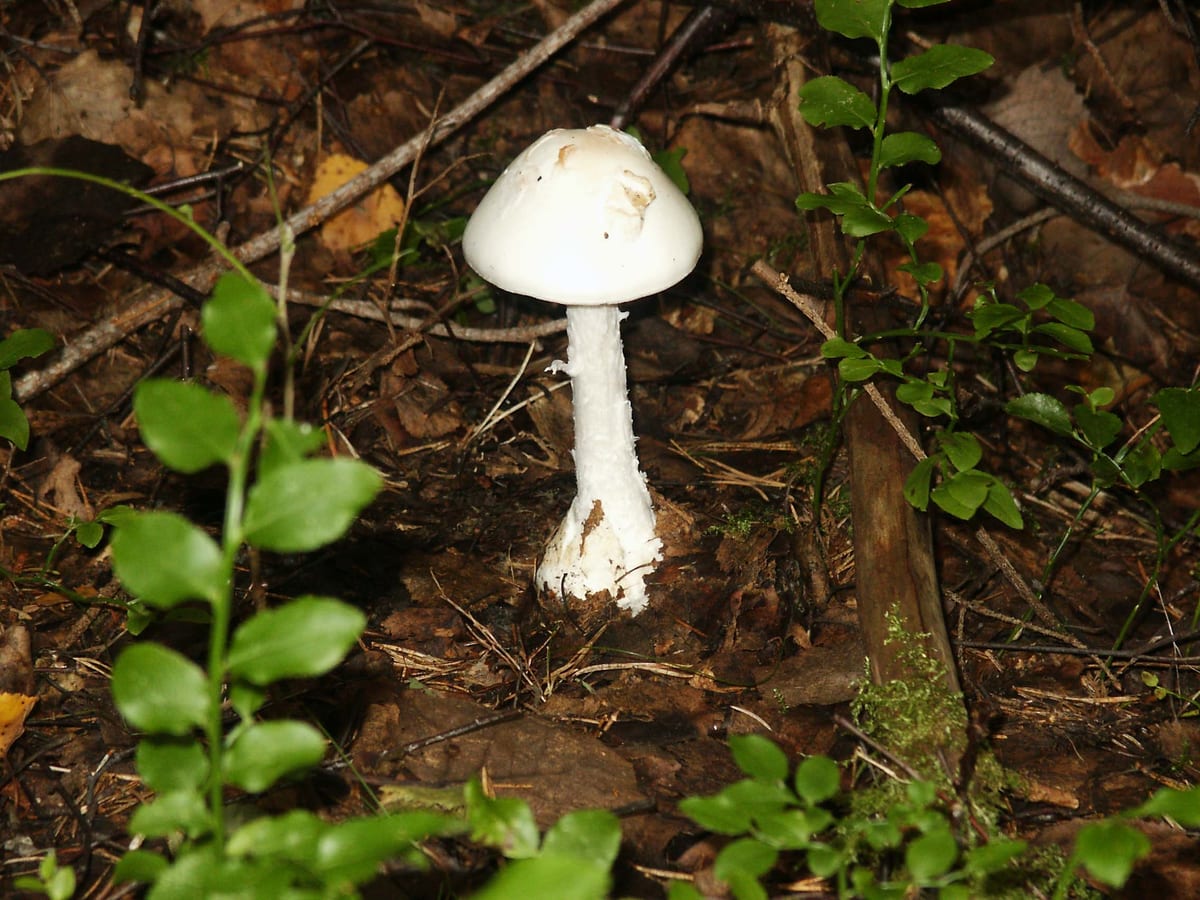
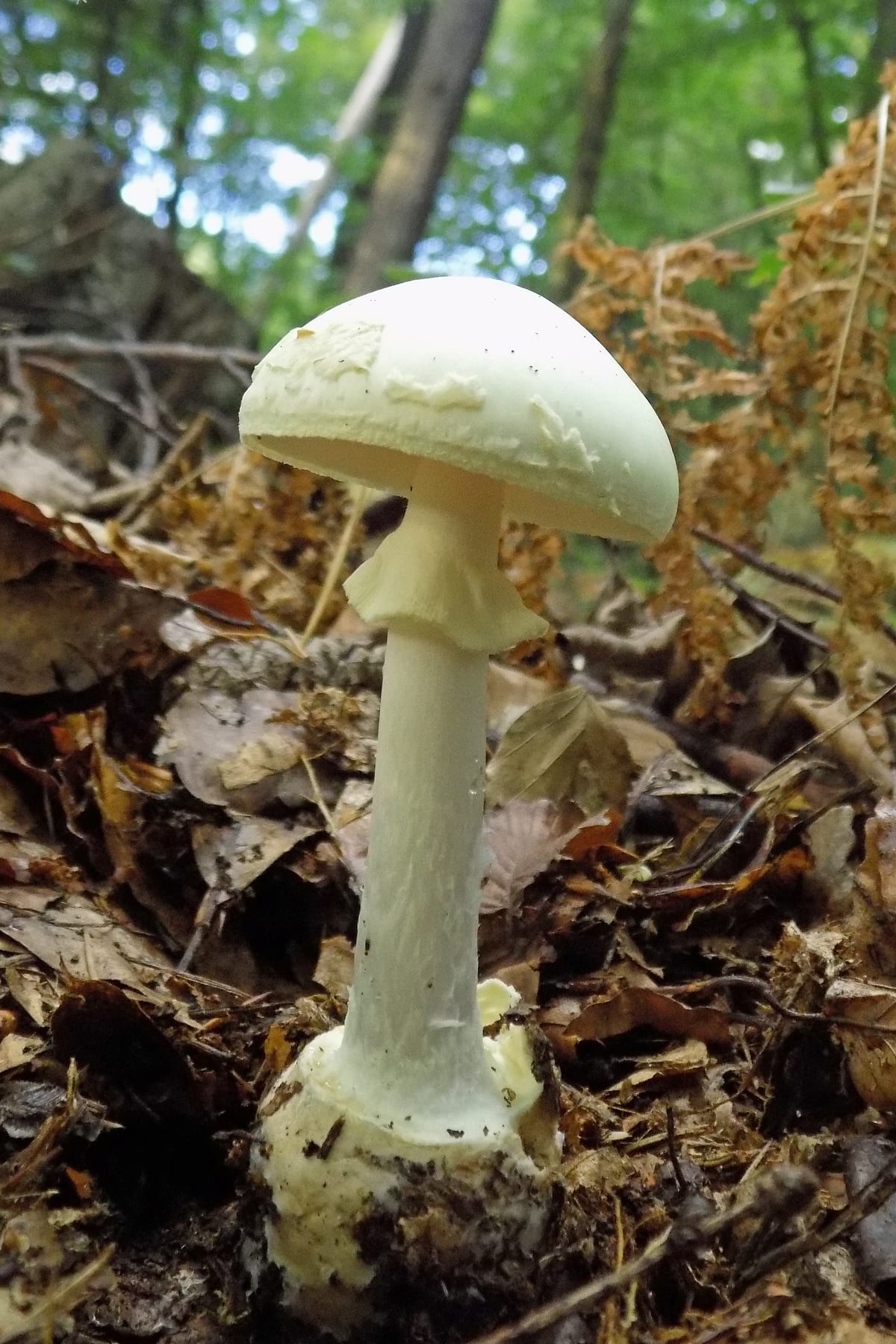
Amanita phalloides
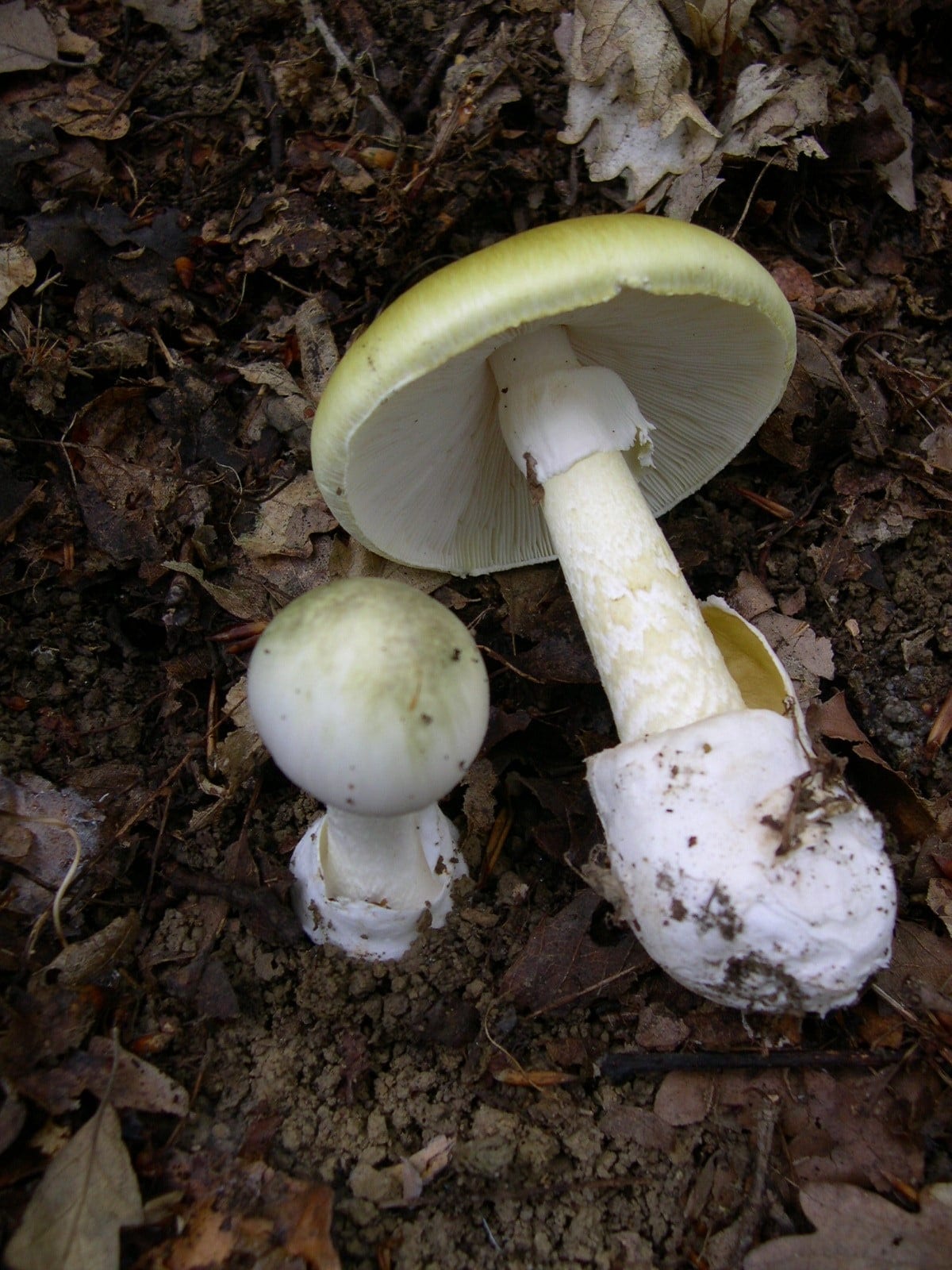
The deadliest mushroom in the world by number of fatal poisonings. Amatoxins survive boiling, frying and pickling, and the first symptoms arrive 6–18 hours after the meal.
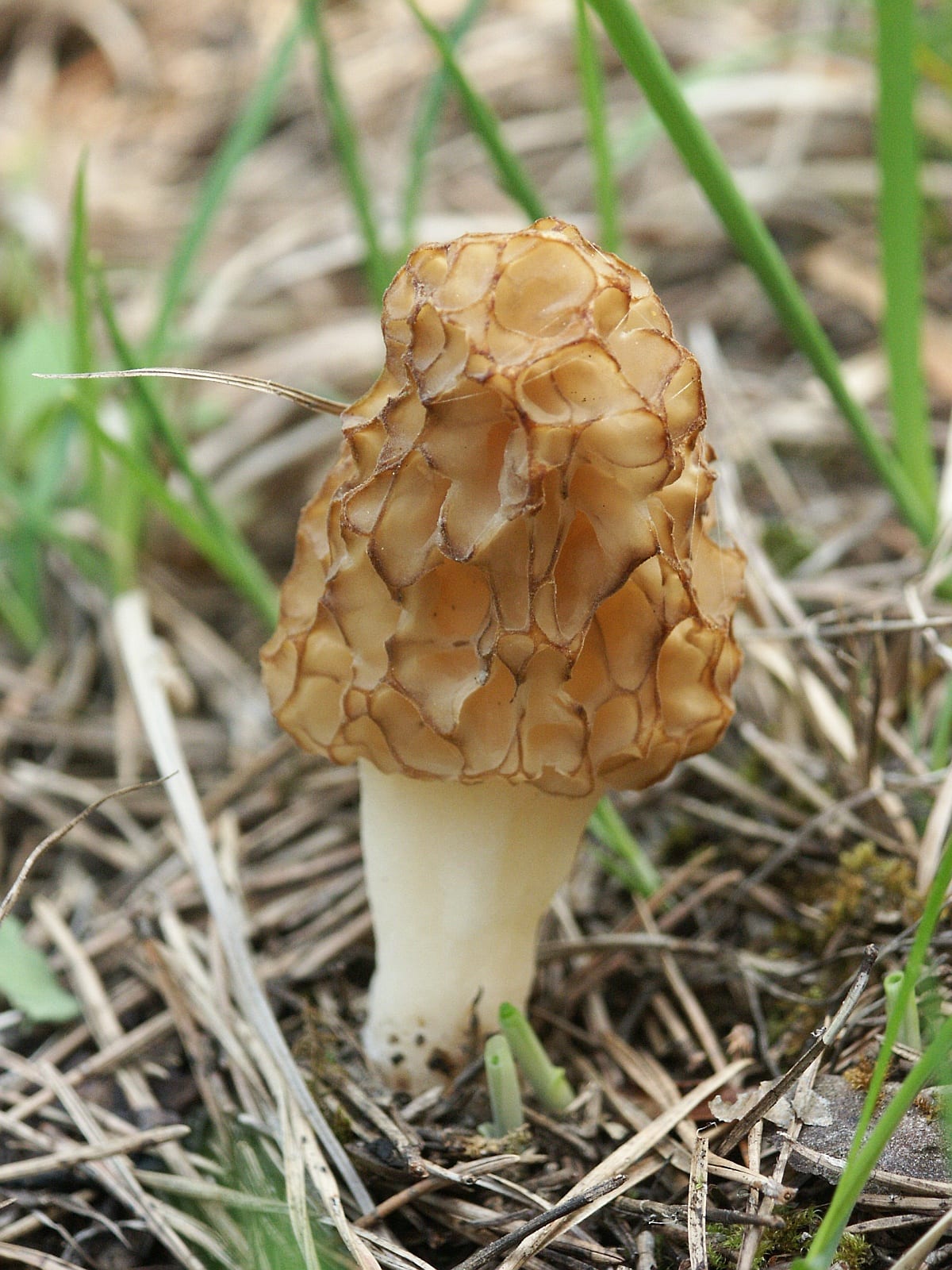
Verpa bohemica
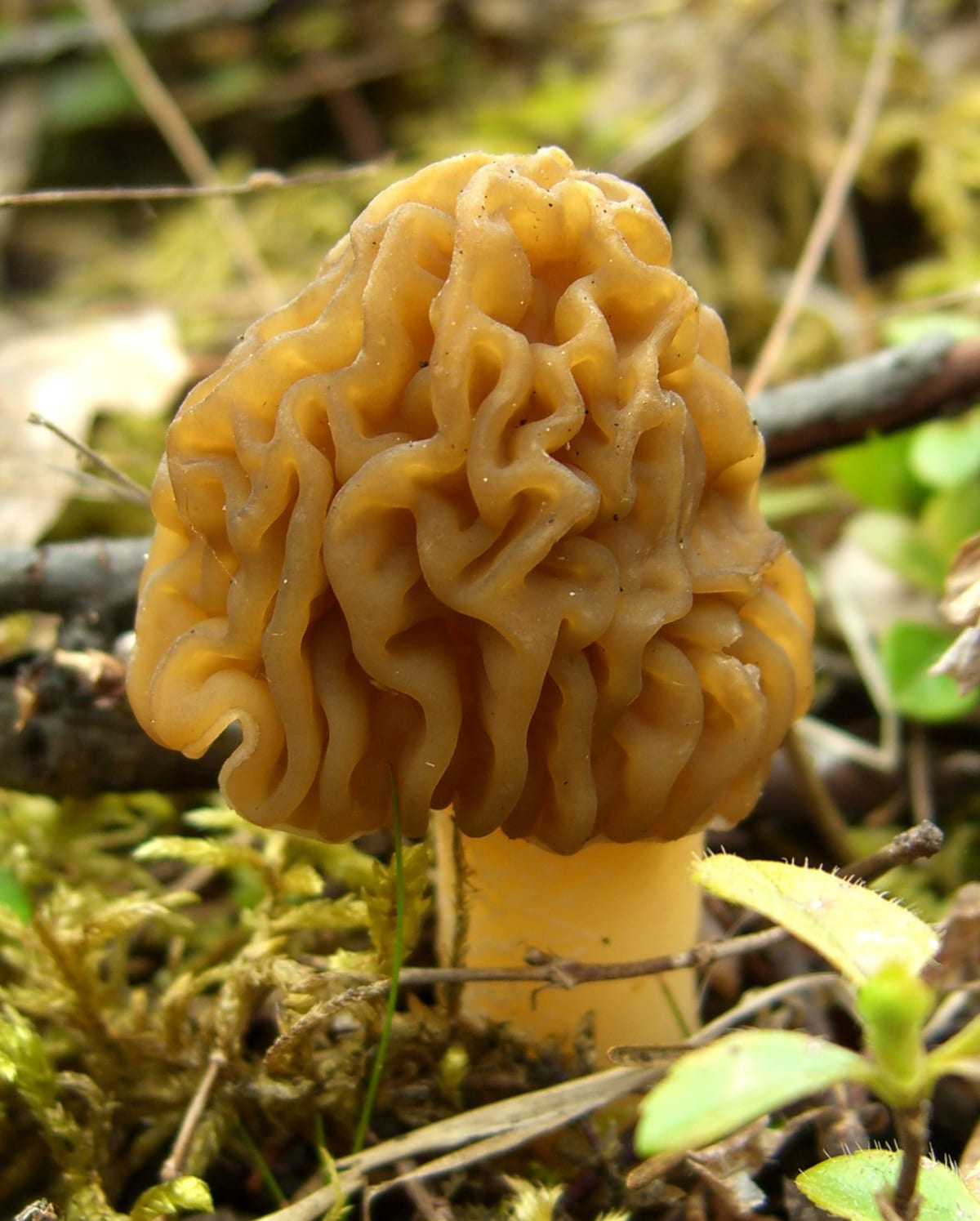
A spring morel relative: the wrinkled cap hangs free like a thimble — not fused as in true morels. Conditionally edible cooked; raw it poisons.
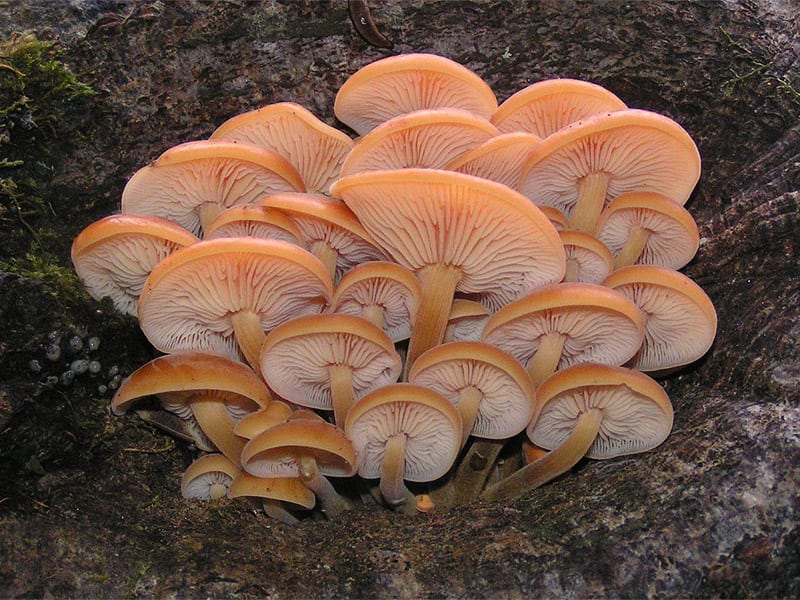
Flammulina velutipes
The winter mushroom: velvet brown stem, small cap, fruiting in frost. The wild form is brown-stemmed; the long white cultivated shape is grown in the dark.
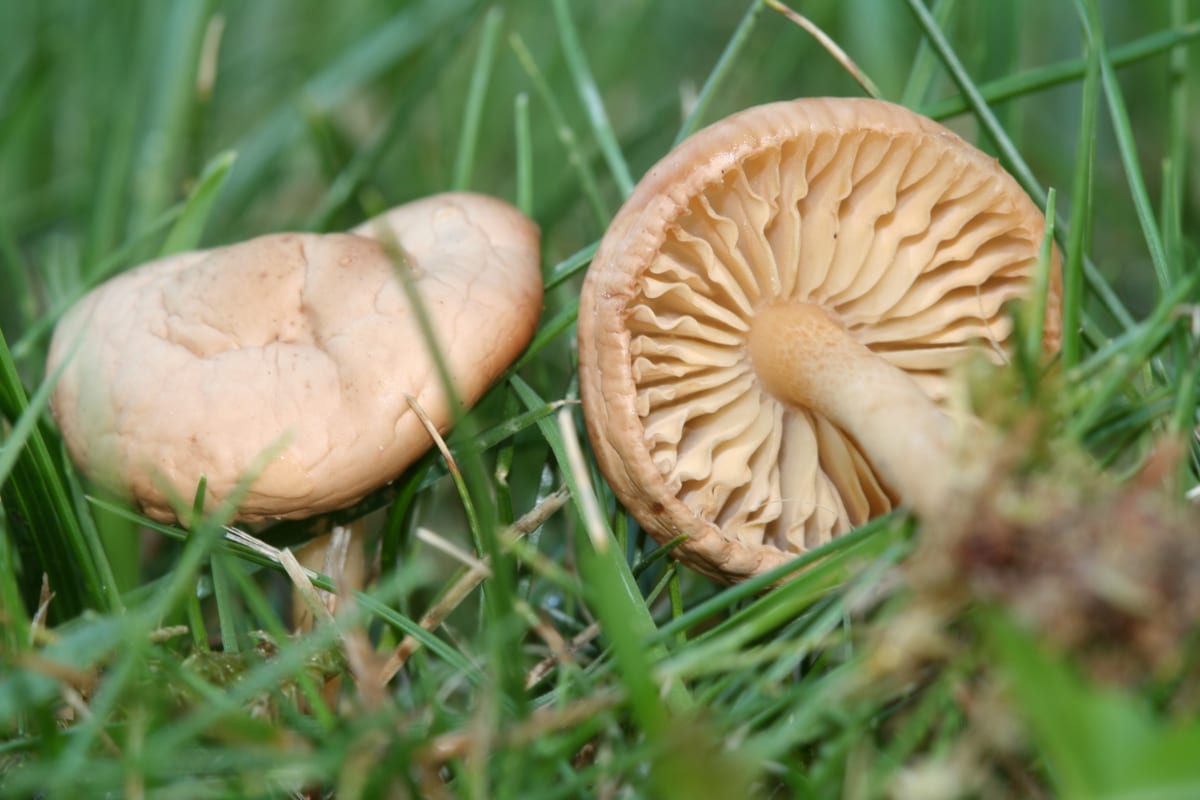
Marasmius oreades
The meadow mushroom of fairy rings: small, cream-tan, widely-spaced gills. Edible and fragrant — but it lives where poisonous clitocybes and entolomas do.
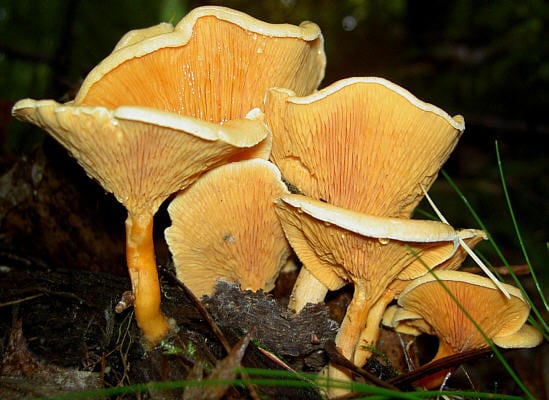
Hygrophoropsis aurantiaca
An orange chanterelle lookalike: thin true gills instead of blunt ridges, grows on wood rather than soil. Causes gastrointestinal poisoning.
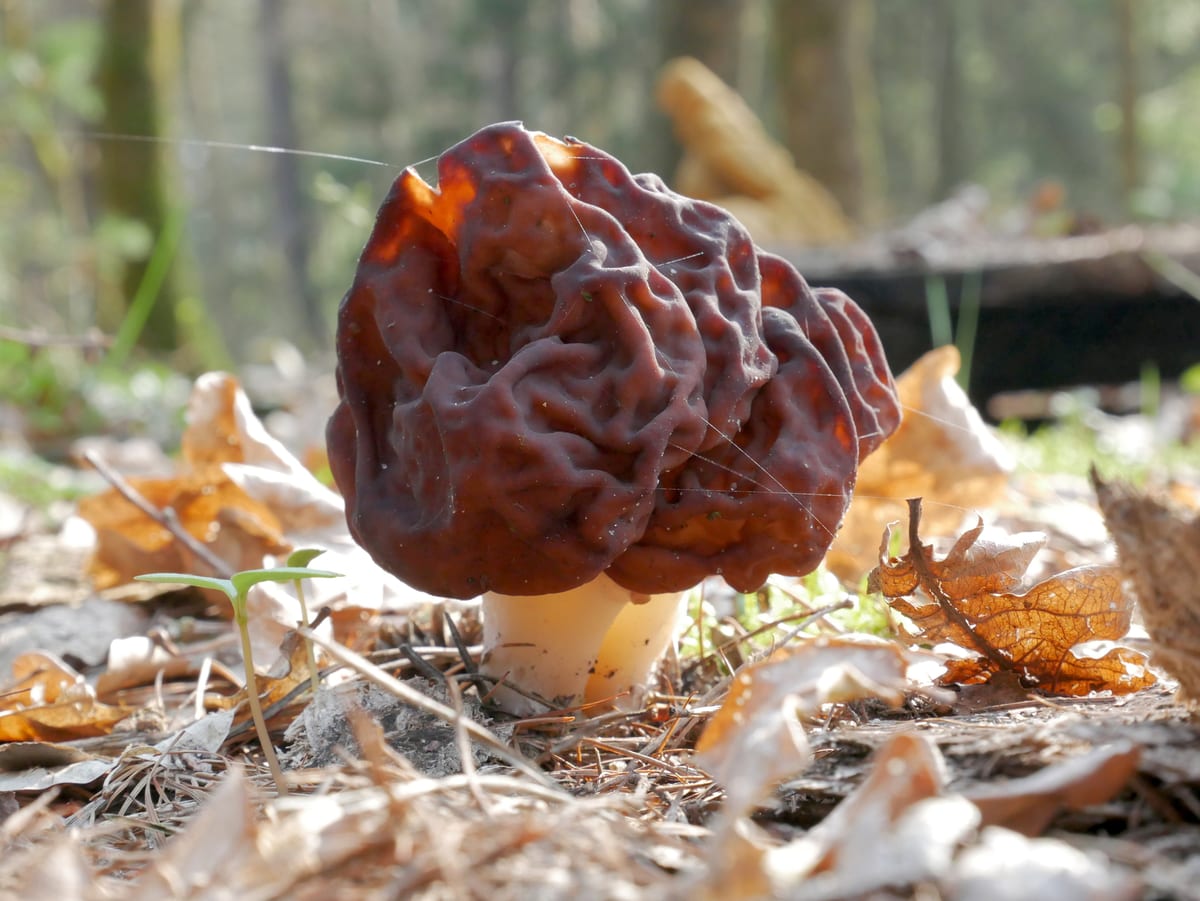
Gyromitra esculenta
The spring ‘false morel’: gyromitrin converts to monomethylhydrazine in the body — liver damage, seizures, recorded deaths. Cooking does not reliably help.
Lepiota brunneoincarnata
A small ‘parasol’ with red-brown scaling growing right beside housing. Contains amatoxins at death-cap doses. The survival rule is simple: no small lepiotas are picked, ever.
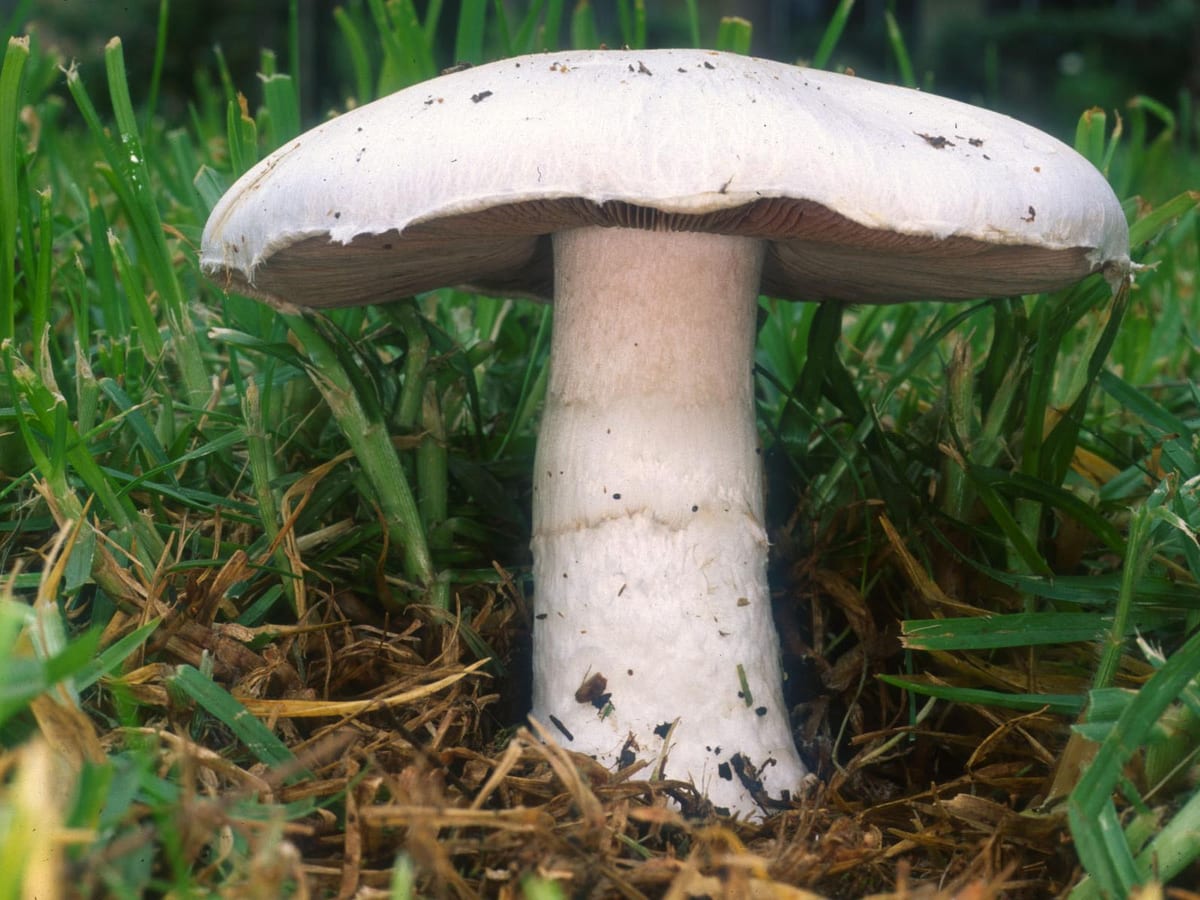
Agaricus campestris
The wild meadow agaricus: pink gills turning chocolate-brown, white flesh. Edible — but grassland hosts yellow-stainers and young amanitas.
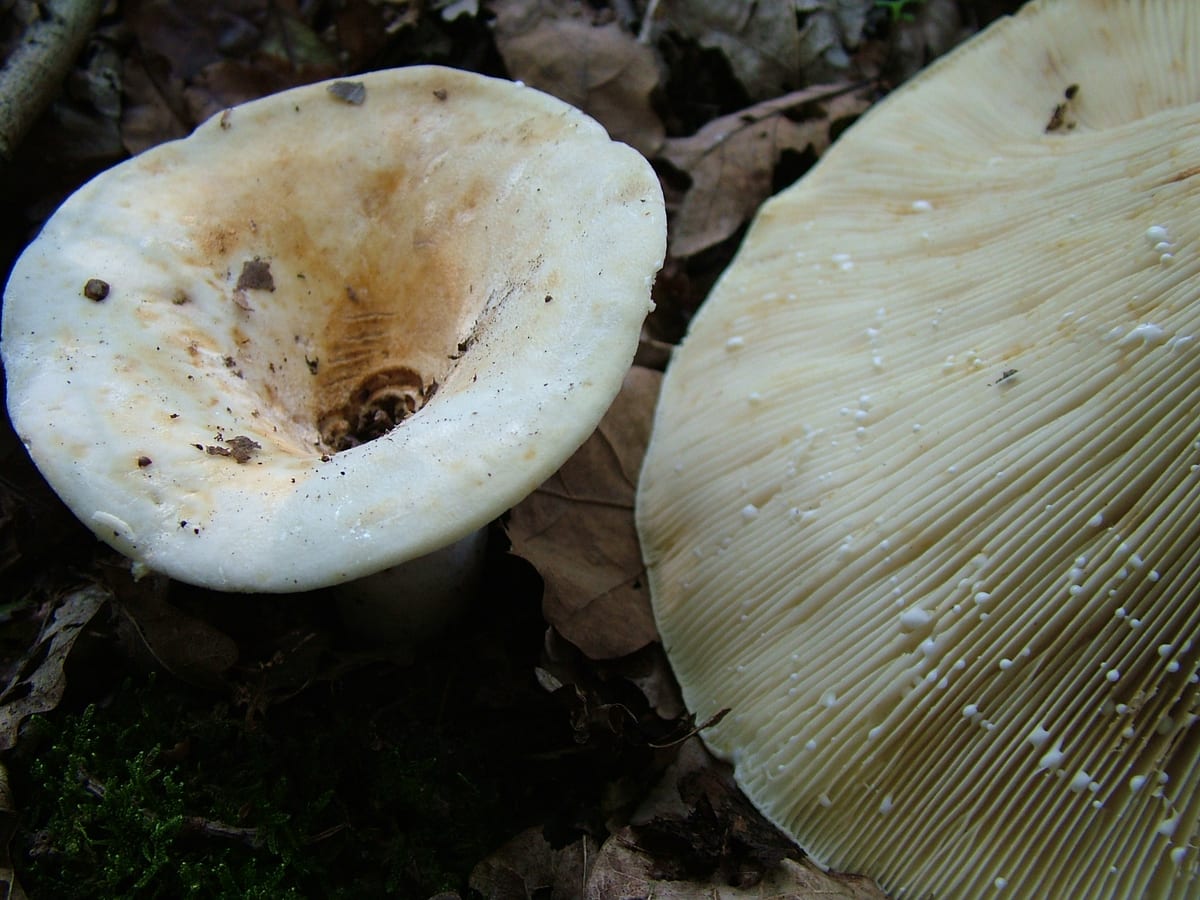
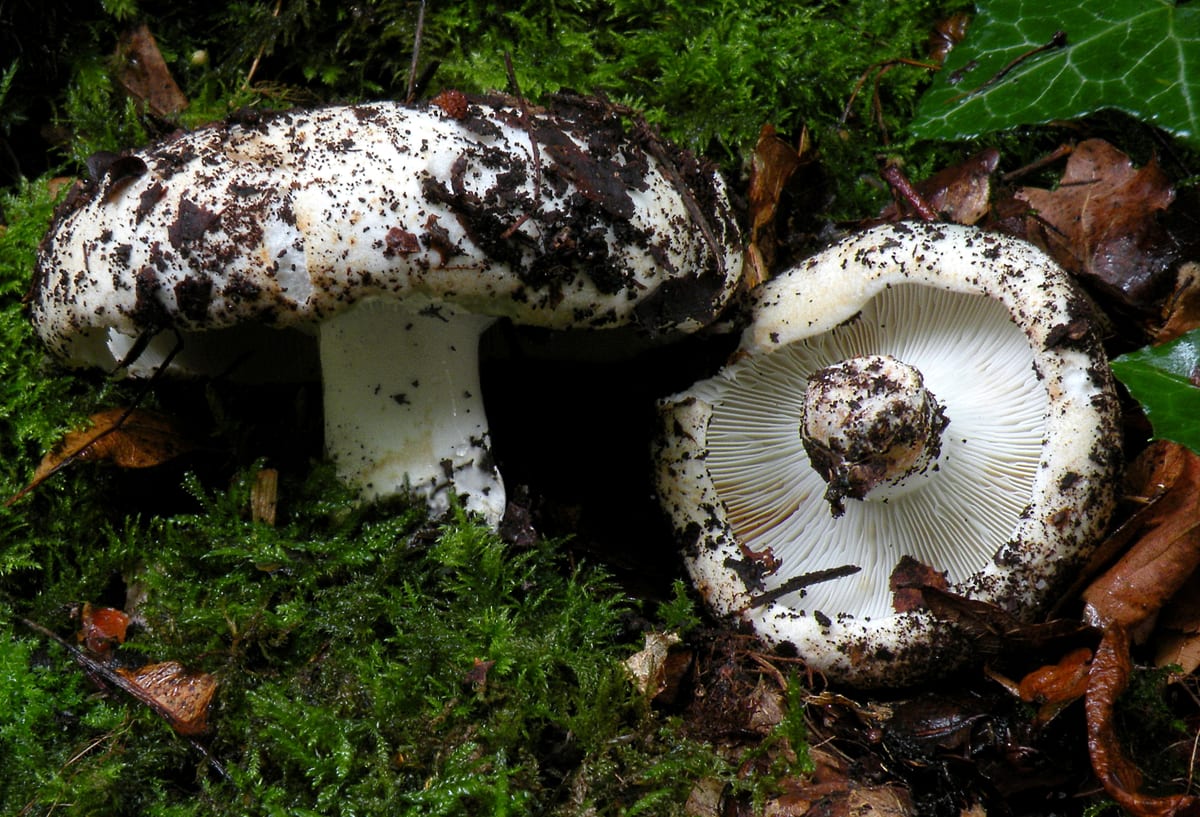
Lactarius vellereus
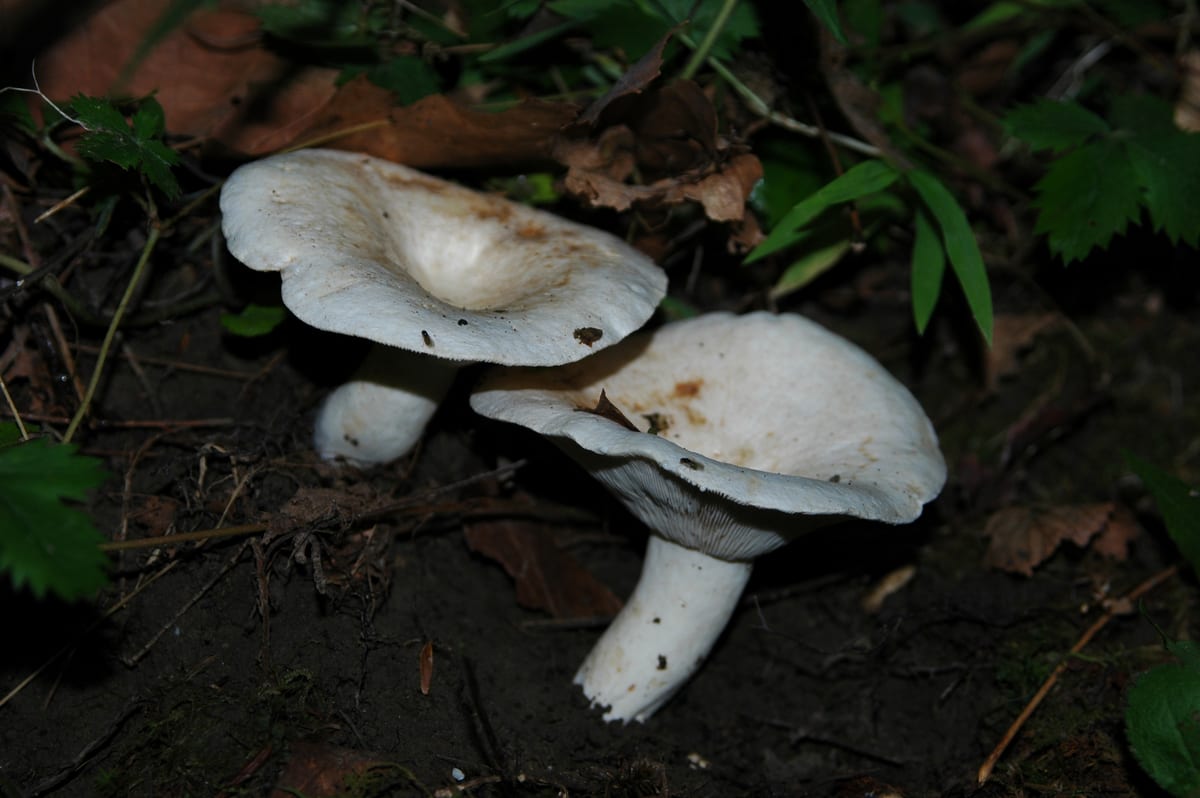
A white woolly milkcap with very acrid latex — conditionally edible for salting after soaking; the woolly margin and crowded decurrent gills mark it.
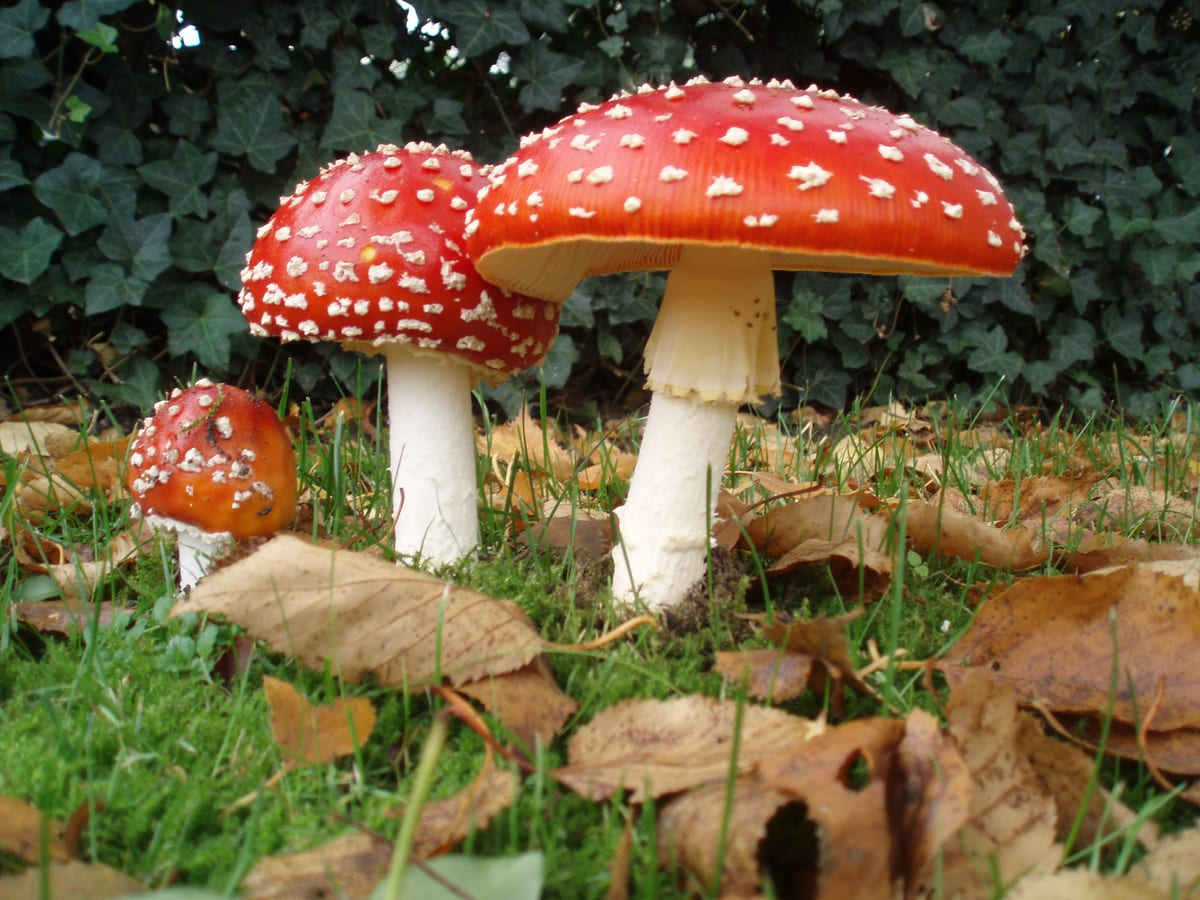
Amanita muscaria
The most famous poisonous mushroom: ibotenic acid and muscimol act on the nervous system — delirium, hallucinations, sleep. Rarely fatal, but not ‘just a showpiece’.
Clitocybe rivulosa
A white funnel-cap from lawns and meadows. One of the worst muscarine sources: sweating, salivation, slowed pulse — and documented deaths.
Cortinarius orellanus
The orellanine story: symptoms can arrive 2 days to 3 weeks after the meal, and about half of poisonings end in chronic kidney failure.
Galerina marginata
A small brown mushroom on rotting wood with amatoxins at death-cap levels. It grows on the same stumps and in the same season as honey fungi — that is the whole point.
Calvatia gigantea
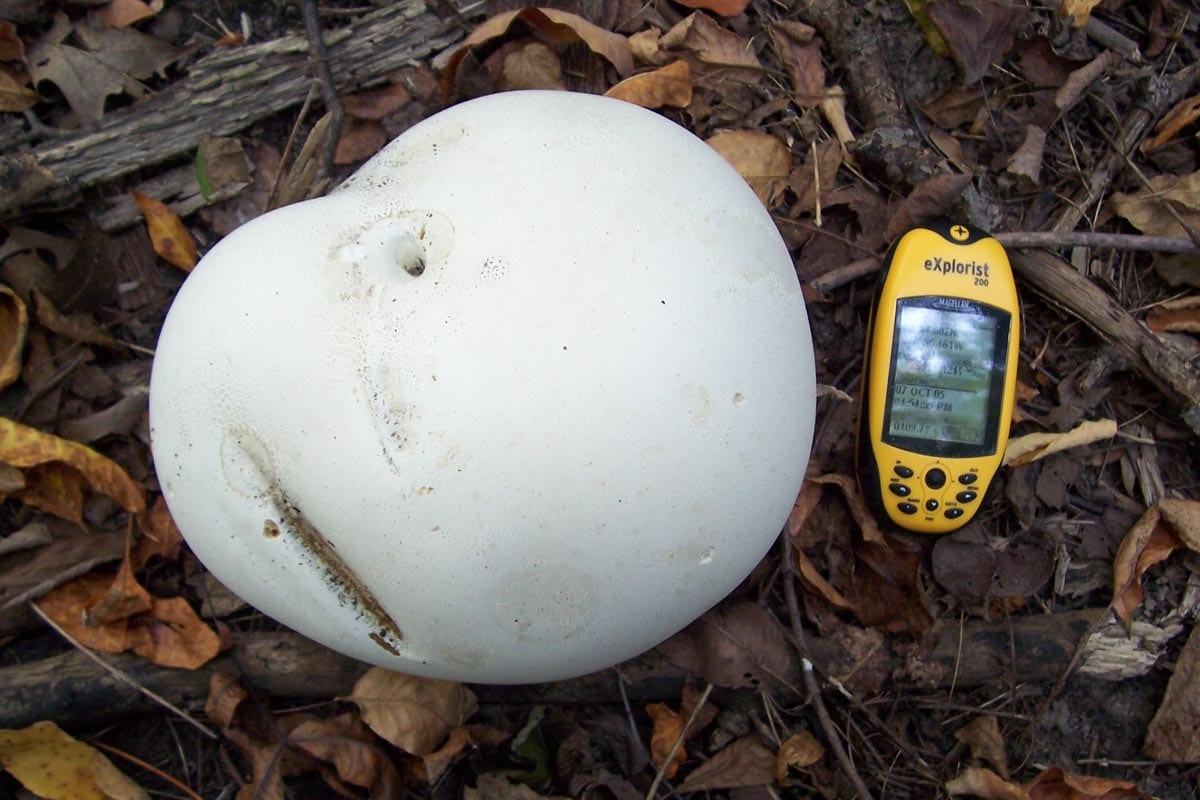
A football-sized white puffball: edible while the whole interior is snow-white. Dense, bread-like flesh; a striking find.
Pleurotus citrinopileatus
The bright-yellow oyster relative — tamogitake — notable for high ergothioneine content; a 2025 Japanese study looked at its gut-microbiome effects.
Pholiota aurivella
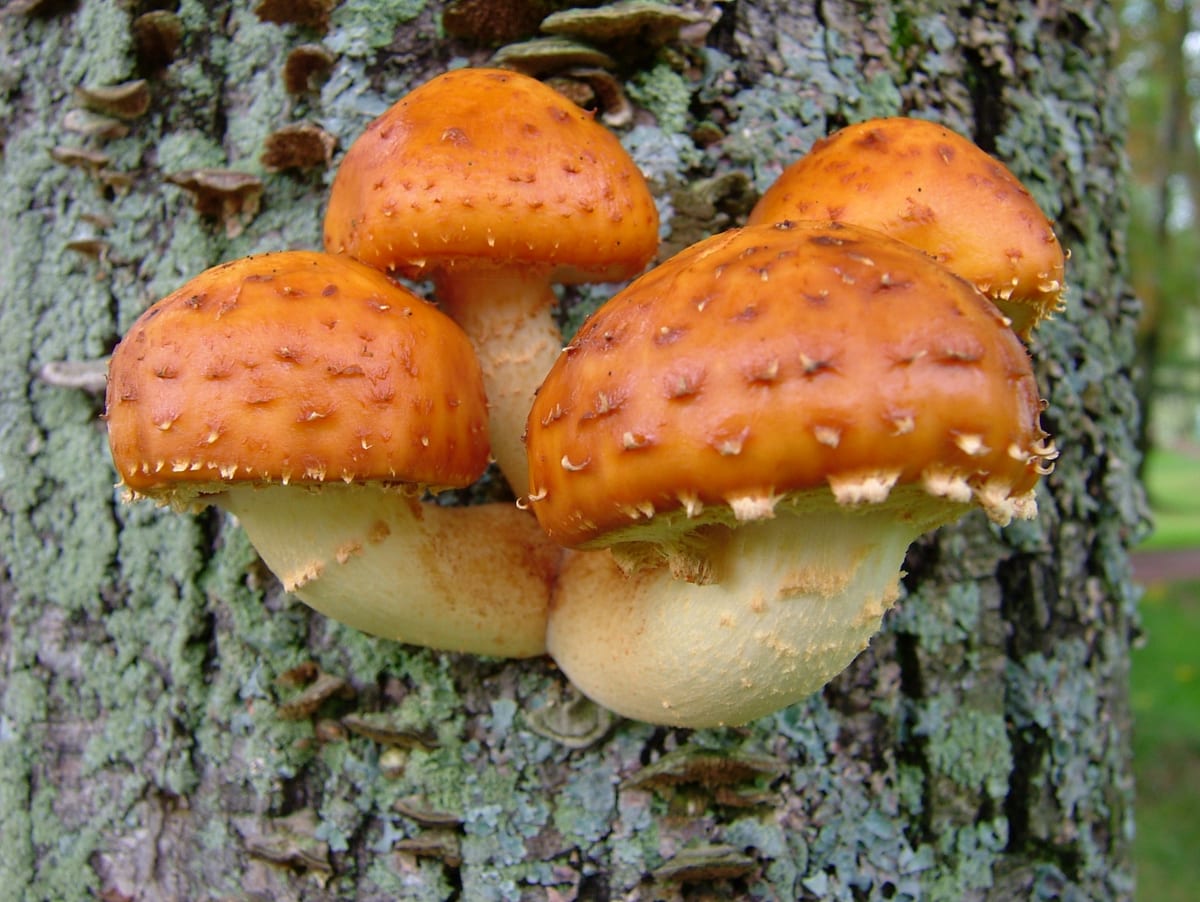
A shiny golden scaly cluster on wood — conditionally edible cooked, but causes gastrointestinal upset for many. Recognize it, cook it fully or leave it.
Xerocomus subtomentosus
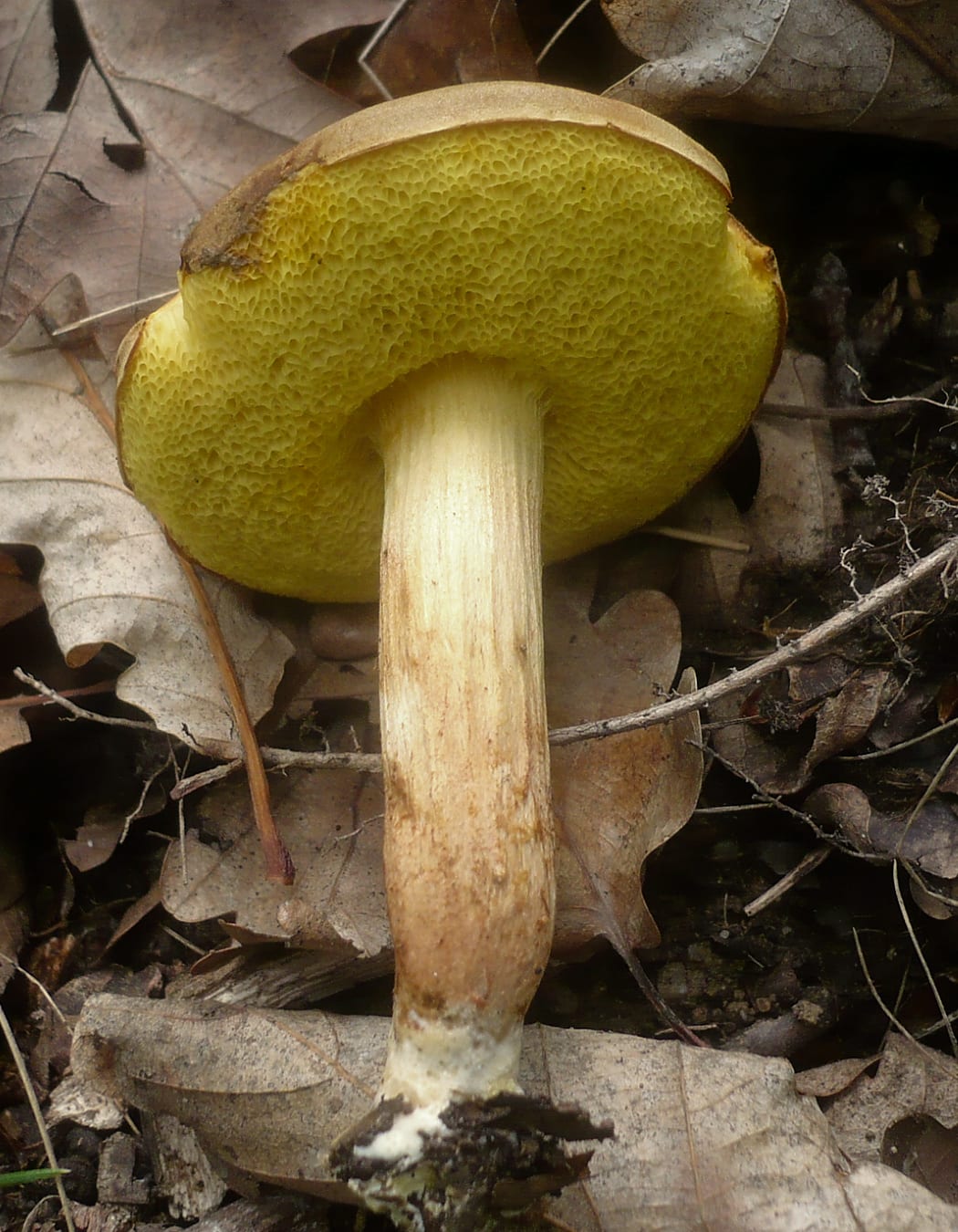
A suede-cap bolete with olive-yellow tubes that slowly stain blue. Mild-flavored edible; check against the bitter bolete before the pan.
Russula aeruginea
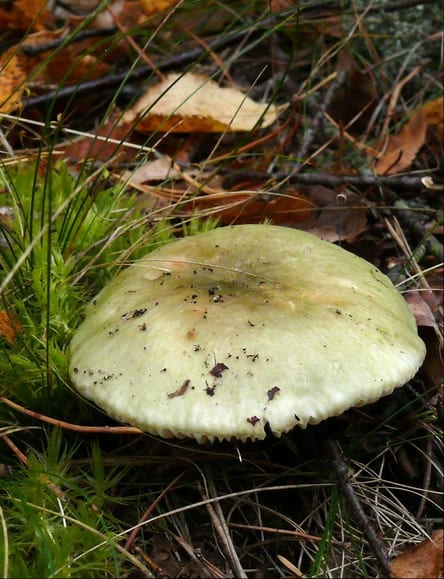
A green russula with a cracked cap surface — edible, mild. The identification is serious work: green russulas sit in the same silhouette as the [death cap](/en/griby/blednaya-poganka/).
Tricholoma portentosum
A late-autumn pine edible: gray cap, pale yellow gills, floury smell. One of the last mushrooms before frost.
Craterellus cornucopioides
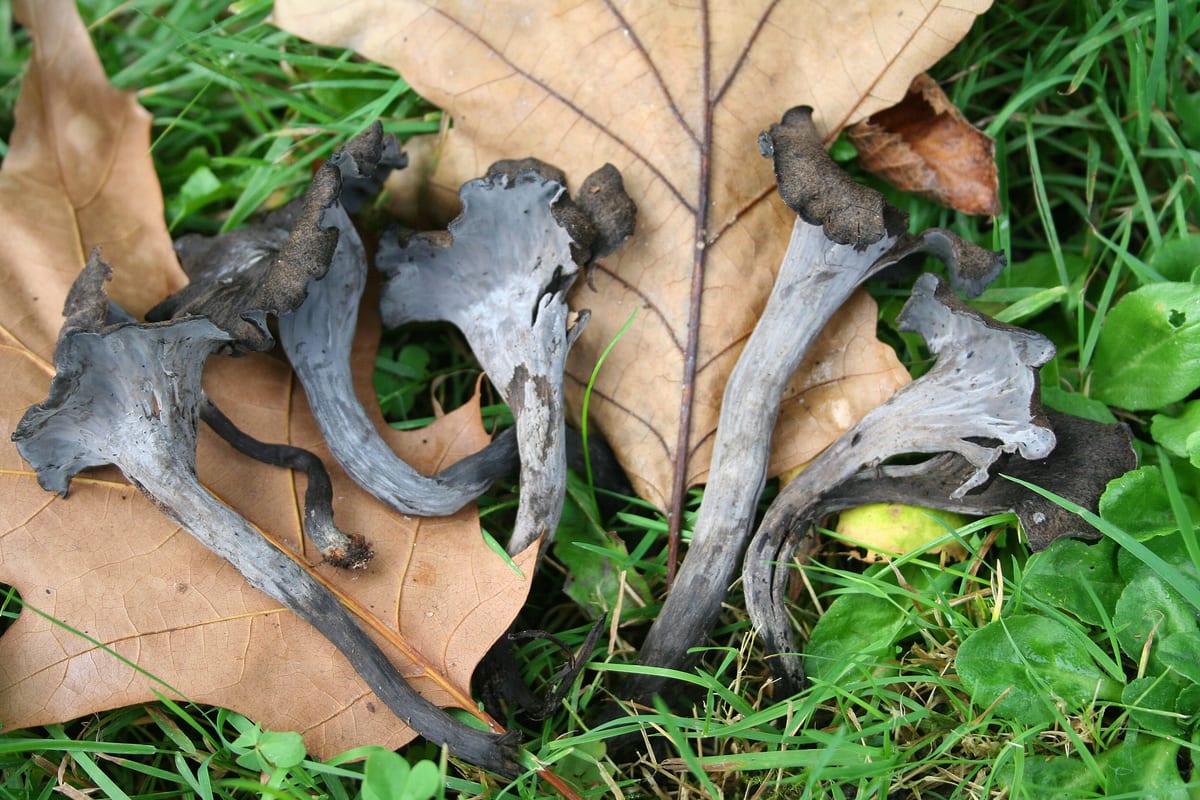
A black-brown hollow trumpet — hard to spot, easy to trust: no dangerous lookalikes. A gourmet species prized for drying into ‘truffle-scented’ powder.
Omphalotus olearius
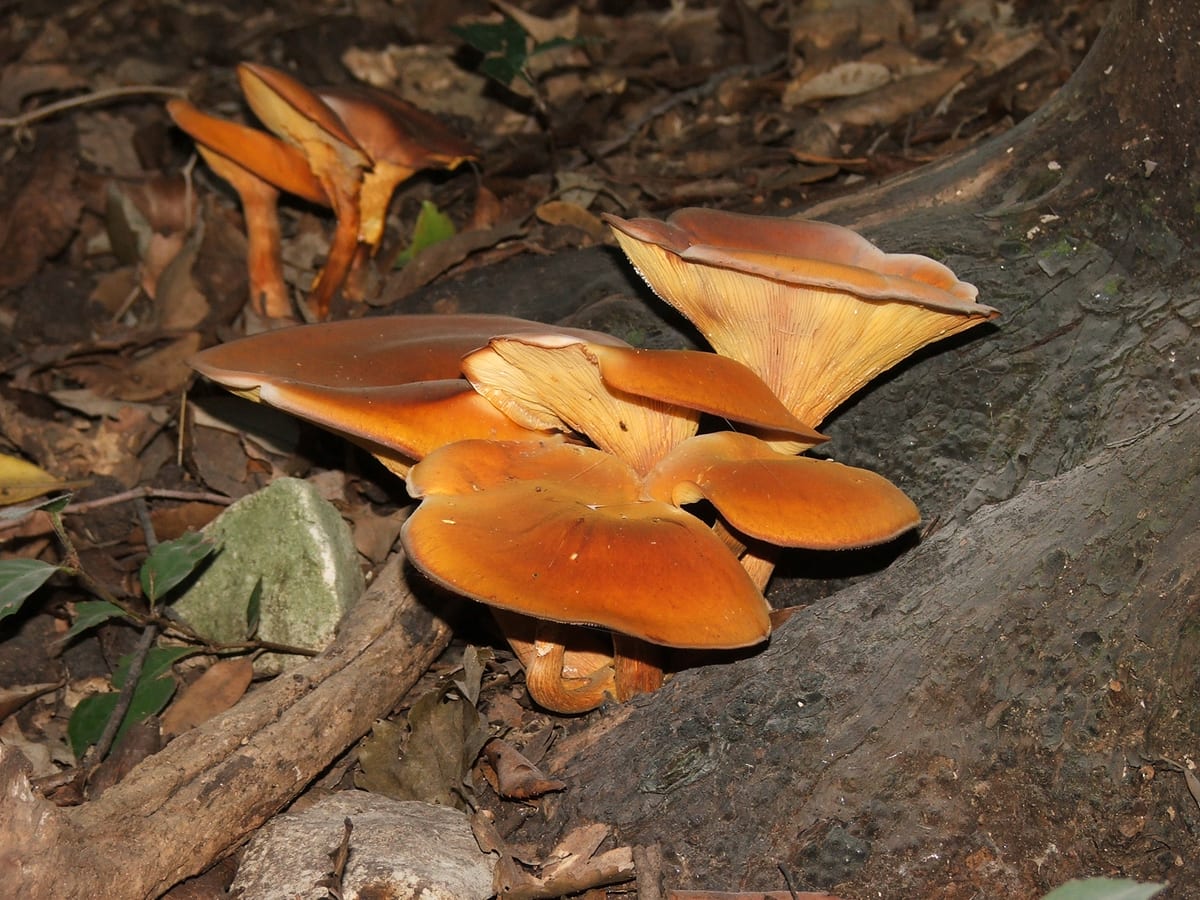
An orange clustered mushroom from southern forests — confused with chanterelles. Causes severe gastrointestinal poisoning (illudin).
Hericium erinaceus
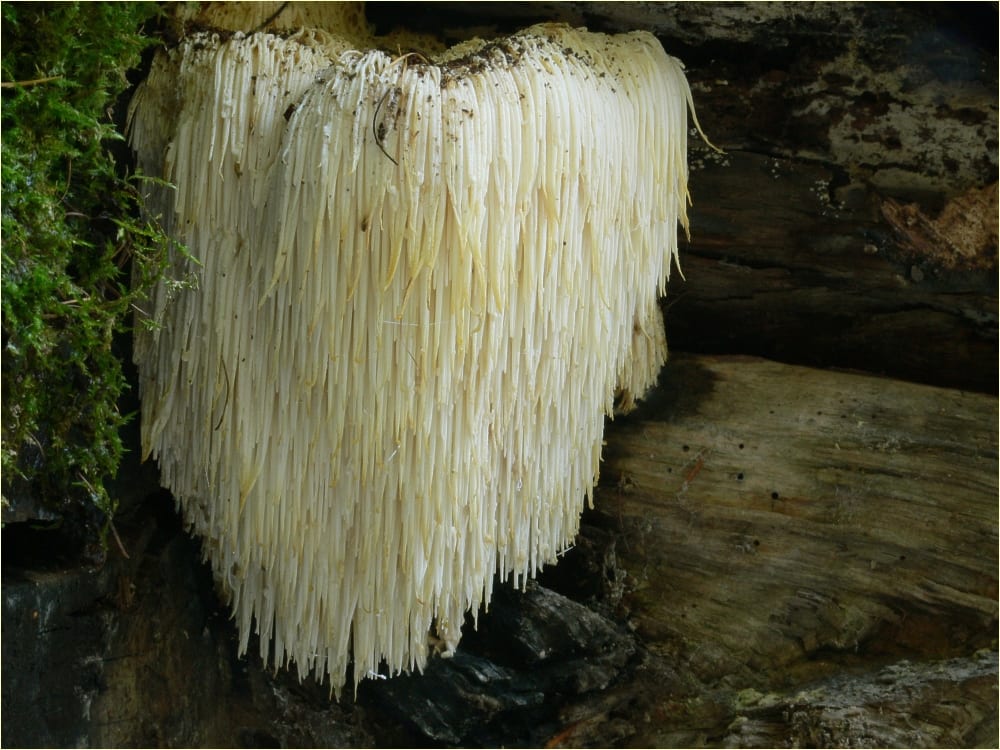
The white ‘icicle’ fungus studied for nerve-growth-factor stimulation in vitro and in small human trials — promising but far from proven. Culinary use is straightforward.
Entoloma sinuatum
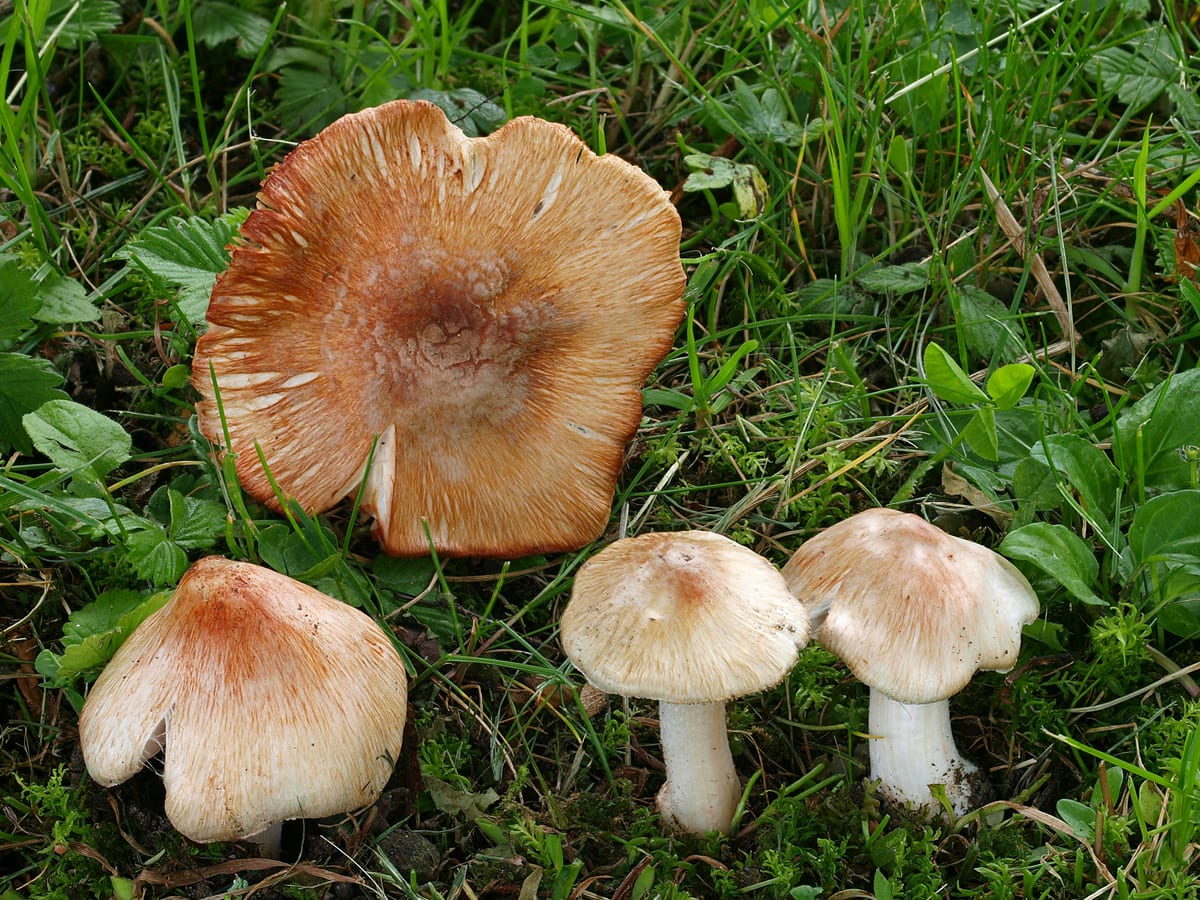
A large pink-gilled mushroom confused with the miller, St George's mushroom and the field mushroom. Causes severe gastroenteric poisoning.
Suillellus luridus
Olive-brown bolete with orange-red pores; flesh turns blue immediately on the cut. Conditionally edible — must be cooked; raw or undercooked causes poisoning.
Grifola frondosa
The fronded ‘dancing mushroom’ at oak bases: edible and studied for beta-glucans in human trials — adjunctive research, not treatment.
Tricholoma equestre
Long considered edible, but a French series described delayed rhabdomyolysis — muscle breakdown threatening kidneys and heart — after large repeated meals.
Phellinus linteus
A hoof-shaped conk of East Asian medicine: Phellinus linteus polysaccharides studied in oncology-adjacent trials — the name 'mesima' comes from its Japanese trade name.
Russula delica
A large white russula relative: dense, peppery-milked flesh. Conditionally edible — salted after soaking; the similar [peppery milkcap](/en/griby/gruzd-percheny/) has gills that don't spot.
Morchella esculenta
The spring honeycomb mushroom: pitted ridges fused to the stem, hollow inside. Edible cooked — raw it is toxic; a 2023 Montana outbreak underlined the point.
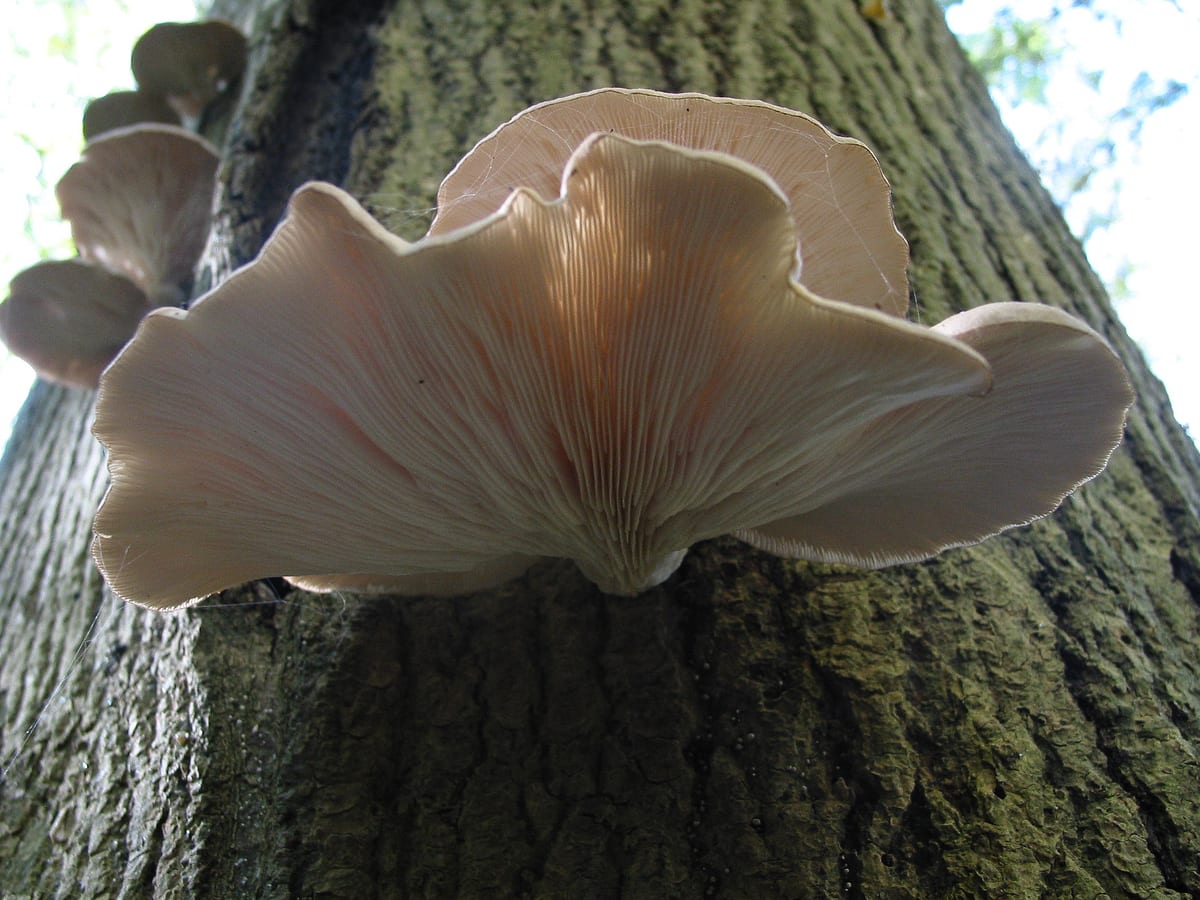
Pleurotus ostreatus
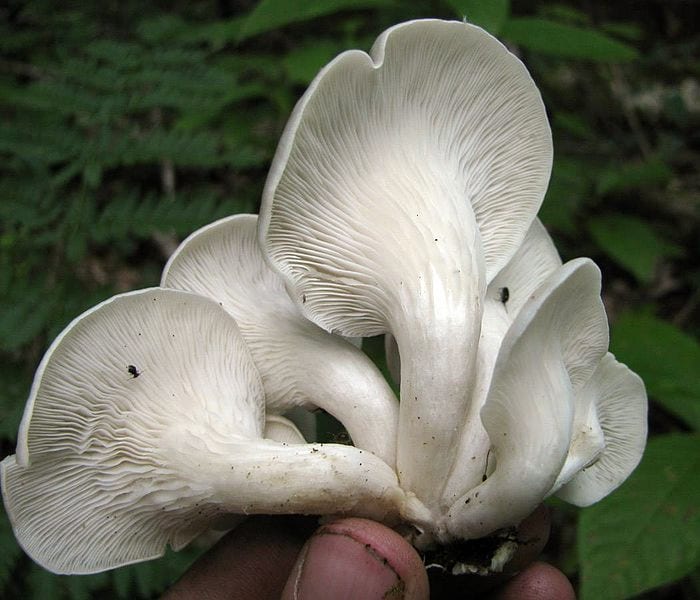
The main cold-season mushroom: shelf-like clusters on wood, decurrent gills, anise-ish smell. One of the world's most cultivated species.
Amanita pantherina
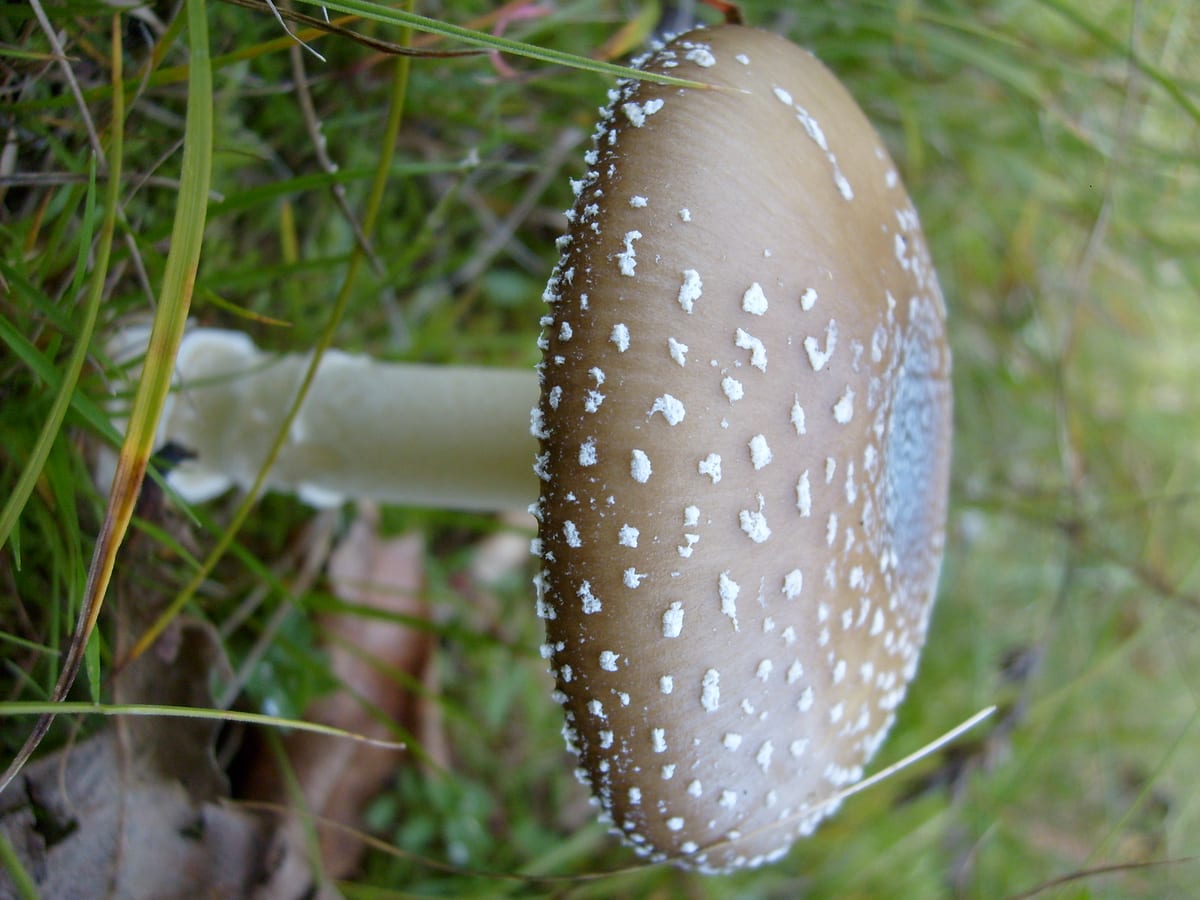
More toxic than the fly agaric: higher muscimol/ibotenic acid content, more severe poisonings. Gray-brown cap with white warts — confused with edible amanitas.
Macrolepiota procera
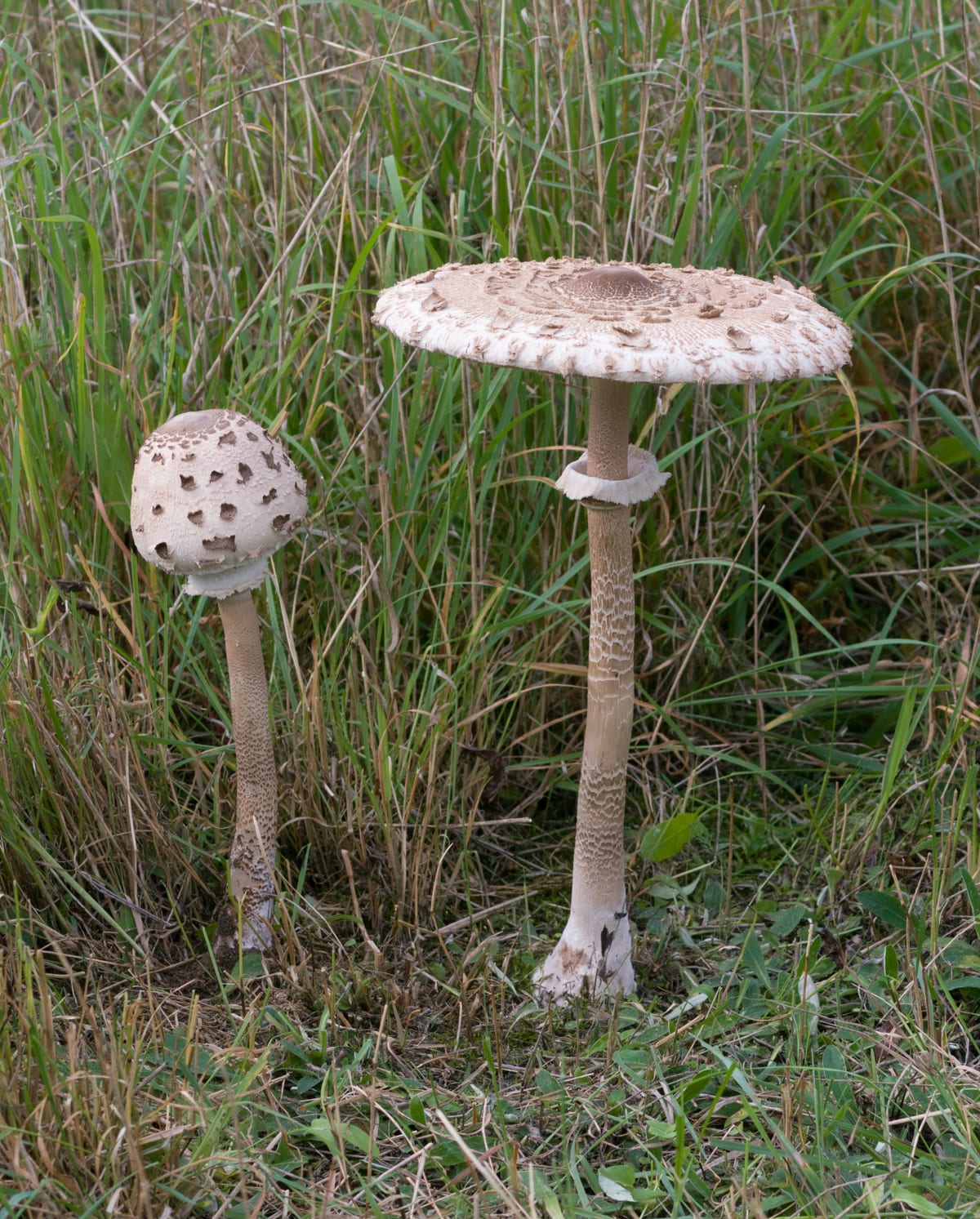
A large parasol with a snakeskin stem and movable ring — a gourmet edible when picked big. Small lookalikes include the deadly [fatal dapperling](/en/griby/lepiota-korichnevo-krasnaya/).
Lycoperdon pyriforme
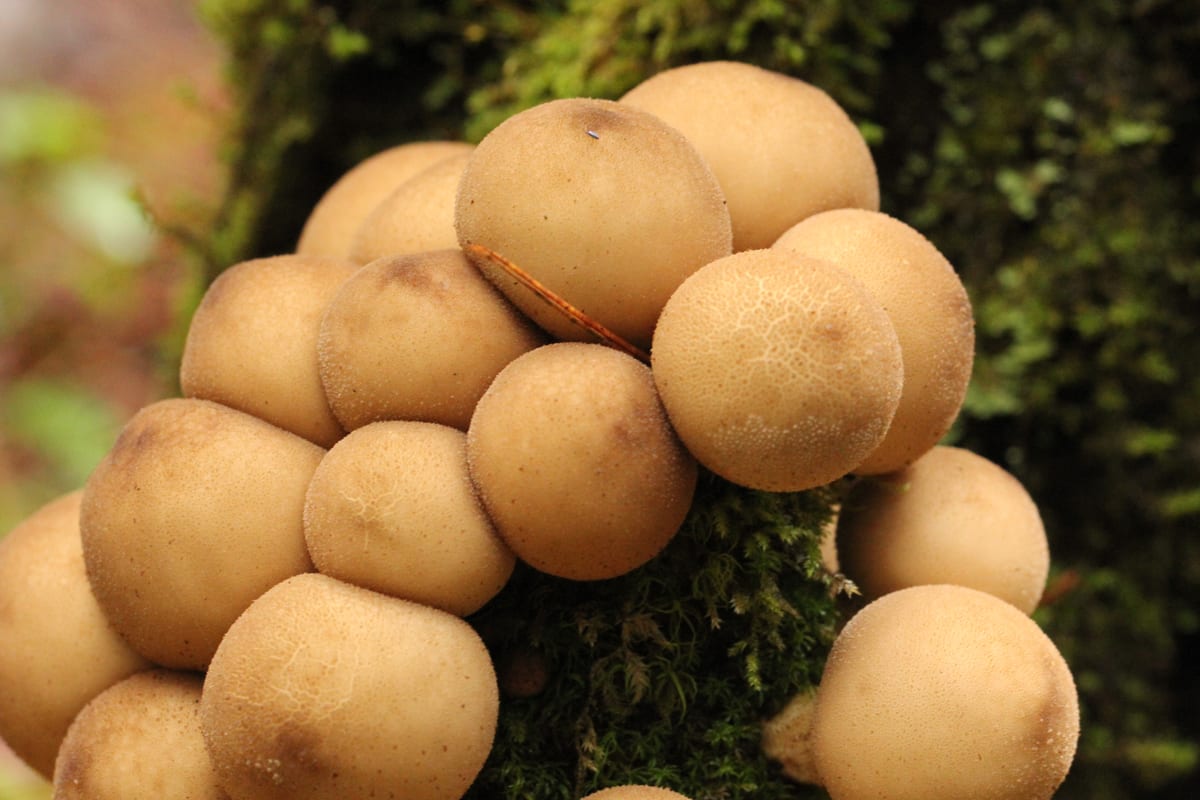
Small pear-shaped puffballs clustering on wood — edible while uniformly white inside. One of the few puffballs that grow on wood rather than soil.
Lactarius piperatus
A white milkcap with decurrent crowded gills and fiercely peppery latex — conditionally edible salted; dried, it was historically ground as a pepper substitute.
Boletus pinophilus
The closest pine-forest relative of the porcini: red-brown cap, earliest of the white boletes in the season. Same delicacy — dries and fries like the classic.
Hebeloma crustuliniforme
A beige ‘pie’ mushroom of edges and gardens with a radish smell. Gastrointestinal poisoner, confused with edible Agrocybe and field species.
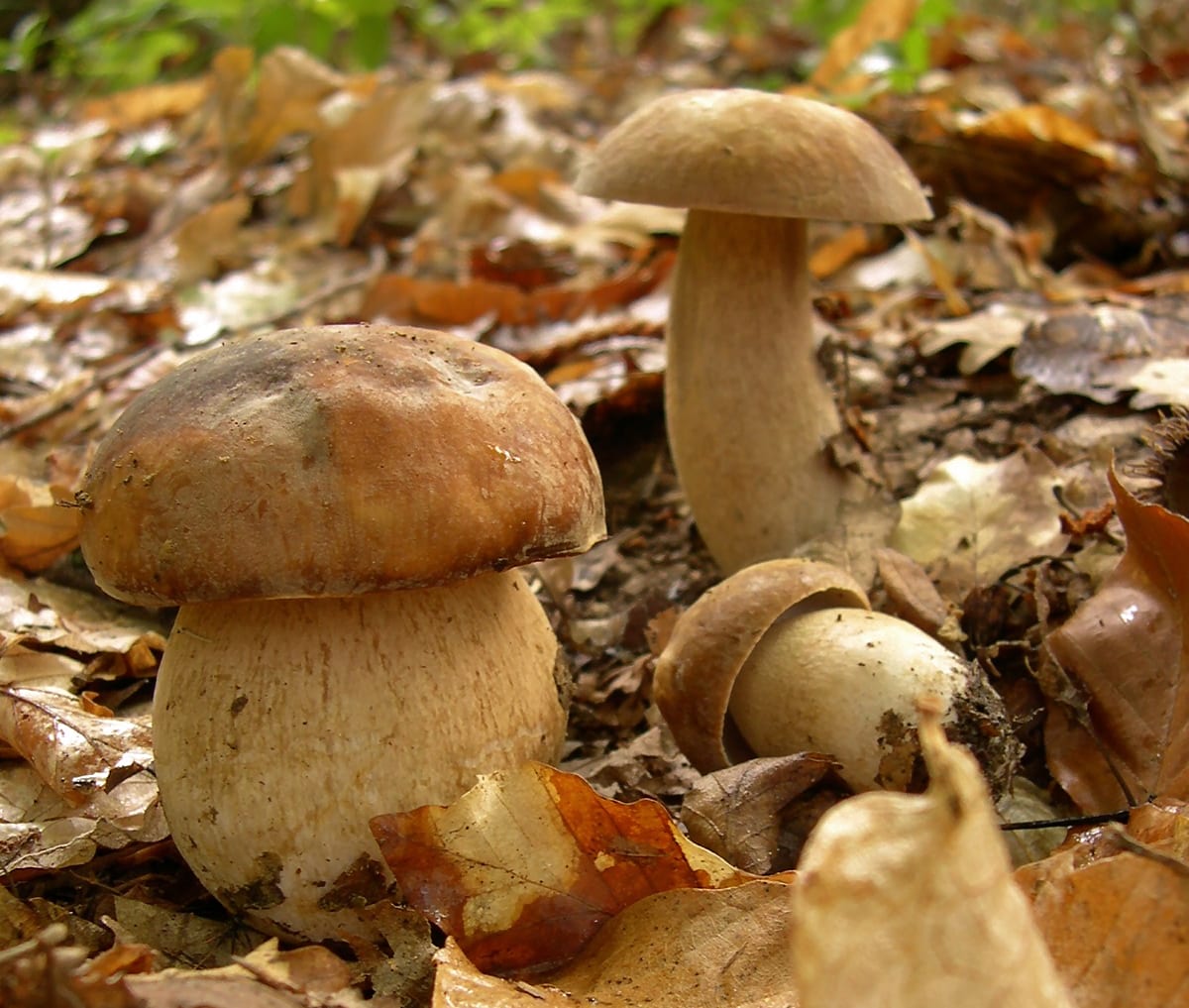
Boletus edulis
The benchmark edible mushroom: firm white flesh that does not change color, nutty aroma, dries and freezes superbly. The main prize of the quiet hunt.
Lycoperdon
Round white fruit bodies — edible while the inside is uniformly white. The rule is one knife cut: any marbling or dark gleba means discard.
Leccinum aurantiacum
Orange-red cap on a scaly stem; flesh turns blue-gray then black on the cut — normal for the species. Firm and good fresh or dried.
Ganoderma lucidum
The most famous medicinal mushroom — triterpenes and beta-glucans, centuries of use, and a real clinical-trial base on immune parameters. Evidence for oncology claims remains adjunctive.
Lactarius rufus
A red-brown milkcap with intensely acrid latex — conditionally edible after long soaking, used for salting. The acrid taste is the field mark.
Lactarius deliciosus
The orange milkcap of pine woods: carrot-colored, bleeds orange latex, stains green when handled. A classic for salting and frying.
Rubroboletus satanas
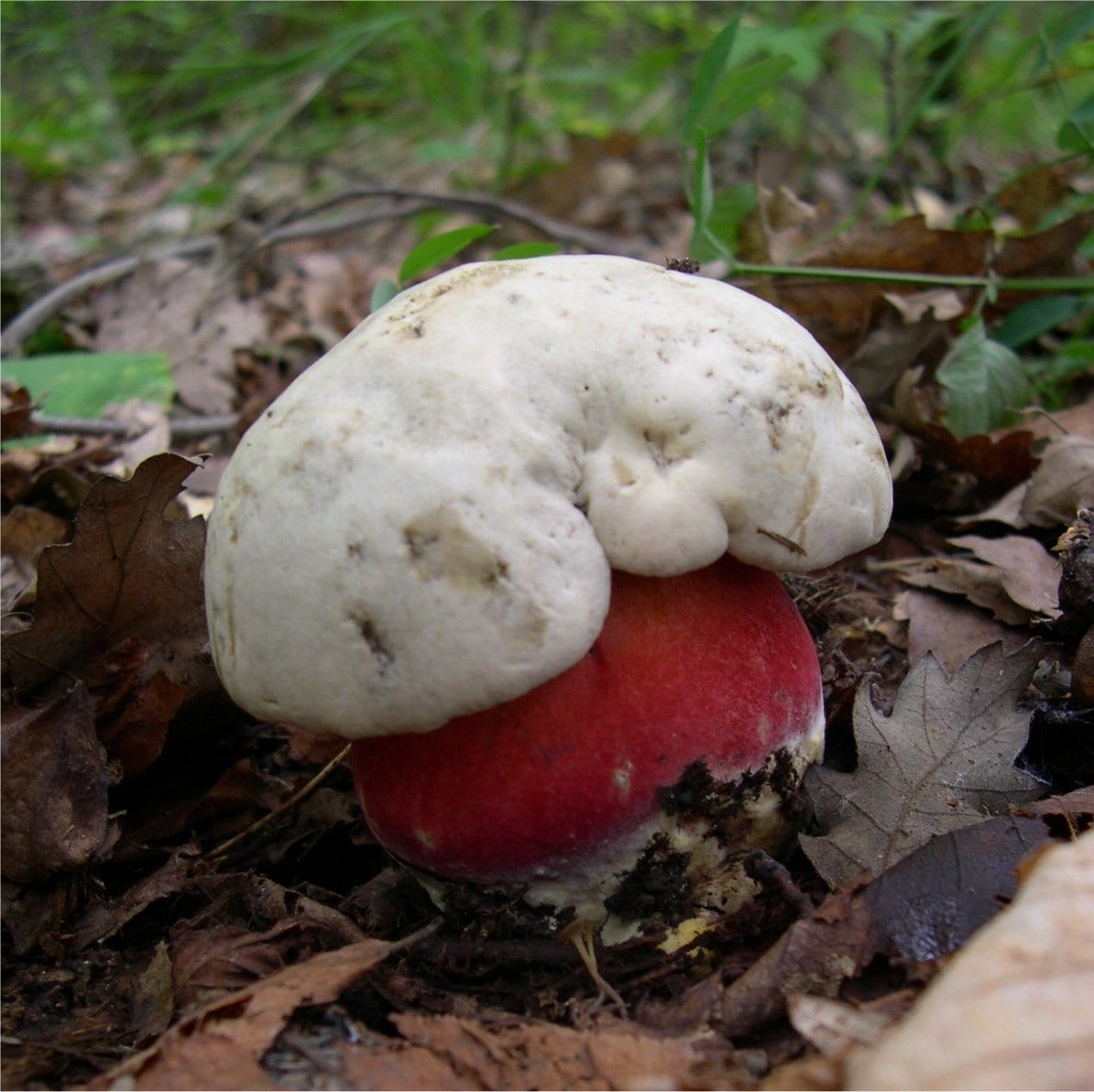
A pale-capped bolete whose flesh turns blue on cutting and smells of carrion. Poisonous: gastrointestinal syndrome; the toxin bolesatine; ‘safe when boiled’ is not proven.
Coprinus comatus
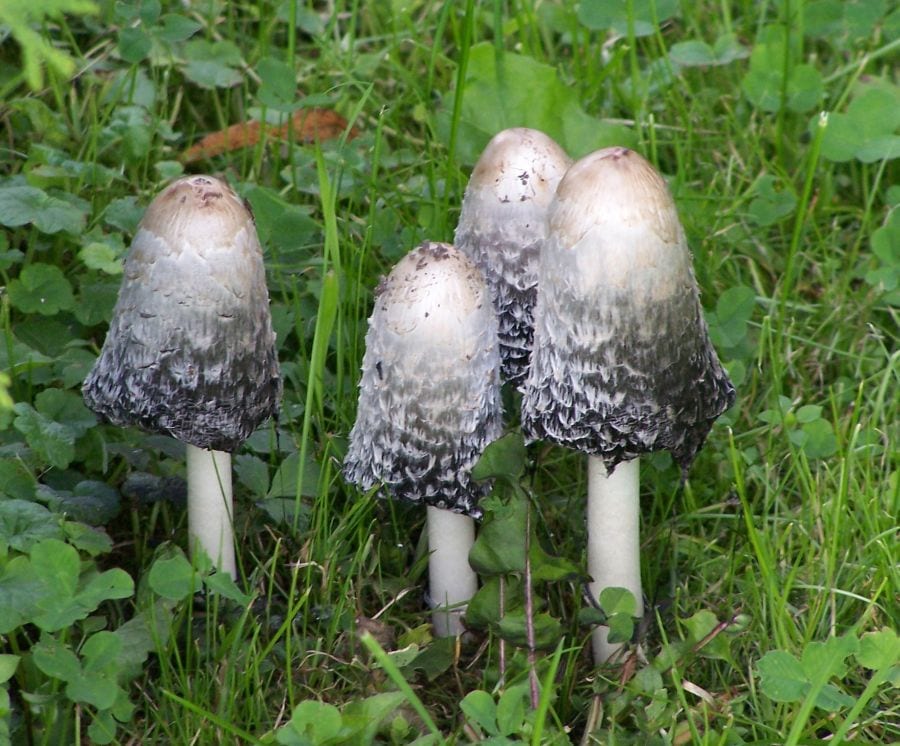
A white shaggy cylinder that ‘deliquesces’ into ink within hours of picking. Edible only young and only cooked right away — do not store.
Lentinula edodes
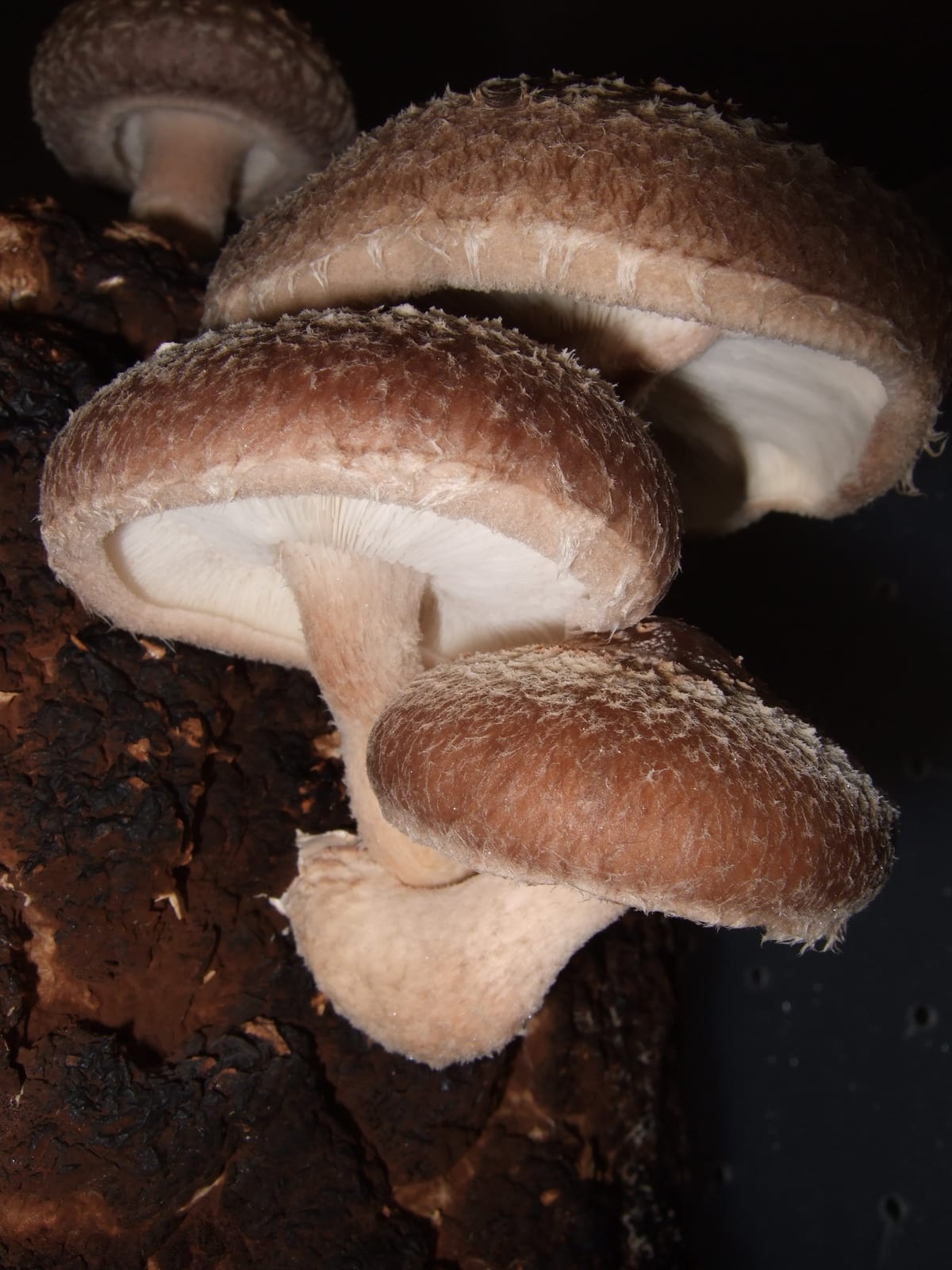
The flagship cultivated mushroom: lentinan polysaccharide studied in human trials; note shiitake dermatitis — a documented whip-like rash from raw or undercooked caps.
Volvariella bombycina
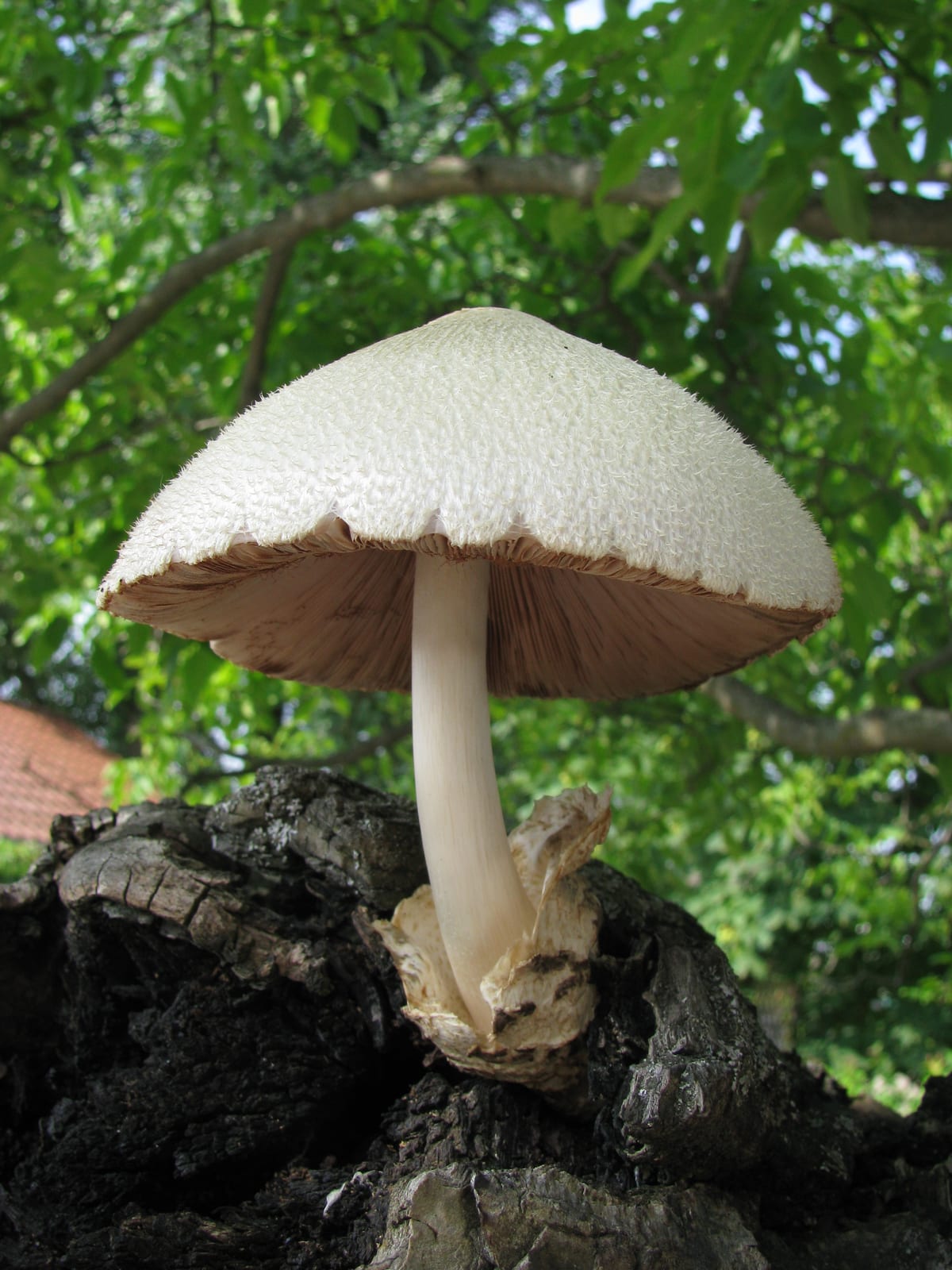
A silky white wood mushroom with a volva and pink free gills — edible, but it shares the volva+pink-gills formula with amanitas, so the base check is mandatory.
Suillus
The slimy-cap genus under pines: brown cap with a ring, yellowish pores, peeled before cooking. One of the earliest mass edibles of the year.
Tremella fuciformis
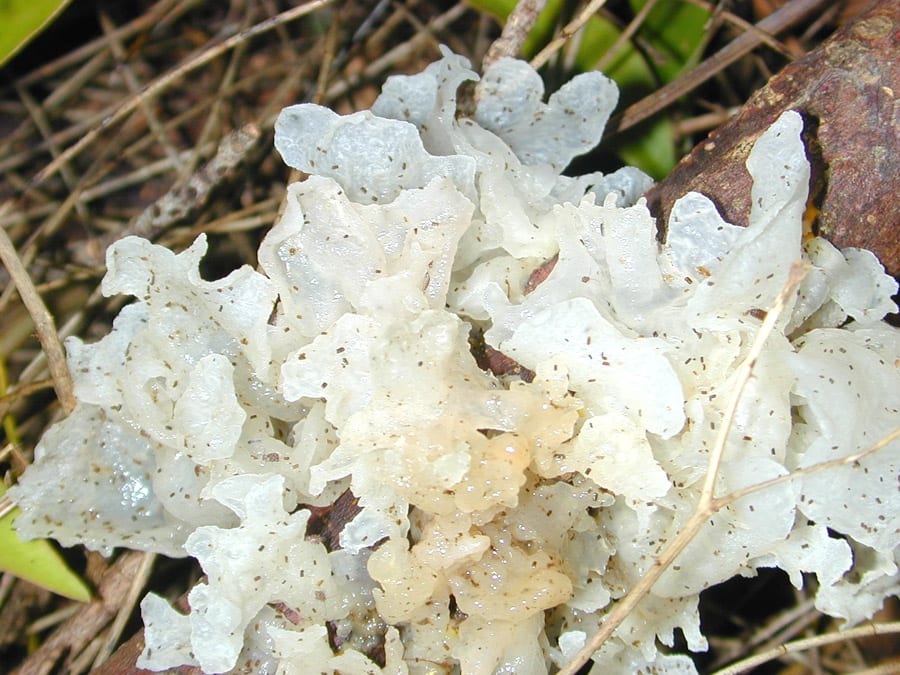
The ‘snow mushroom’ — a white gelatinous body mass-cultivated in Asia for desserts and skincare. Edible; polysaccharide research is mostly preclinical.
Gymnopilus junonius
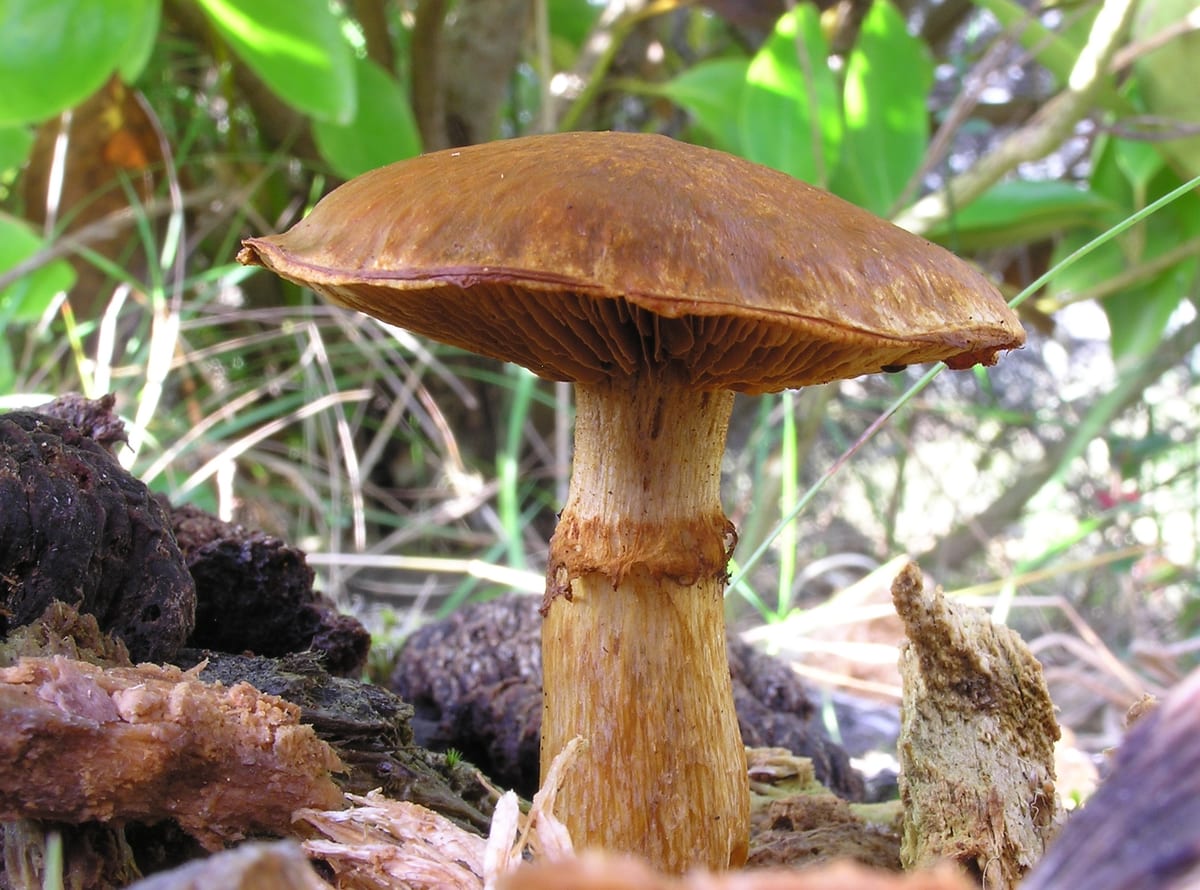
A large rusty-orange cluster on stumps. Contains gymnopilin/neurotropic compounds; in Japan responsible for ‘laughing mushroom’ poisonings.
Calocybe gambosa
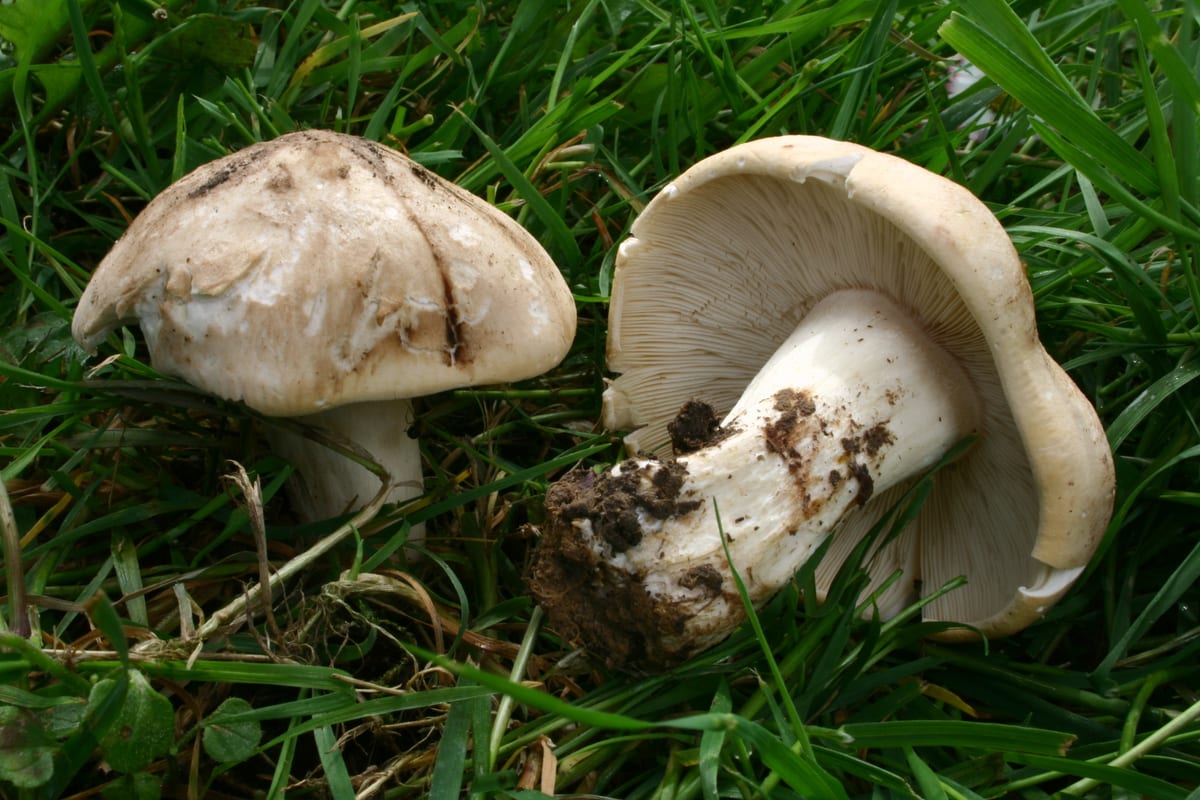
A spring edible with dense flesh and a mealy smell — one of the first of the year. Confused with poisonous entolomas and fool's funnel — check gill color and ringless stem.
Amanita virosa
A white amanita of the destroying-angel group: white cap, white gills, volva — and amatoxins. Confused with champignons and edible amanitas.
Russula foetens
A yellow-brown russula with a foul smell — conditionally edible salted after soaking; one of the traditionally salted russulas of birch forest.
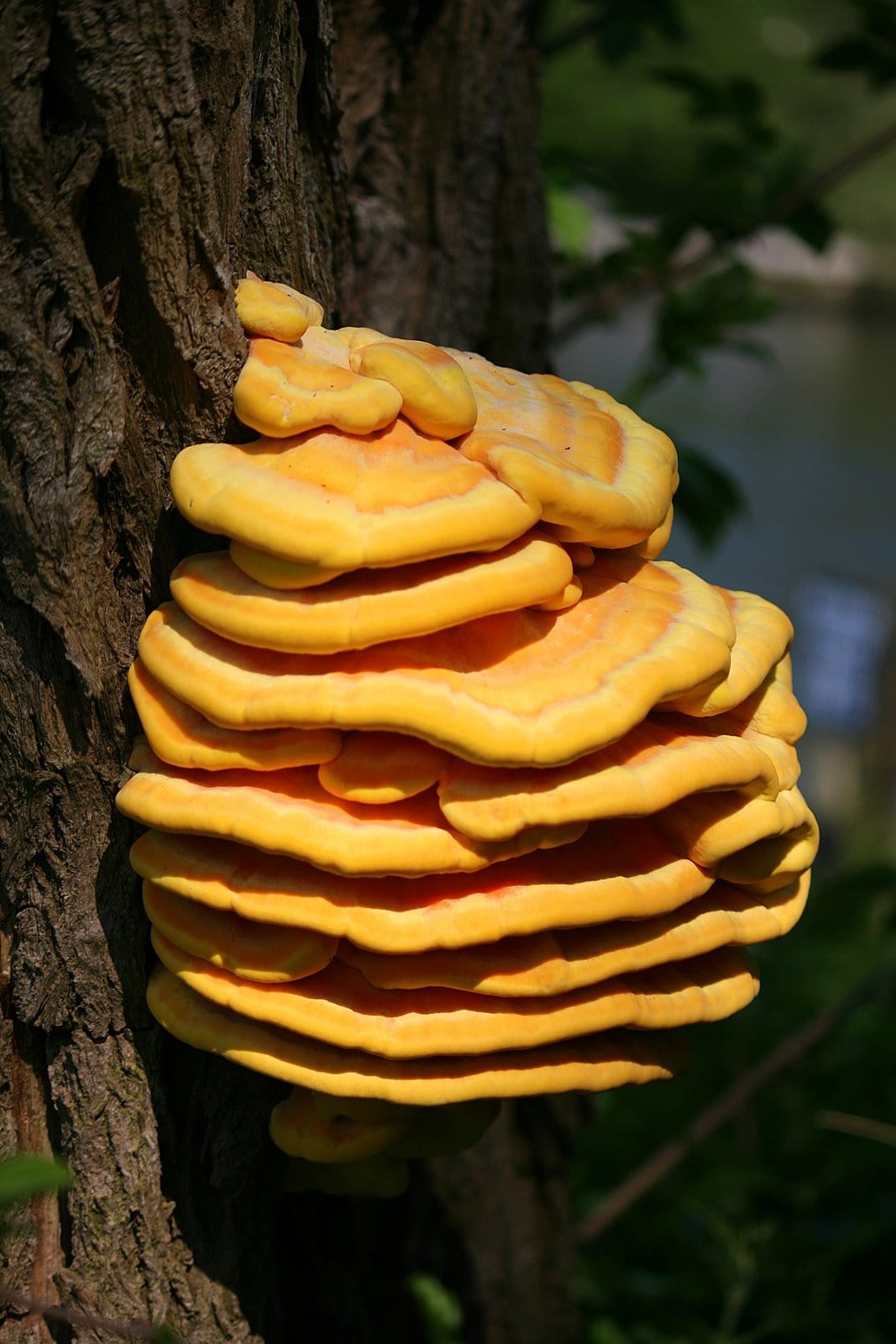
Laetiporus sulphureus
The bright orange shelf — edible young on hardwoods, but documented poisonings exist: GI reactions, and toxicity reports on conifer/eucalyptus substrates. Cook young shelves well.
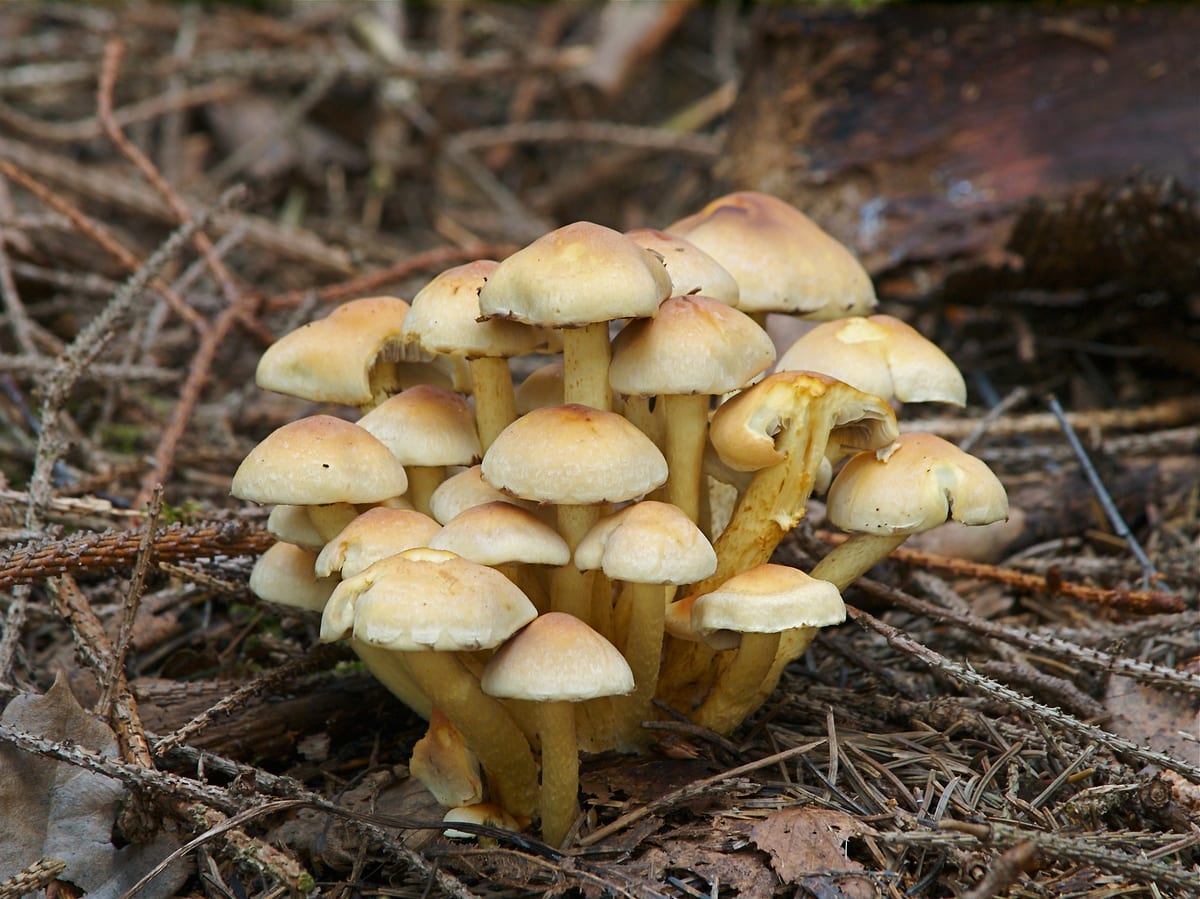
Hypholoma fasciculare
The most common false honey fungus — sulfur-yellow tufts on stumps. Poisoning starts 5–10 h after eating; severe cases can involve paralysis and vision disturbance.
Boletus reticulatus
The summer porcini of deciduous forest, with a pronounced white net on the stem right up to the cap. Earlier than the common porcini and just as good.
Kuehneromyces mutabilis
The summer wood-cluster honey fungus: brown cap with a darker rim, a ring on the stem. Edible caps — the deadly lookalike is the [bordered galerina](/en/griby/galerina-okaymlennaya/).
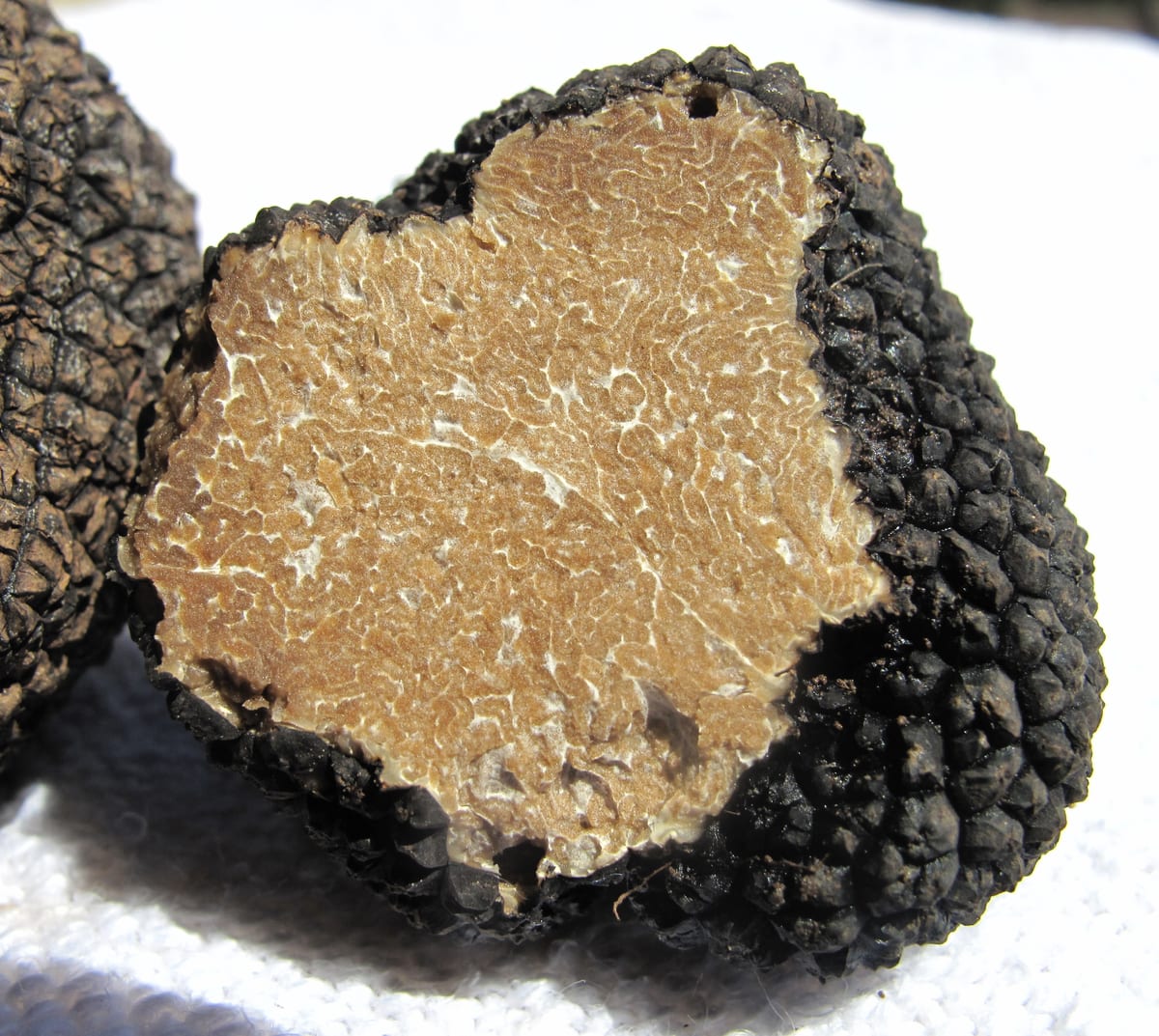
Tuber aestivum
The underground delicacy with a warty black skin and nutty flesh. Rare in Russia; most ‘truffle oil’ on the market is synthetic aroma.
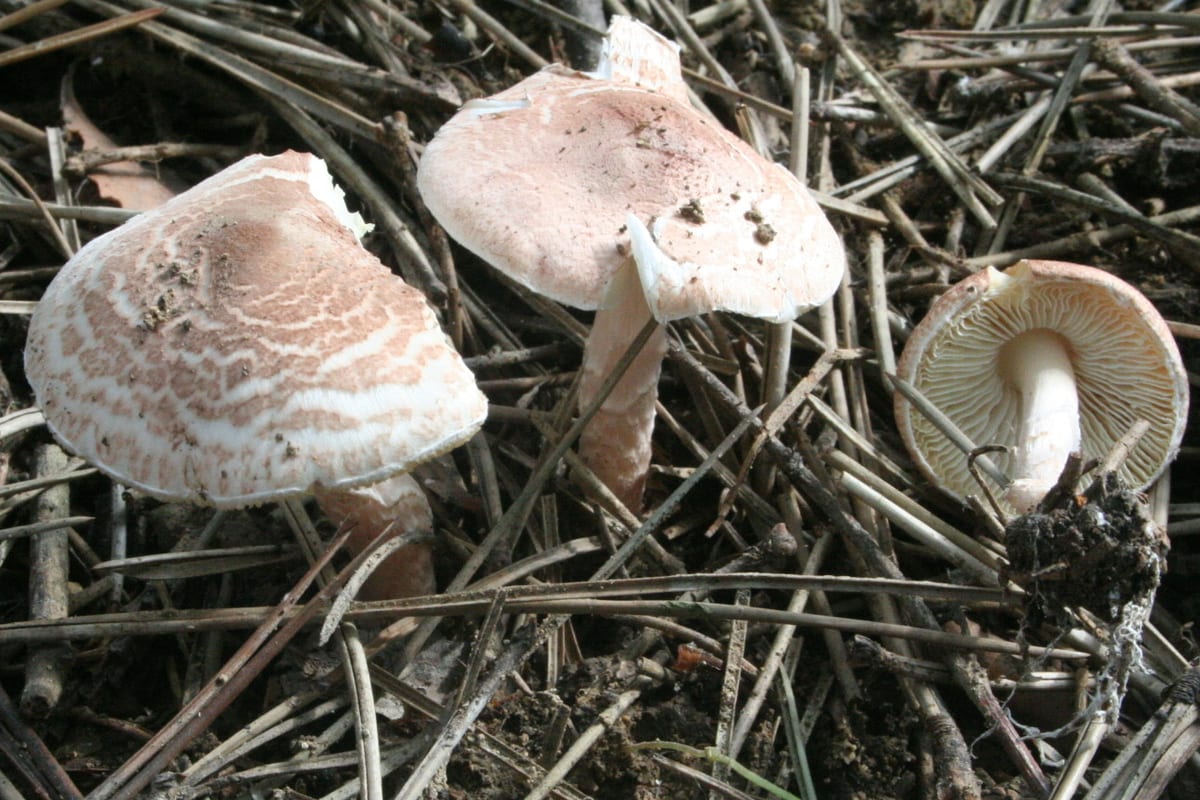
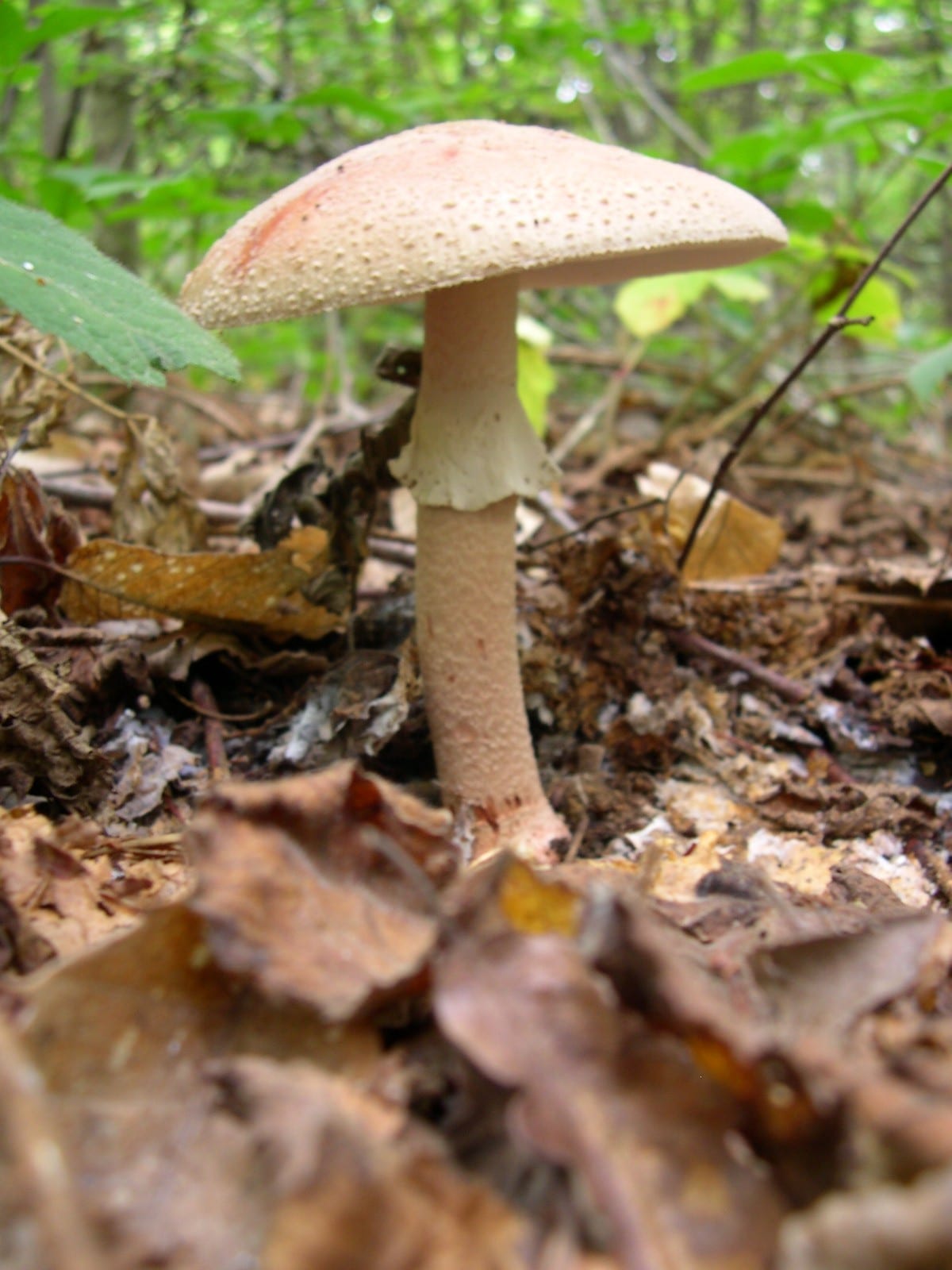
Amanita rubescens
The amanita that blushes pink-red when bruised — conditionally edible cooked, but the amanita family means only the confident should take it.
Laccaria laccata
A small pinkish mushroom called 'the deceiver' for its variable appearance — edible but insubstantial; the faint lilac-pink tones and widely-spaced waxy gills mark it.
Russula vesca
A mild russula with a distinctive feature: the cap skin peels only halfway from the edge. Edible, nutty — one of the safe russulas.
Cortinarius caperatus
A late-summer/autumn edible with a violet stem and faint ring zone. Confused with poisonous webcaps — the violet color and habitat guide it.
Russula emetica
A red russula with white gills and an intensely acrid taste. Causes vomiting and gastrointestinal upset; guides class it as poisonous.
Tricholoma pardinum
A gray scaly mushroom resembling edible blewits. Symptoms start 15 min – 2 h after eating; recovery takes 4–6 days.
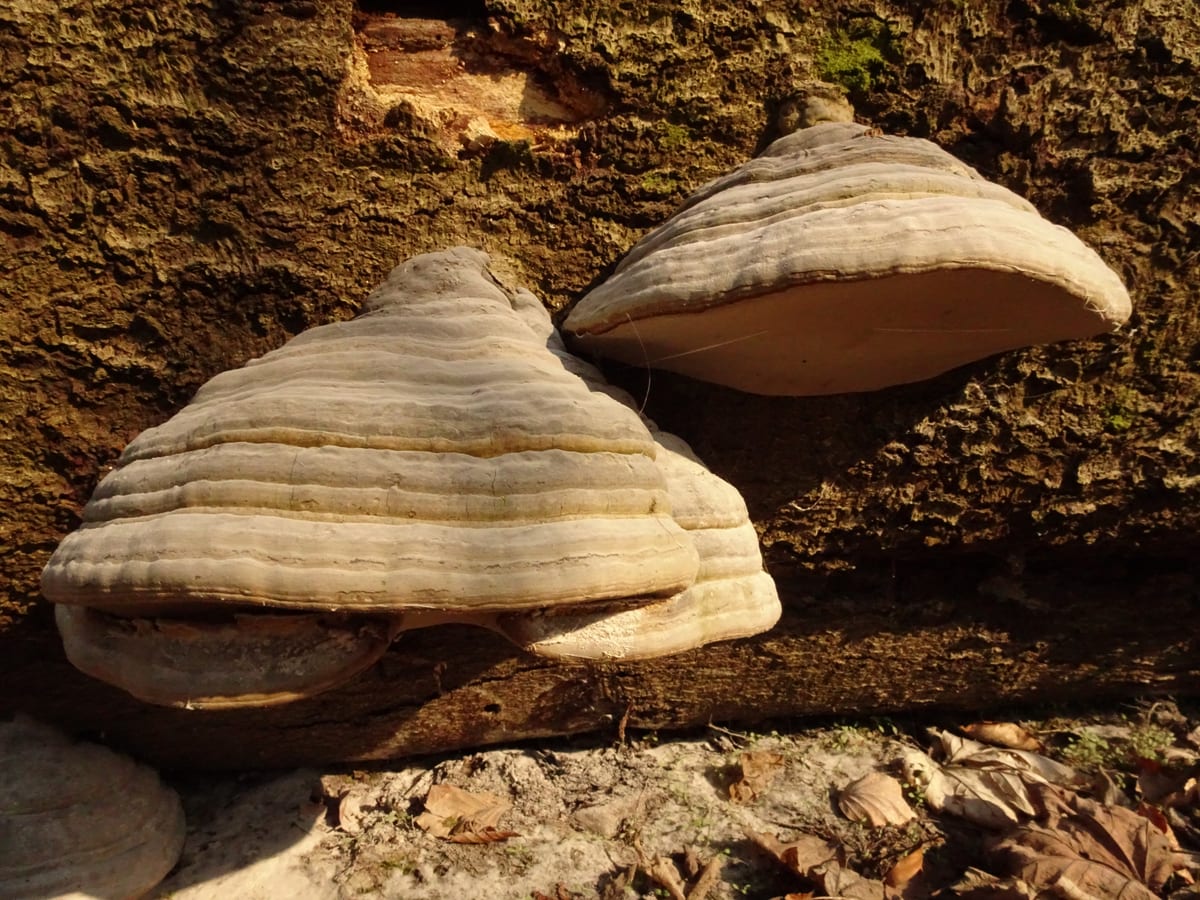
Fomes fomentarius
The hoof-shaped conk that gave humanity tinder and felt: thousands of years of material culture, plus traditional medicinal decoctions — modern evidence is thin.
Lactarius resimus
The classic Russian salting mushroom: white funnel with a fringed margin and acrid latex — conditionally edible, always soaked before salting.
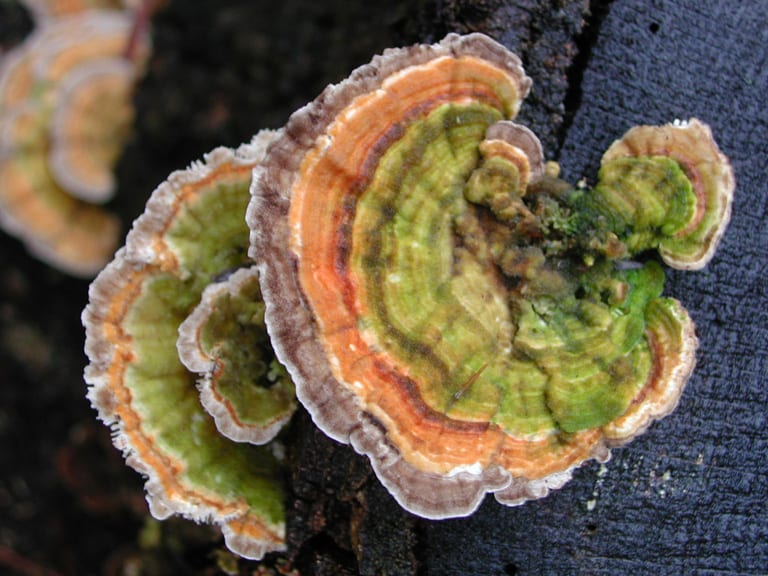
Trametes versicolor
The zoned bracket fungus behind PSK and PSP — the polysaccharide fractions with actual approved-adjuvant status in Japan for gastric cancer. The strongest clinical dossier of any mushroom.
Suillus granulatus
A ringless Suillus: pores ‘weep’ milky droplets in youth. Edible after peeling the cap skin; one of the earliest mushrooms of the year.
Craterellus tubaeformis
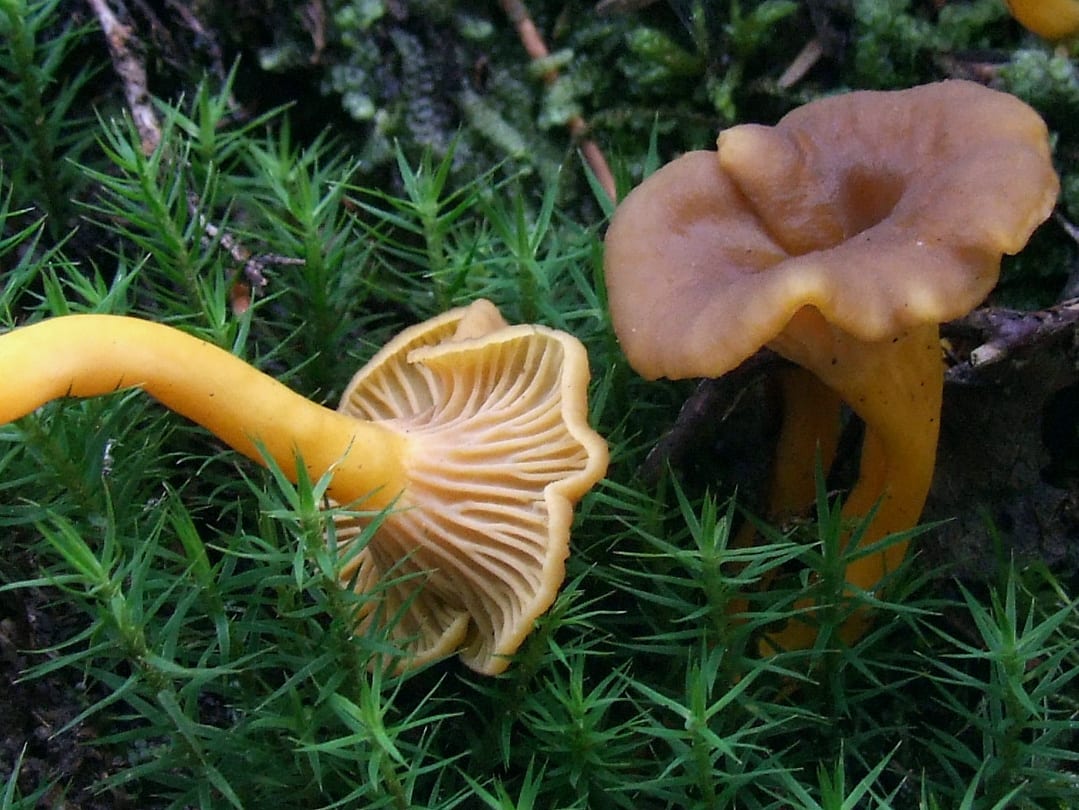
The late-season chanterelle relative: brown funnel with yellow ridges and a hollow stem. A delicacy cut when other mushrooms are gone.
Lepista nuda
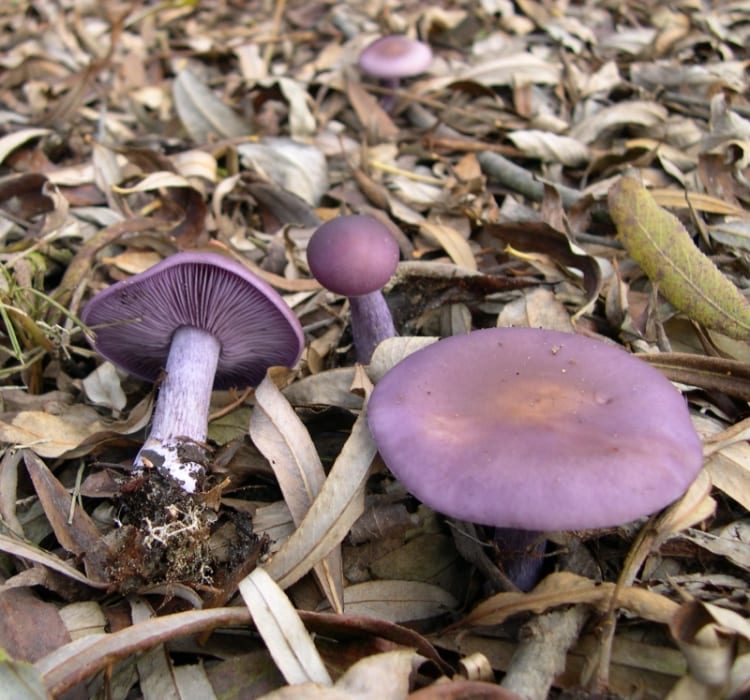
A lilac-violet autumn edible of leaf litter — recognizable by color and orange-blossom smell; the poisonous lookalikes are webcaps, so the cortina check matters.
Auricularia auricula-judae
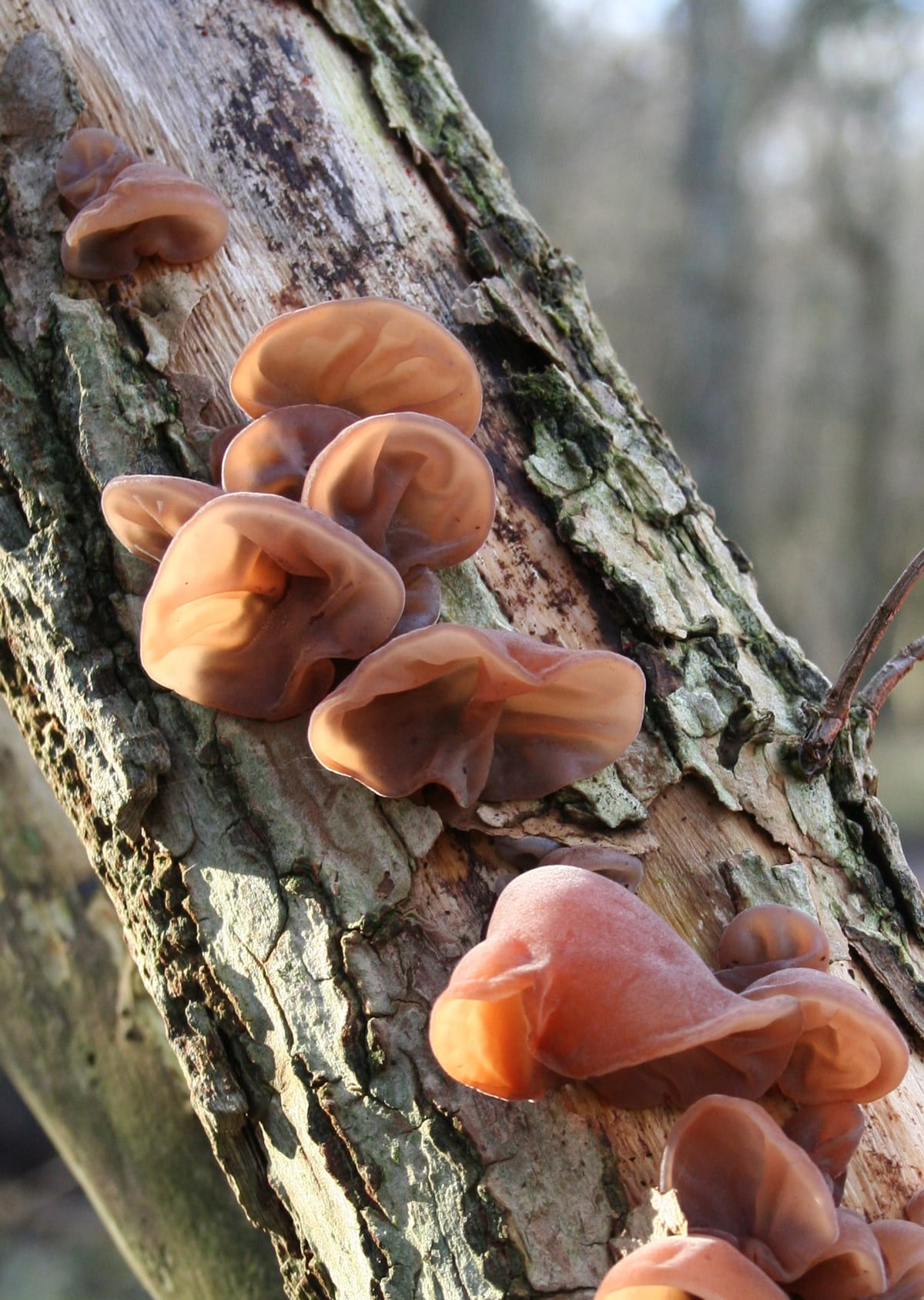
Brown gelatinous ‘ears’ on branches — the Asian wood ear. Edible cooked and dried; cultivated at scale; studied for polysaccharides.
Lactarius torminosus
A pink woolly-fringed milkcap — conditionally edible salted after soaking; the pink shaggy margin and birch habitat mark it.
Lactarius scrobiculatus
A yellowish scrobiculate milkcap — conditionally edible for salting; the golden latex stains yellow, distinguishing it from the true milkcap.
Amanita citrina
A pale-yellow amanita with an earthy smell. Milder than the white group but still contains questionable compounds — classed as poisonous/inadvisable.
Agaricus xanthodermus
The urban lookalike of the field mushroom: same shape, but turns bright yellow when cut and smells of phenol. Causes strong gastrointestinal poisoning.