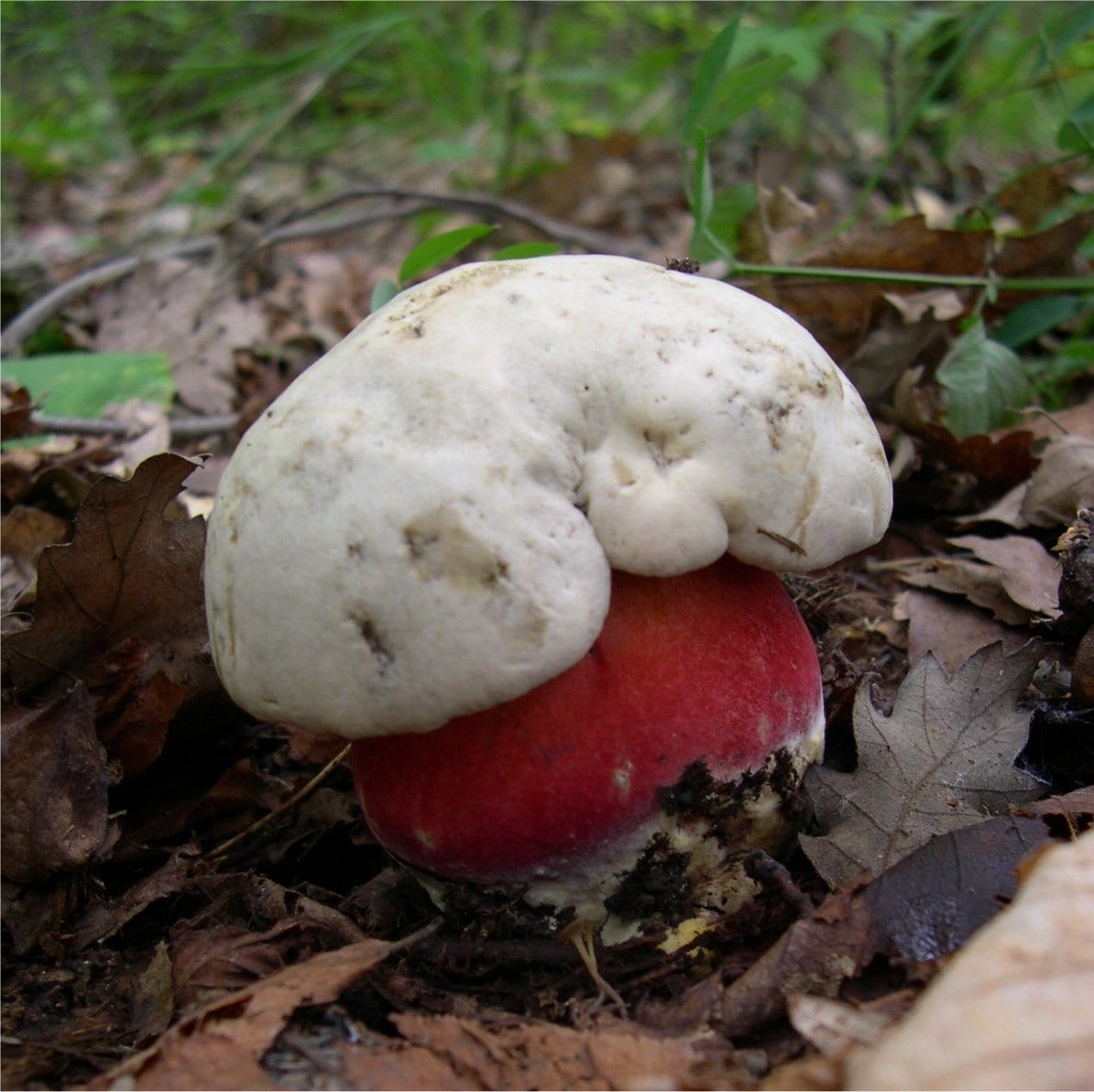
Identification
Pale grayish-olive cap, red pore surface, thick stem with red mesh; flesh whitish, turns blue when cut; mature fruit bodies smell unpleasant. Lookalikes among pale boletes are separated by the red pores and the smell.
Why it is dangerous
Contains bolesatine — a toxin causing strong gastrointestinal poisoning: vomiting, diarrhea, pain. Sources differ on severity after thorough cooking; the claim "harmless when boiled" is not proven, so treat it as poisonous.
In practice
- Pale bolete + red pores + blue-staining flesh = discard.
- Do not confuse with the bilious bolete: that one has pink tubes and bitter flesh.