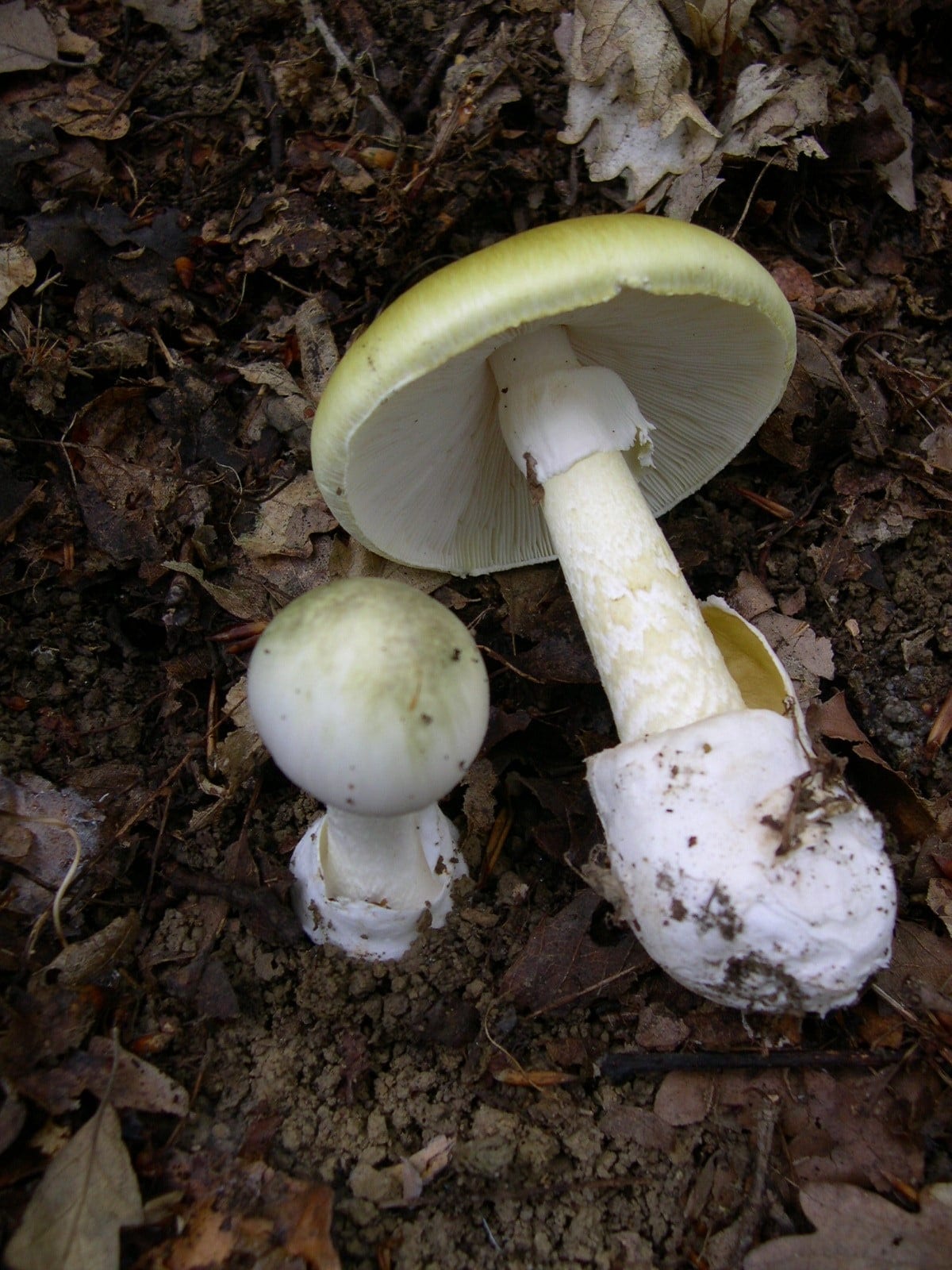
Why everyone should know it
The death cap (Amanita phalloides) is not exotic — it causes the overwhelming majority of fatal mushroom poisonings worldwide (over 90 % in the J Crit Care review). The danger is not that it looks frightening, but that it resembles edible species and acts with a delay.
How the toxin works
The main toxins are amatoxins, chiefly α-amanitin. They inhibit RNA polymerase II: cells stop synthesizing protein and die. The primary target is the liver, then the kidneys.
- The toxins are heat-stable: boiling, frying, drying and pickling do not destroy them. "Parboil and discard the water" does not protect against this mushroom.
- A typical case is a single cap among gathered mushrooms; young and mature specimens are equally poisonous.
The course of poisoning — and why it is treacherous
Per clinical reviews (PMC11640968) poisoning runs in phases:
- Latent phase — no symptoms, usually 6–18 hours.
- Gastrointestinal phase (6–24 h after the meal) — abdominal pain, nausea, vomiting, watery diarrhea. Easily mistaken for ordinary food poisoning.
- False recovery (about 36–48 h) — the patient feels better although the liver is already damaged.
- Hepatic phase — transaminases rise, liver failure develops.
What to do if you suspect poisoning
- Call an ambulance immediately. Do not wait for symptoms to peak.
- Keep leftovers and photos of the mushrooms for identification.
- Do not rely on folk tests — a silver spoon, garlic or onion browning prove nothing.
How not to confuse it
| Feature | Death cap | Field mushroom / parasol |
|---|---|---|
| Volva at the base | present, sac-like | absent |
| Gills | always white | pink → brown in champignon; cream in parasol |
| Ring | skirt-like, on the stem | movable ring on parasol; champignon ring differs |
Young buttons are the most deceptive — before the cap opens, the universal veil hides everything. Any "mushroom with a volva" is discarded.