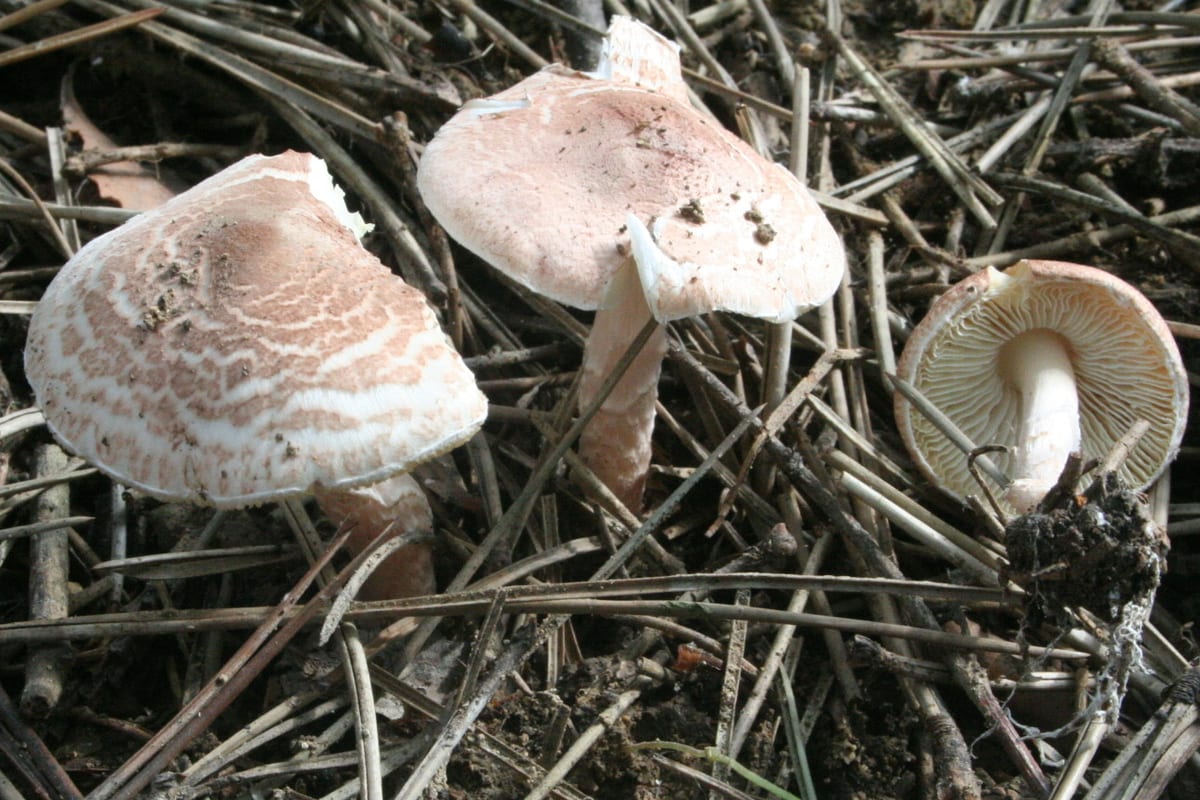
Identification
Cap 3–6 cm, pinkish-beige with concentric red-brown scales; ring on the stem; white gills. Its silhouette resembles a young parasol mushroom and a champignon — that is exactly why it is dangerous.
Why it is dangerous
Like the death cap, it contains α-amanitin — a toxin that suppresses RNA polymerase II in liver cells. Fatal poisonings by this species are documented; the toxin is heat-stable, cooking does not help. The picture is the same as the death cap's: latent phase 6–12 h → gastrointestinal phase → liver failure.
In practice
- The mycologists' rule: parasols are picked only large — cap 10 cm+, scales on a white background, movable ring, flesh that blushes. Anything small "looking like a parasol" is passed by.
- Late (>6 h) vomiting after any forest mushrooms — call emergency services immediately.