Calendar
What to gather and when
Pick a time of year — see which mushrooms grow then, which are edible, and which must be avoided. Dates are a guide for the temperate belt: a warm, wet year shifts everything by 2–3 weeks. The catalog is being translated; species currently available in English appear here automatically.
Spring March — May
In season now
A quiet season. The main find is morels right after the snow melts — and poisonous false morels grow right beside them.
Edible 8
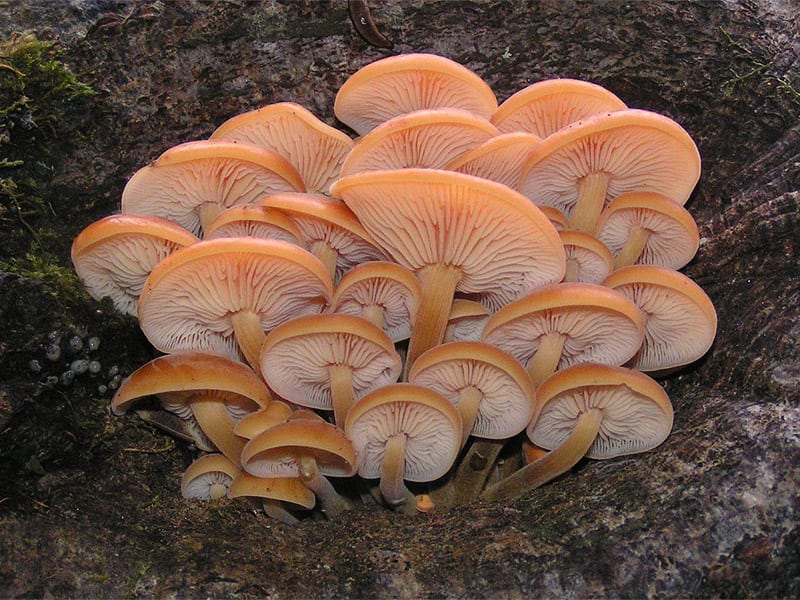 Enoki (velvet shank)
Flammulina velutipes
Late autumn–winter, to early spring
Enoki (velvet shank)
Flammulina velutipes
Late autumn–winter, to early spring
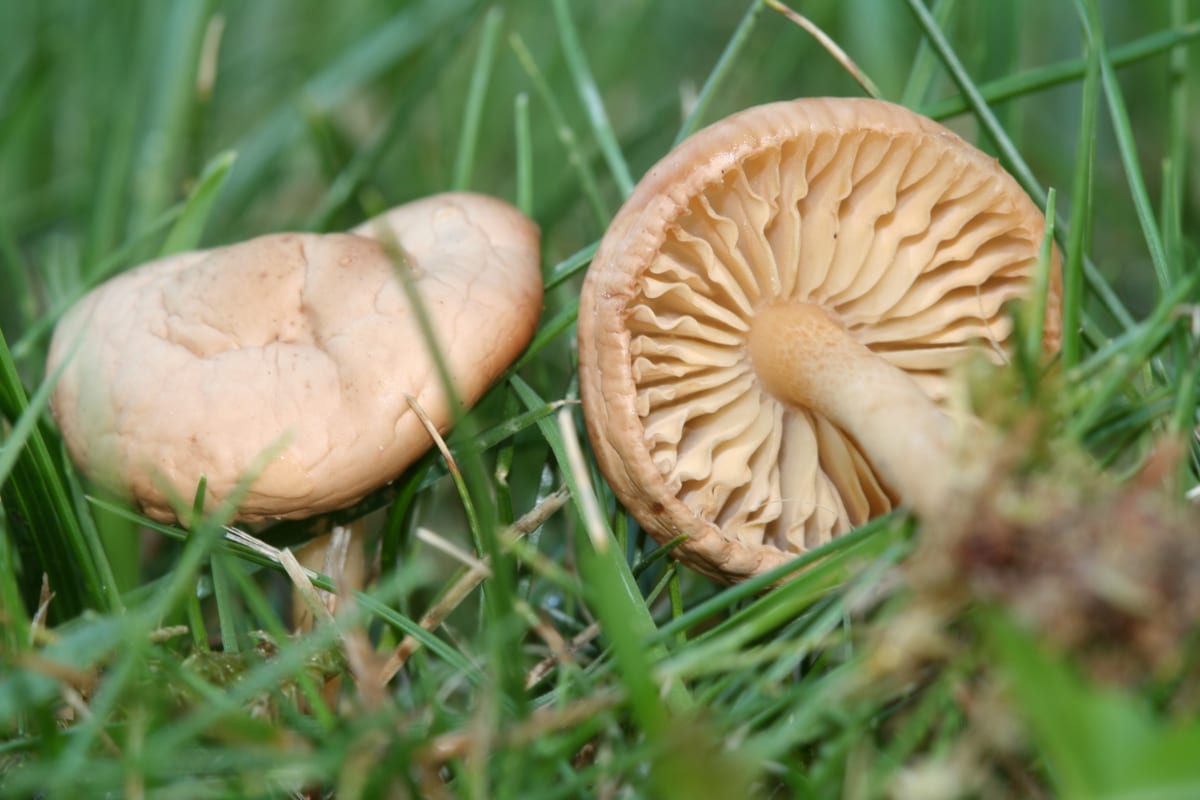 Fairy ring mushroom (scotch bonnet)
Marasmius oreades
May–October
Fairy ring mushroom (scotch bonnet)
Marasmius oreades
May–October
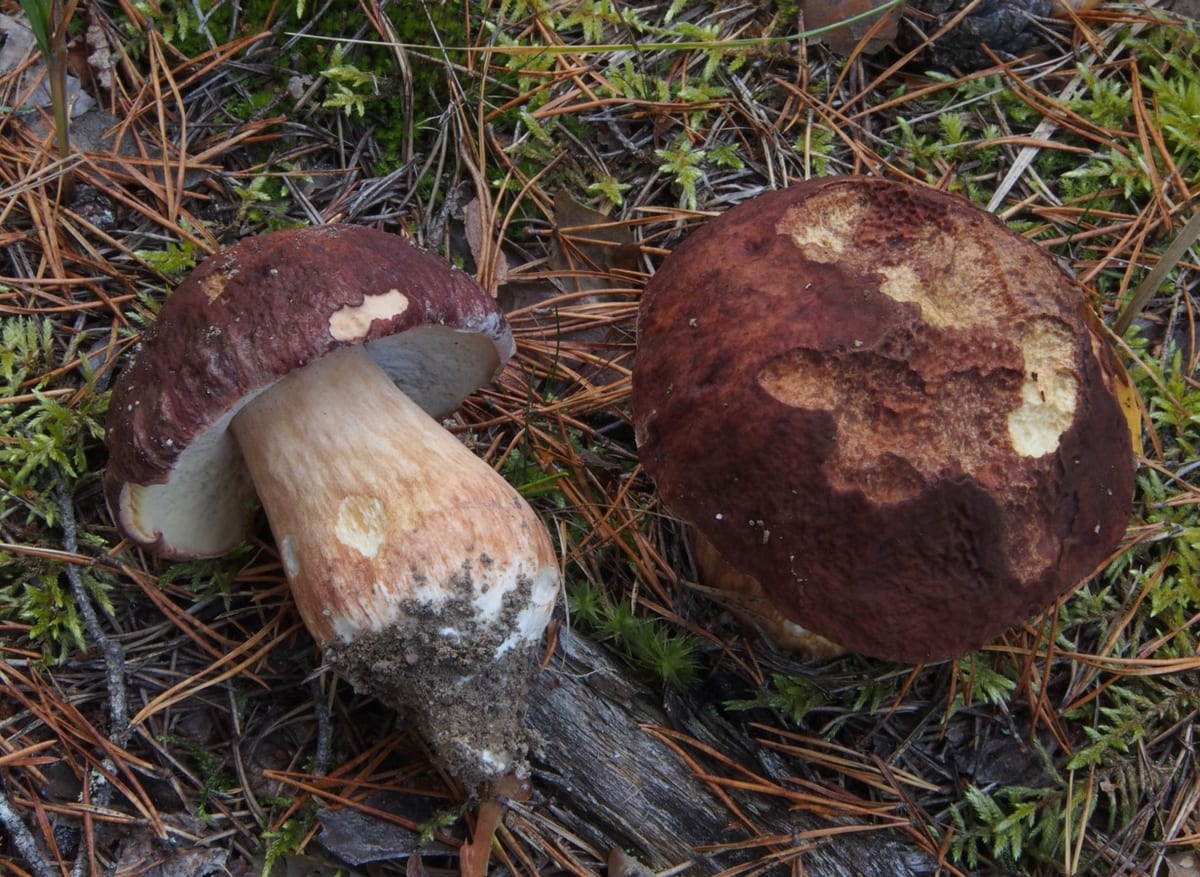 Pine bolete
Boletus pinophilus
May–October, the first of the porcini group
Pine bolete
Boletus pinophilus
May–October, the first of the porcini group
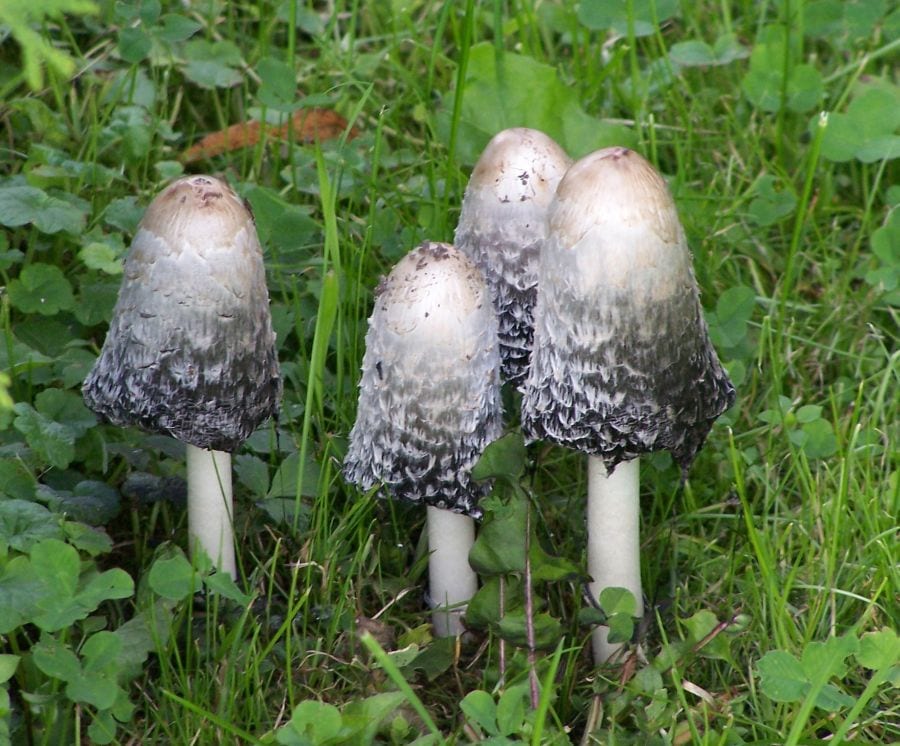 Shaggy inkcap (lawyer's wig)
Coprinus comatus
June–October
Shaggy inkcap (lawyer's wig)
Coprinus comatus
June–October
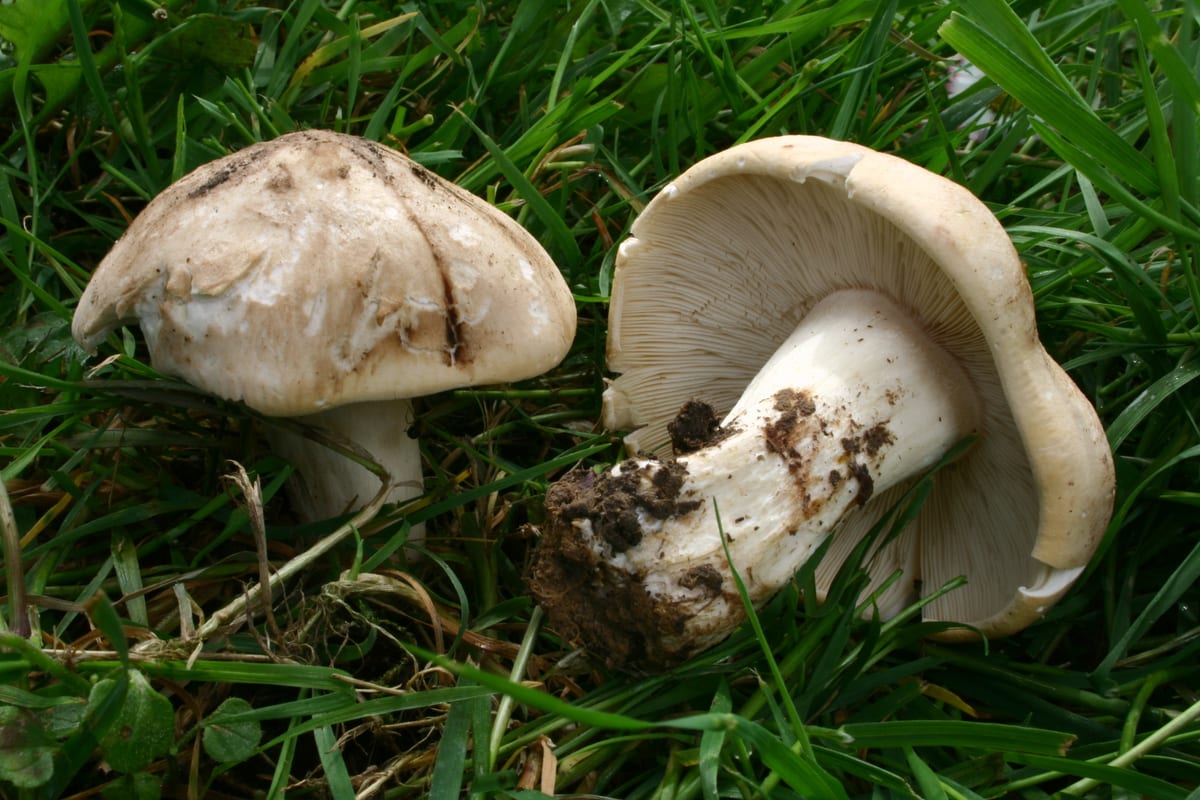 St George's mushroom
Calocybe gambosa
April–June
St George's mushroom
Calocybe gambosa
April–June
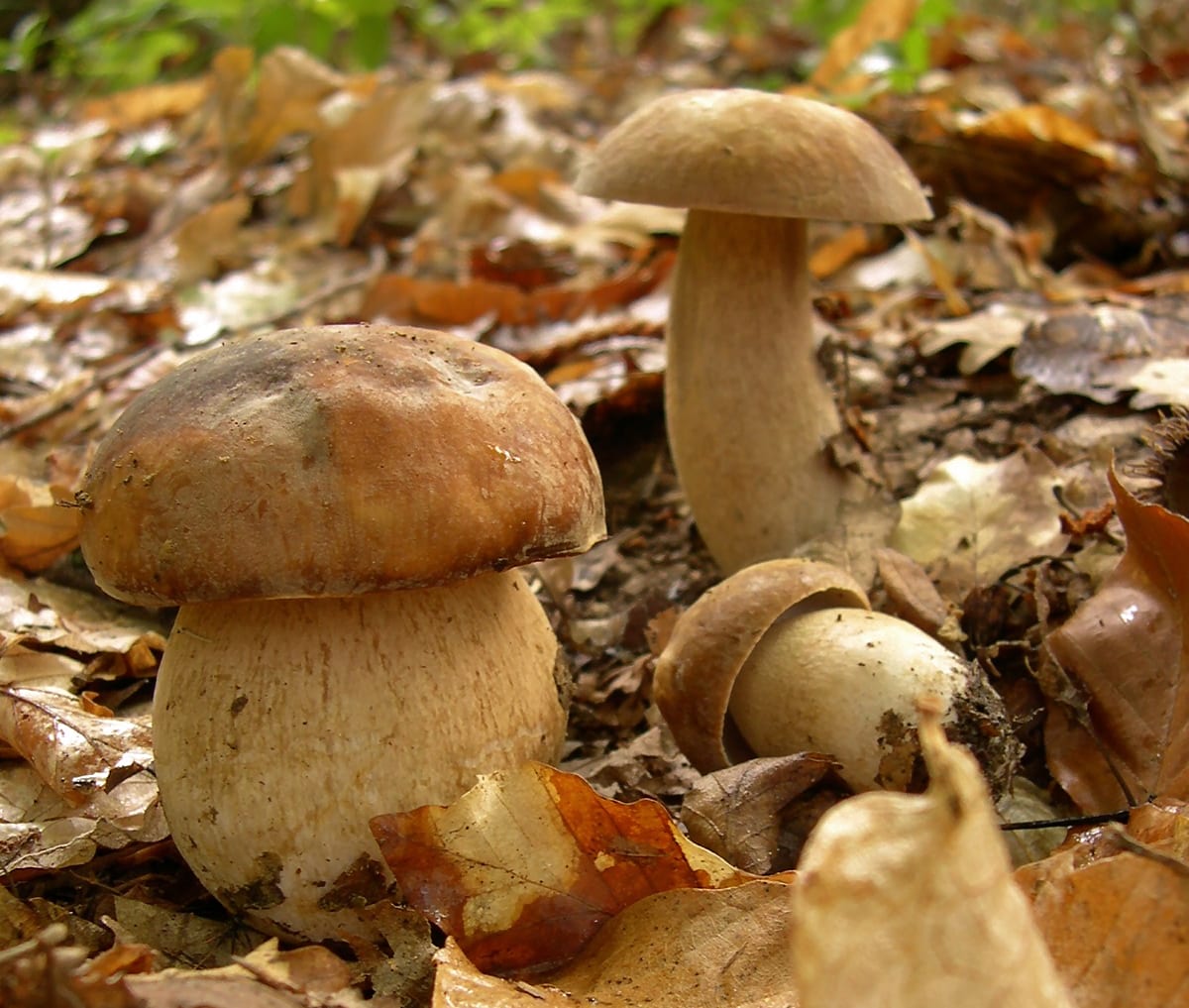 Summer bolete (early porcini)
Boletus reticulatus
May–September
Summer bolete (early porcini)
Boletus reticulatus
May–September
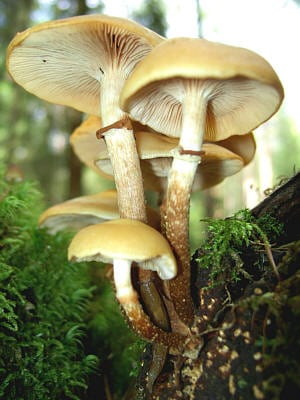 Summer honey fungus (two-toned pholiota)
Kuehneromyces mutabilis
May–October
Summer honey fungus (two-toned pholiota)
Kuehneromyces mutabilis
May–October
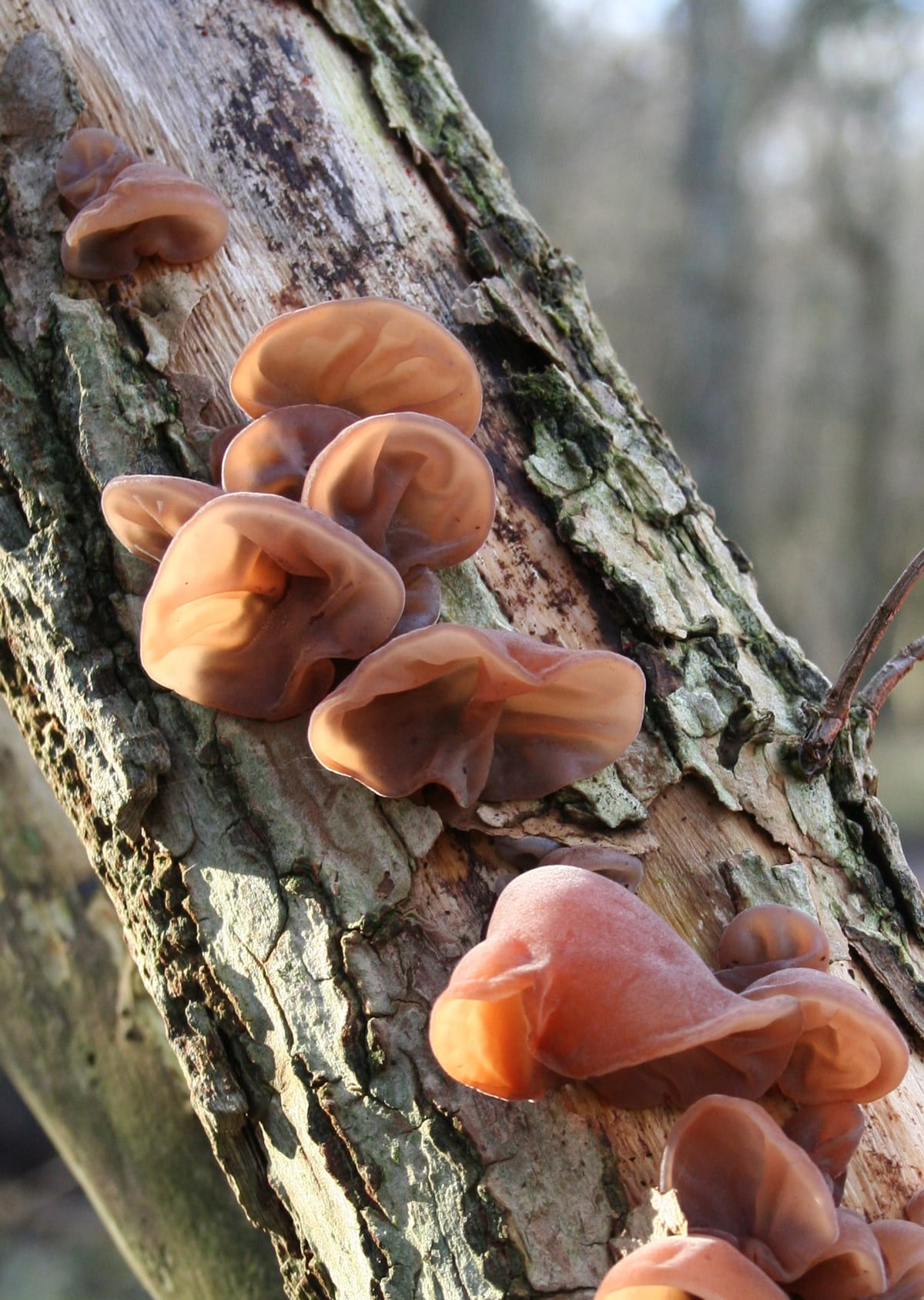 Wood ear (Judas' ear)
Auricularia auricula-judae
Year-round, peak in autumn and winter
Wood ear (Judas' ear)
Auricularia auricula-judae
Year-round, peak in autumn and winter
Conditionally edible requires processing: boiling, soaking, salting 4
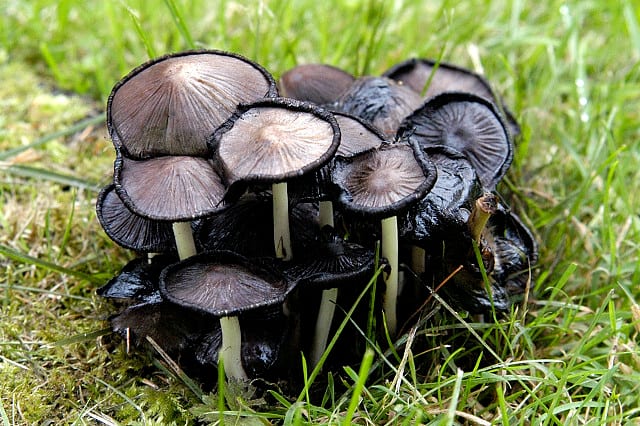 Common inkcap
Coprinopsis atramentaria
May–October
Common inkcap
Coprinopsis atramentaria
May–October
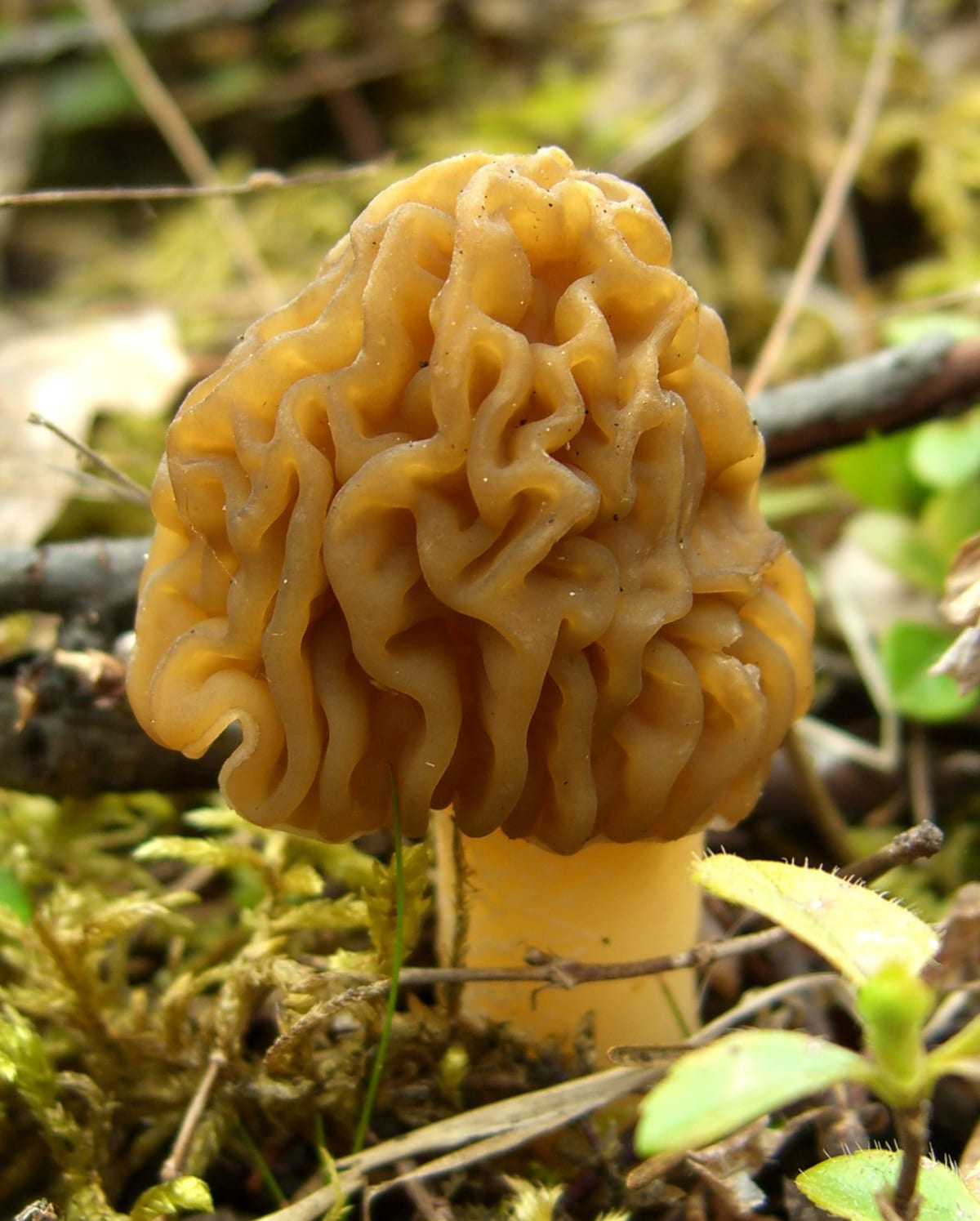 Early morel (Verpa bohemica)
Verpa bohemica
April–May
Early morel (Verpa bohemica)
Verpa bohemica
April–May
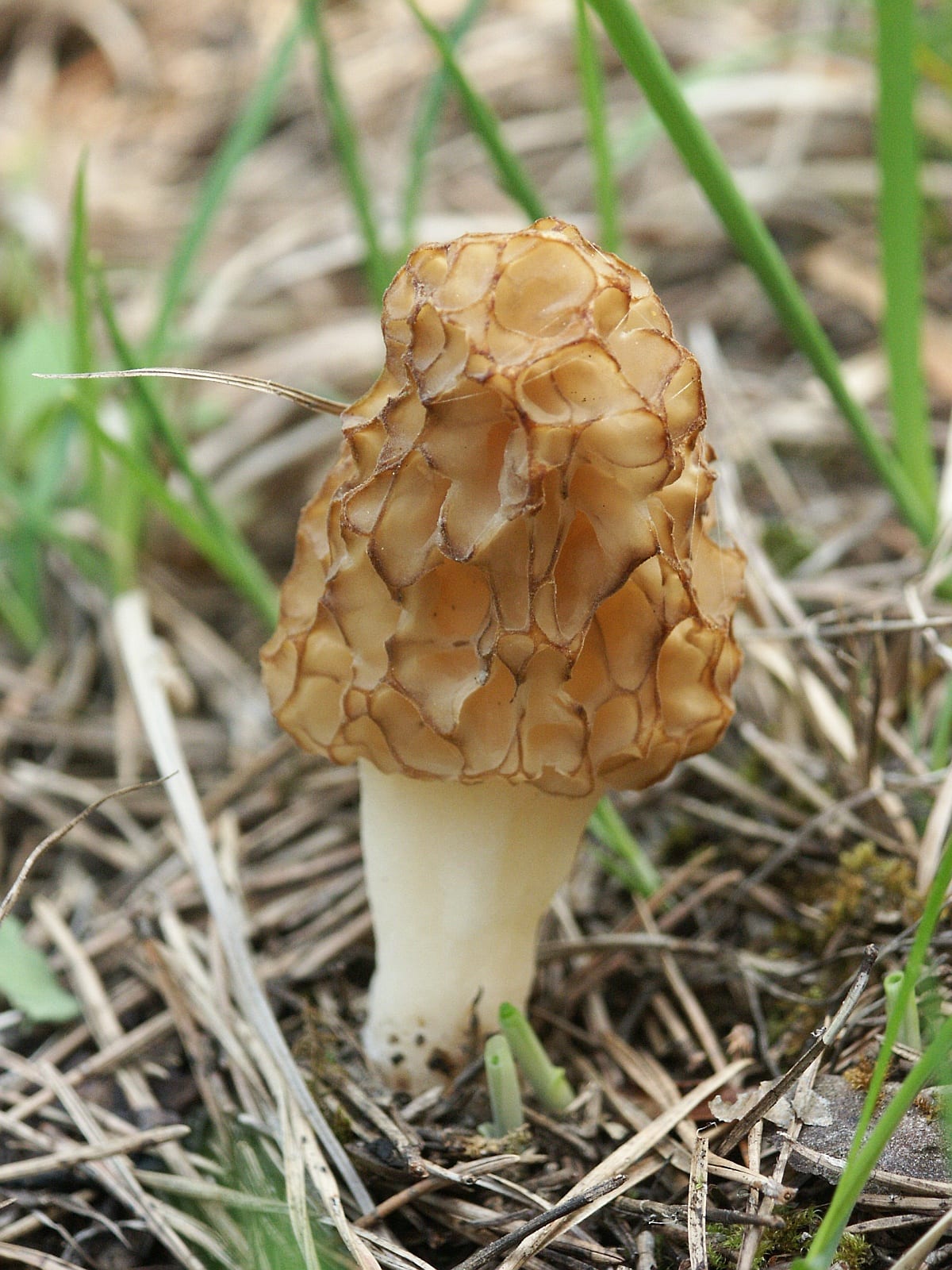 Morel (yellow morel)
Morchella esculenta
April–May
Morel (yellow morel)
Morchella esculenta
April–May
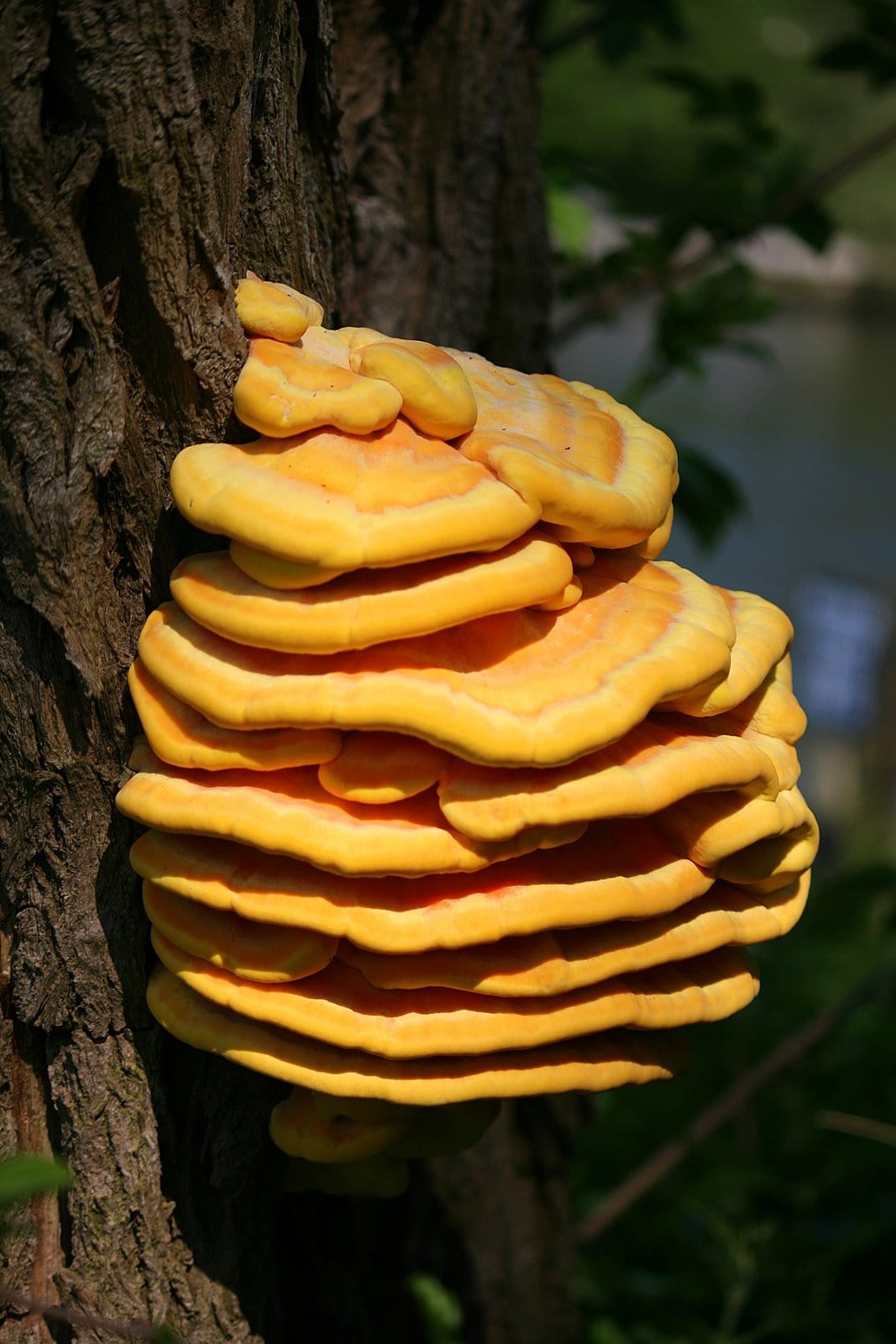 Sulphur shelf (chicken of the woods)
Laetiporus sulphureus
May–October
Sulphur shelf (chicken of the woods)
Laetiporus sulphureus
May–October
Medicinal 2
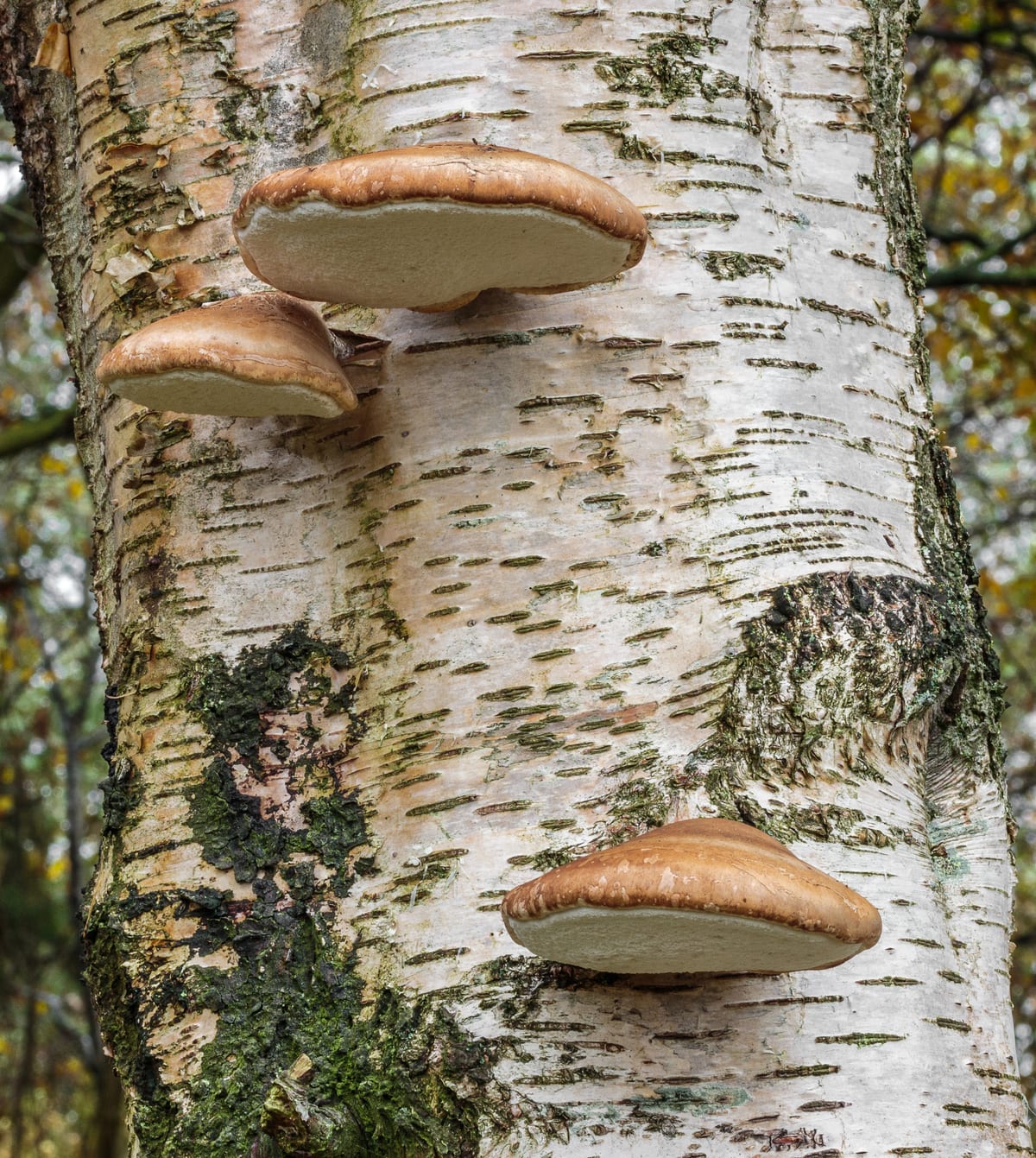 Birch polypore (Ötzi's mushroom)
Fomitopsis betulina
August–October, persisting into winter
Birch polypore (Ötzi's mushroom)
Fomitopsis betulina
August–October, persisting into winter
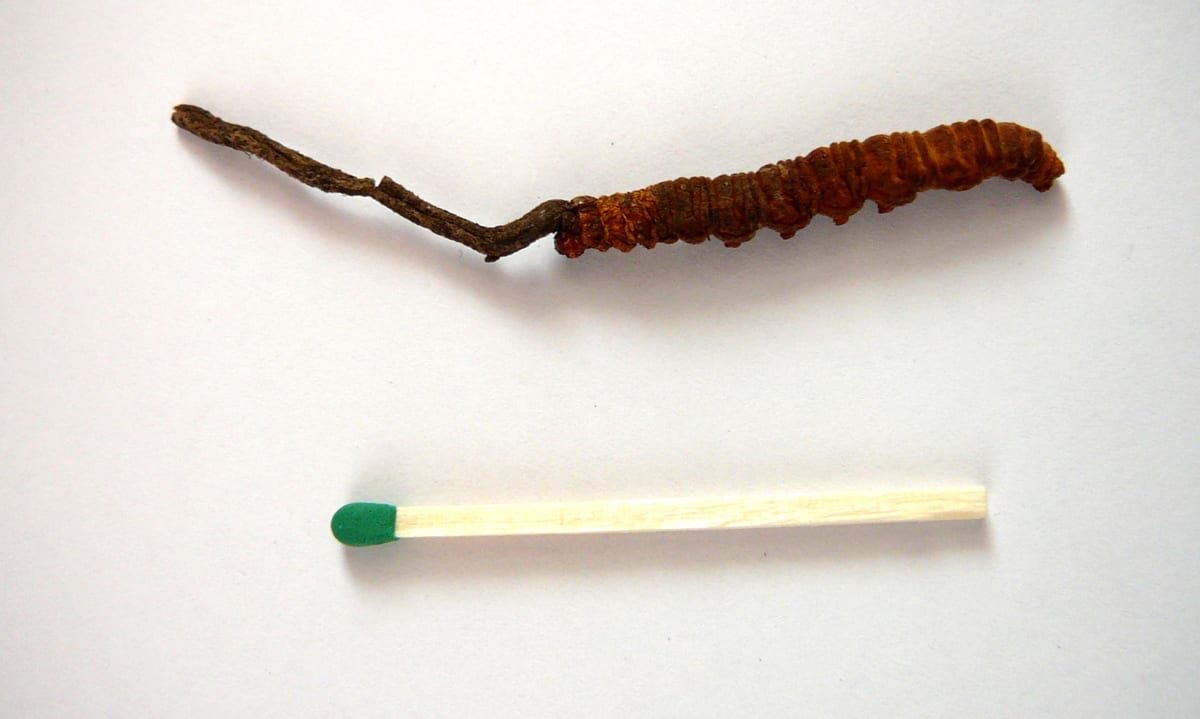 Chinese caterpillar fungus (yartsa gunbu)
Ophiocordyceps sinensis
May–July
Chinese caterpillar fungus (yartsa gunbu)
Ophiocordyceps sinensis
May–July
Dangerous — do not pick 3
These mushrooms grow at the same time and in the same places. Some are deadly and cooking does not help.
Early summer June
In season now
The season gains momentum: first boletes, chanterelles and porcini appear after warm rains.
Edible 18
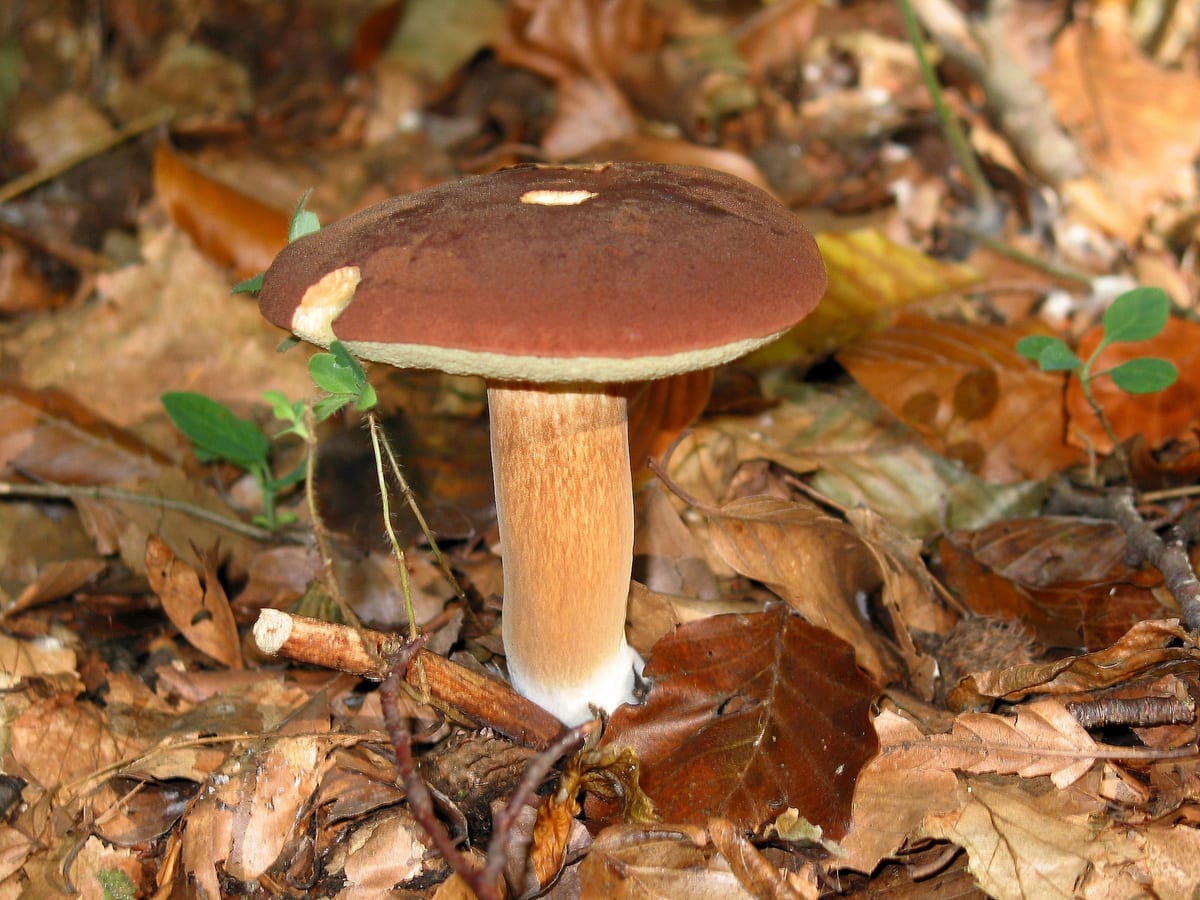 Bay bolete ('Polish mushroom')
Imleria badia
July–October
Bay bolete ('Polish mushroom')
Imleria badia
July–October
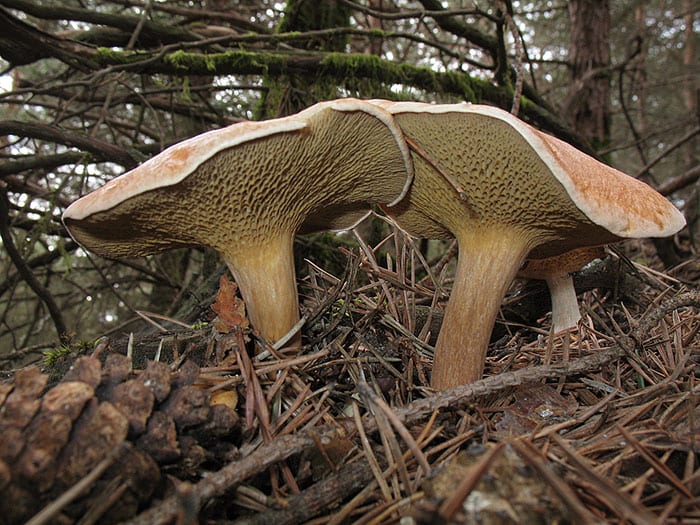 Bovine bolete (Jersey cow mushroom)
Suillus bovinus
July–October
Bovine bolete (Jersey cow mushroom)
Suillus bovinus
July–October
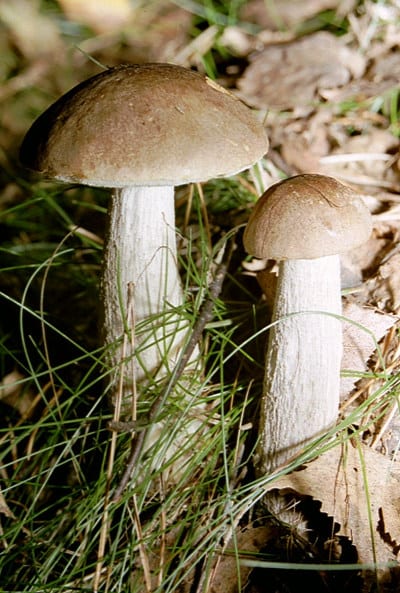 Brown birch bolete
Leccinum scabrum
June–October
Brown birch bolete
Leccinum scabrum
June–October
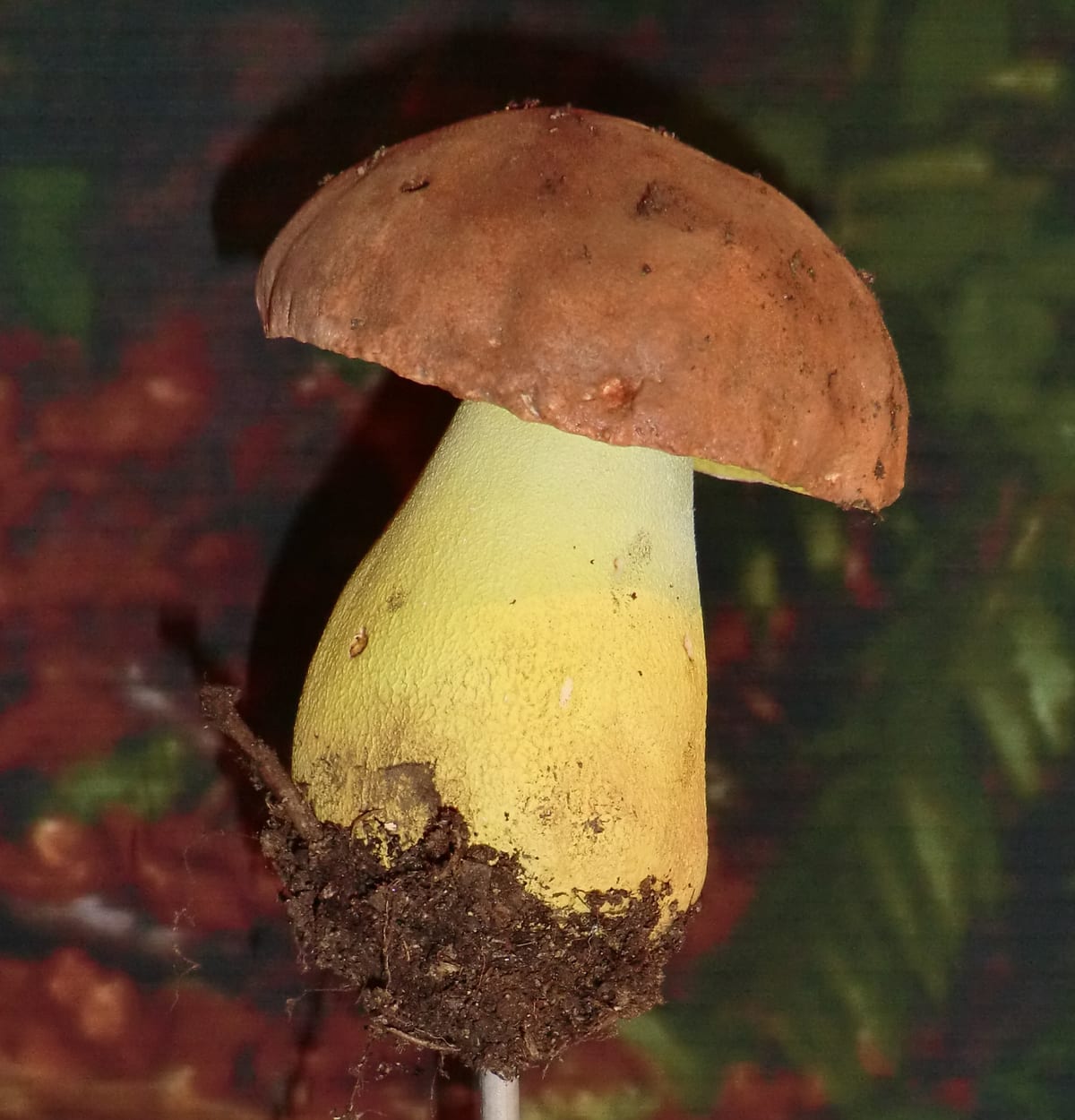 Butter bolete (grainy-stemmed)
Butyriboletus appendiculatus
June–September
Butter bolete (grainy-stemmed)
Butyriboletus appendiculatus
June–September
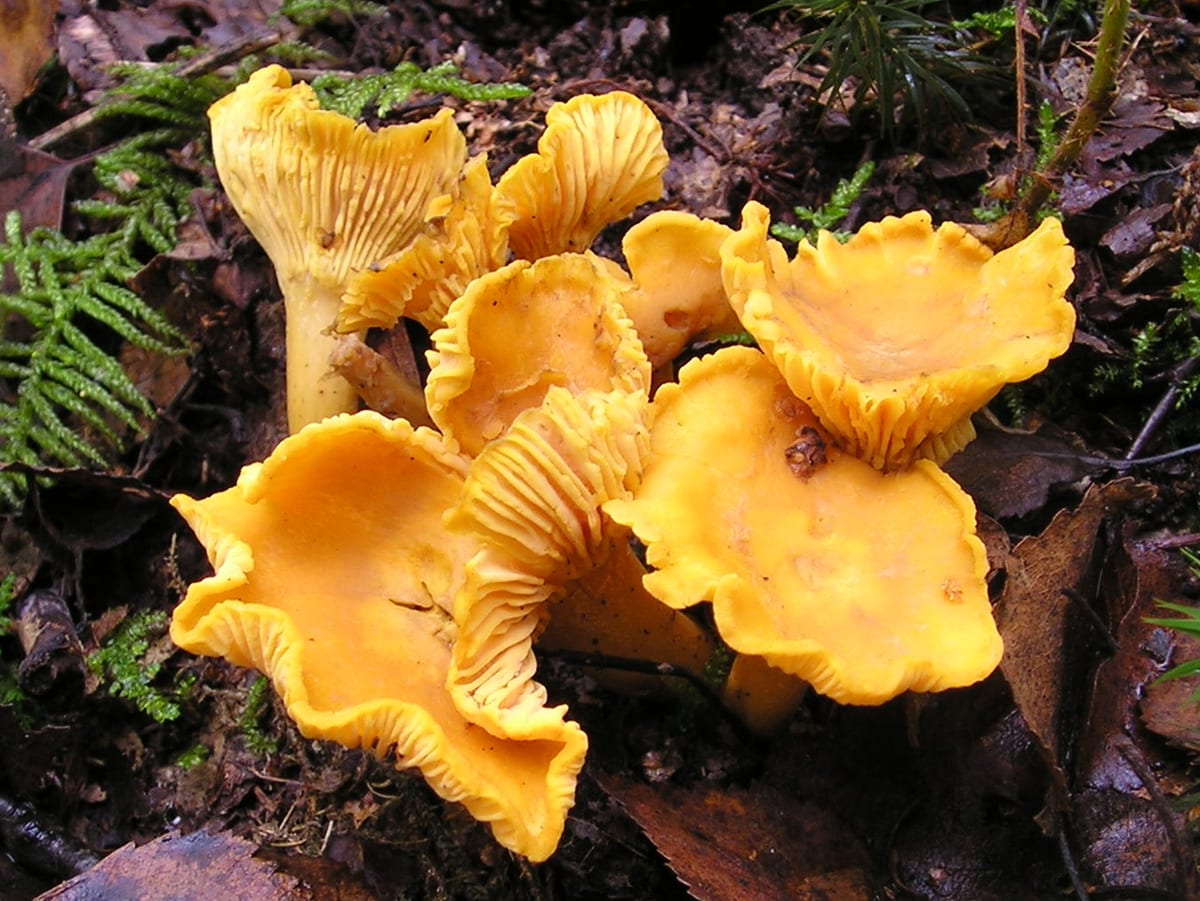 Chanterelle (golden chanterelle)
Cantharellus cibarius
June–October
Fairy ring mushroom (scotch bonnet)
Marasmius oreades
May–October
Chanterelle (golden chanterelle)
Cantharellus cibarius
June–October
Fairy ring mushroom (scotch bonnet)
Marasmius oreades
May–October
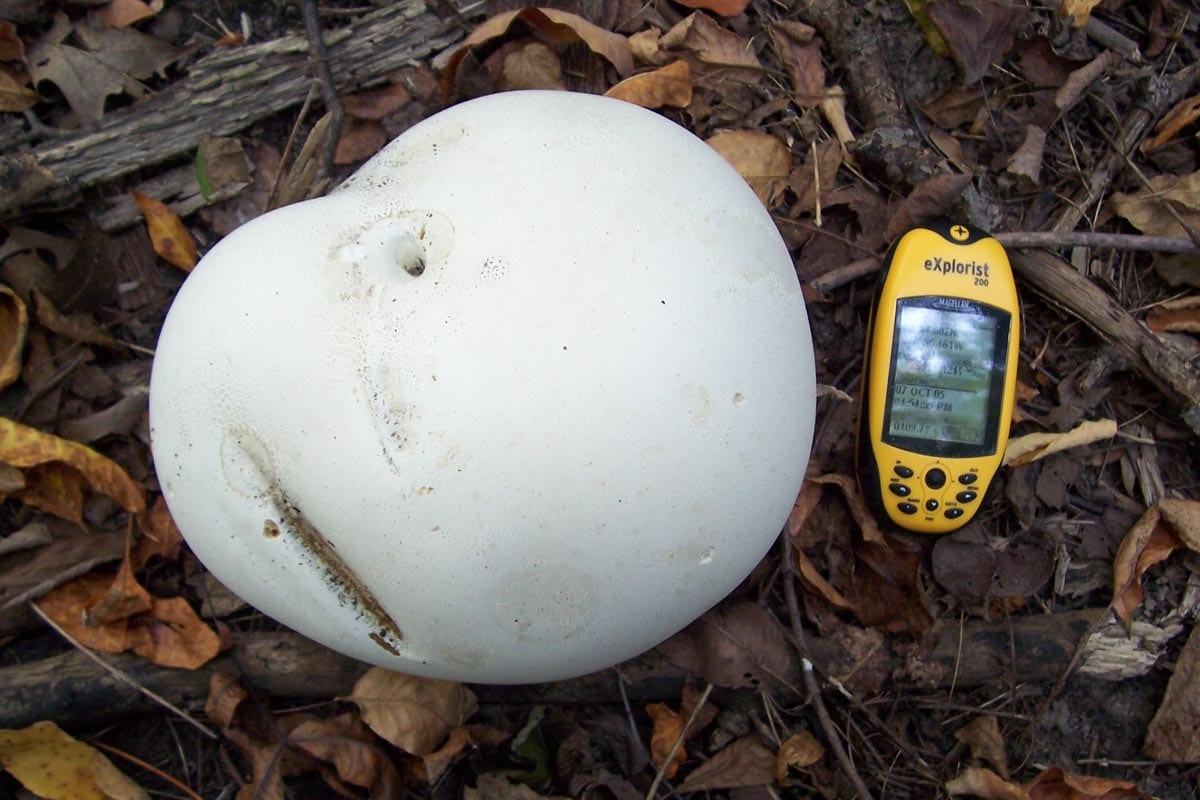 Giant puffball
Calvatia gigantea
August–October
Giant puffball
Calvatia gigantea
August–October
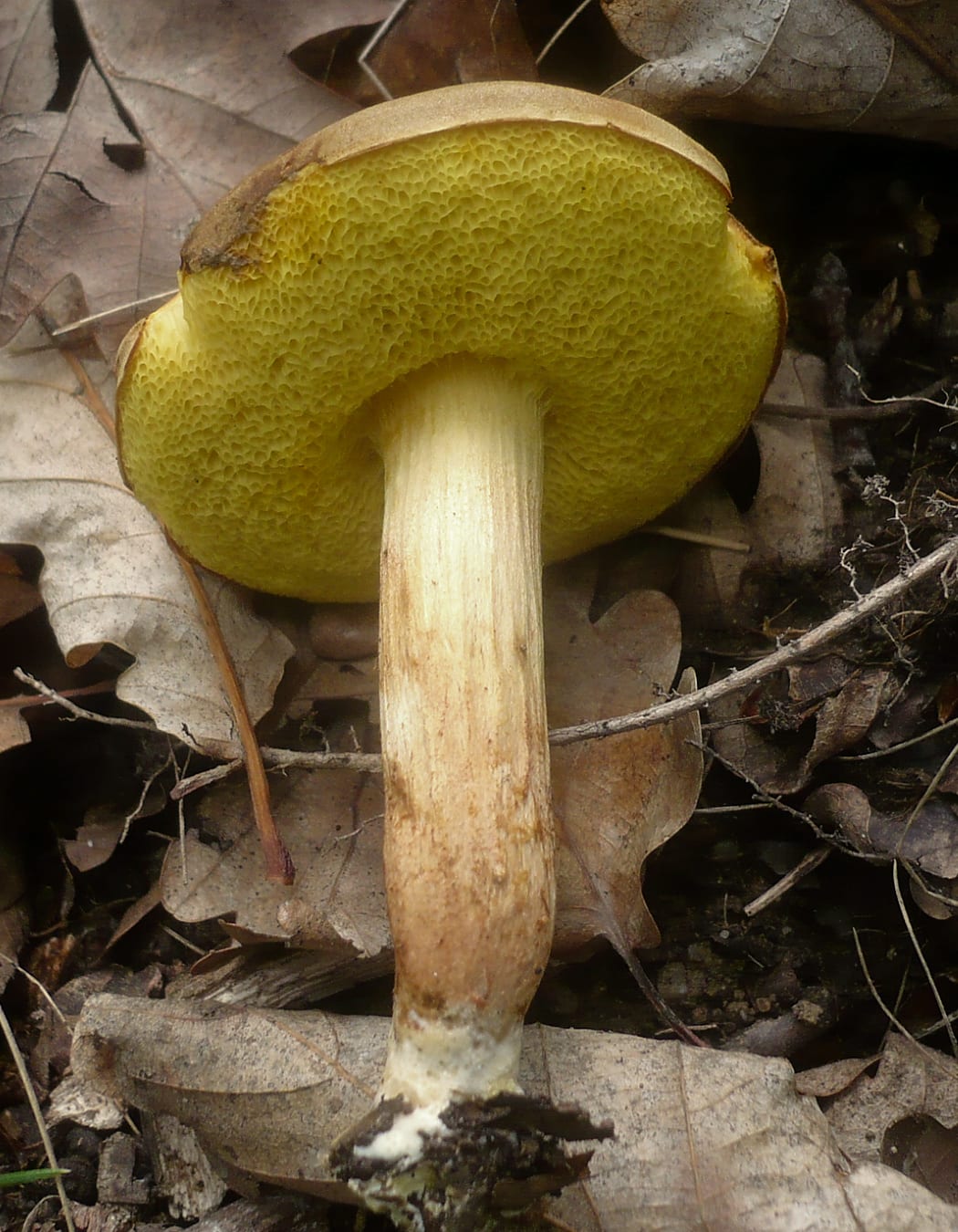 Green cracking bolete (suede bolete)
Xerocomus subtomentosus
June–October
Green cracking bolete (suede bolete)
Xerocomus subtomentosus
June–October
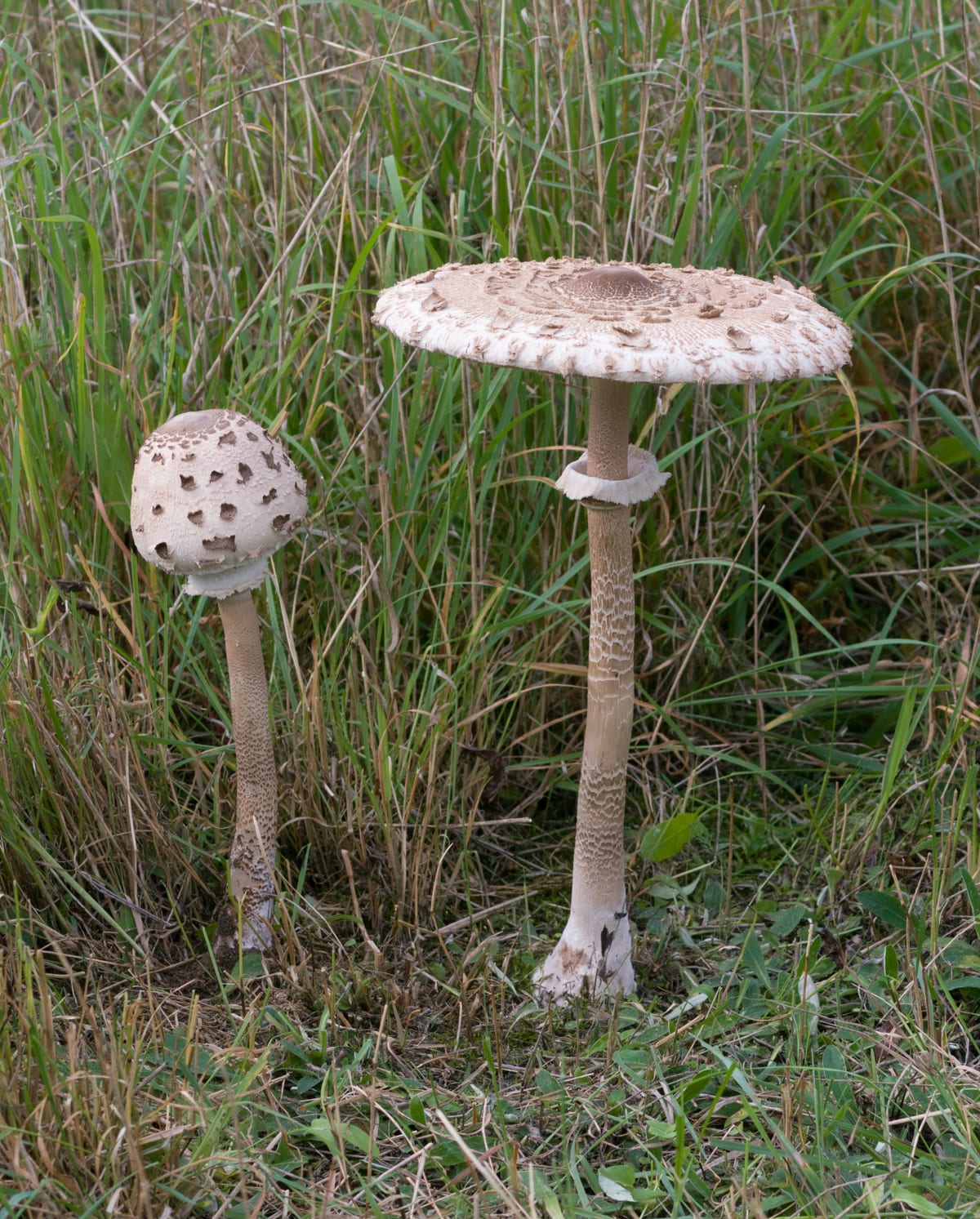 Parasol mushroom
Macrolepiota procera
June–October
Pine bolete
Boletus pinophilus
May–October, the first of the porcini group
Parasol mushroom
Macrolepiota procera
June–October
Pine bolete
Boletus pinophilus
May–October, the first of the porcini group
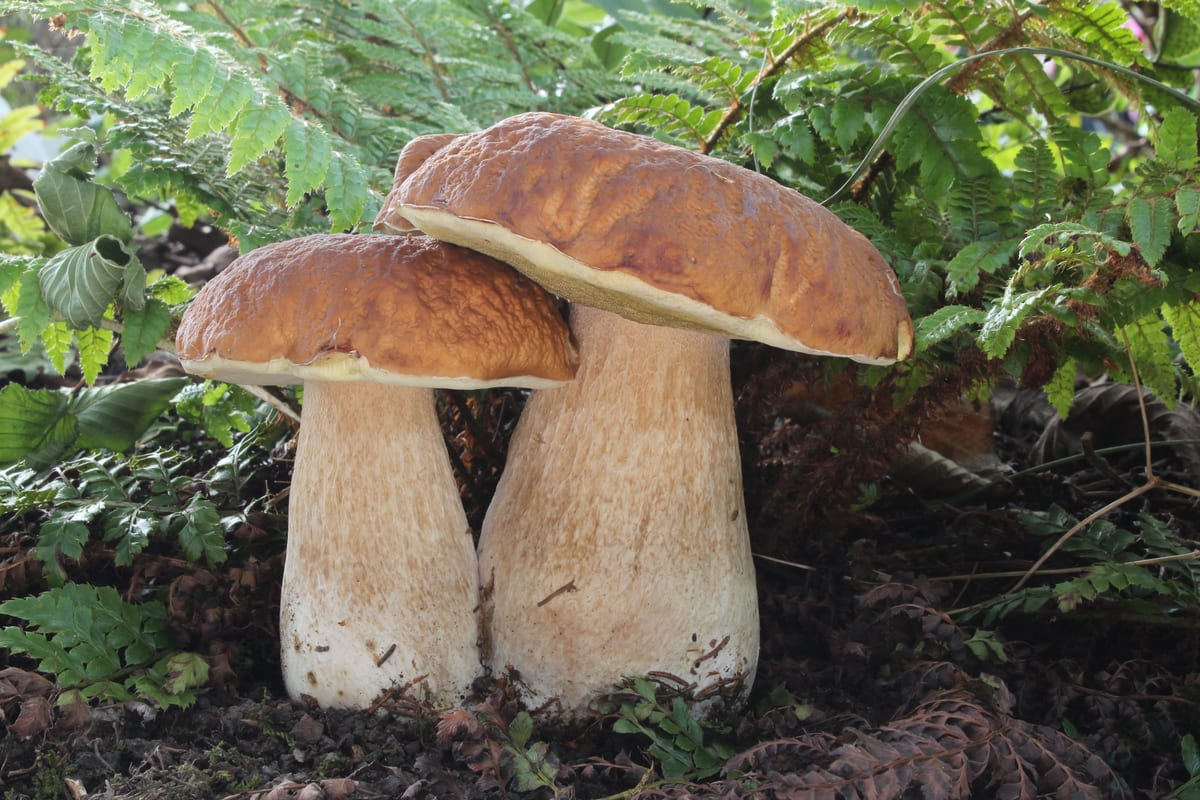 Porcini (king bolete)
Boletus edulis
June–October
Porcini (king bolete)
Boletus edulis
June–October
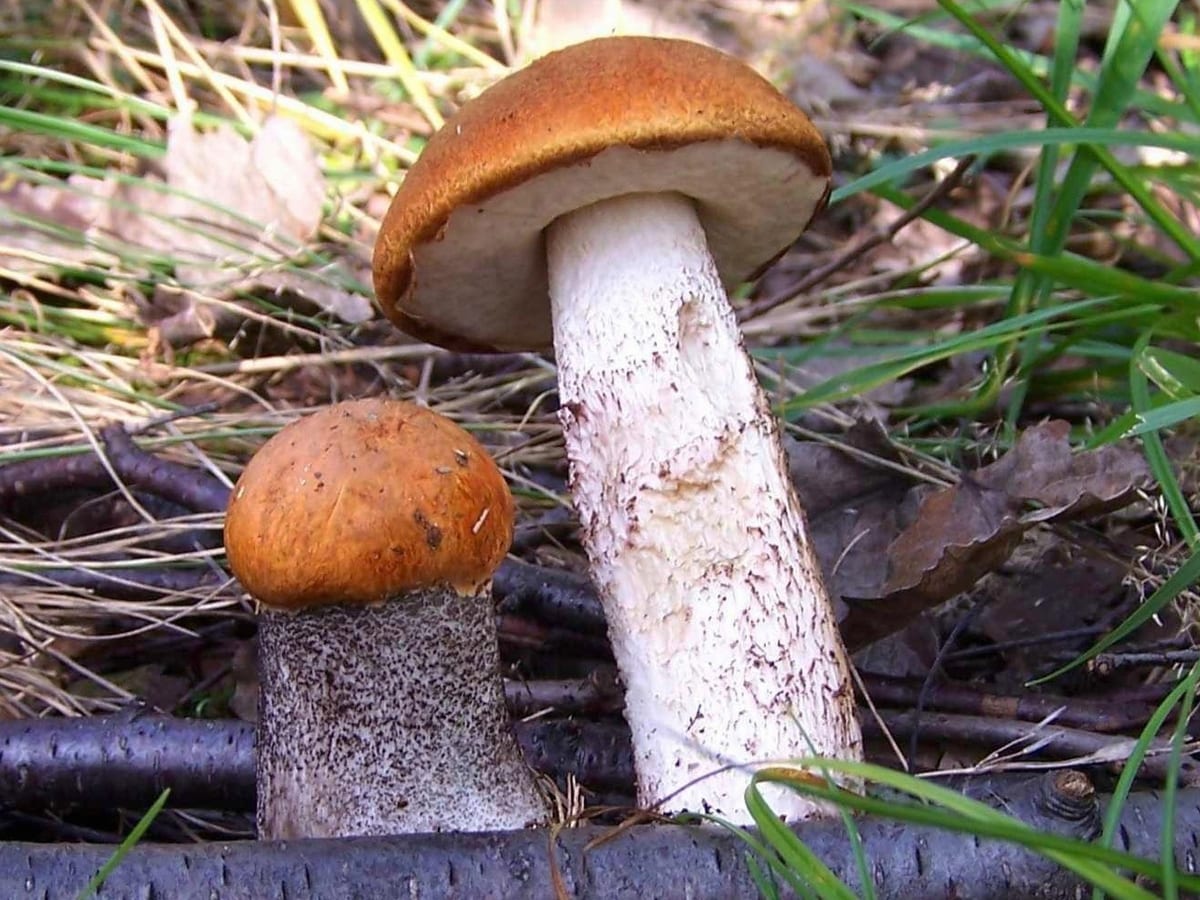 Red-capped scaber stalk (aspen bolete)
Leccinum aurantiacum
June–October
Shaggy inkcap (lawyer's wig)
Coprinus comatus
June–October
Red-capped scaber stalk (aspen bolete)
Leccinum aurantiacum
June–October
Shaggy inkcap (lawyer's wig)
Coprinus comatus
June–October
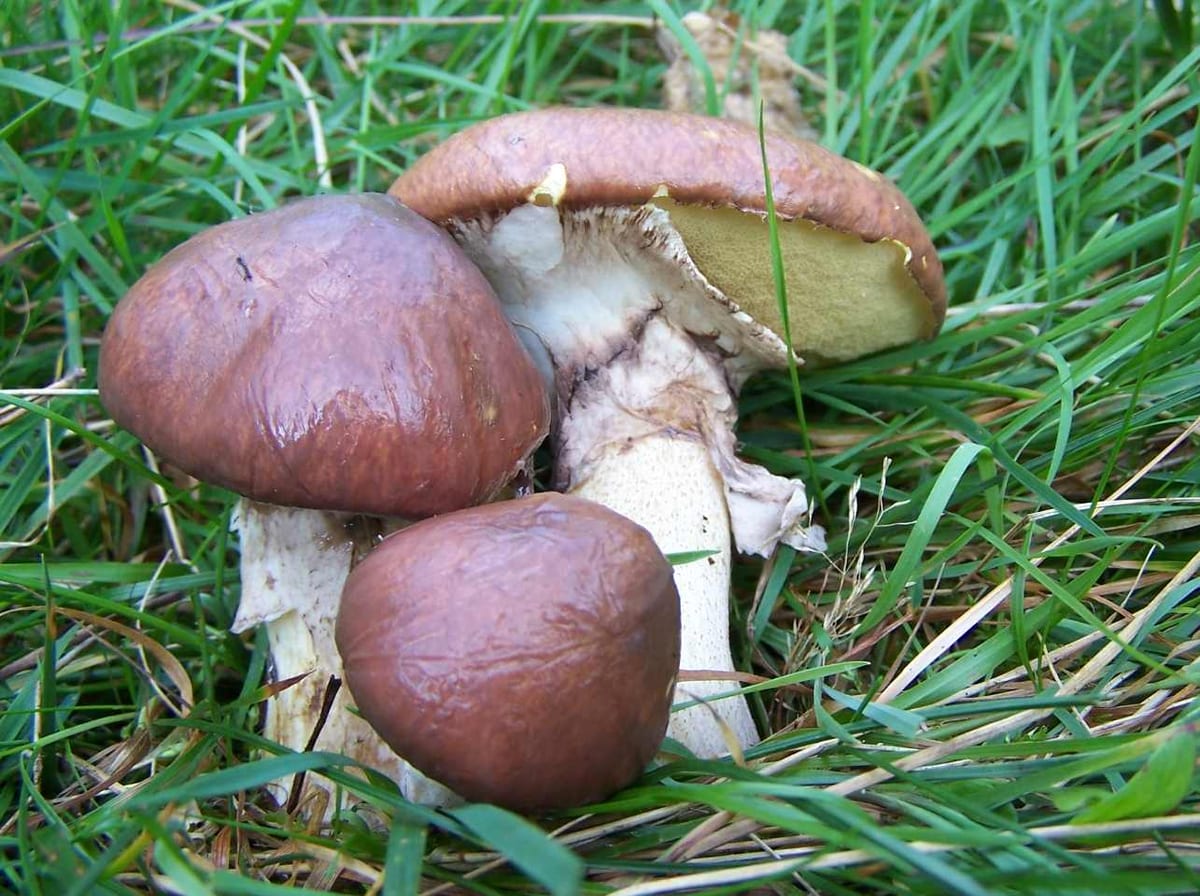 Slippery jacks (Suillus)
Suillus
June–October
St George's mushroom
Calocybe gambosa
April–June
Summer bolete (early porcini)
Boletus reticulatus
May–September
Summer honey fungus (two-toned pholiota)
Kuehneromyces mutabilis
May–October
Slippery jacks (Suillus)
Suillus
June–October
St George's mushroom
Calocybe gambosa
April–June
Summer bolete (early porcini)
Boletus reticulatus
May–September
Summer honey fungus (two-toned pholiota)
Kuehneromyces mutabilis
May–October
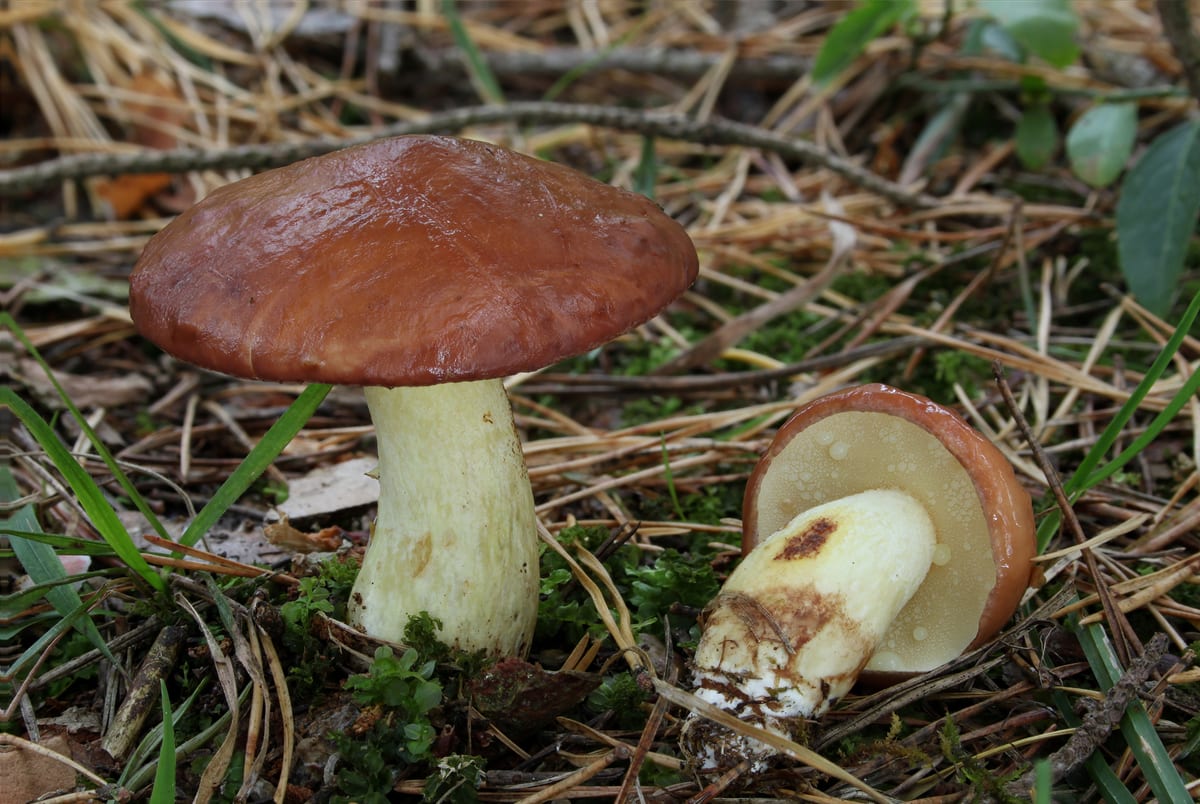 Weeping bolete (grainy suillus)
Suillus granulatus
May–November
Weeping bolete (grainy suillus)
Suillus granulatus
May–November
Conditionally edible requires processing: boiling, soaking, salting 6
Common inkcap
Coprinopsis atramentaria
May–October
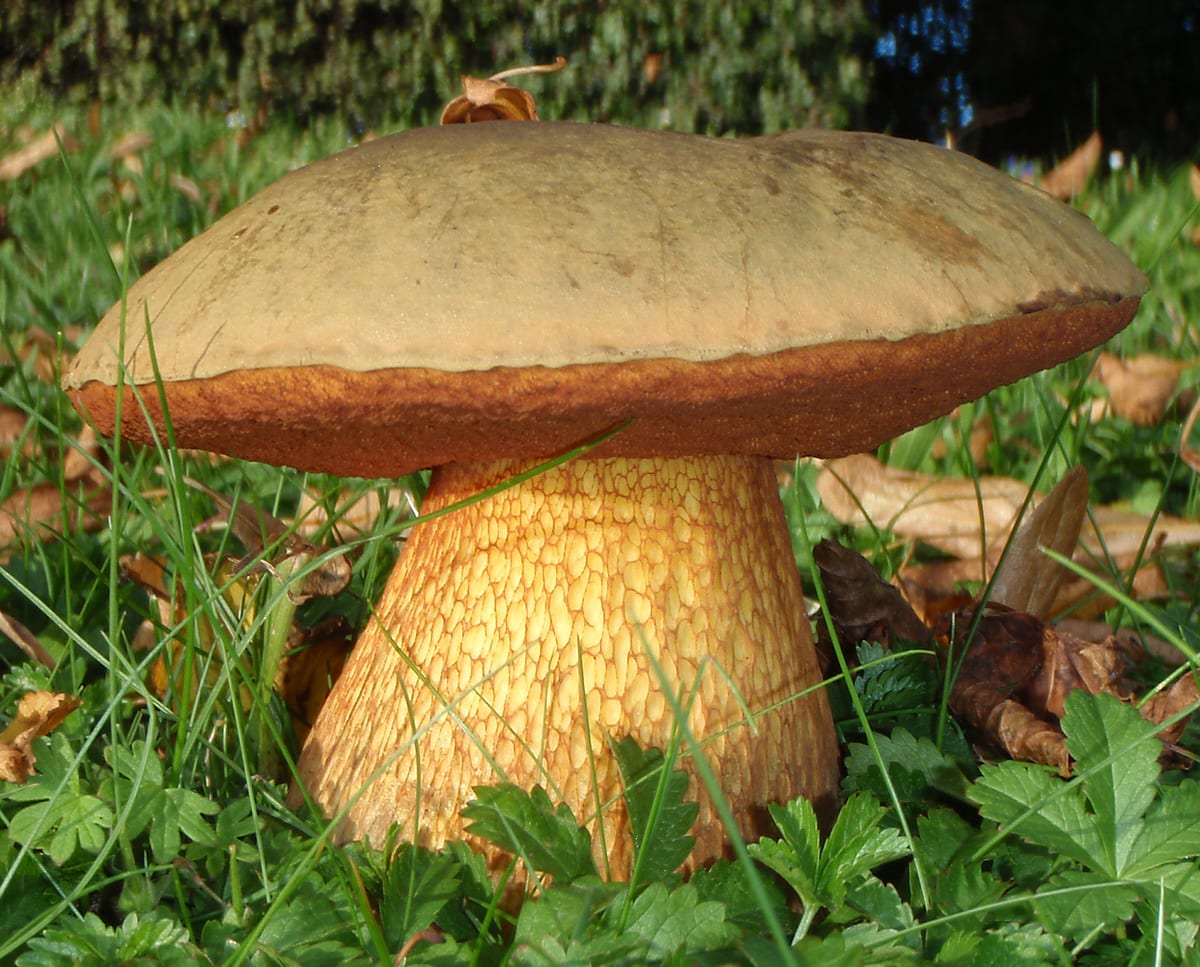 Lurid bolete
Suillellus luridus
June–October
Lurid bolete
Suillellus luridus
June–October
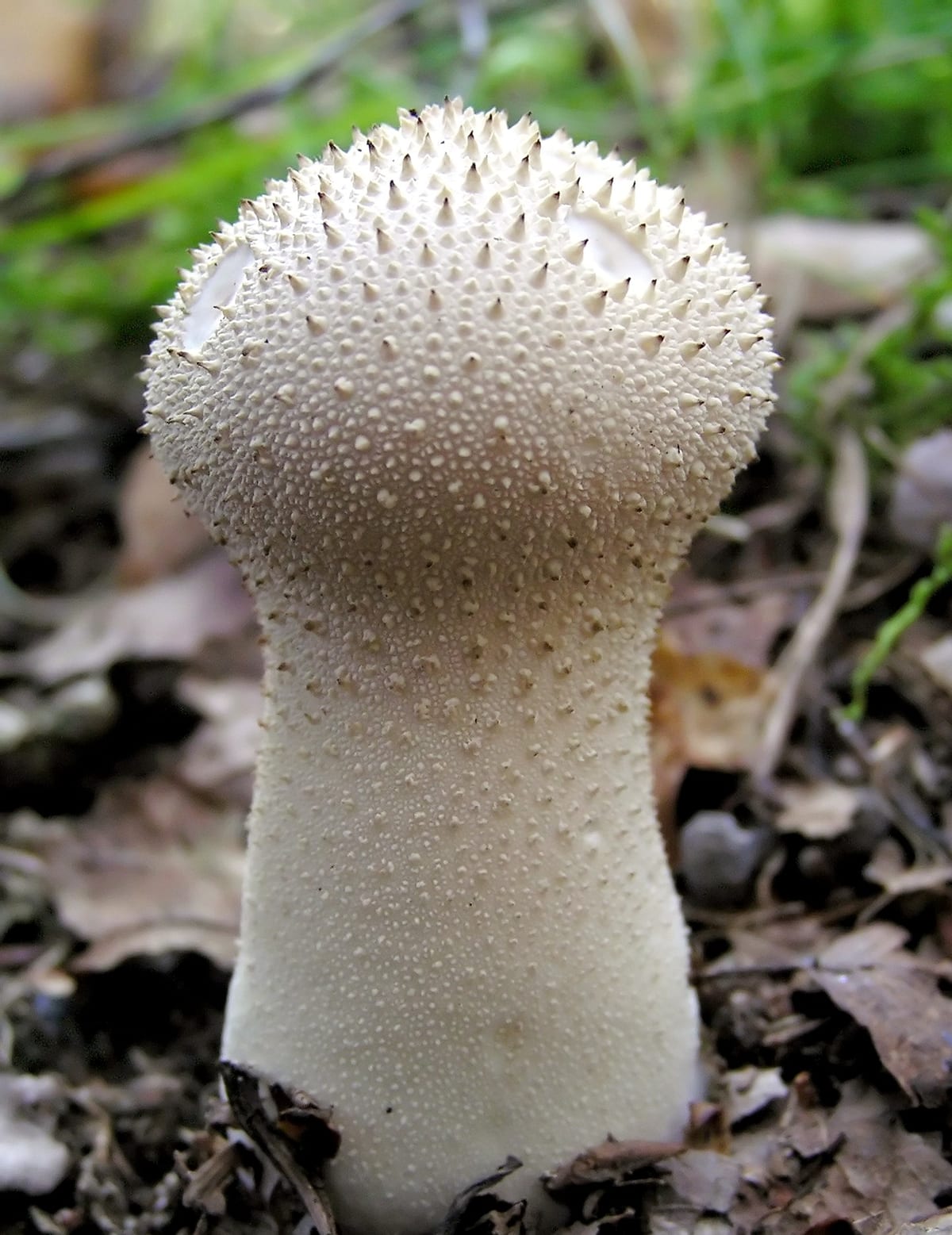 Puffball (Lycoperdon group)
Lycoperdon
July–October
Sulphur shelf (chicken of the woods)
Laetiporus sulphureus
May–October
Puffball (Lycoperdon group)
Lycoperdon
July–October
Sulphur shelf (chicken of the woods)
Laetiporus sulphureus
May–October
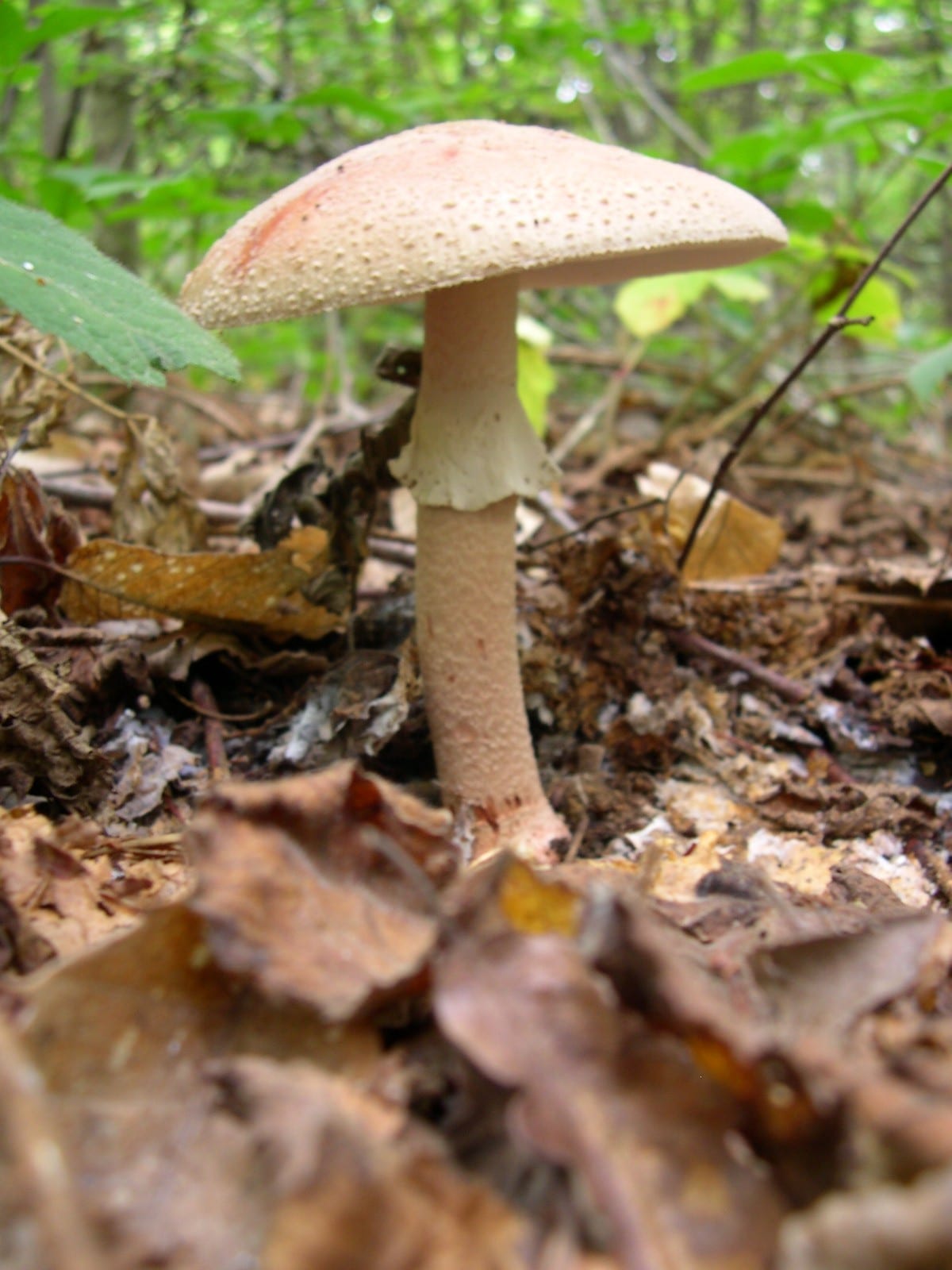 The blusher (amanita rubescens)
Amanita rubescens
June–October
The blusher (amanita rubescens)
Amanita rubescens
June–October
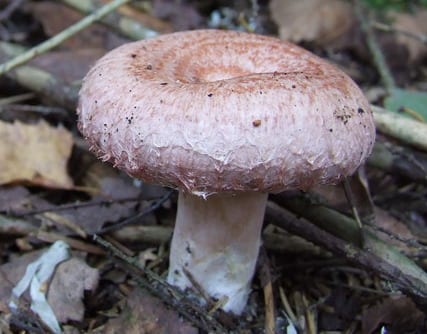 Woolly milkcap (pink fringe)
Lactarius torminosus
June–October
Woolly milkcap (pink fringe)
Lactarius torminosus
June–October
Medicinal 2
Birch polypore (Ötzi's mushroom)
Fomitopsis betulina
August–October, persisting into winter
Chinese caterpillar fungus (yartsa gunbu)
Ophiocordyceps sinensis
May–July
Dangerous — do not pick 7
These mushrooms grow at the same time and in the same places. Some are deadly and cooking does not help.
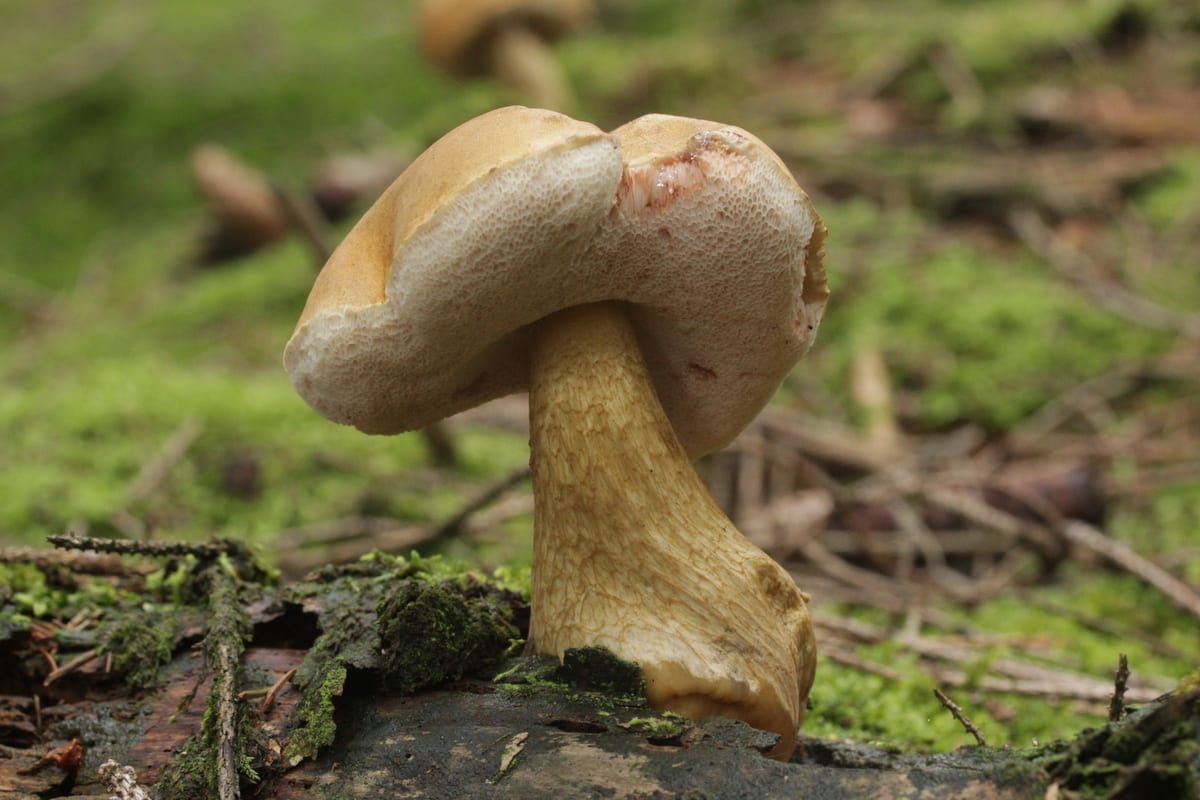 Bitter bolete (bilious bolete)
Tylopilus felleus
June–October
Bitter bolete (bilious bolete)
Tylopilus felleus
June–October
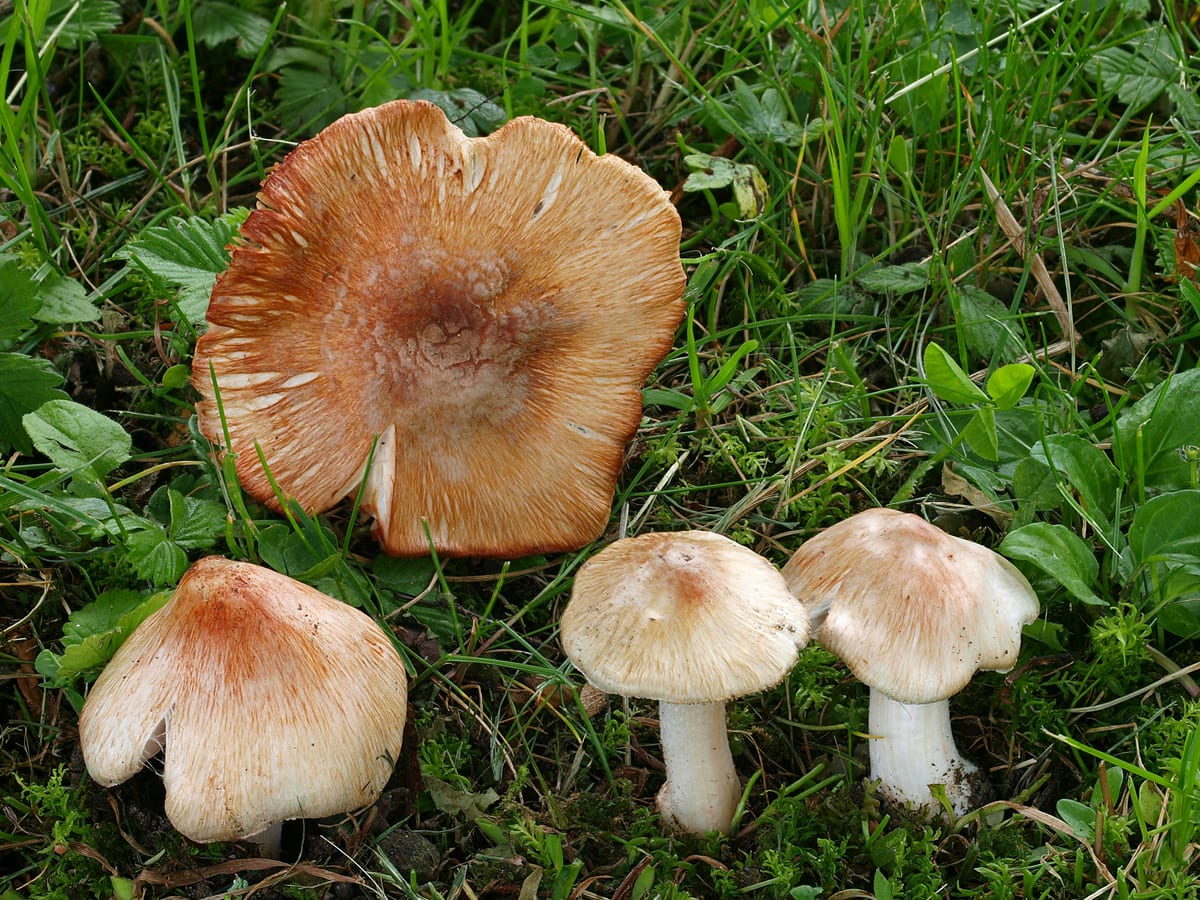 Deadly fibercap (blushing fibercap)
Inocybe erubescens
May–September
Deadly fibercap (blushing fibercap)
Inocybe erubescens
May–September
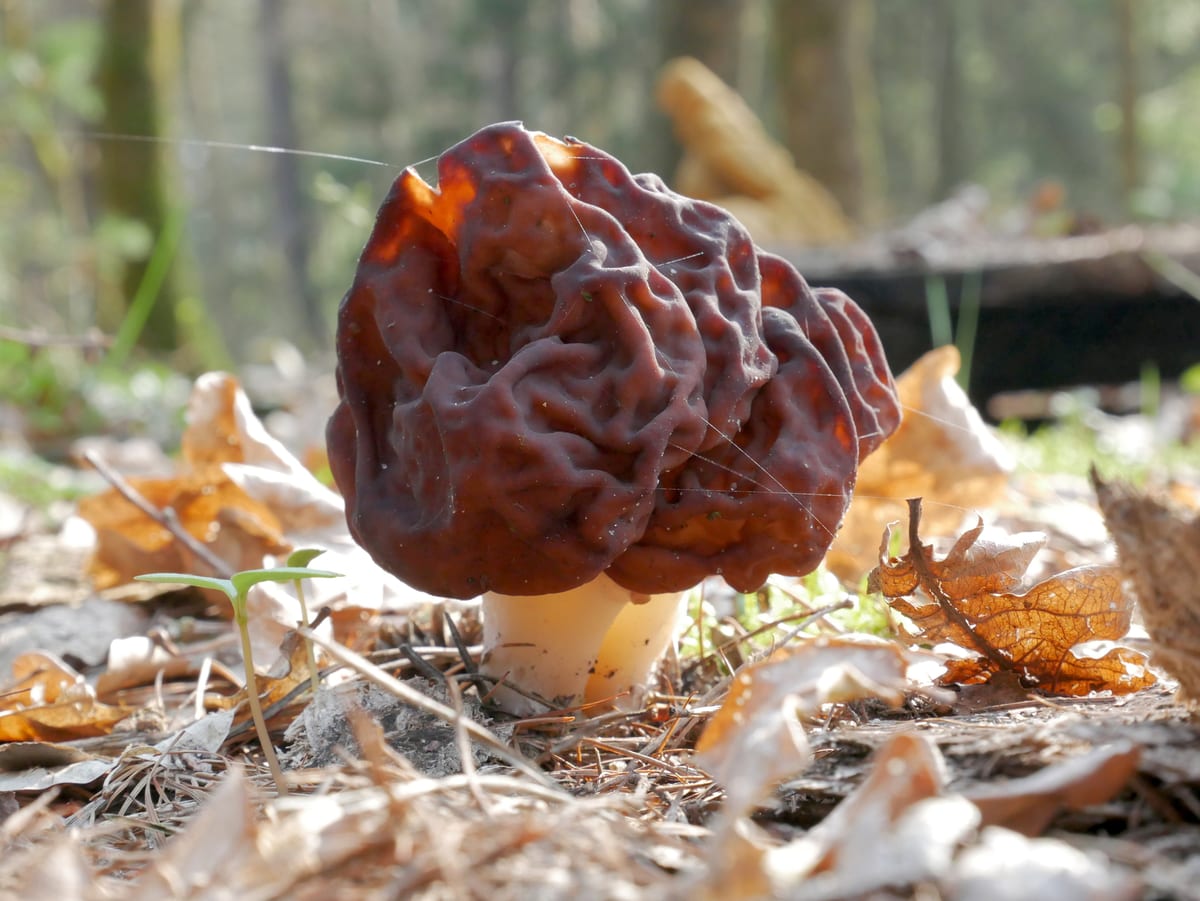 False morel
Gyromitra esculenta
April–May, spring
False morel
Gyromitra esculenta
April–May, spring
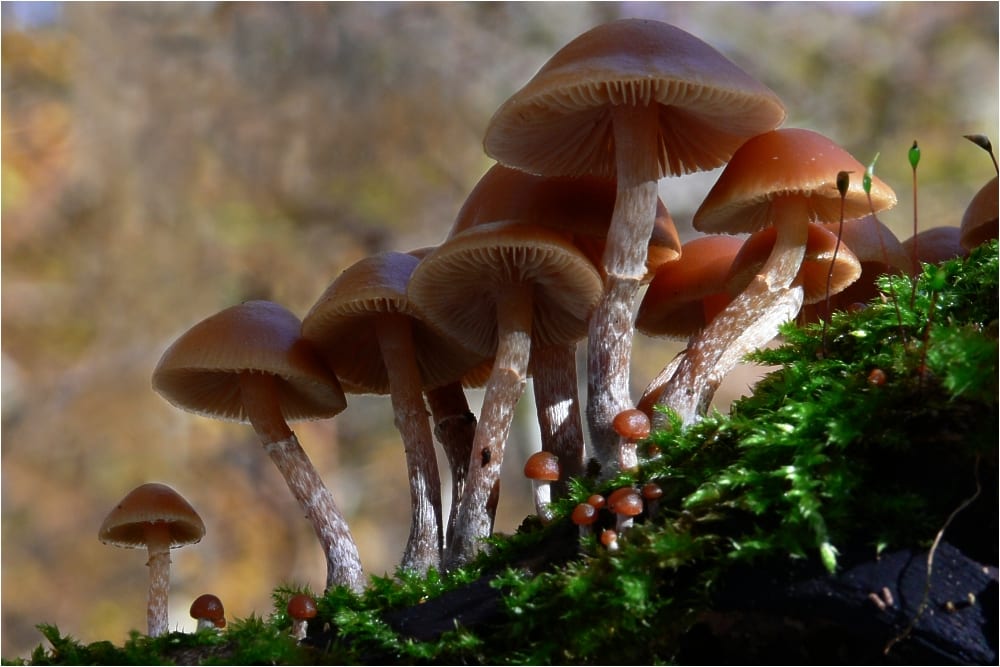 Funeral bell (deadly galerina)
Galerina marginata
August–November, the same time as honey fungi
Funeral bell (deadly galerina)
Galerina marginata
August–November, the same time as honey fungi
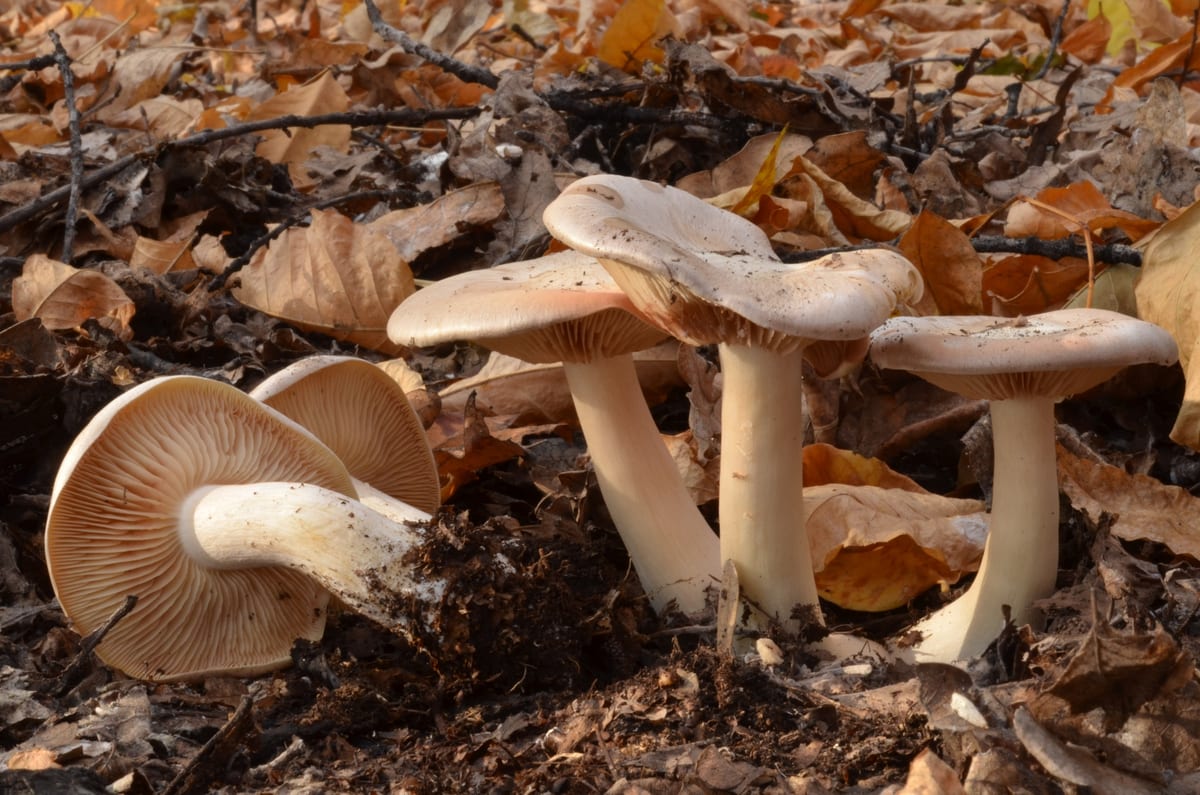 Livid entoloma
Entoloma sinuatum
May–October
Livid entoloma
Entoloma sinuatum
May–October
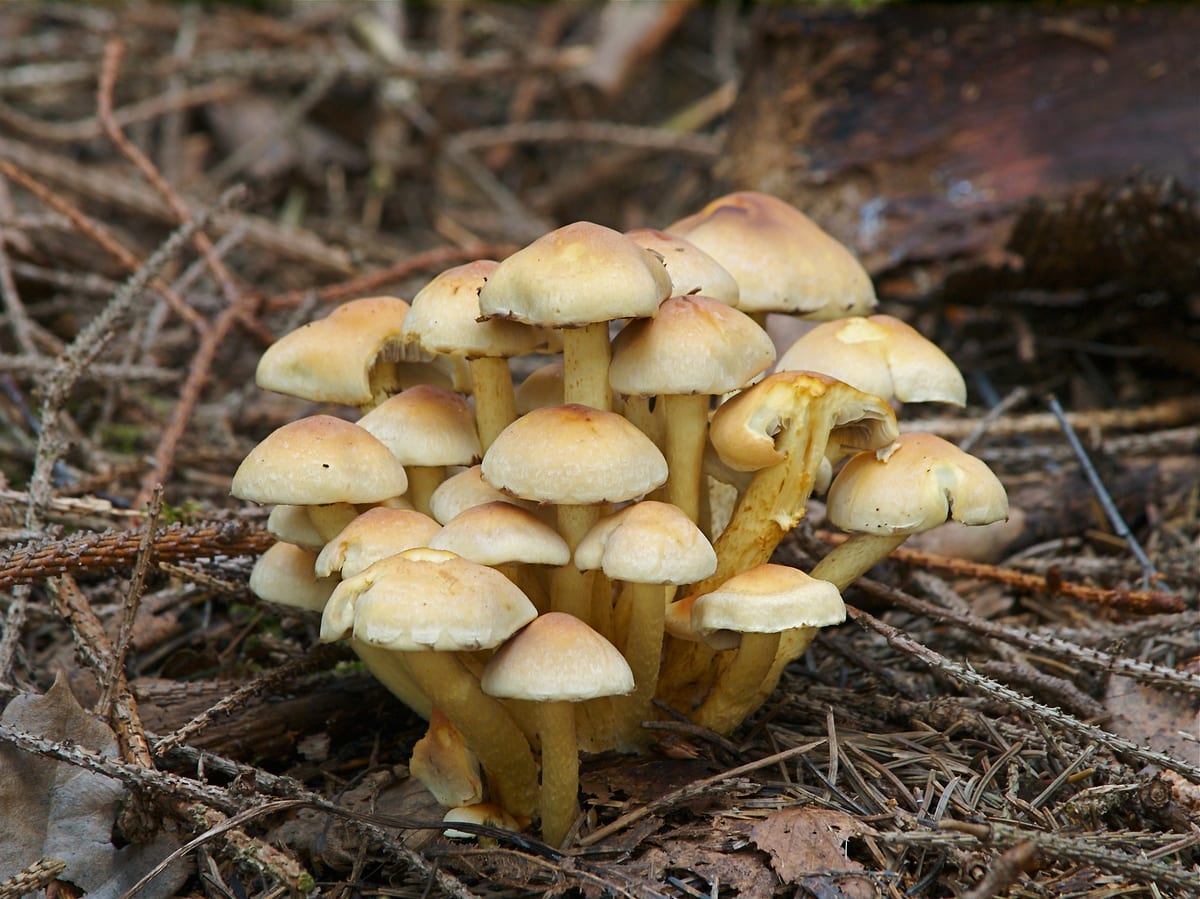 Sulphur tuft
Hypholoma fasciculare
May–November
Sulphur tuft
Hypholoma fasciculare
May–November
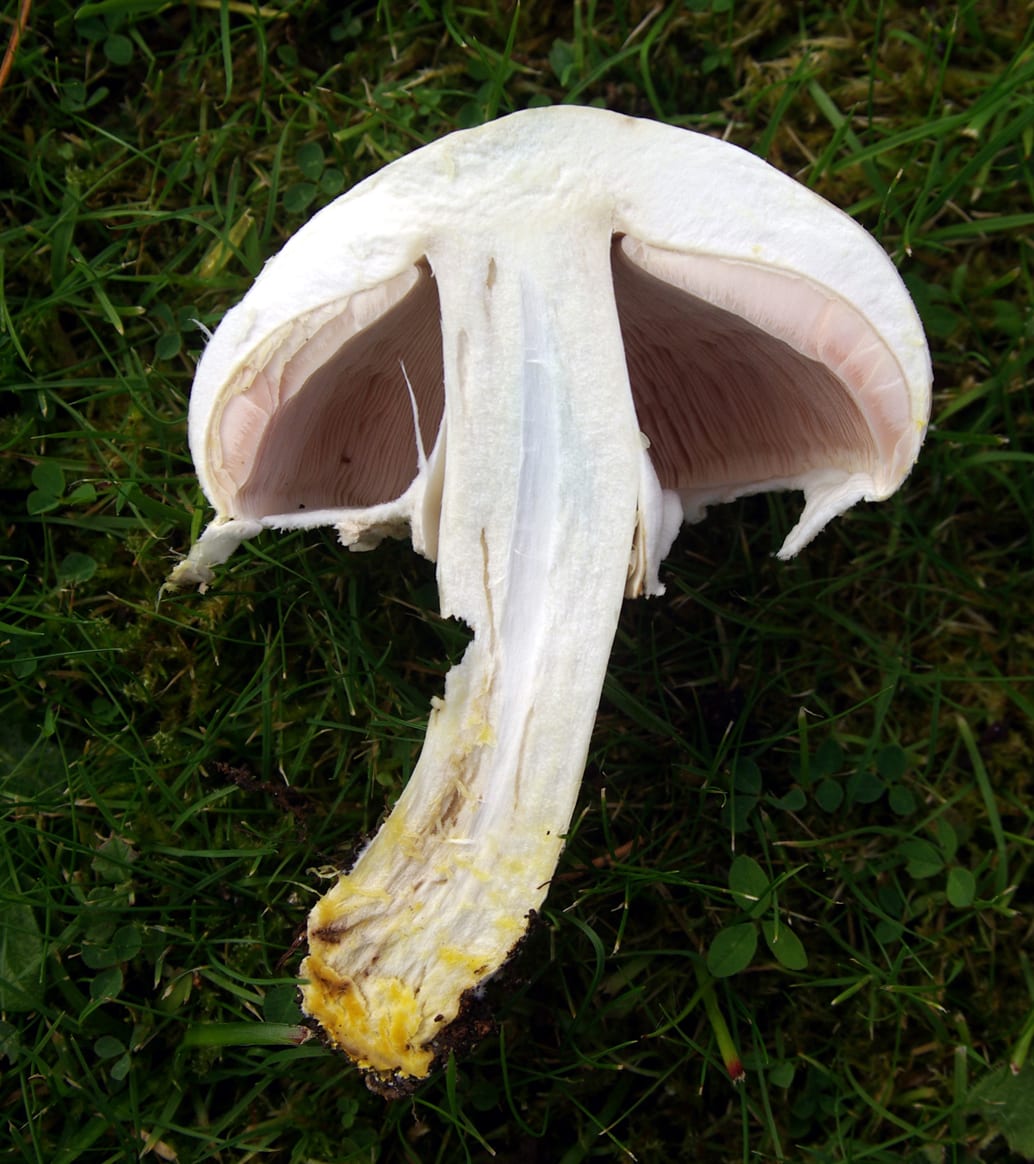 Yellow-staining mushroom
Agaricus xanthodermus
June–October
Yellow-staining mushroom
Agaricus xanthodermus
June–October
Mid summer July
In season now
Variety widens: saffron milkcaps and milkcaps join the main species. The first dangerous lookalikes appear — check the stem base carefully.
Edible 26
Bay bolete ('Polish mushroom')
Imleria badia
July–October
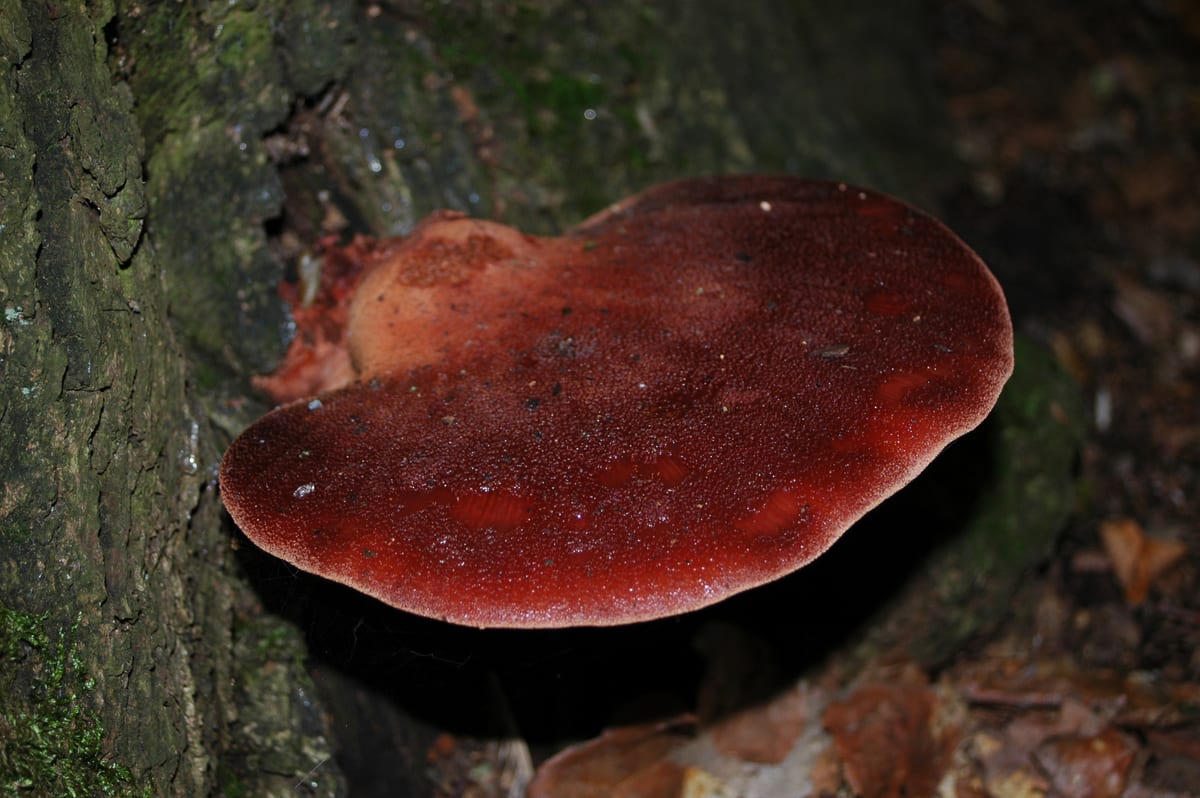 Beefsteak fungus
Fistulina hepatica
August–October
Bovine bolete (Jersey cow mushroom)
Suillus bovinus
July–October
Brown birch bolete
Leccinum scabrum
June–October
Butter bolete (grainy-stemmed)
Butyriboletus appendiculatus
June–September
Beefsteak fungus
Fistulina hepatica
August–October
Bovine bolete (Jersey cow mushroom)
Suillus bovinus
July–October
Brown birch bolete
Leccinum scabrum
June–October
Butter bolete (grainy-stemmed)
Butyriboletus appendiculatus
June–September
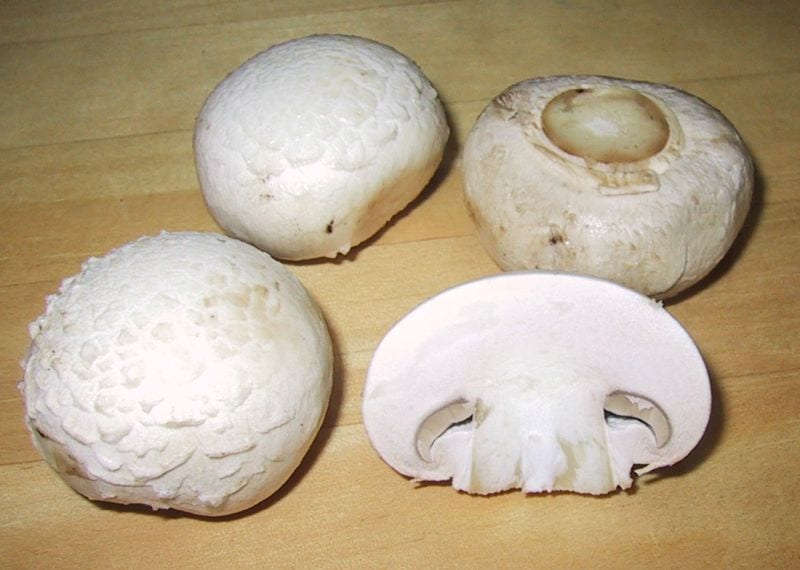 Button mushroom (cultivated agaricus)
Agaricus bisporus
Year-round in culture
Button mushroom (cultivated agaricus)
Agaricus bisporus
Year-round in culture
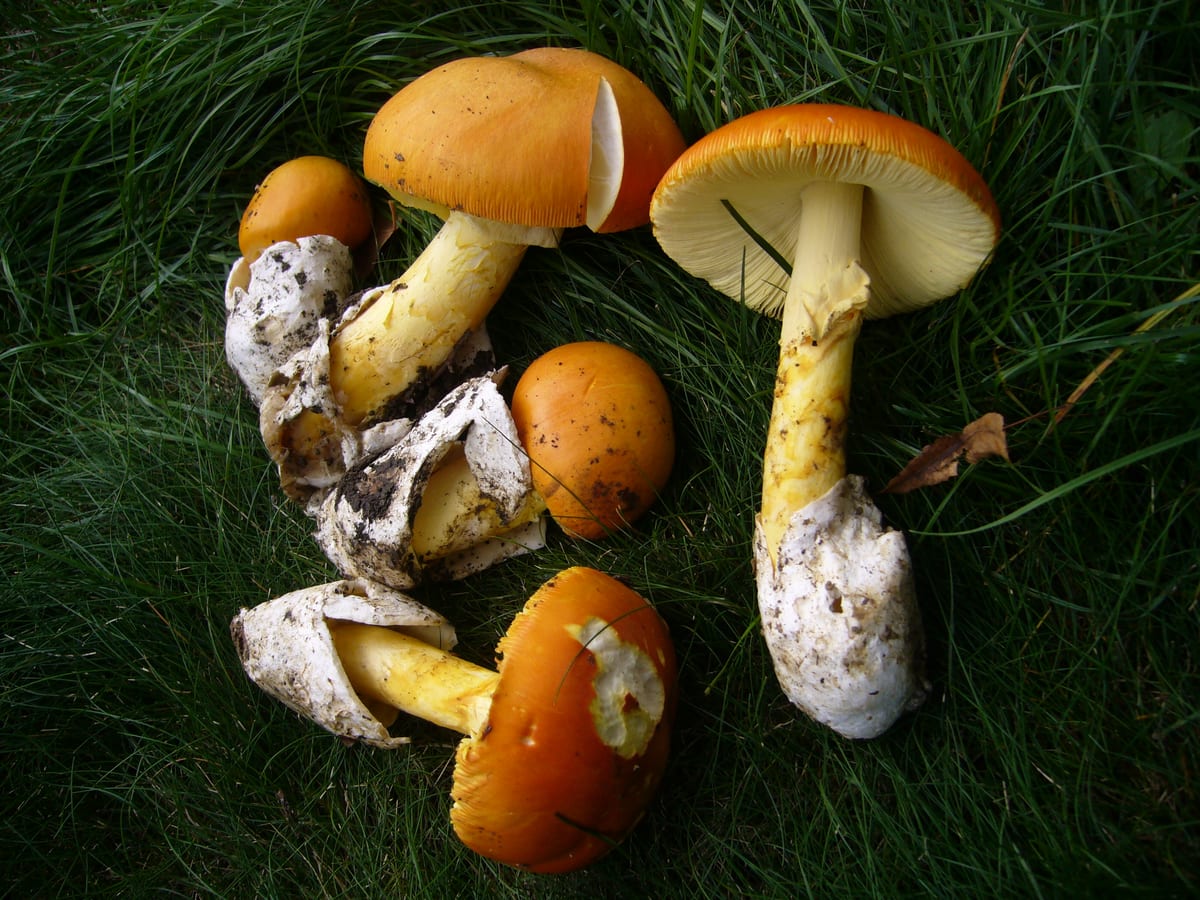 Caesar's mushroom
Amanita caesarea
June–October
Chanterelle (golden chanterelle)
Cantharellus cibarius
June–October
Fairy ring mushroom (scotch bonnet)
Marasmius oreades
May–October
Caesar's mushroom
Amanita caesarea
June–October
Chanterelle (golden chanterelle)
Cantharellus cibarius
June–October
Fairy ring mushroom (scotch bonnet)
Marasmius oreades
May–October
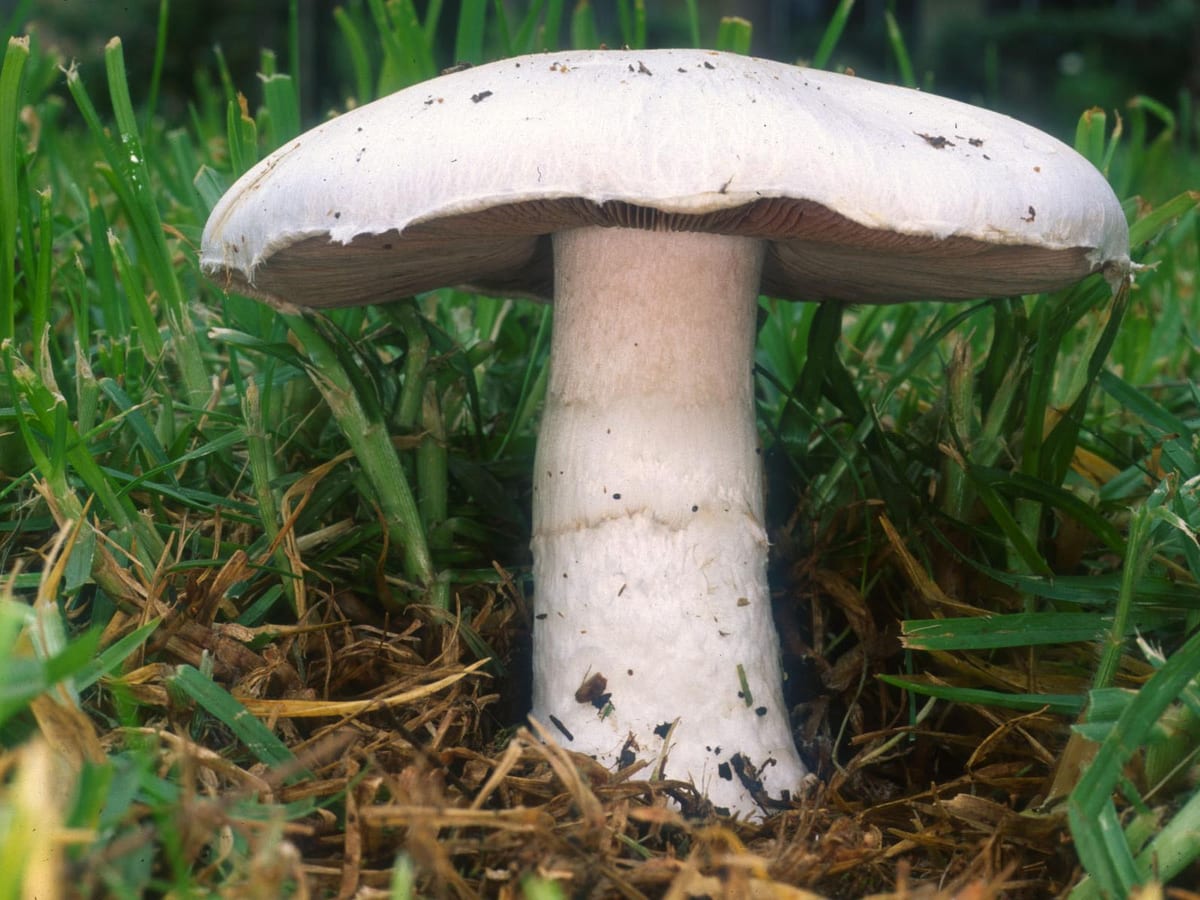 Field mushroom (meadow agaricus)
Agaricus campestris
May–October
Giant puffball
Calvatia gigantea
August–October
Green cracking bolete (suede bolete)
Xerocomus subtomentosus
June–October
Field mushroom (meadow agaricus)
Agaricus campestris
May–October
Giant puffball
Calvatia gigantea
August–October
Green cracking bolete (suede bolete)
Xerocomus subtomentosus
June–October
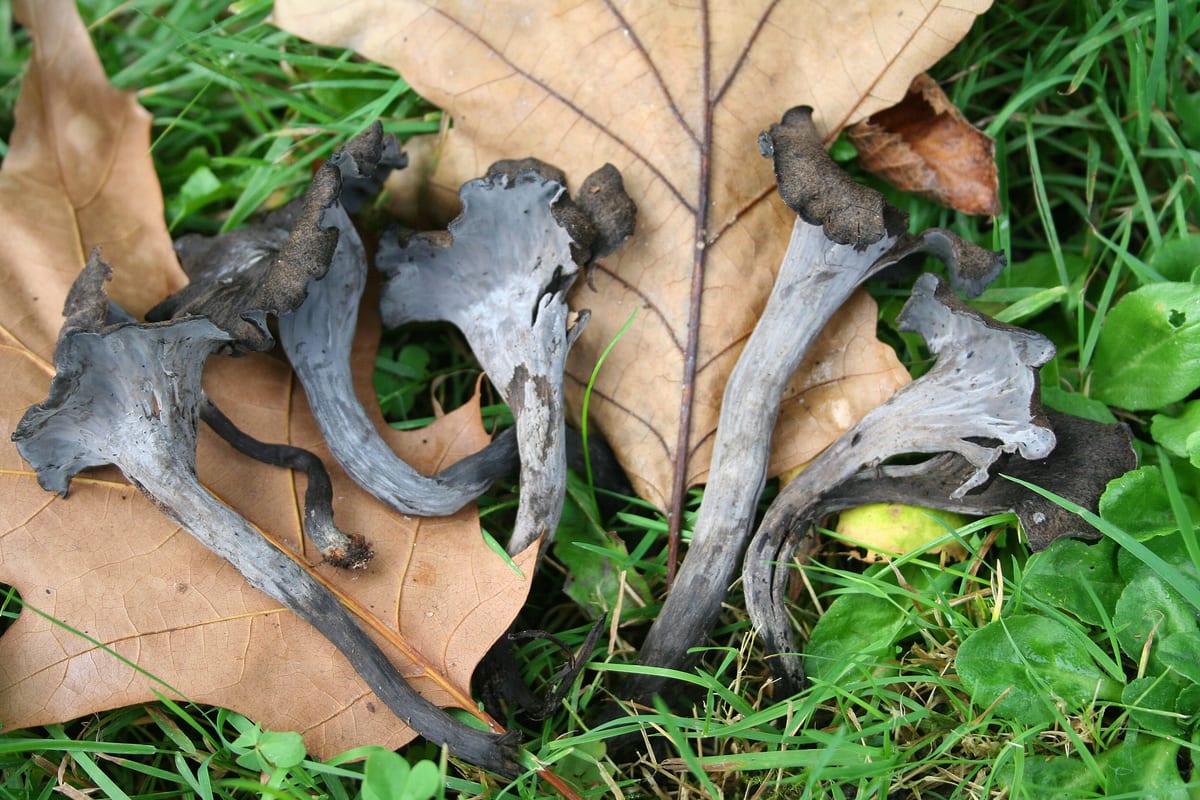 Horn of plenty (black chanterelle)
Craterellus cornucopioides
July–October
Parasol mushroom
Macrolepiota procera
June–October
Horn of plenty (black chanterelle)
Craterellus cornucopioides
July–October
Parasol mushroom
Macrolepiota procera
June–October
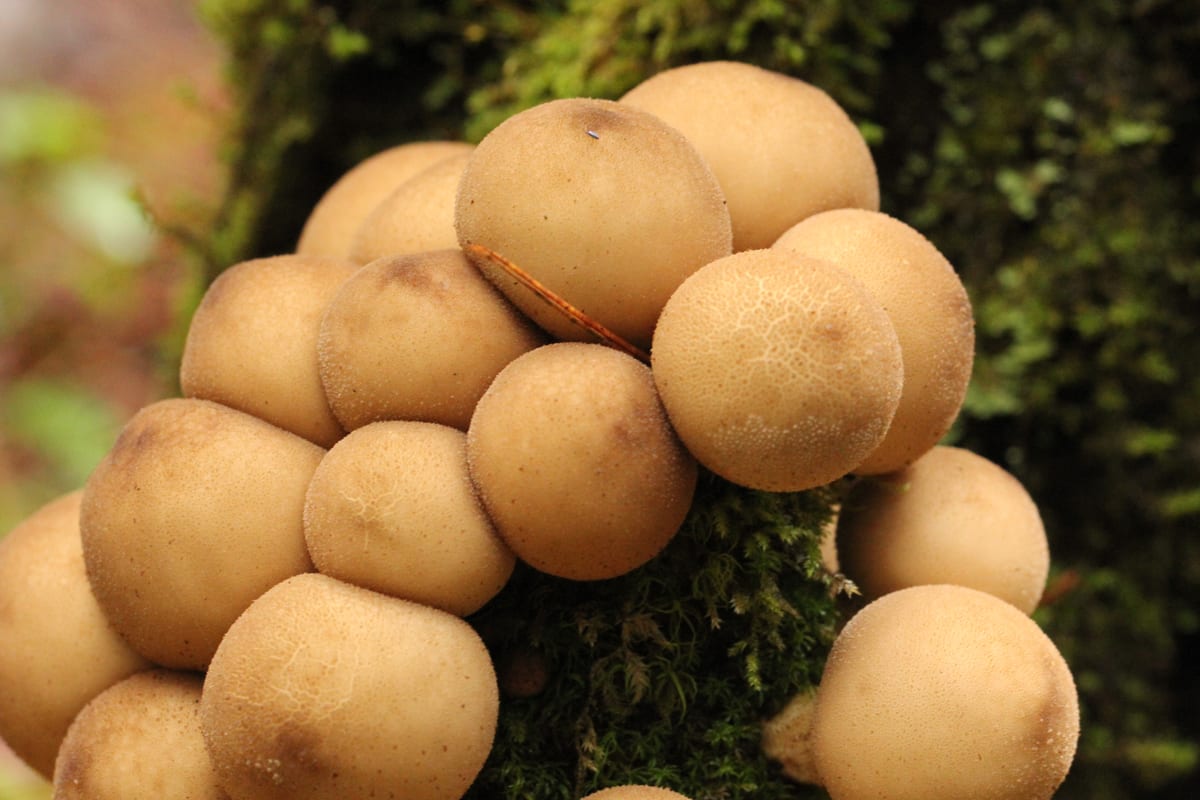 Pear-shaped puffball
Lycoperdon pyriforme
July–November
Pine bolete
Boletus pinophilus
May–October, the first of the porcini group
Porcini (king bolete)
Boletus edulis
June–October
Red-capped scaber stalk (aspen bolete)
Leccinum aurantiacum
June–October
Pear-shaped puffball
Lycoperdon pyriforme
July–November
Pine bolete
Boletus pinophilus
May–October, the first of the porcini group
Porcini (king bolete)
Boletus edulis
June–October
Red-capped scaber stalk (aspen bolete)
Leccinum aurantiacum
June–October
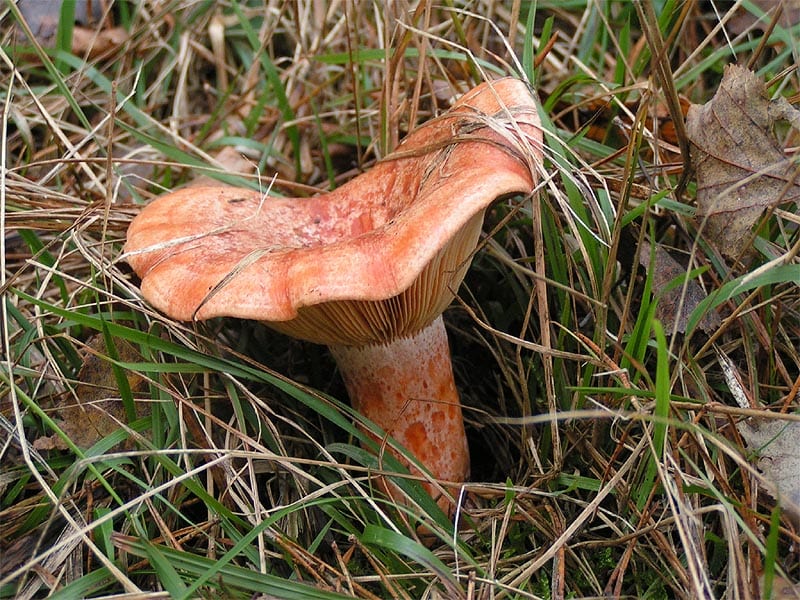 Saffron milkcap
Lactarius deliciosus
June–October
Shaggy inkcap (lawyer's wig)
Coprinus comatus
June–October
Slippery jacks (Suillus)
Suillus
June–October
Summer bolete (early porcini)
Boletus reticulatus
May–September
Summer honey fungus (two-toned pholiota)
Kuehneromyces mutabilis
May–October
Saffron milkcap
Lactarius deliciosus
June–October
Shaggy inkcap (lawyer's wig)
Coprinus comatus
June–October
Slippery jacks (Suillus)
Suillus
June–October
Summer bolete (early porcini)
Boletus reticulatus
May–September
Summer honey fungus (two-toned pholiota)
Kuehneromyces mutabilis
May–October
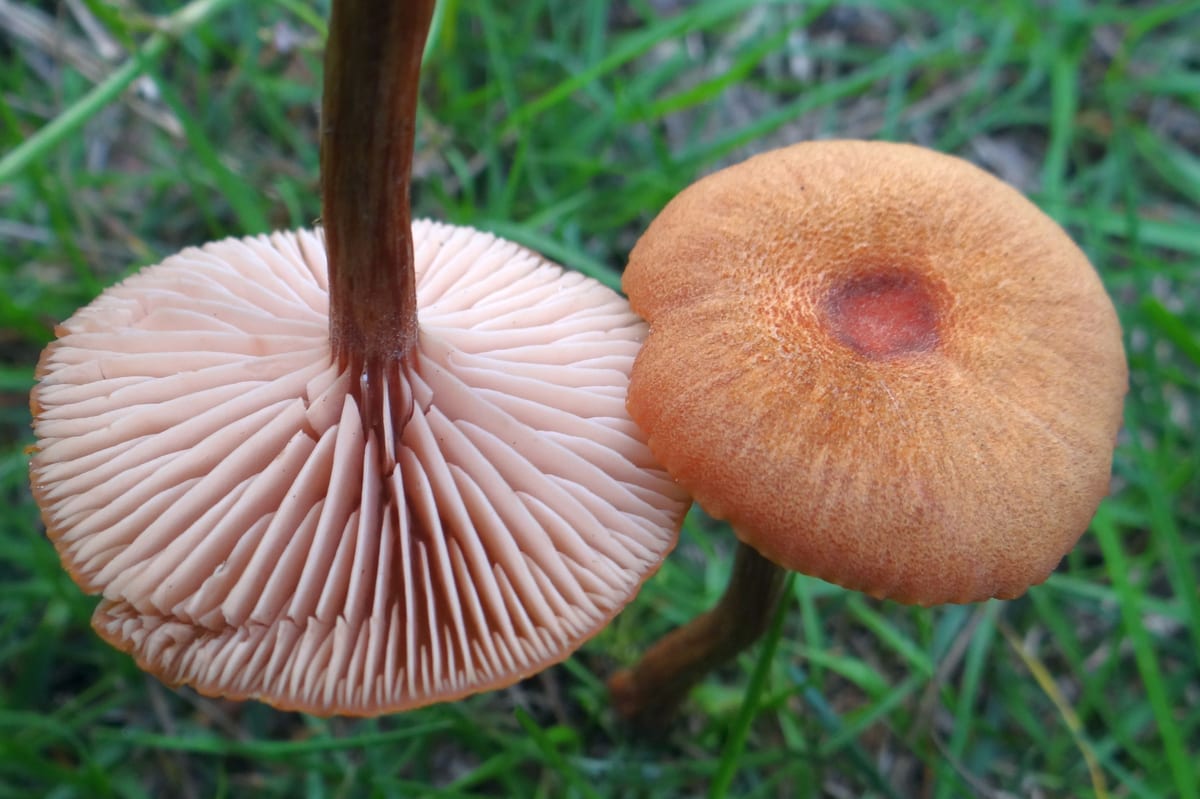 The deceiver (pink laccaria)
Laccaria laccata
June–November
The deceiver (pink laccaria)
Laccaria laccata
June–November
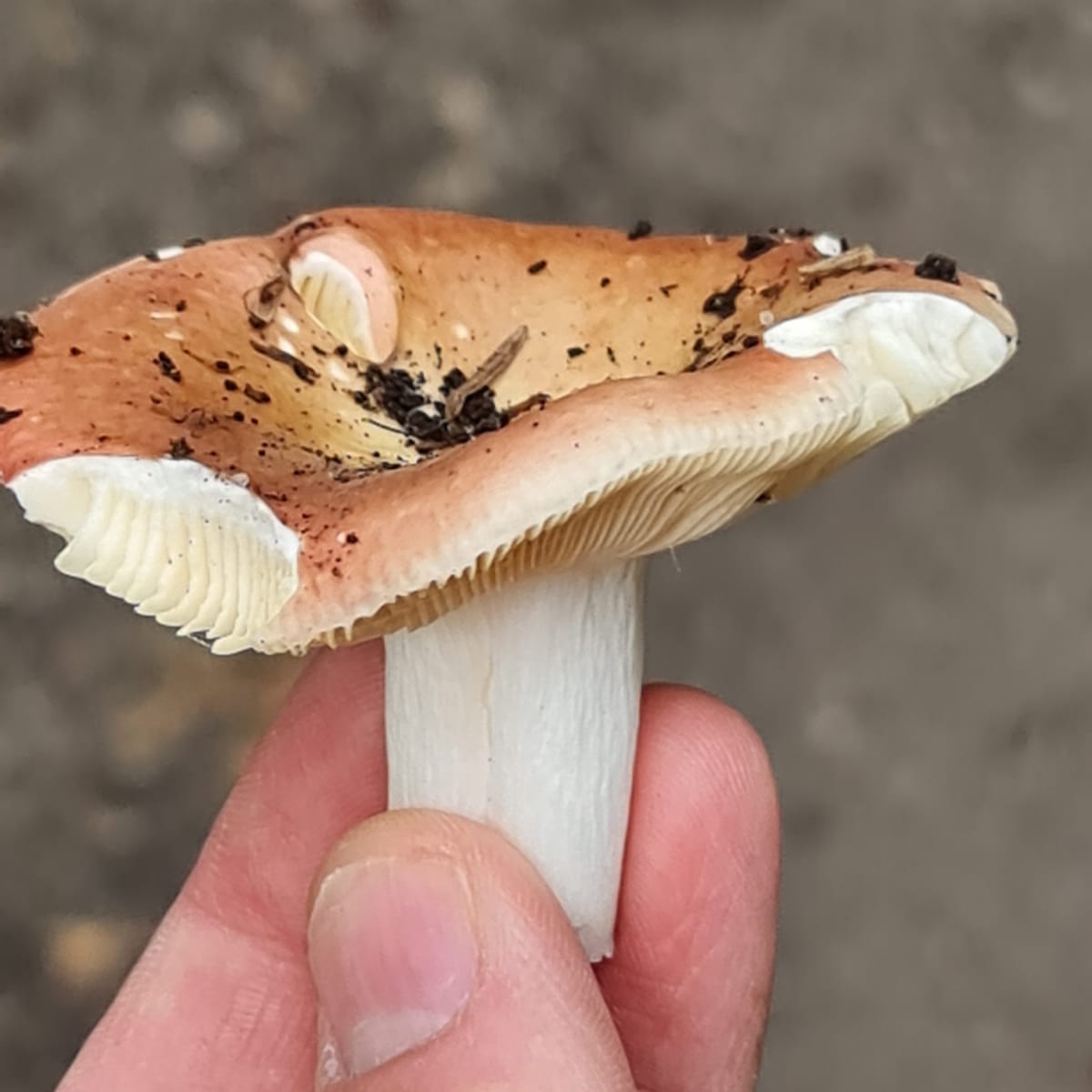 The flirt (russula vesca)
Russula vesca
June–October
Weeping bolete (grainy suillus)
Suillus granulatus
May–November
The flirt (russula vesca)
Russula vesca
June–October
Weeping bolete (grainy suillus)
Suillus granulatus
May–November
Conditionally edible requires processing: boiling, soaking, salting 16
Common inkcap
Coprinopsis atramentaria
May–October
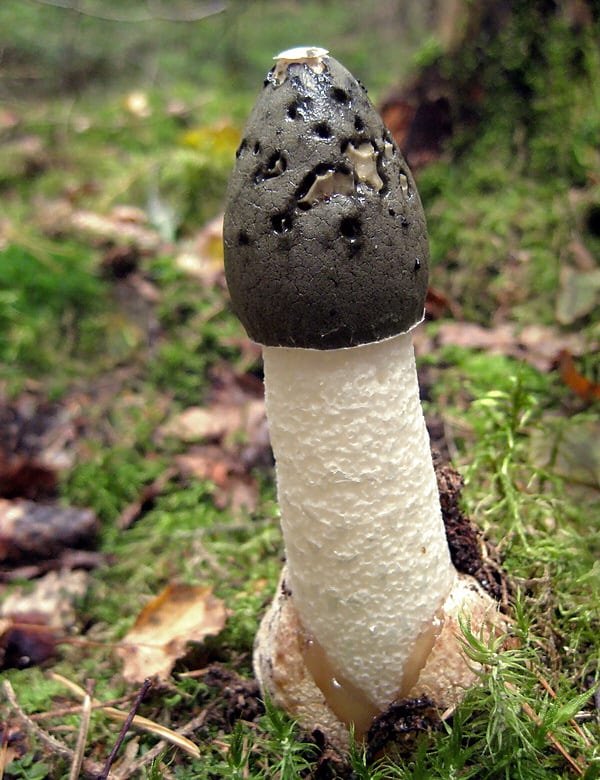 Common stinkhorn
Phallus impudicus
July–October
Common stinkhorn
Phallus impudicus
July–October
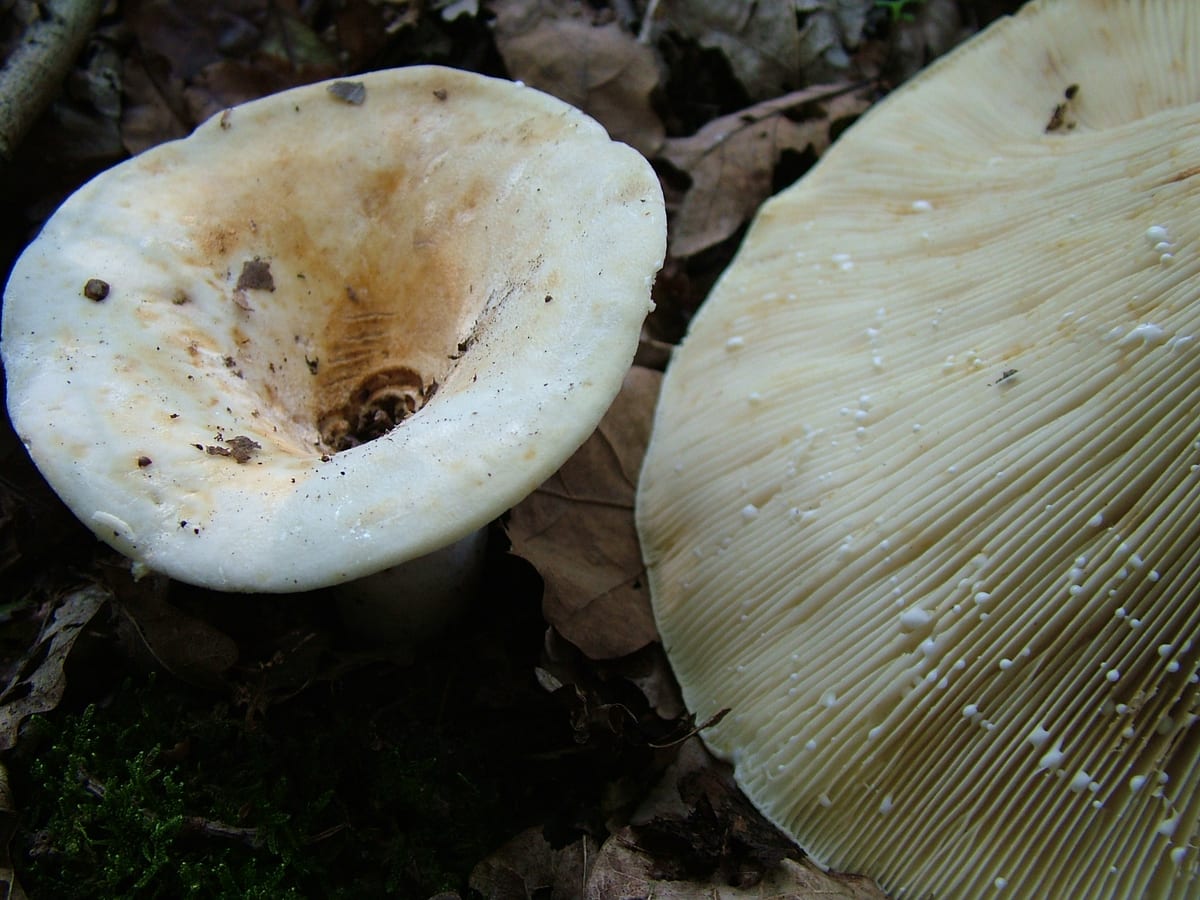 Fleecy milkcap
Lactarius vellereus
July–October
Fleecy milkcap
Lactarius vellereus
July–October
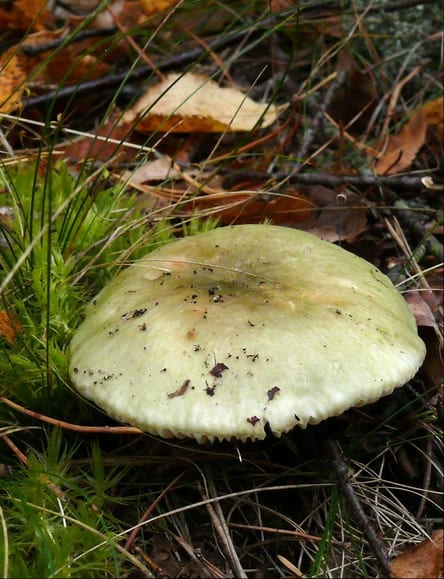 Green russula (green-cracking)
Russula aeruginea
July–October
Lurid bolete
Suillellus luridus
June–October
Green russula (green-cracking)
Russula aeruginea
July–October
Lurid bolete
Suillellus luridus
June–October
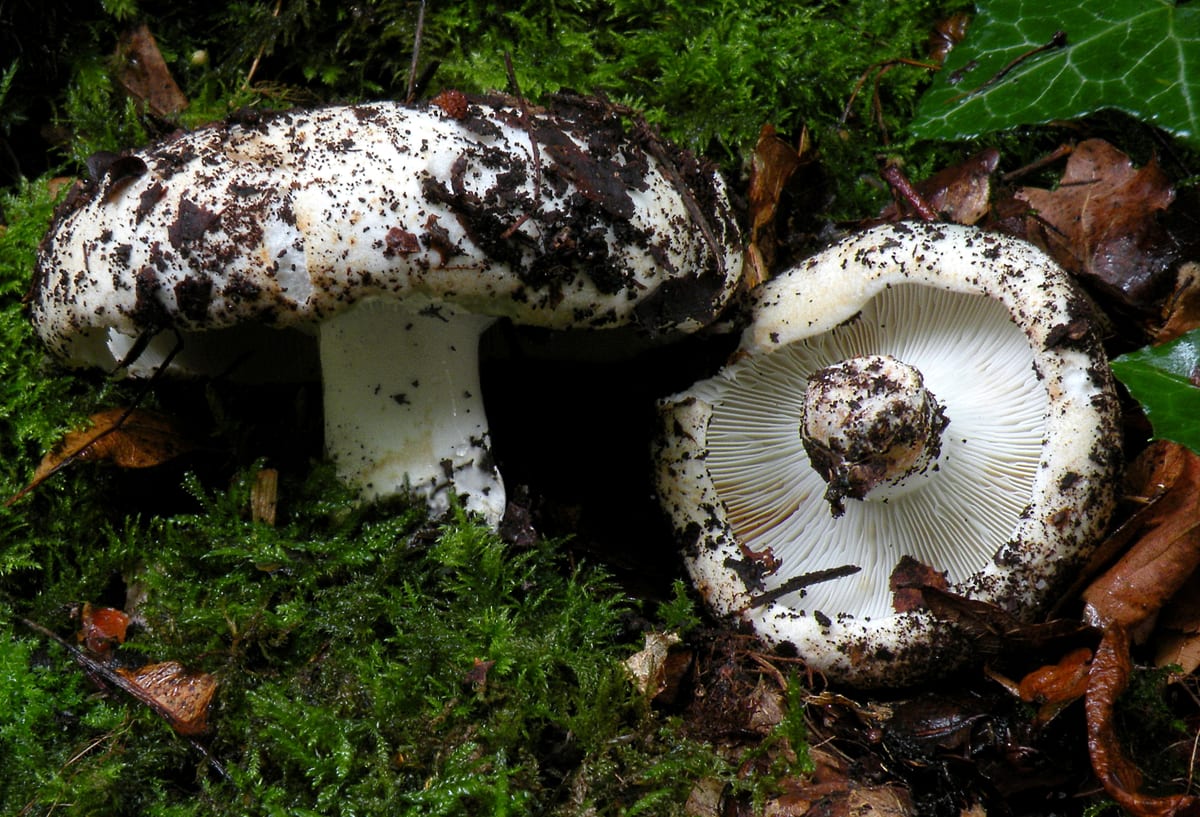 Milk-white brittlegill
Russula delica
July–October
Milk-white brittlegill
Russula delica
July–October
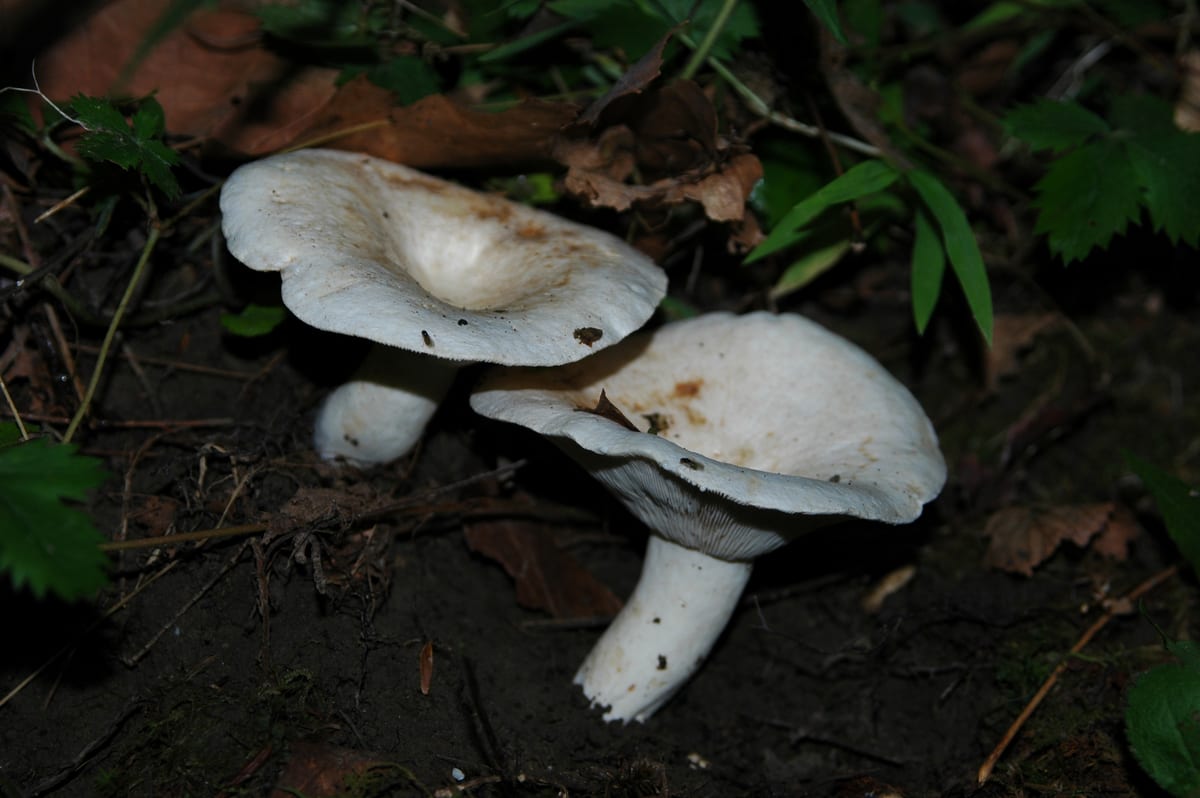 Peppery milkcap
Lactarius piperatus
July–October
Puffball (Lycoperdon group)
Lycoperdon
July–October
Peppery milkcap
Lactarius piperatus
July–October
Puffball (Lycoperdon group)
Lycoperdon
July–October
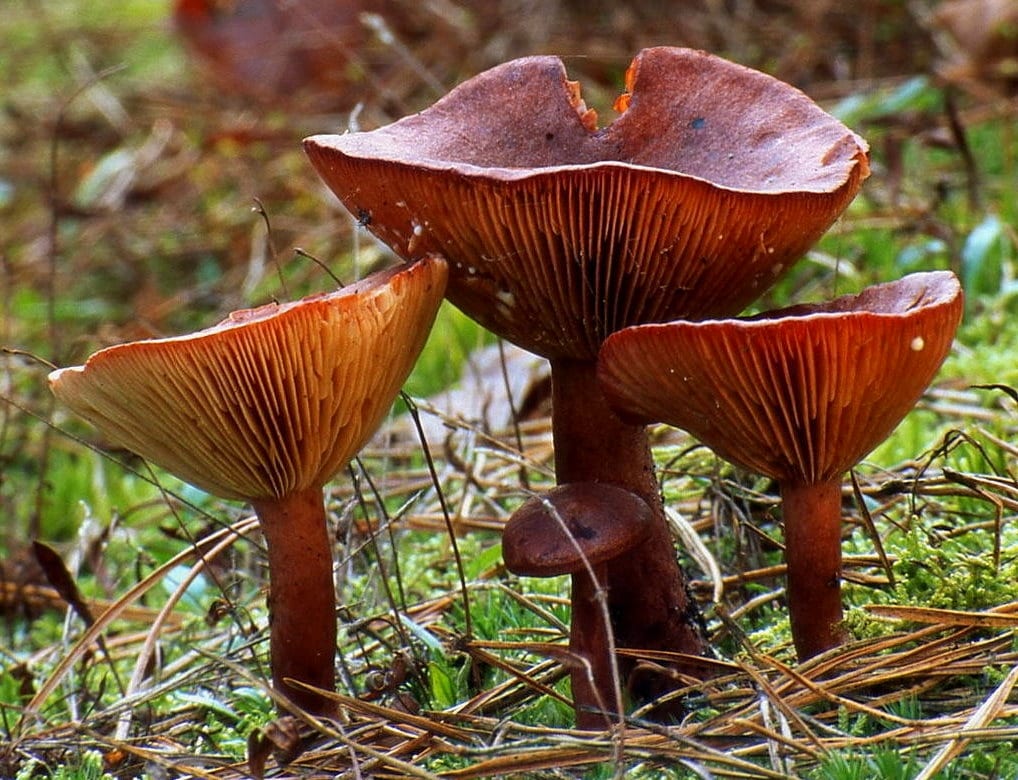 Rufous milkcap
Lactarius rufus
July–October
Rufous milkcap
Lactarius rufus
July–October
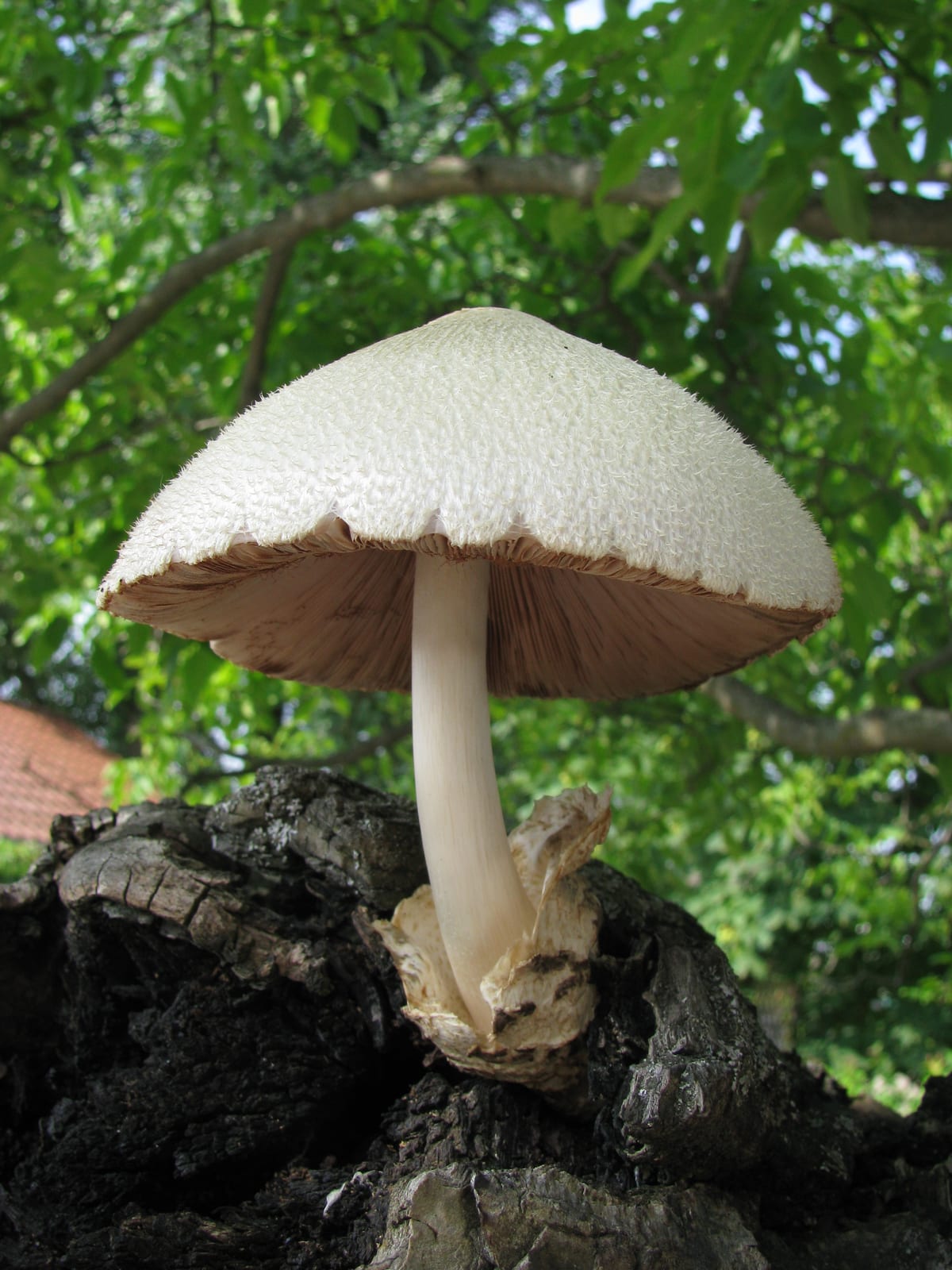 Silky volvariella
Volvariella bombycina
July–September
Silky volvariella
Volvariella bombycina
July–September
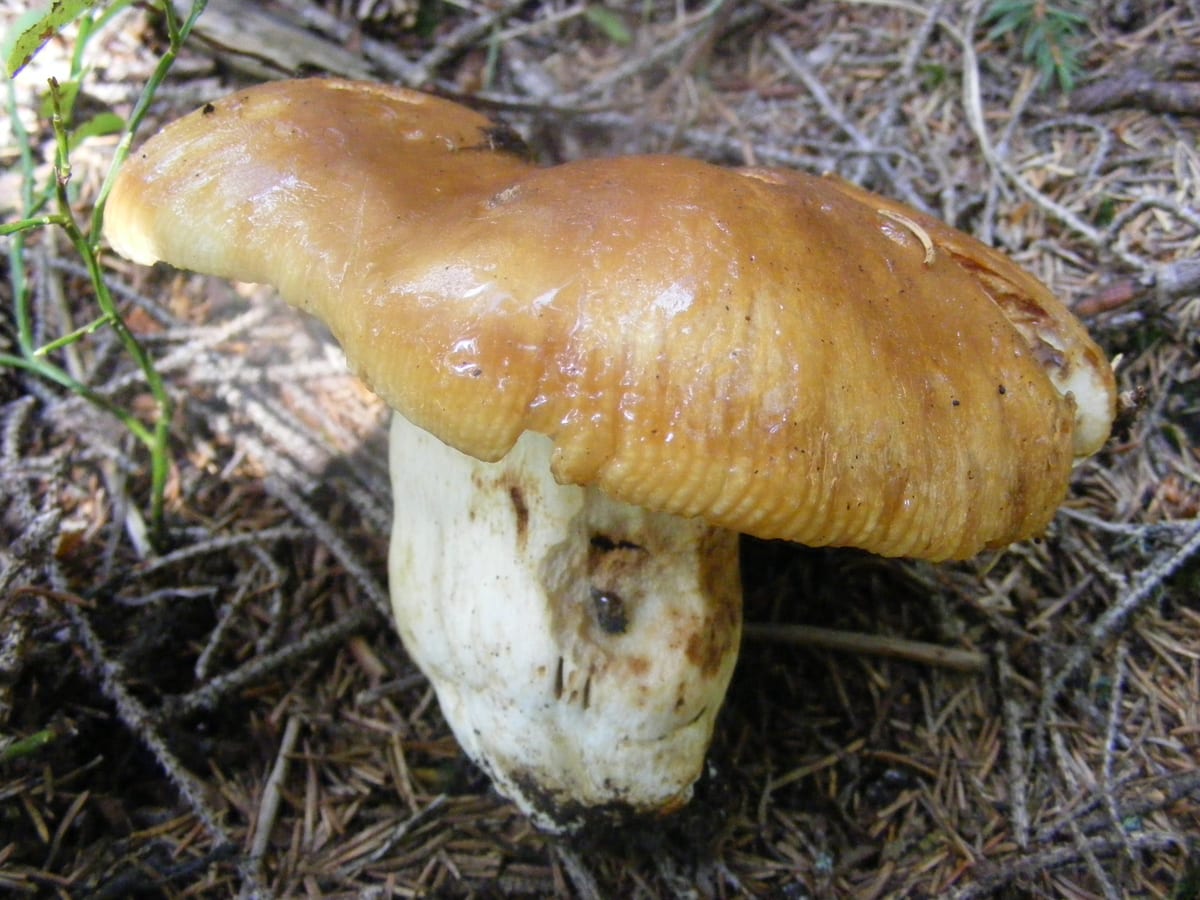 Stinking russula
Russula foetens
July–October
Sulphur shelf (chicken of the woods)
Laetiporus sulphureus
May–October
The blusher (amanita rubescens)
Amanita rubescens
June–October
Stinking russula
Russula foetens
July–October
Sulphur shelf (chicken of the woods)
Laetiporus sulphureus
May–October
The blusher (amanita rubescens)
Amanita rubescens
June–October
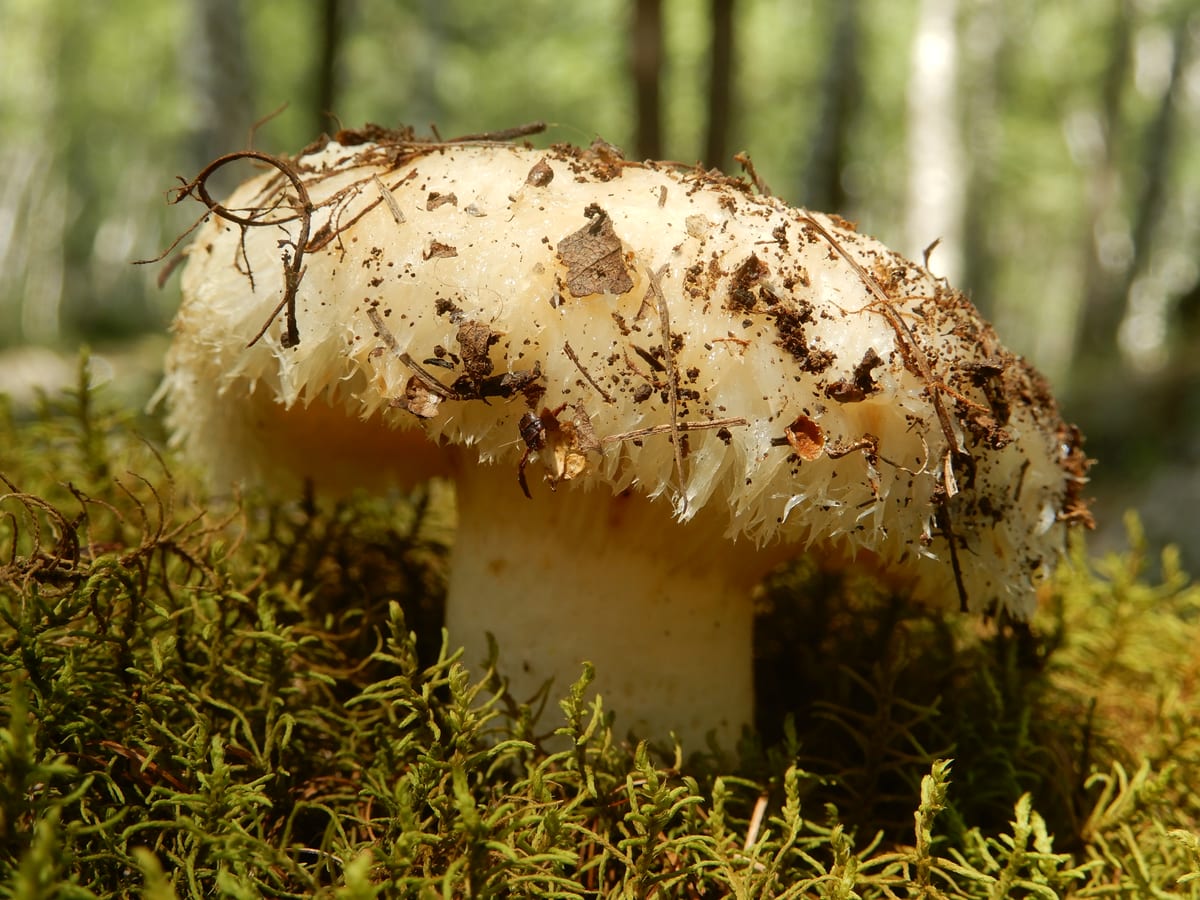 True milkcap (white milk-cap)
Lactarius resimus
July–September
Woolly milkcap (pink fringe)
Lactarius torminosus
June–October
True milkcap (white milk-cap)
Lactarius resimus
July–September
Woolly milkcap (pink fringe)
Lactarius torminosus
June–October
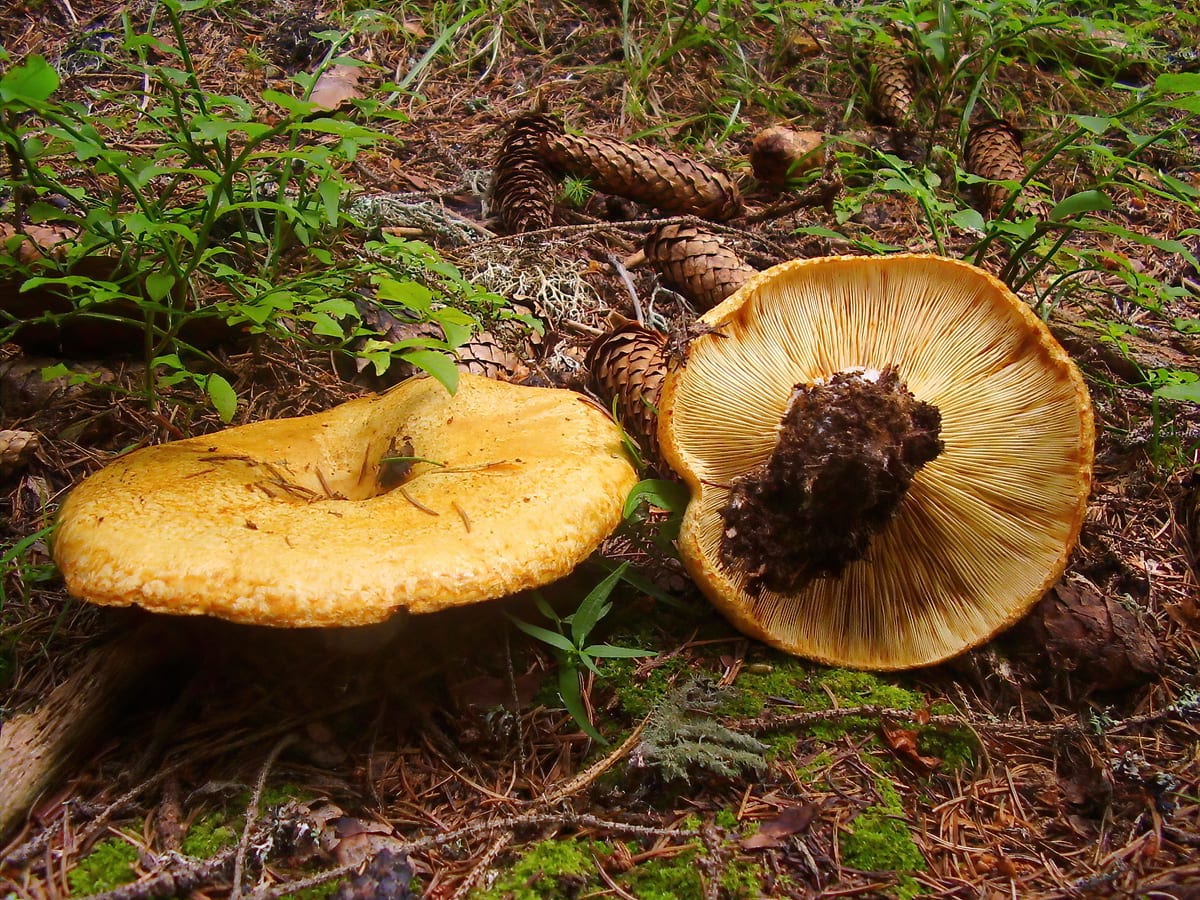 Yellow milkcap (podskryobnik)
Lactarius scrobiculatus
July–October
Yellow milkcap (podskryobnik)
Lactarius scrobiculatus
July–October
Medicinal 2
Birch polypore (Ötzi's mushroom)
Fomitopsis betulina
August–October, persisting into winter
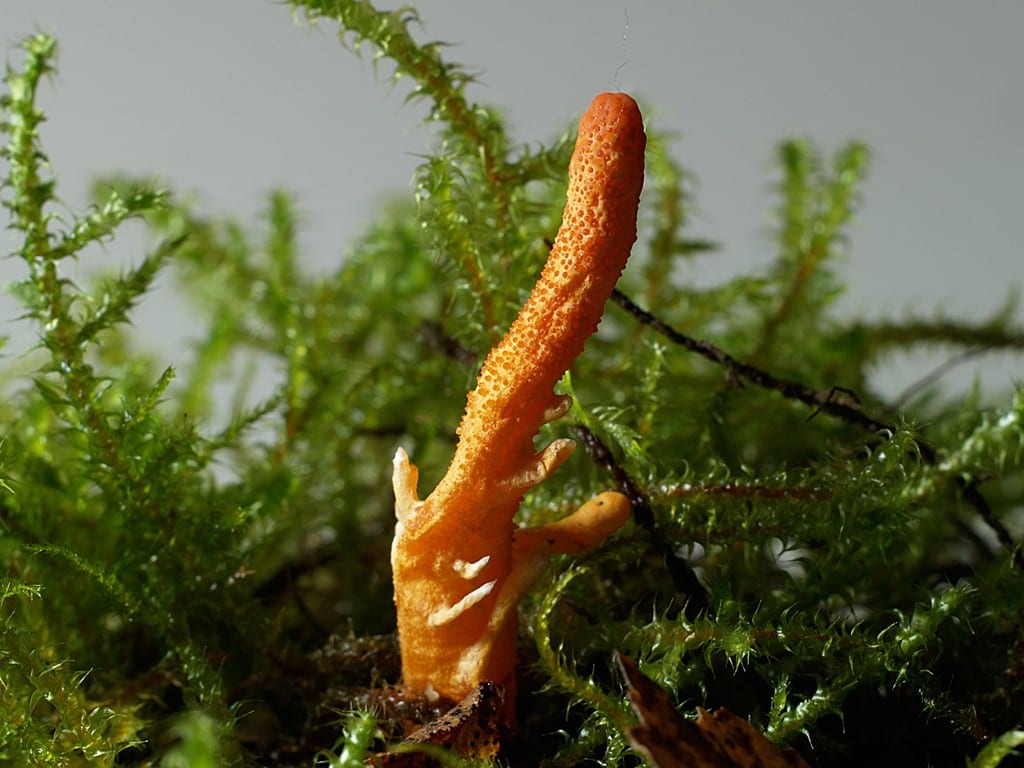 Cordyceps militaris
Year-round in culture
Cordyceps militaris
Cordyceps militaris
Year-round in culture
Dangerous — do not pick 16
These mushrooms grow at the same time and in the same places. Some are deadly and cooking does not help.
Bitter bolete (bilious bolete)
Tylopilus felleus
June–October
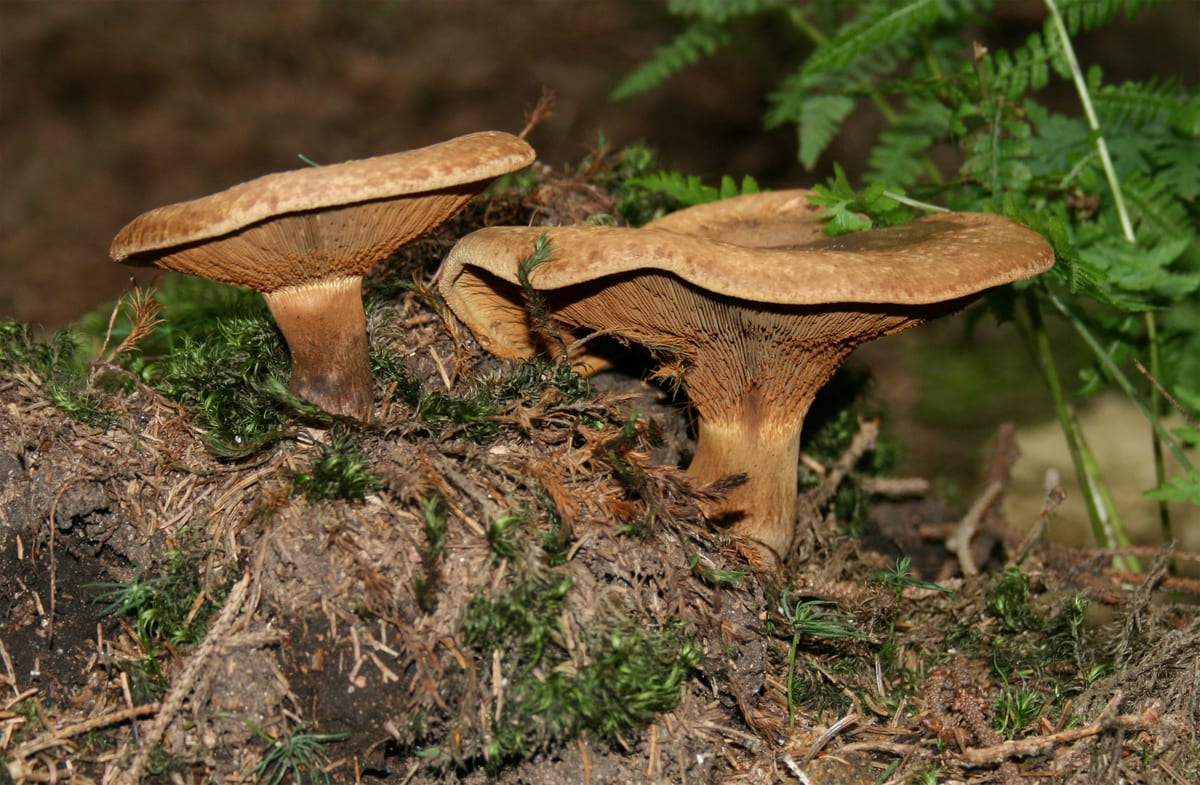 Brown roll-rim
Paxillus involutus
July–October
Brown roll-rim
Paxillus involutus
July–October
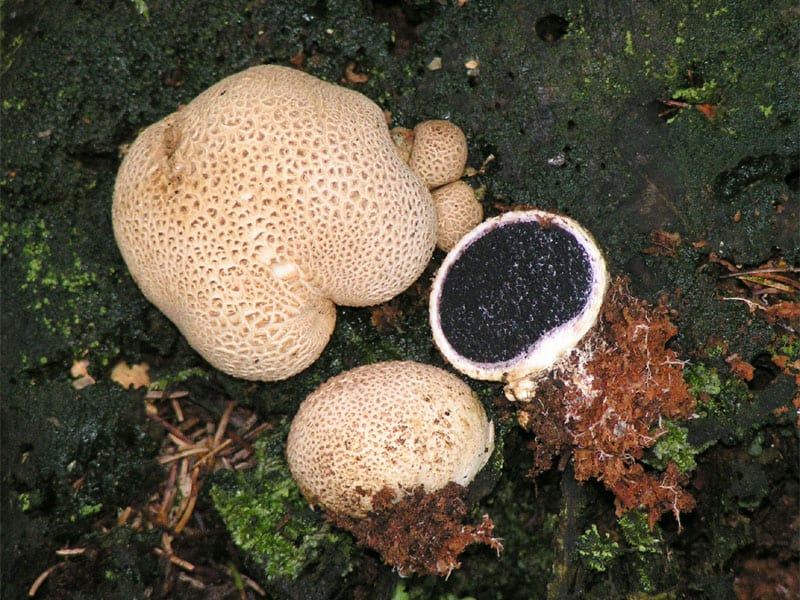 Common earthball (false puffball)
Scleroderma citrinum
July–November
Deadly fibercap (blushing fibercap)
Inocybe erubescens
May–September
Common earthball (false puffball)
Scleroderma citrinum
July–November
Deadly fibercap (blushing fibercap)
Inocybe erubescens
May–September
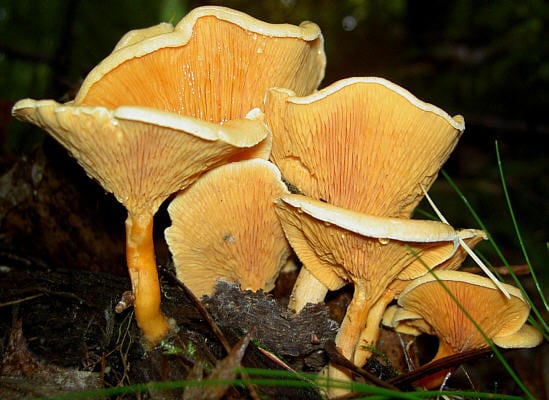 False chanterelle
Hygrophoropsis aurantiaca
July–November
False chanterelle
Hygrophoropsis aurantiaca
July–November
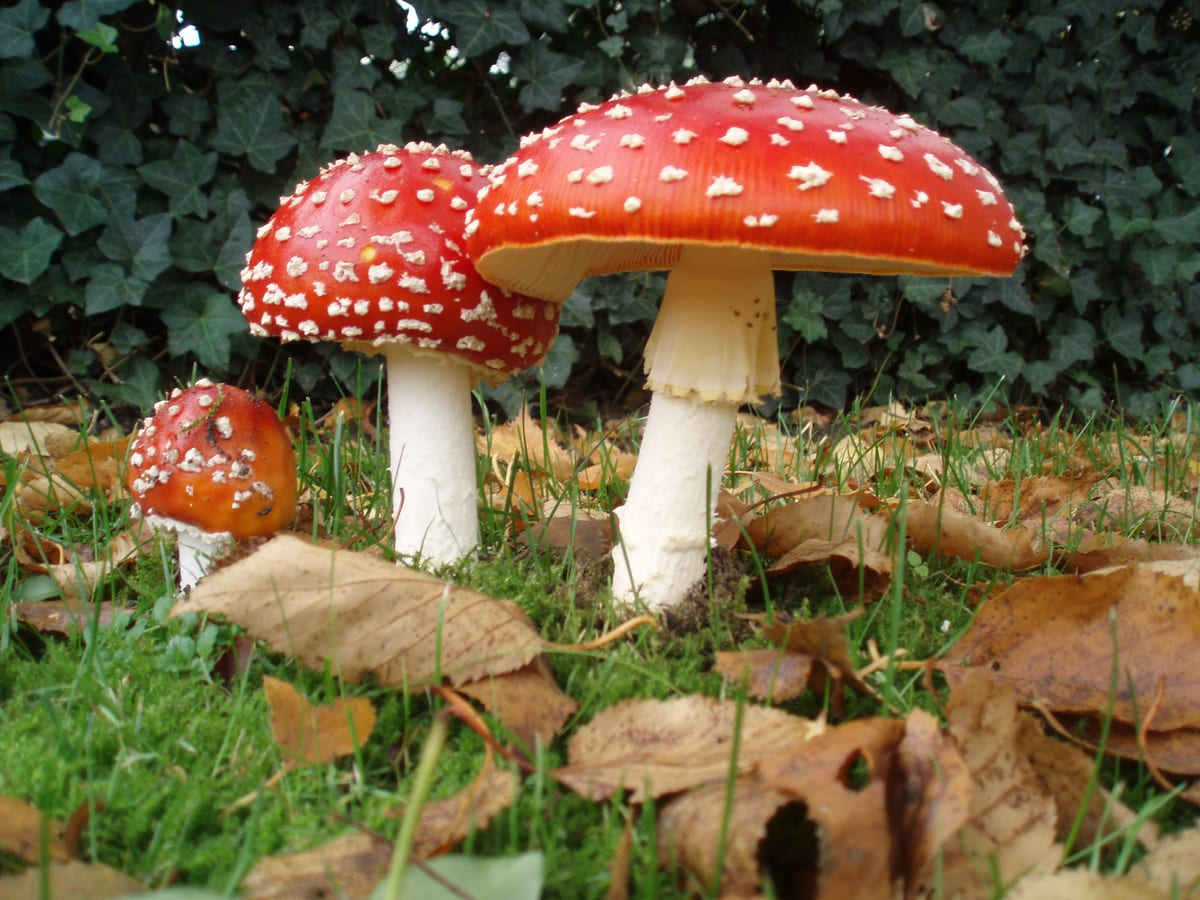 Fly agaric
Amanita muscaria
July–October
Fly agaric
Amanita muscaria
July–October
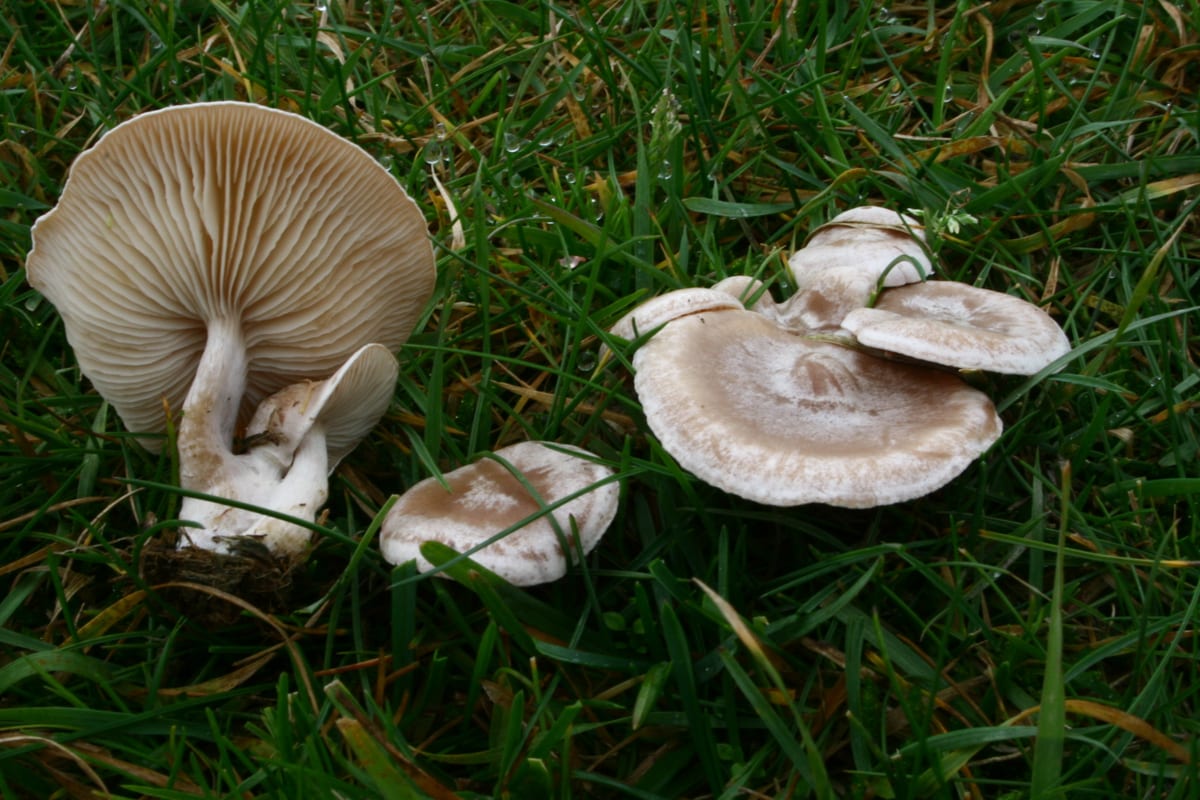 Fool's funnel (bleached funnel)
Clitocybe rivulosa
June–October
Funeral bell (deadly galerina)
Galerina marginata
August–November, the same time as honey fungi
Livid entoloma
Entoloma sinuatum
May–October
Fool's funnel (bleached funnel)
Clitocybe rivulosa
June–October
Funeral bell (deadly galerina)
Galerina marginata
August–November, the same time as honey fungi
Livid entoloma
Entoloma sinuatum
May–October
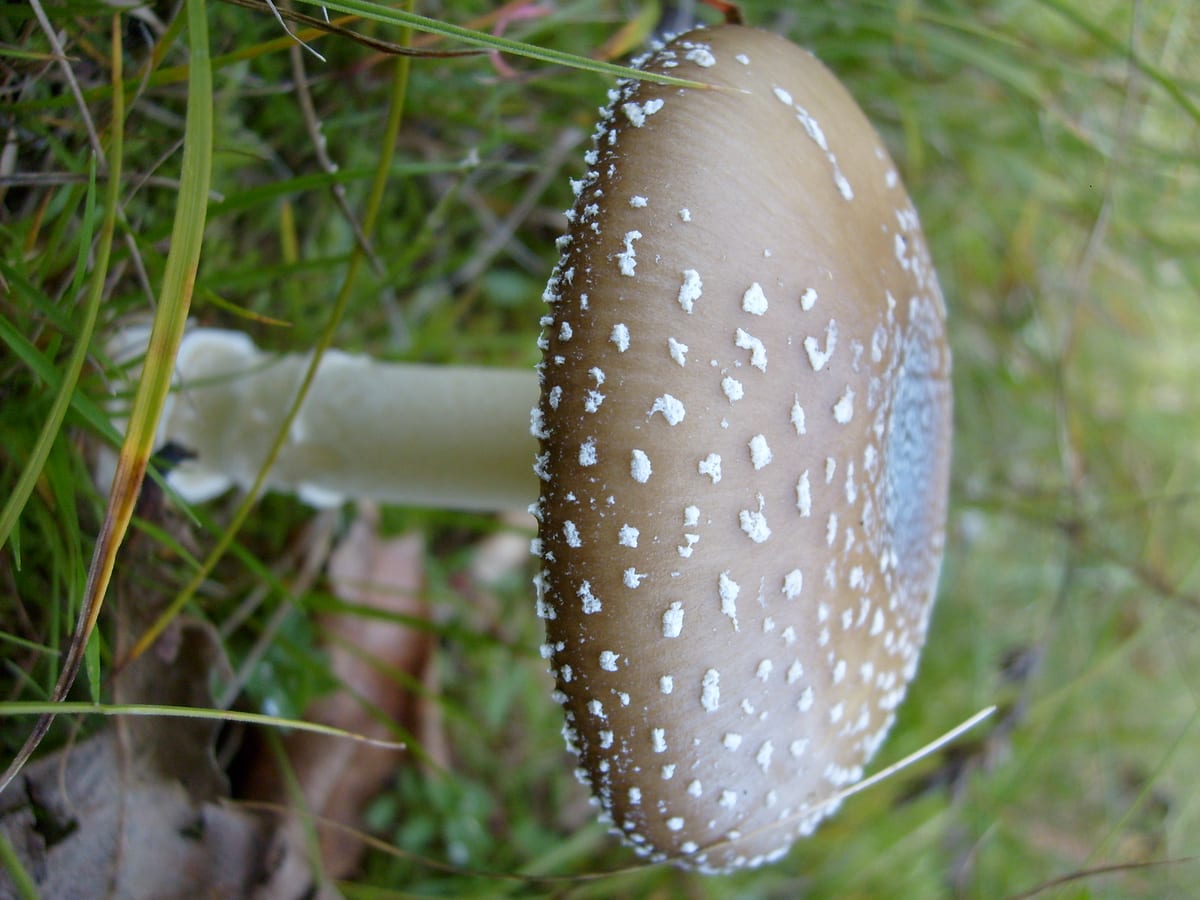 Panther cap
Amanita pantherina
July–October
Panther cap
Amanita pantherina
July–October
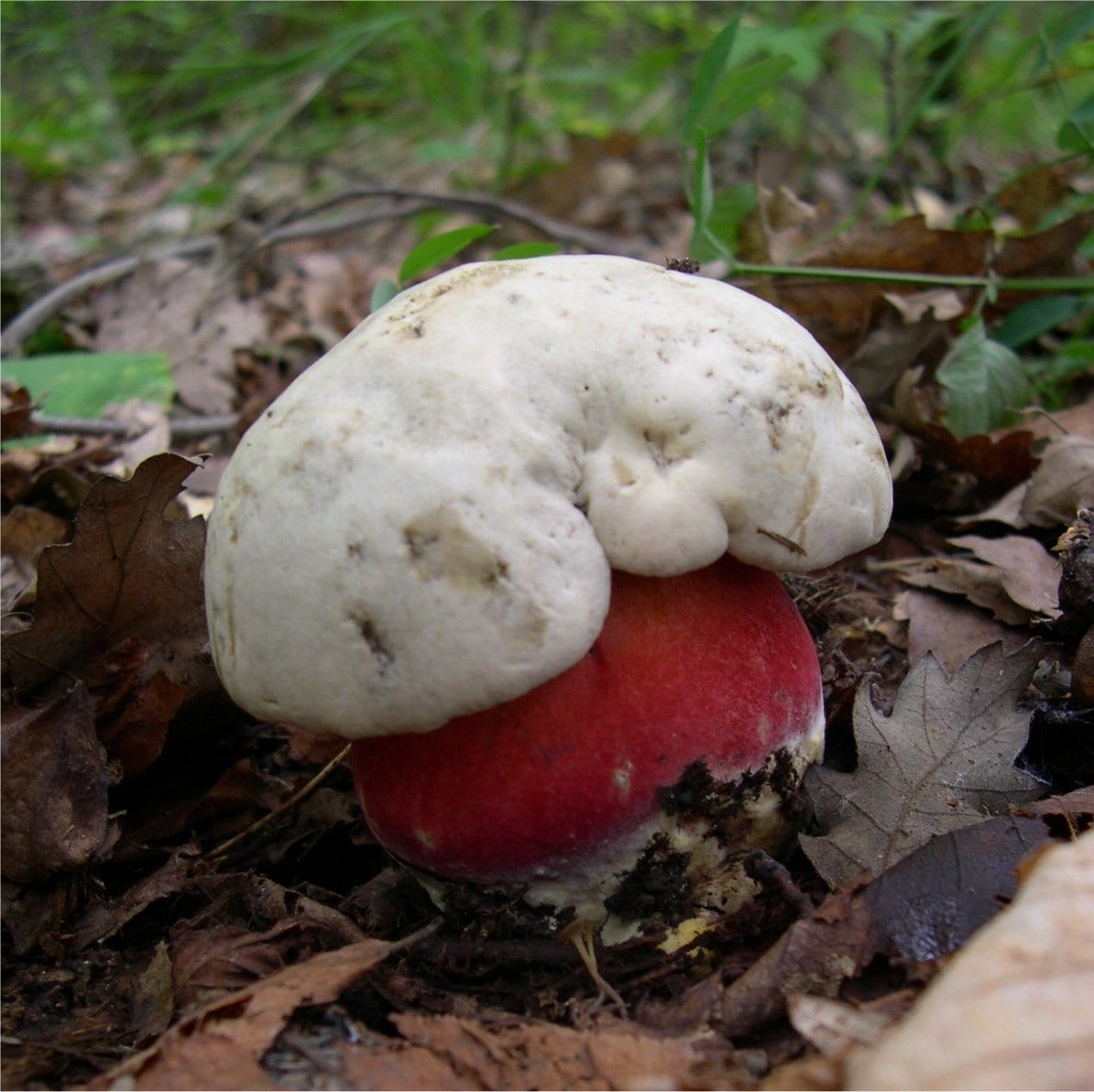 Satan's bolete
Rubroboletus satanas
June–October
Satan's bolete
Rubroboletus satanas
June–October
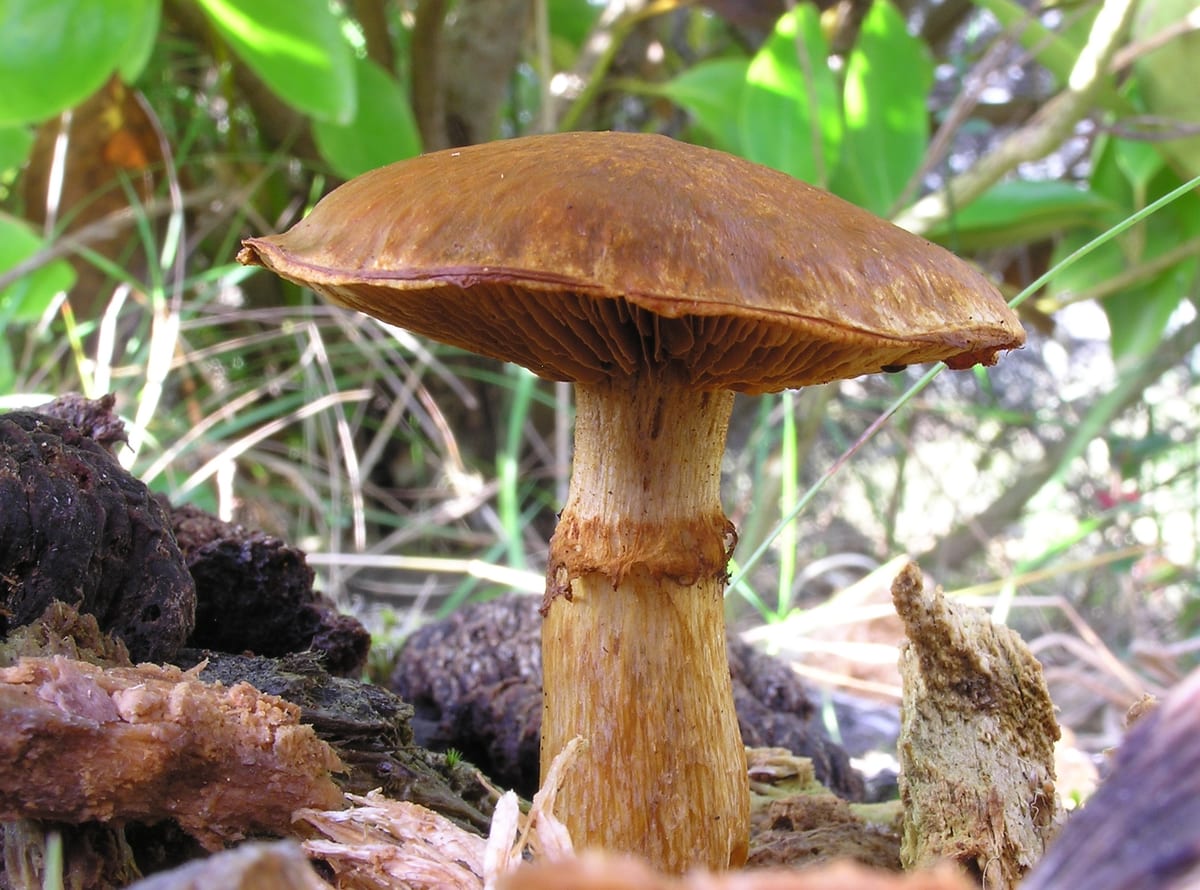 Spectacular rustgill (Gymnopilus junonius)
Gymnopilus junonius
July–November
Sulphur tuft
Hypholoma fasciculare
May–November
Spectacular rustgill (Gymnopilus junonius)
Gymnopilus junonius
July–November
Sulphur tuft
Hypholoma fasciculare
May–November
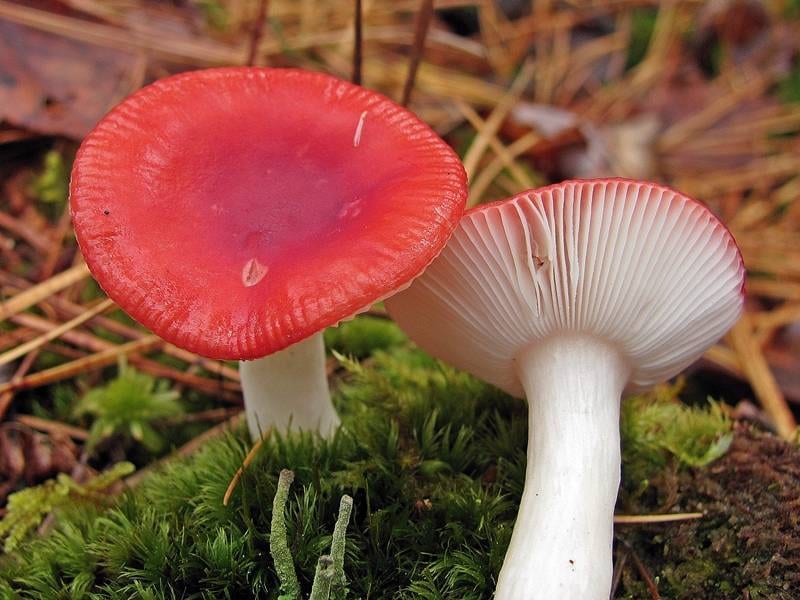 The sickener (vomiting russula)
Russula emetica
Summer–autumn
The sickener (vomiting russula)
Russula emetica
Summer–autumn
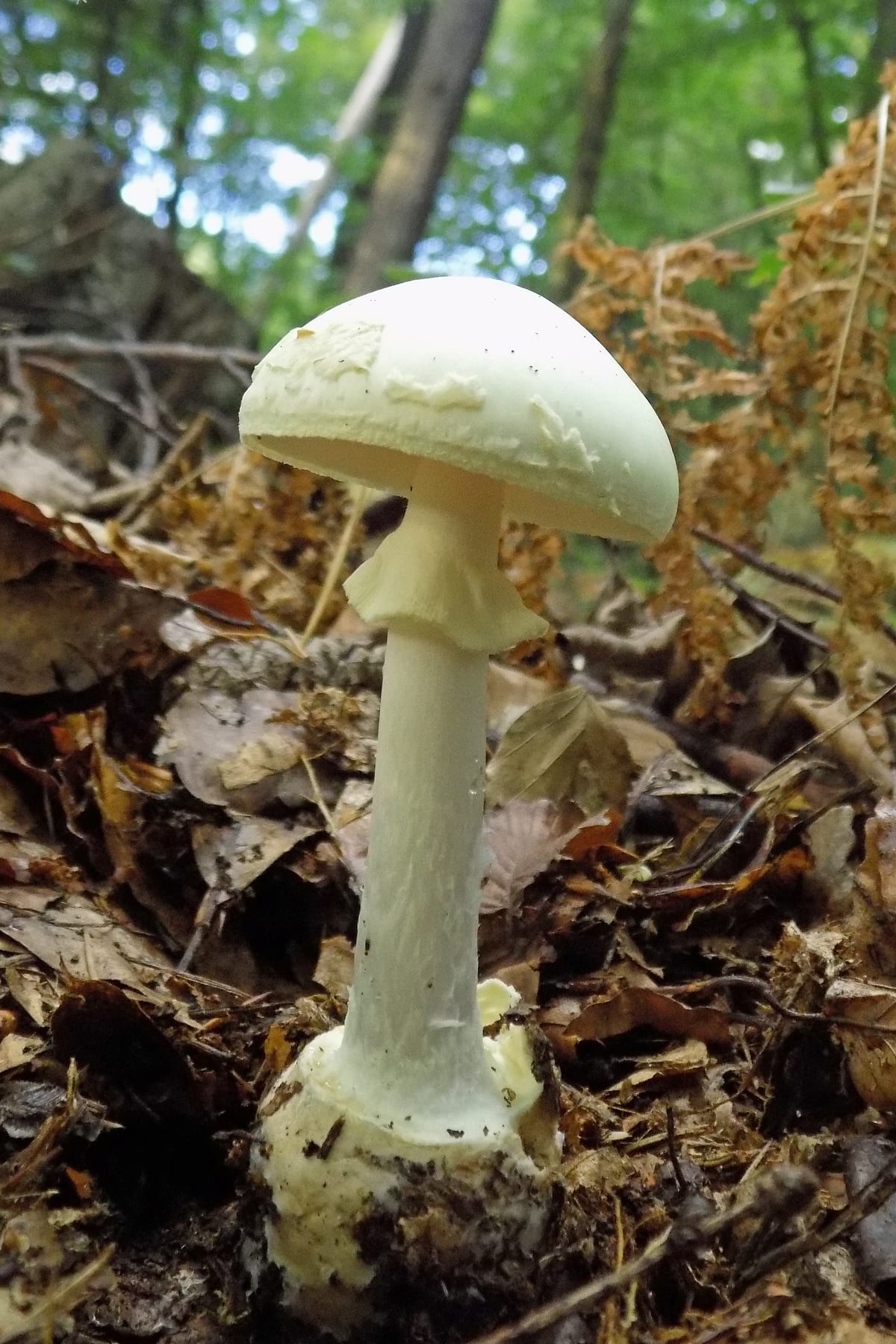 Yellow-staining / lemon amanita (Amanita citrina)
Amanita citrina
July–October
Yellow-staining mushroom
Agaricus xanthodermus
June–October
Yellow-staining / lemon amanita (Amanita citrina)
Amanita citrina
July–October
Yellow-staining mushroom
Agaricus xanthodermus
June–October
Late summer August
In season now
Peak season — and peak risk: death caps and destroying angels fruit now, easily confused with field mushrooms and parasols. Honey fungi begin.
Edible 32
Bay bolete ('Polish mushroom')
Imleria badia
July–October
Beefsteak fungus
Fistulina hepatica
August–October
Bovine bolete (Jersey cow mushroom)
Suillus bovinus
July–October
Brown birch bolete
Leccinum scabrum
June–October
Butter bolete (grainy-stemmed)
Butyriboletus appendiculatus
June–September
Button mushroom (cultivated agaricus)
Agaricus bisporus
Year-round in culture
Caesar's mushroom
Amanita caesarea
June–October
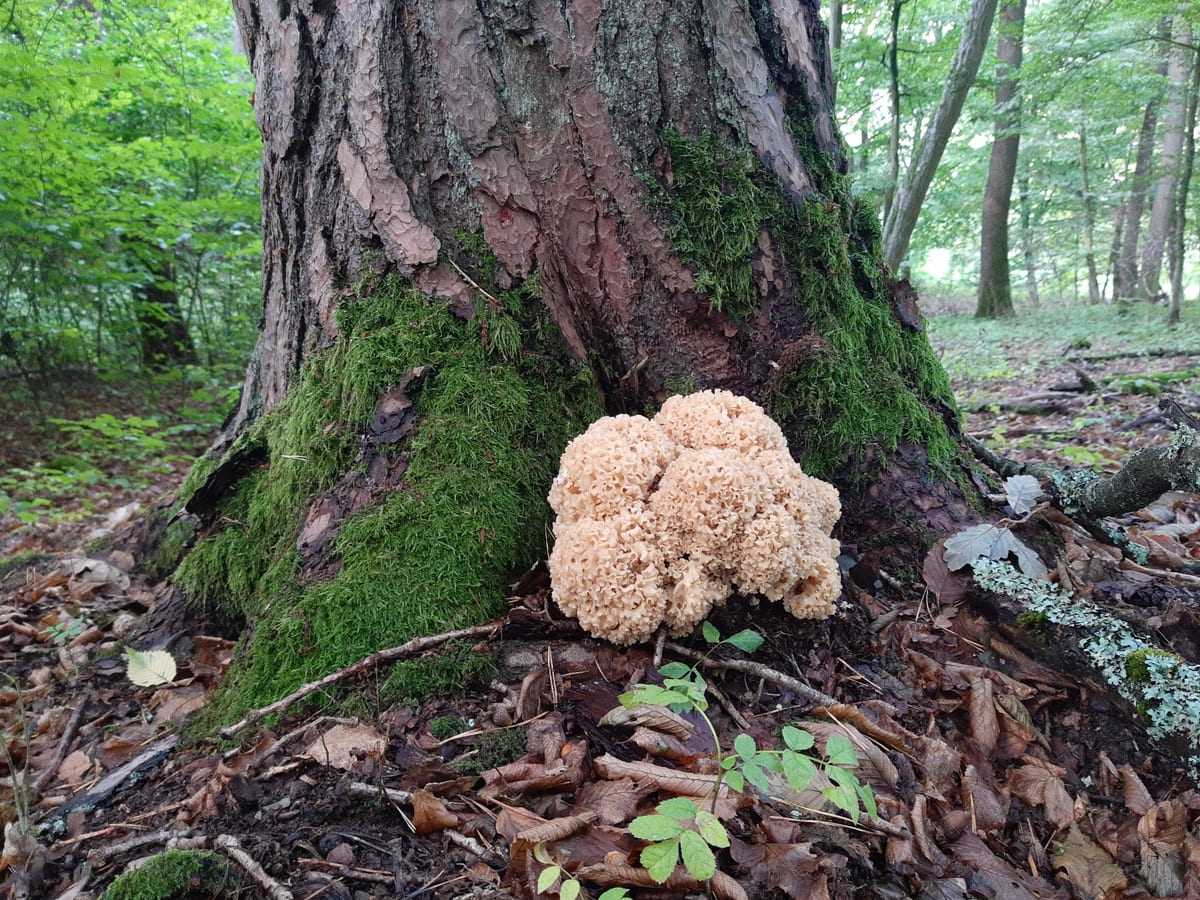 Cauliflower fungus
Sparassis crispa
August–October
Chanterelle (golden chanterelle)
Cantharellus cibarius
June–October
Cauliflower fungus
Sparassis crispa
August–October
Chanterelle (golden chanterelle)
Cantharellus cibarius
June–October
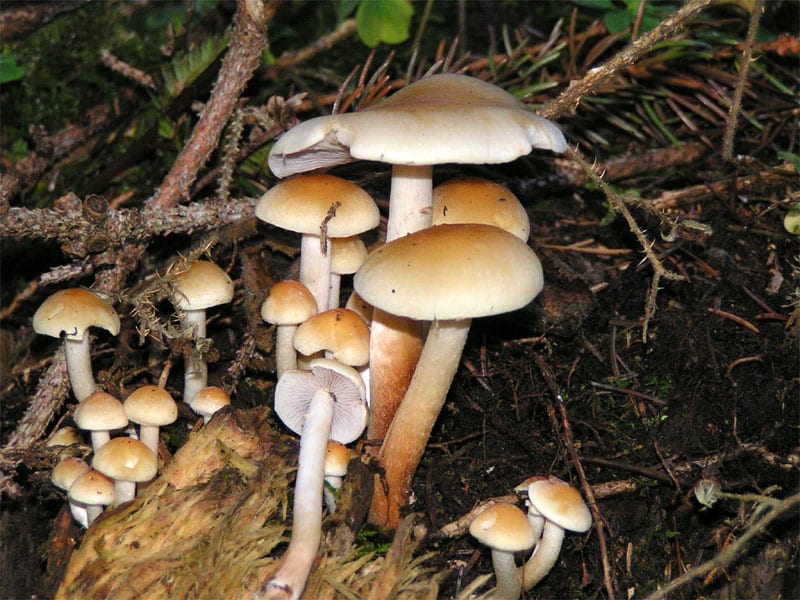 Conifer tuft (gray-gilled false honey fungus)
Hypholoma capnoides
August–November
Fairy ring mushroom (scotch bonnet)
Marasmius oreades
May–October
Field mushroom (meadow agaricus)
Agaricus campestris
May–October
Giant puffball
Calvatia gigantea
August–October
Green cracking bolete (suede bolete)
Xerocomus subtomentosus
June–October
Horn of plenty (black chanterelle)
Craterellus cornucopioides
July–October
Conifer tuft (gray-gilled false honey fungus)
Hypholoma capnoides
August–November
Fairy ring mushroom (scotch bonnet)
Marasmius oreades
May–October
Field mushroom (meadow agaricus)
Agaricus campestris
May–October
Giant puffball
Calvatia gigantea
August–October
Green cracking bolete (suede bolete)
Xerocomus subtomentosus
June–October
Horn of plenty (black chanterelle)
Craterellus cornucopioides
July–October
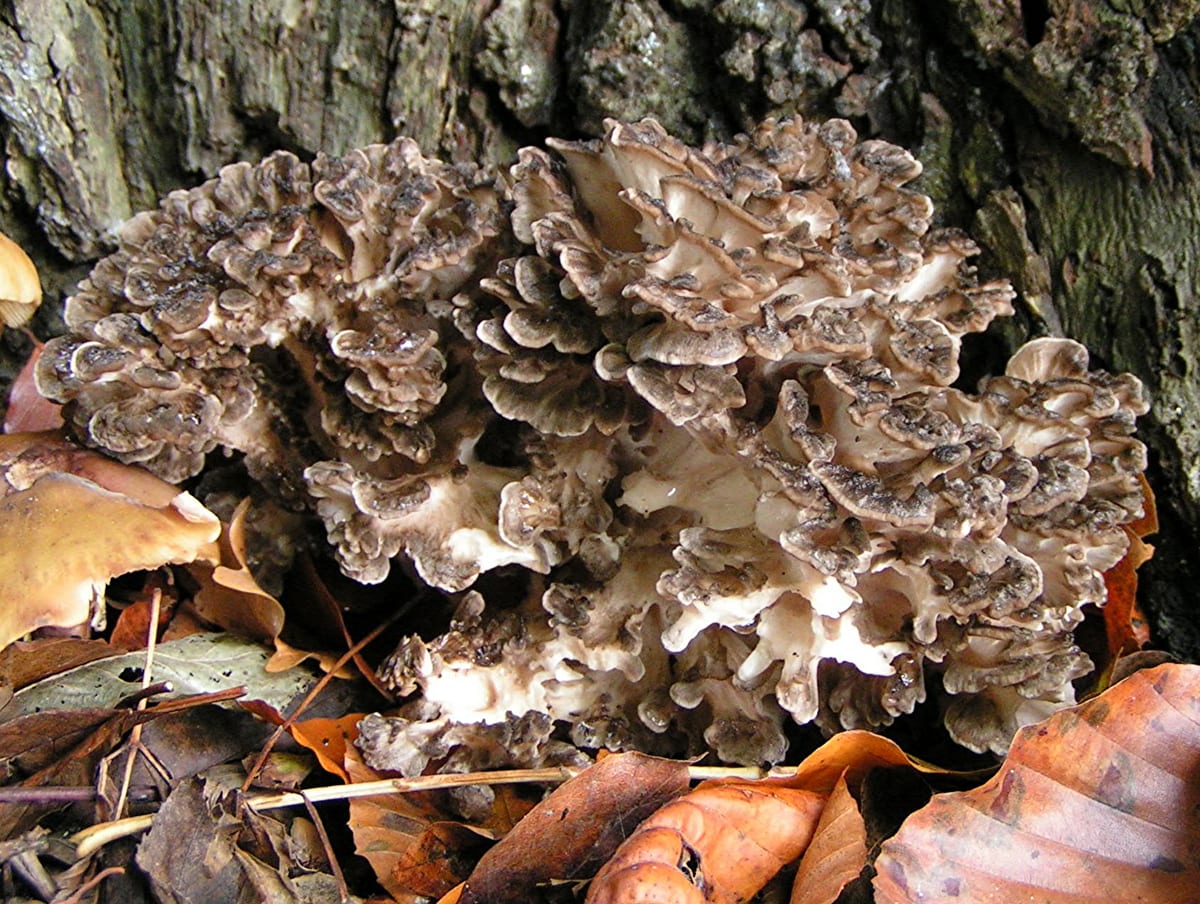 Maitake (hen of the woods)
Grifola frondosa
August–October
Parasol mushroom
Macrolepiota procera
June–October
Pear-shaped puffball
Lycoperdon pyriforme
July–November
Pine bolete
Boletus pinophilus
May–October, the first of the porcini group
Porcini (king bolete)
Boletus edulis
June–October
Red-capped scaber stalk (aspen bolete)
Leccinum aurantiacum
June–October
Saffron milkcap
Lactarius deliciosus
June–October
Shaggy inkcap (lawyer's wig)
Coprinus comatus
June–October
Slippery jacks (Suillus)
Suillus
June–October
Summer bolete (early porcini)
Boletus reticulatus
May–September
Summer honey fungus (two-toned pholiota)
Kuehneromyces mutabilis
May–October
Maitake (hen of the woods)
Grifola frondosa
August–October
Parasol mushroom
Macrolepiota procera
June–October
Pear-shaped puffball
Lycoperdon pyriforme
July–November
Pine bolete
Boletus pinophilus
May–October, the first of the porcini group
Porcini (king bolete)
Boletus edulis
June–October
Red-capped scaber stalk (aspen bolete)
Leccinum aurantiacum
June–October
Saffron milkcap
Lactarius deliciosus
June–October
Shaggy inkcap (lawyer's wig)
Coprinus comatus
June–October
Slippery jacks (Suillus)
Suillus
June–October
Summer bolete (early porcini)
Boletus reticulatus
May–September
Summer honey fungus (two-toned pholiota)
Kuehneromyces mutabilis
May–October
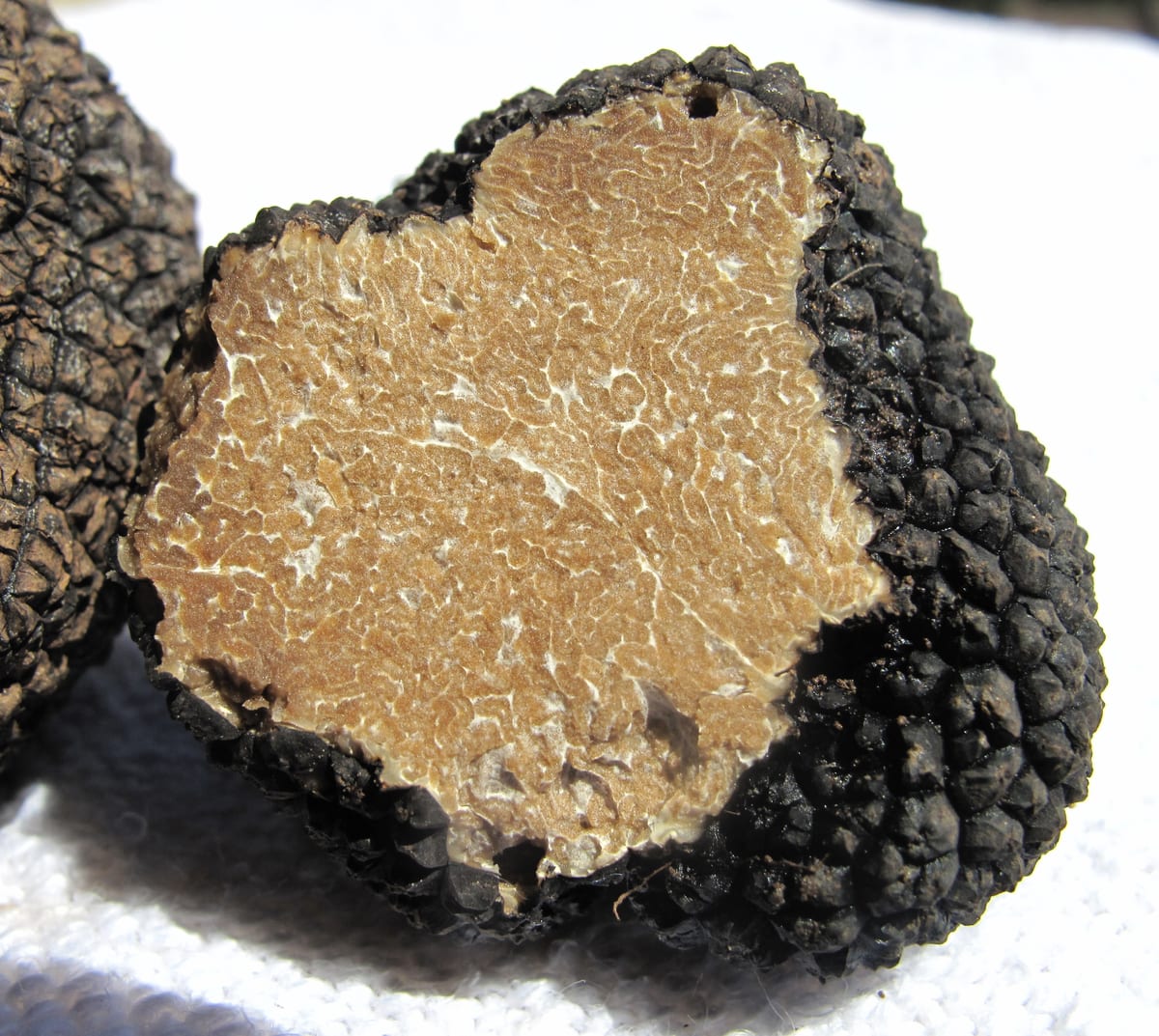 Summer truffle
Tuber aestivum
June–November
The deceiver (pink laccaria)
Laccaria laccata
June–November
The flirt (russula vesca)
Russula vesca
June–October
Summer truffle
Tuber aestivum
June–November
The deceiver (pink laccaria)
Laccaria laccata
June–November
The flirt (russula vesca)
Russula vesca
June–October
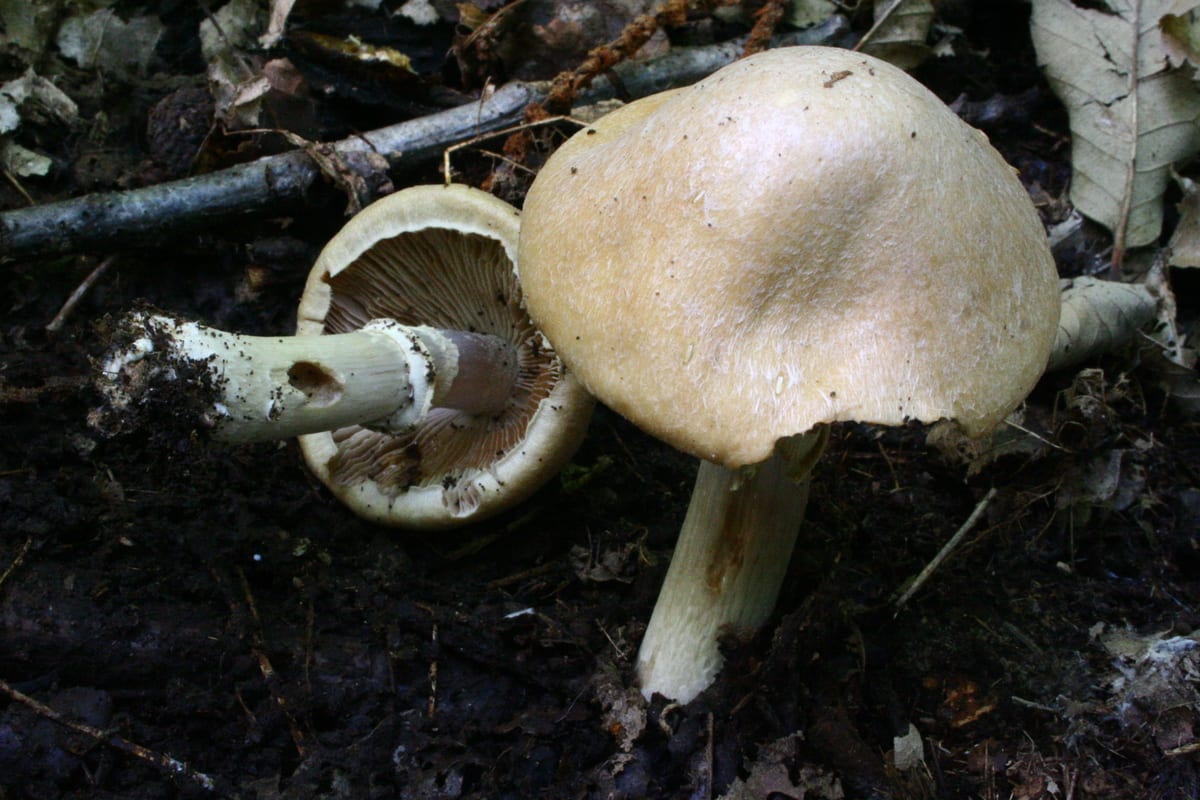 The miller (purple-stalked webcap)
Cortinarius caperatus
June–October
Weeping bolete (grainy suillus)
Suillus granulatus
May–November
The miller (purple-stalked webcap)
Cortinarius caperatus
June–October
Weeping bolete (grainy suillus)
Suillus granulatus
May–November
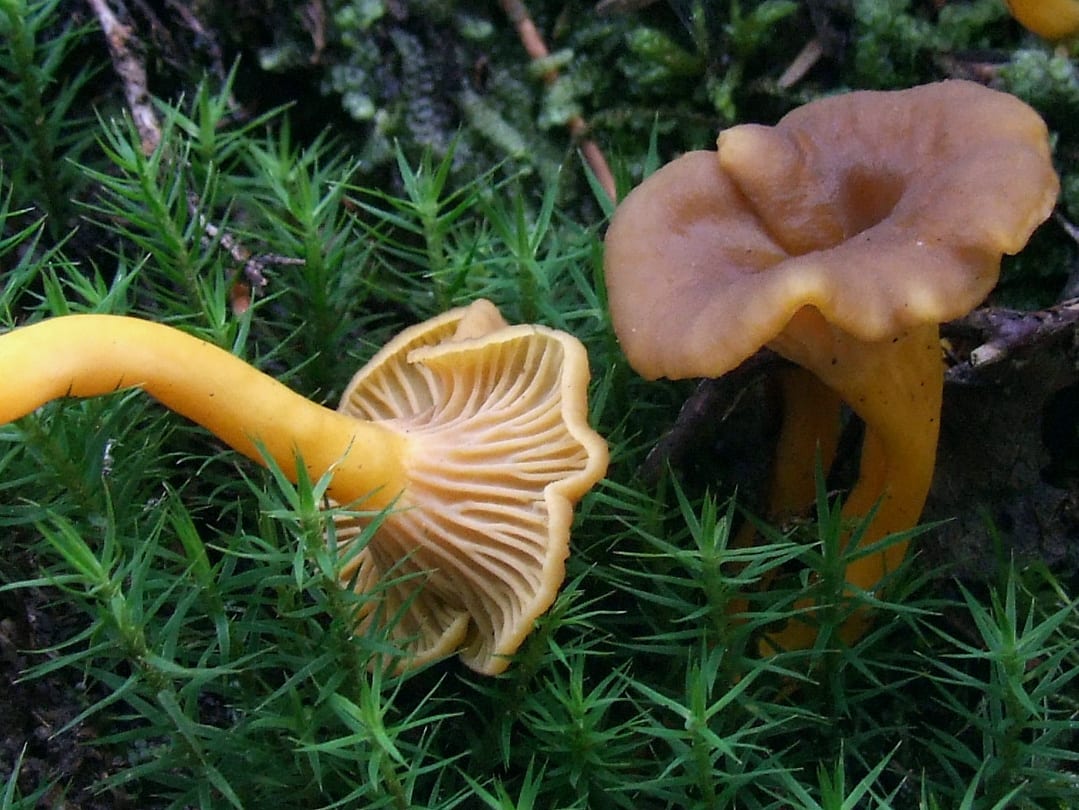 Winter chanterelle (yellowfoot)
Craterellus tubaeformis
August–November, to the frosts
Winter chanterelle (yellowfoot)
Craterellus tubaeformis
August–November, to the frosts
Conditionally edible requires processing: boiling, soaking, salting 18
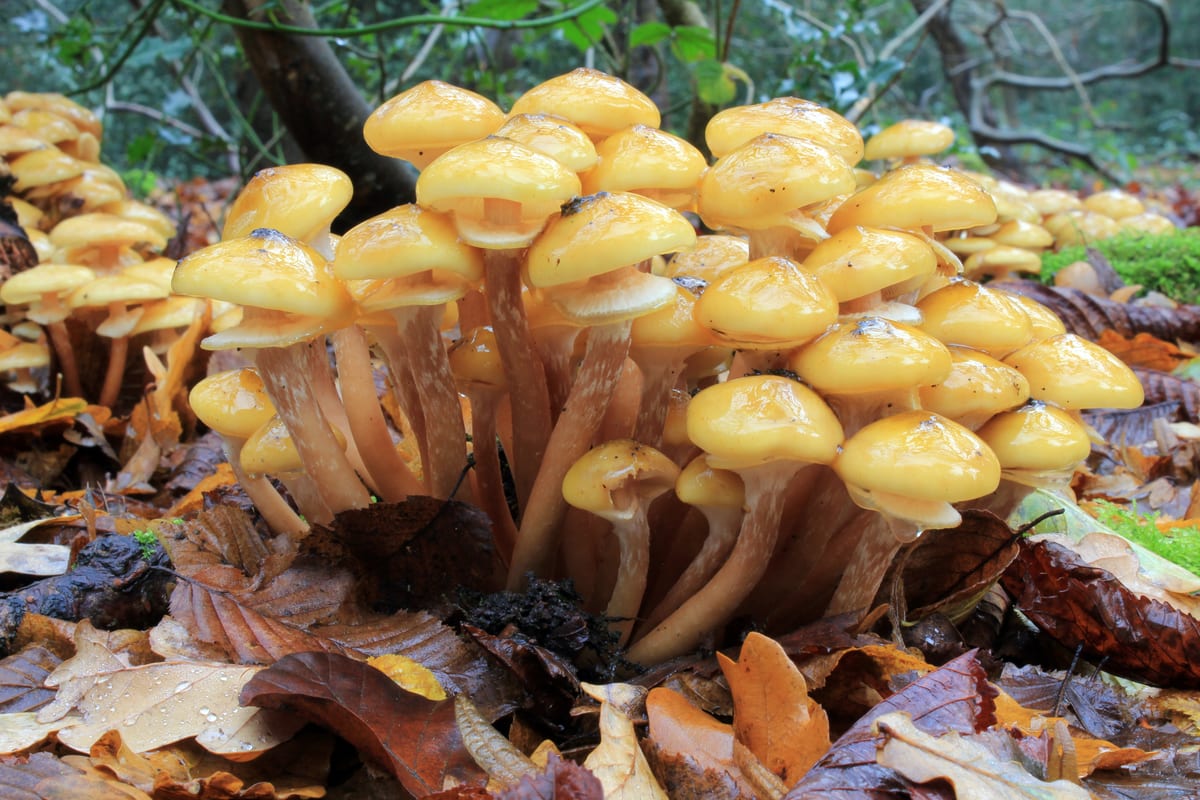 Autumn honey fungus
Armillaria mellea
August–November
Common inkcap
Coprinopsis atramentaria
May–October
Common stinkhorn
Phallus impudicus
July–October
Fleecy milkcap
Lactarius vellereus
July–October
Autumn honey fungus
Armillaria mellea
August–November
Common inkcap
Coprinopsis atramentaria
May–October
Common stinkhorn
Phallus impudicus
July–October
Fleecy milkcap
Lactarius vellereus
July–October
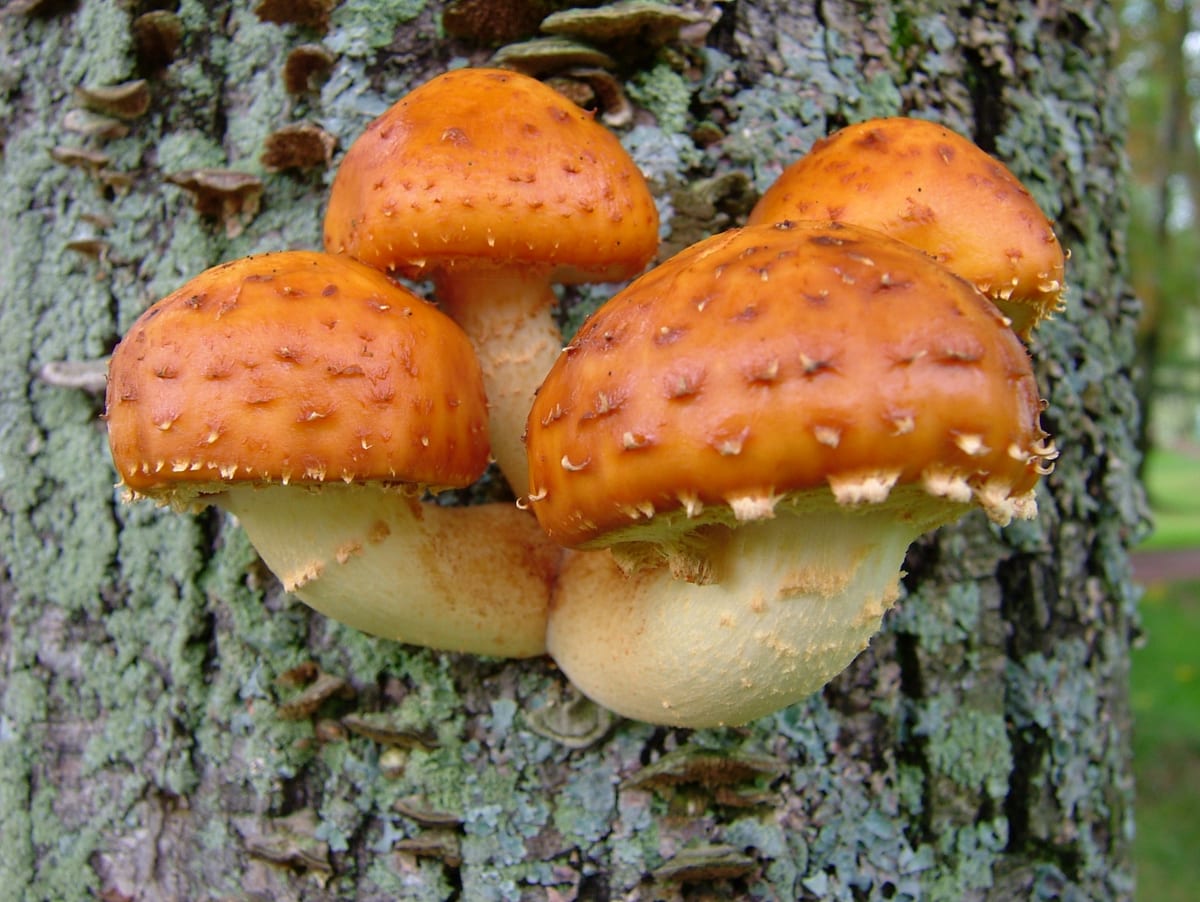 Golden scalycap
Pholiota aurivella
August–October
Green russula (green-cracking)
Russula aeruginea
July–October
Lurid bolete
Suillellus luridus
June–October
Milk-white brittlegill
Russula delica
July–October
Peppery milkcap
Lactarius piperatus
July–October
Puffball (Lycoperdon group)
Lycoperdon
July–October
Rufous milkcap
Lactarius rufus
July–October
Silky volvariella
Volvariella bombycina
July–September
Stinking russula
Russula foetens
July–October
Sulphur shelf (chicken of the woods)
Laetiporus sulphureus
May–October
The blusher (amanita rubescens)
Amanita rubescens
June–October
True milkcap (white milk-cap)
Lactarius resimus
July–September
Woolly milkcap (pink fringe)
Lactarius torminosus
June–October
Yellow milkcap (podskryobnik)
Lactarius scrobiculatus
July–October
Golden scalycap
Pholiota aurivella
August–October
Green russula (green-cracking)
Russula aeruginea
July–October
Lurid bolete
Suillellus luridus
June–October
Milk-white brittlegill
Russula delica
July–October
Peppery milkcap
Lactarius piperatus
July–October
Puffball (Lycoperdon group)
Lycoperdon
July–October
Rufous milkcap
Lactarius rufus
July–October
Silky volvariella
Volvariella bombycina
July–September
Stinking russula
Russula foetens
July–October
Sulphur shelf (chicken of the woods)
Laetiporus sulphureus
May–October
The blusher (amanita rubescens)
Amanita rubescens
June–October
True milkcap (white milk-cap)
Lactarius resimus
July–September
Woolly milkcap (pink fringe)
Lactarius torminosus
June–October
Yellow milkcap (podskryobnik)
Lactarius scrobiculatus
July–October
Medicinal 3
Birch polypore (Ötzi's mushroom)
Fomitopsis betulina
August–October, persisting into winter
Cordyceps militaris
Cordyceps militaris
Year-round in culture
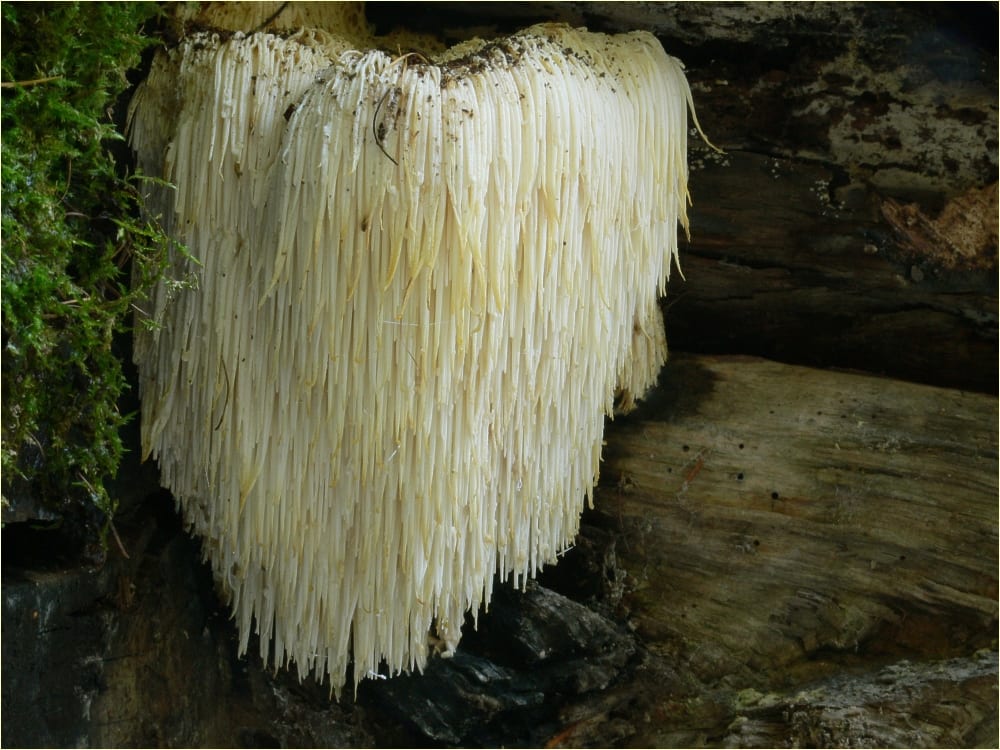 Lion's mane
Hericium erinaceus
Late summer–autumn; year-round in culture
Lion's mane
Hericium erinaceus
Late summer–autumn; year-round in culture
Dangerous — do not pick 23
These mushrooms grow at the same time and in the same places. Some are deadly and cooking does not help.
Bitter bolete (bilious bolete)
Tylopilus felleus
June–October
Brown roll-rim
Paxillus involutus
July–October
Common earthball (false puffball)
Scleroderma citrinum
July–November
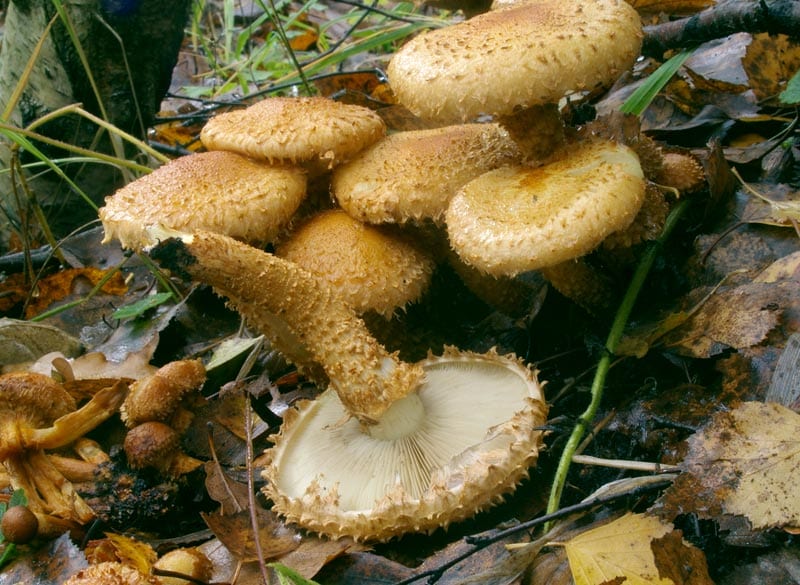 Common scalycap
Pholiota squarrosa
May–November
Deadly fibercap (blushing fibercap)
Inocybe erubescens
May–September
Common scalycap
Pholiota squarrosa
May–November
Deadly fibercap (blushing fibercap)
Inocybe erubescens
May–September
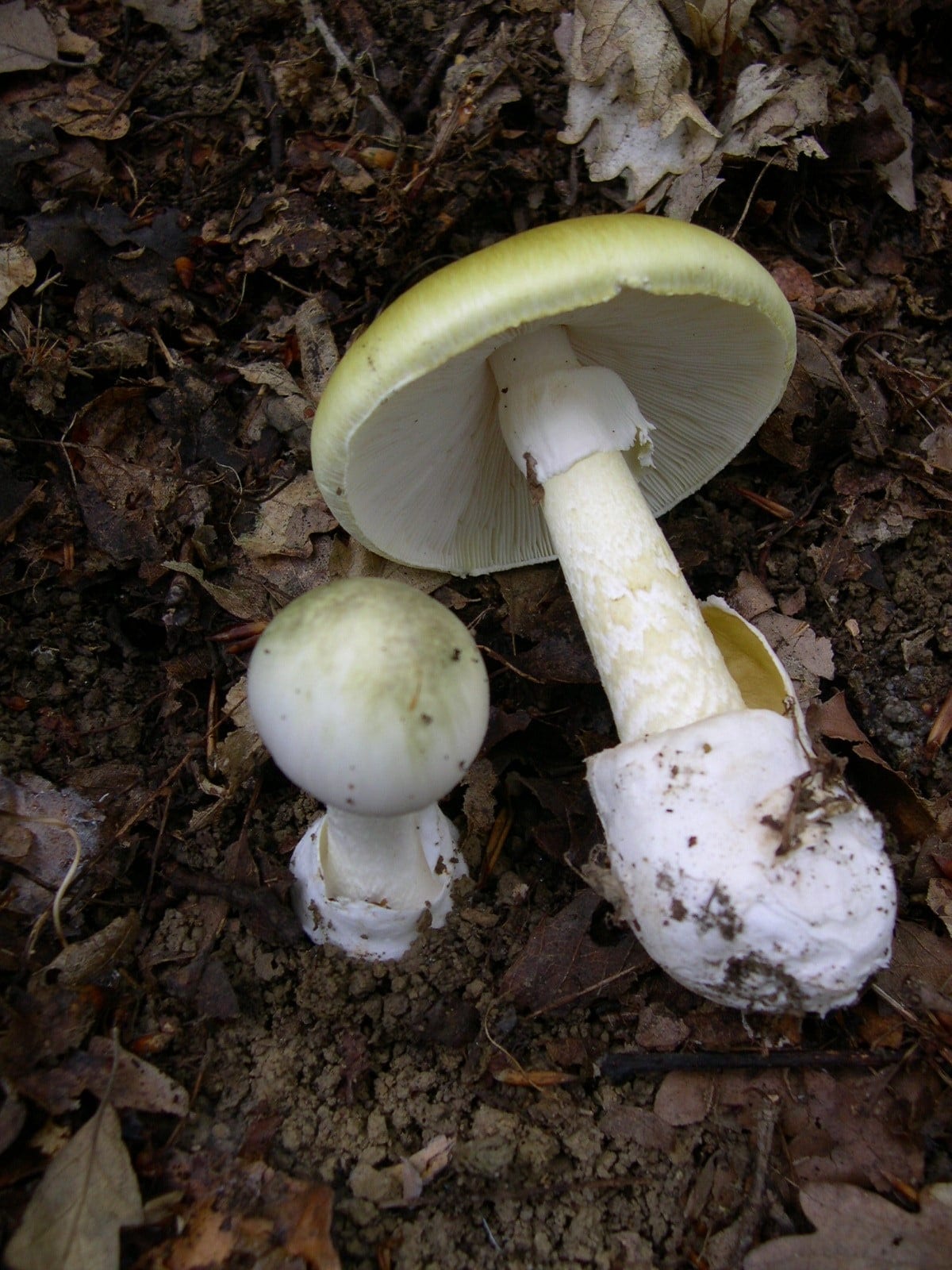 Death cap
Amanita phalloides
Late summer to autumn, usually August–October
False chanterelle
Hygrophoropsis aurantiaca
July–November
Death cap
Amanita phalloides
Late summer to autumn, usually August–October
False chanterelle
Hygrophoropsis aurantiaca
July–November
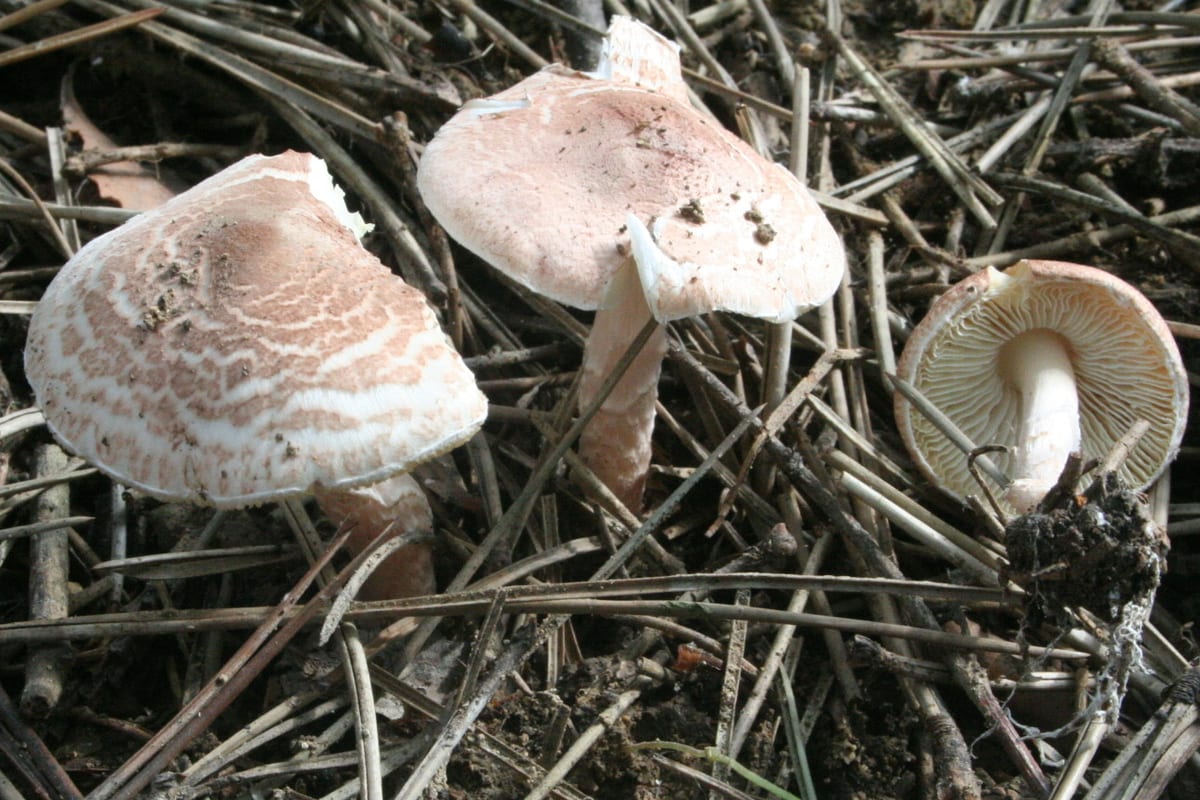 Fatal dapperling
Lepiota brunneoincarnata
July–October
Fly agaric
Amanita muscaria
July–October
Fool's funnel (bleached funnel)
Clitocybe rivulosa
June–October
Fatal dapperling
Lepiota brunneoincarnata
July–October
Fly agaric
Amanita muscaria
July–October
Fool's funnel (bleached funnel)
Clitocybe rivulosa
June–October
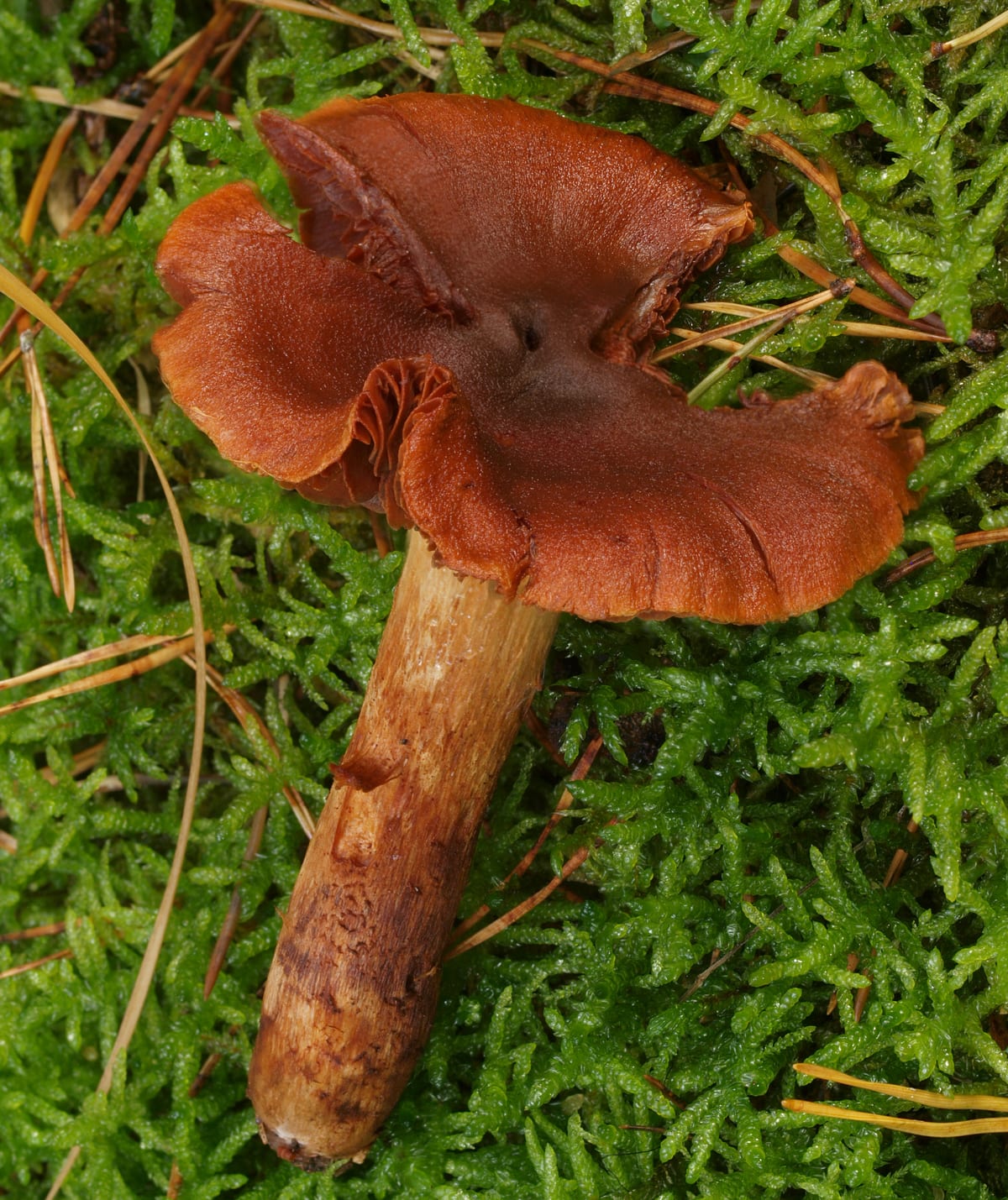 Fool's webcap
Cortinarius orellanus
July–October
Funeral bell (deadly galerina)
Galerina marginata
August–November, the same time as honey fungi
Livid entoloma
Entoloma sinuatum
May–October
Panther cap
Amanita pantherina
July–October
Fool's webcap
Cortinarius orellanus
July–October
Funeral bell (deadly galerina)
Galerina marginata
August–November, the same time as honey fungi
Livid entoloma
Entoloma sinuatum
May–October
Panther cap
Amanita pantherina
July–October
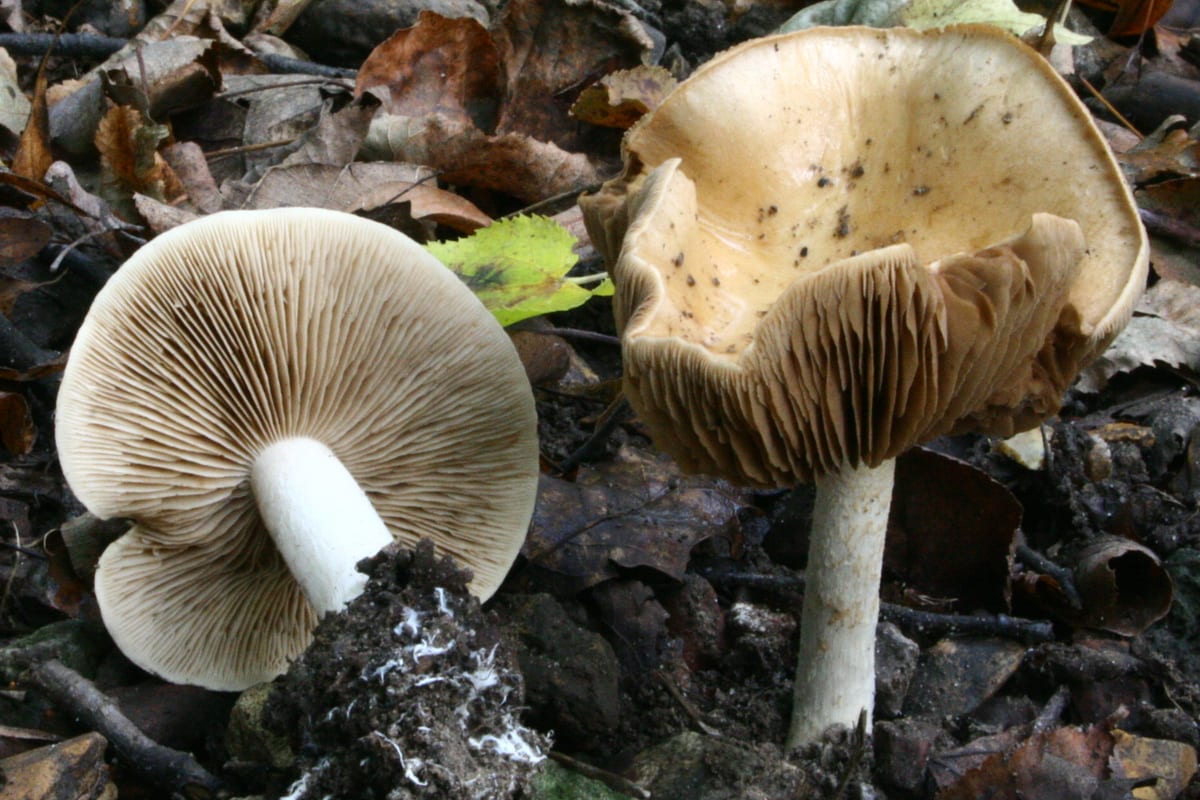 Poison pie (crusted hebeloma)
Hebeloma crustuliniforme
July–October
Satan's bolete
Rubroboletus satanas
June–October
Spectacular rustgill (Gymnopilus junonius)
Gymnopilus junonius
July–November
Poison pie (crusted hebeloma)
Hebeloma crustuliniforme
July–October
Satan's bolete
Rubroboletus satanas
June–October
Spectacular rustgill (Gymnopilus junonius)
Gymnopilus junonius
July–November
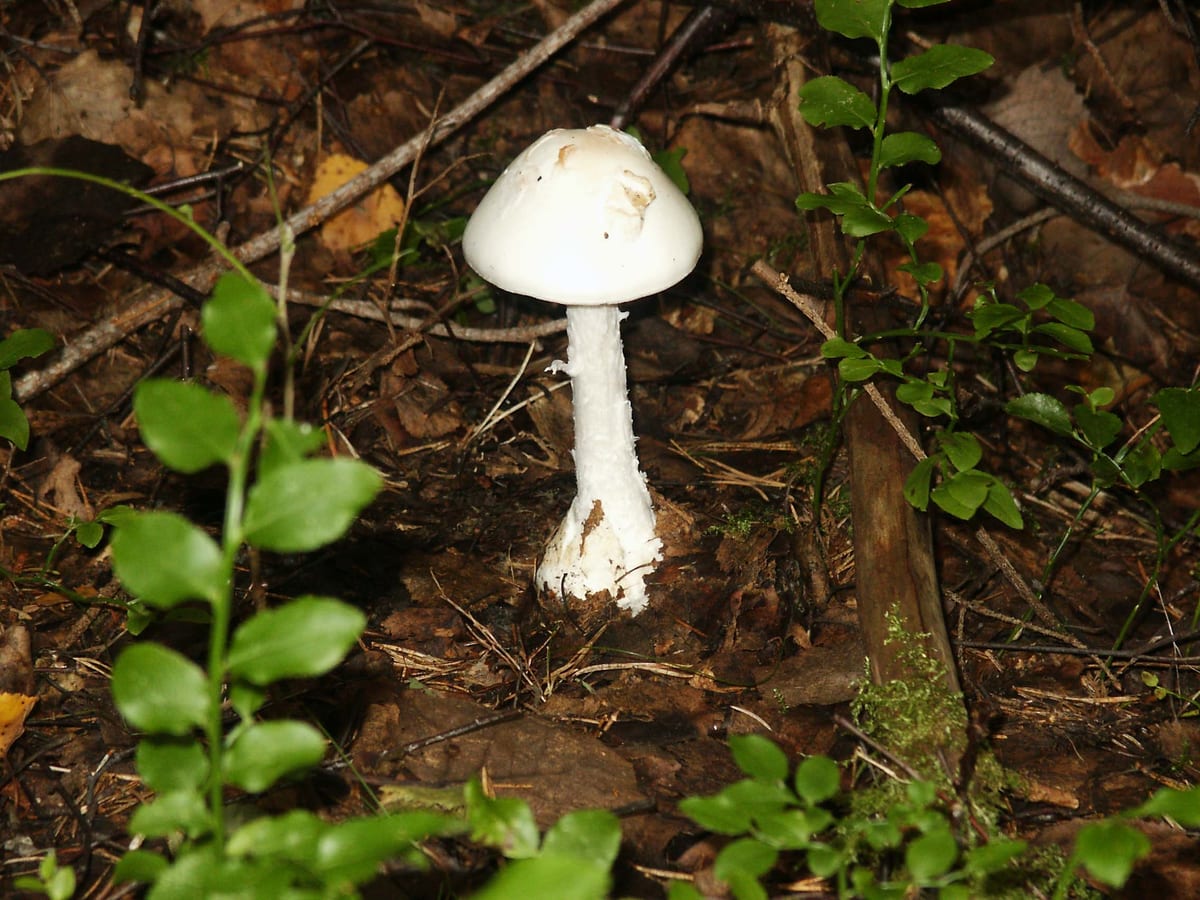 Stinking amanita (destroying angel group)
Amanita virosa
July–October
Sulphur tuft
Hypholoma fasciculare
May–November
The sickener (vomiting russula)
Russula emetica
Summer–autumn
Stinking amanita (destroying angel group)
Amanita virosa
July–October
Sulphur tuft
Hypholoma fasciculare
May–November
The sickener (vomiting russula)
Russula emetica
Summer–autumn
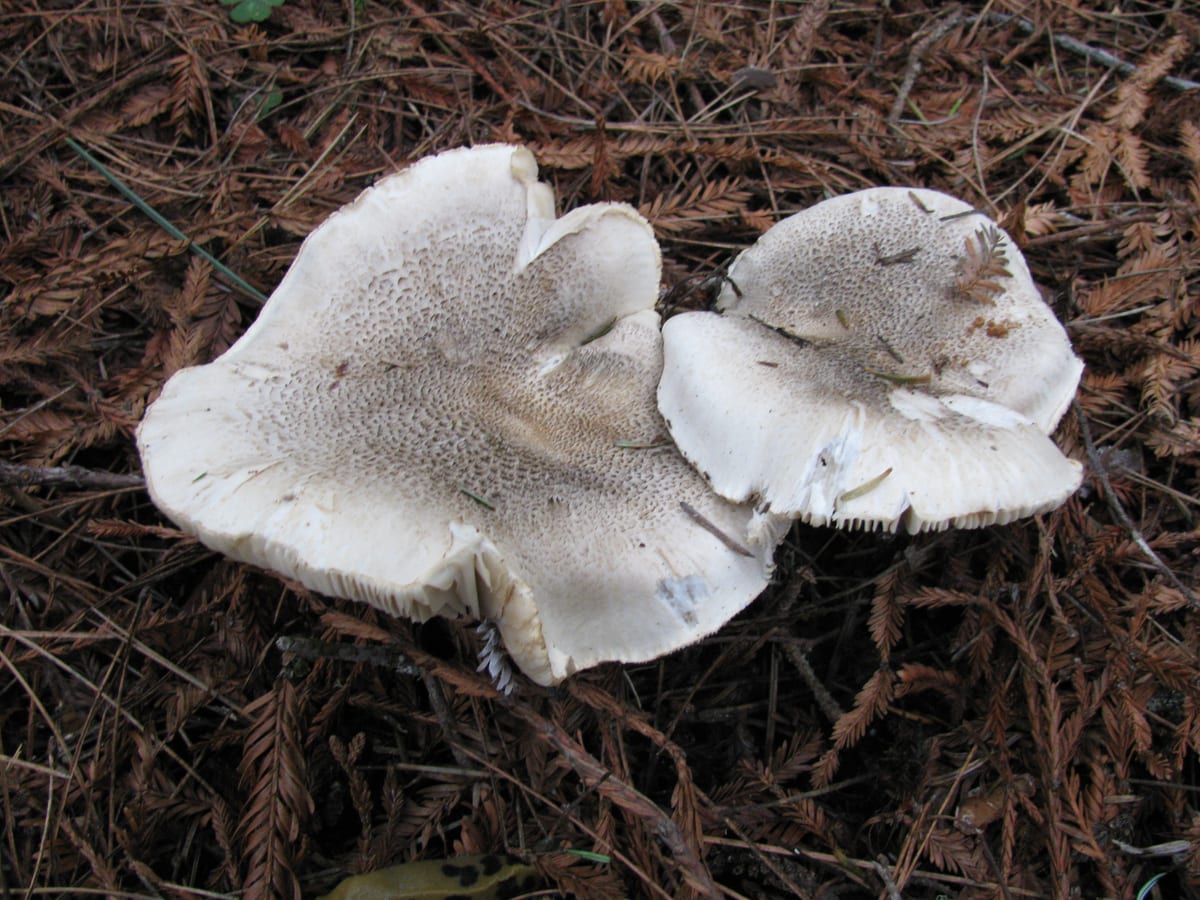 Tiger tricholoma (tiger sawgill)
Tricholoma pardinum
August–October
Yellow-staining / lemon amanita (Amanita citrina)
Amanita citrina
July–October
Yellow-staining mushroom
Agaricus xanthodermus
June–October
Tiger tricholoma (tiger sawgill)
Tricholoma pardinum
August–October
Yellow-staining / lemon amanita (Amanita citrina)
Amanita citrina
July–October
Yellow-staining mushroom
Agaricus xanthodermus
June–October
Early autumn September
In season now
Prime time for honey fungi. Their deadly lookalikes must be known by heart (see the funeral bell).
Edible 36
Bay bolete ('Polish mushroom')
Imleria badia
July–October
Beefsteak fungus
Fistulina hepatica
August–October
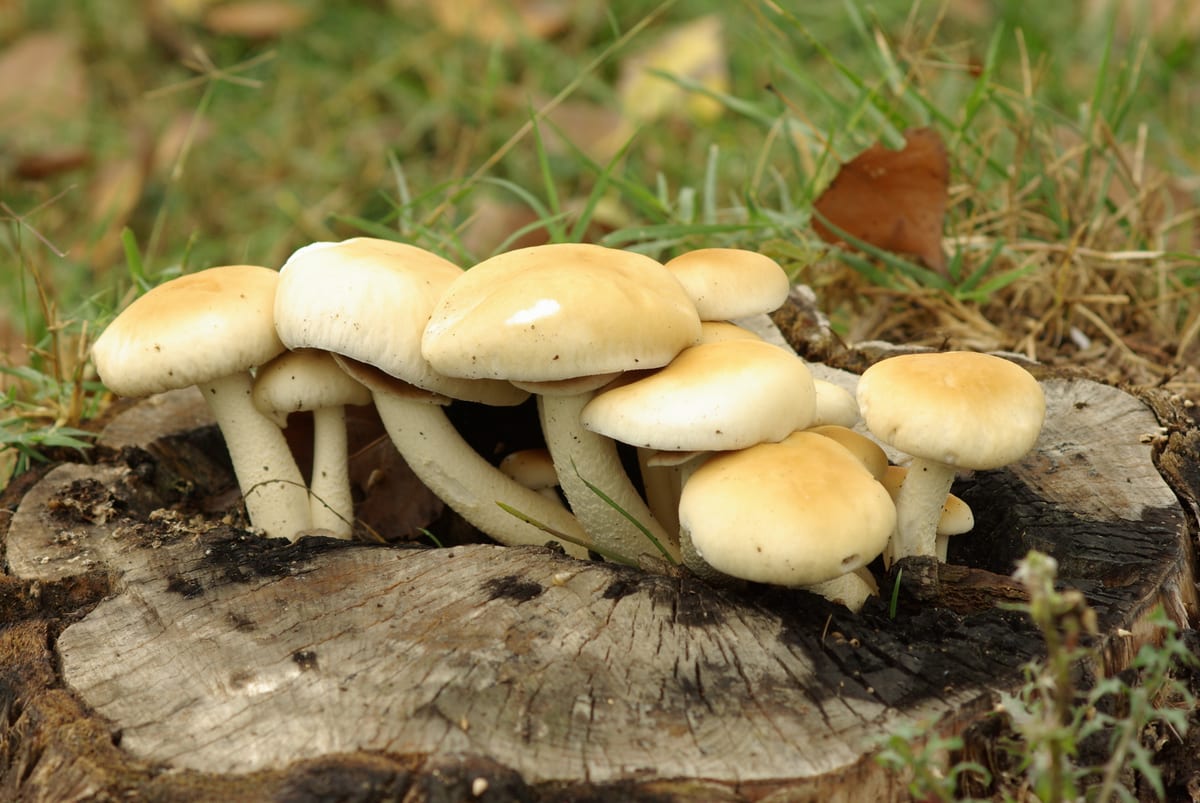 Black poplar mushroom (pioppino)
Cyclocybe aegerita
July–October
Bovine bolete (Jersey cow mushroom)
Suillus bovinus
July–October
Brown birch bolete
Leccinum scabrum
June–October
Butter bolete (grainy-stemmed)
Butyriboletus appendiculatus
June–September
Button mushroom (cultivated agaricus)
Agaricus bisporus
Year-round in culture
Caesar's mushroom
Amanita caesarea
June–October
Cauliflower fungus
Sparassis crispa
August–October
Chanterelle (golden chanterelle)
Cantharellus cibarius
June–October
Conifer tuft (gray-gilled false honey fungus)
Hypholoma capnoides
August–November
Fairy ring mushroom (scotch bonnet)
Marasmius oreades
May–October
Field mushroom (meadow agaricus)
Agaricus campestris
May–October
Giant puffball
Calvatia gigantea
August–October
Green cracking bolete (suede bolete)
Xerocomus subtomentosus
June–October
Black poplar mushroom (pioppino)
Cyclocybe aegerita
July–October
Bovine bolete (Jersey cow mushroom)
Suillus bovinus
July–October
Brown birch bolete
Leccinum scabrum
June–October
Butter bolete (grainy-stemmed)
Butyriboletus appendiculatus
June–September
Button mushroom (cultivated agaricus)
Agaricus bisporus
Year-round in culture
Caesar's mushroom
Amanita caesarea
June–October
Cauliflower fungus
Sparassis crispa
August–October
Chanterelle (golden chanterelle)
Cantharellus cibarius
June–October
Conifer tuft (gray-gilled false honey fungus)
Hypholoma capnoides
August–November
Fairy ring mushroom (scotch bonnet)
Marasmius oreades
May–October
Field mushroom (meadow agaricus)
Agaricus campestris
May–October
Giant puffball
Calvatia gigantea
August–October
Green cracking bolete (suede bolete)
Xerocomus subtomentosus
June–October
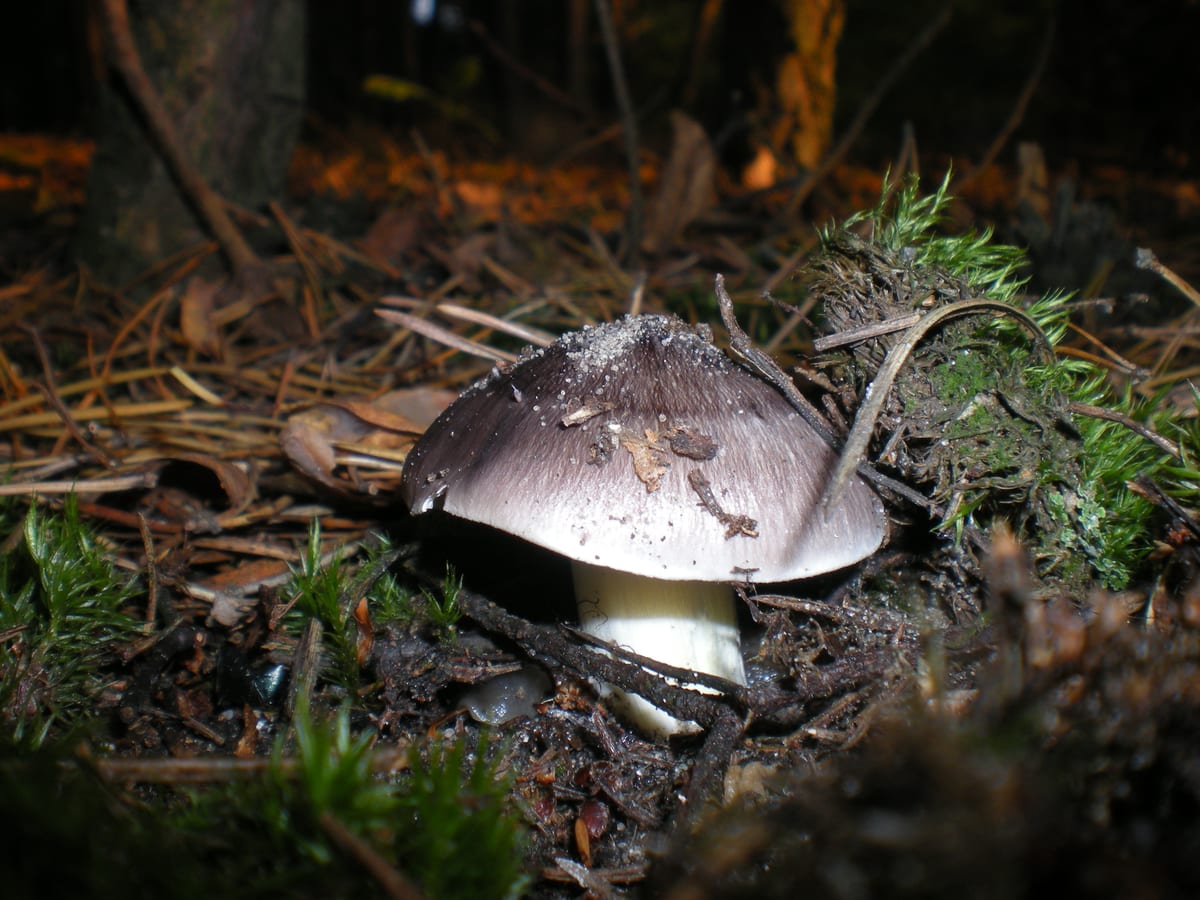 Grey tricholoma
Tricholoma portentosum
August–November
Horn of plenty (black chanterelle)
Craterellus cornucopioides
July–October
Maitake (hen of the woods)
Grifola frondosa
August–October
Grey tricholoma
Tricholoma portentosum
August–November
Horn of plenty (black chanterelle)
Craterellus cornucopioides
July–October
Maitake (hen of the woods)
Grifola frondosa
August–October
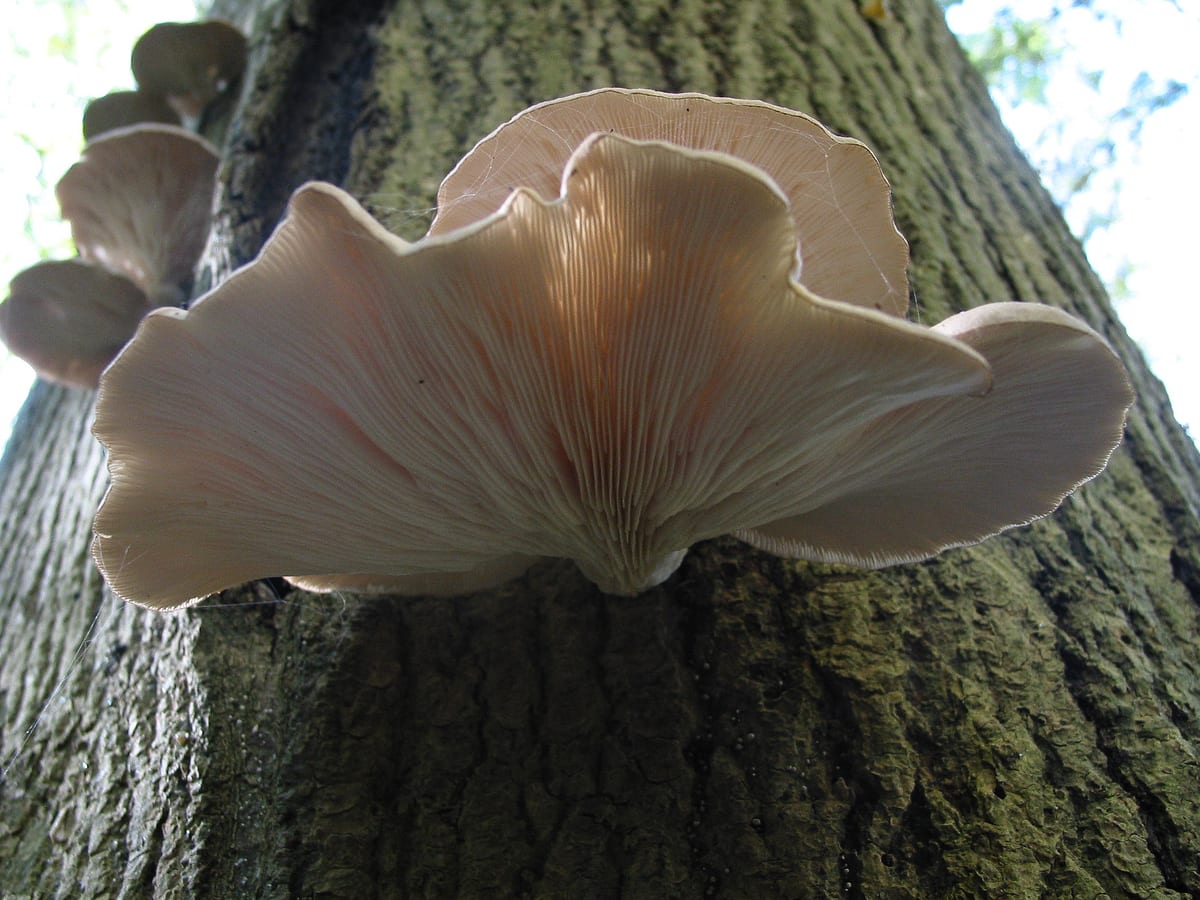 Oyster mushroom
Pleurotus ostreatus
September–December; in mild winters to spring
Parasol mushroom
Macrolepiota procera
June–October
Pear-shaped puffball
Lycoperdon pyriforme
July–November
Pine bolete
Boletus pinophilus
May–October, the first of the porcini group
Porcini (king bolete)
Boletus edulis
June–October
Red-capped scaber stalk (aspen bolete)
Leccinum aurantiacum
June–October
Saffron milkcap
Lactarius deliciosus
June–October
Shaggy inkcap (lawyer's wig)
Coprinus comatus
June–October
Slippery jacks (Suillus)
Suillus
June–October
Summer bolete (early porcini)
Boletus reticulatus
May–September
Summer honey fungus (two-toned pholiota)
Kuehneromyces mutabilis
May–October
Summer truffle
Tuber aestivum
June–November
The deceiver (pink laccaria)
Laccaria laccata
June–November
The flirt (russula vesca)
Russula vesca
June–October
The miller (purple-stalked webcap)
Cortinarius caperatus
June–October
Weeping bolete (grainy suillus)
Suillus granulatus
May–November
Winter chanterelle (yellowfoot)
Craterellus tubaeformis
August–November, to the frosts
Wood ear (Judas' ear)
Auricularia auricula-judae
Year-round, peak in autumn and winter
Oyster mushroom
Pleurotus ostreatus
September–December; in mild winters to spring
Parasol mushroom
Macrolepiota procera
June–October
Pear-shaped puffball
Lycoperdon pyriforme
July–November
Pine bolete
Boletus pinophilus
May–October, the first of the porcini group
Porcini (king bolete)
Boletus edulis
June–October
Red-capped scaber stalk (aspen bolete)
Leccinum aurantiacum
June–October
Saffron milkcap
Lactarius deliciosus
June–October
Shaggy inkcap (lawyer's wig)
Coprinus comatus
June–October
Slippery jacks (Suillus)
Suillus
June–October
Summer bolete (early porcini)
Boletus reticulatus
May–September
Summer honey fungus (two-toned pholiota)
Kuehneromyces mutabilis
May–October
Summer truffle
Tuber aestivum
June–November
The deceiver (pink laccaria)
Laccaria laccata
June–November
The flirt (russula vesca)
Russula vesca
June–October
The miller (purple-stalked webcap)
Cortinarius caperatus
June–October
Weeping bolete (grainy suillus)
Suillus granulatus
May–November
Winter chanterelle (yellowfoot)
Craterellus tubaeformis
August–November, to the frosts
Wood ear (Judas' ear)
Auricularia auricula-judae
Year-round, peak in autumn and winter
Conditionally edible requires processing: boiling, soaking, salting 20
Autumn honey fungus
Armillaria mellea
August–November
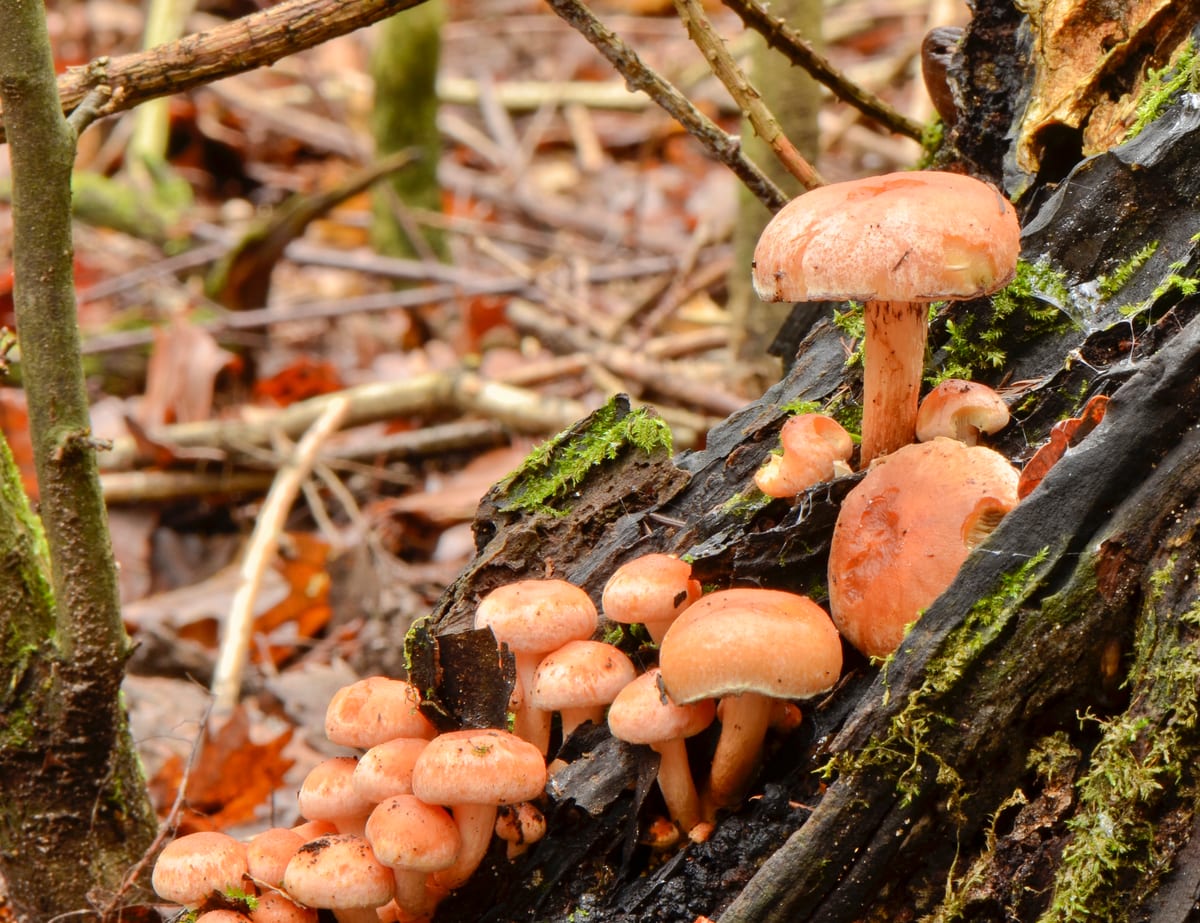 Brick cap (false honey fungus)
Hypholoma sublateritium
August–November
Common inkcap
Coprinopsis atramentaria
May–October
Common stinkhorn
Phallus impudicus
July–October
Fleecy milkcap
Lactarius vellereus
July–October
Golden scalycap
Pholiota aurivella
August–October
Green russula (green-cracking)
Russula aeruginea
July–October
Lurid bolete
Suillellus luridus
June–October
Milk-white brittlegill
Russula delica
July–October
Peppery milkcap
Lactarius piperatus
July–October
Puffball (Lycoperdon group)
Lycoperdon
July–October
Rufous milkcap
Lactarius rufus
July–October
Silky volvariella
Volvariella bombycina
July–September
Stinking russula
Russula foetens
July–October
Sulphur shelf (chicken of the woods)
Laetiporus sulphureus
May–October
The blusher (amanita rubescens)
Amanita rubescens
June–October
True milkcap (white milk-cap)
Lactarius resimus
July–September
Brick cap (false honey fungus)
Hypholoma sublateritium
August–November
Common inkcap
Coprinopsis atramentaria
May–October
Common stinkhorn
Phallus impudicus
July–October
Fleecy milkcap
Lactarius vellereus
July–October
Golden scalycap
Pholiota aurivella
August–October
Green russula (green-cracking)
Russula aeruginea
July–October
Lurid bolete
Suillellus luridus
June–October
Milk-white brittlegill
Russula delica
July–October
Peppery milkcap
Lactarius piperatus
July–October
Puffball (Lycoperdon group)
Lycoperdon
July–October
Rufous milkcap
Lactarius rufus
July–October
Silky volvariella
Volvariella bombycina
July–September
Stinking russula
Russula foetens
July–October
Sulphur shelf (chicken of the woods)
Laetiporus sulphureus
May–October
The blusher (amanita rubescens)
Amanita rubescens
June–October
True milkcap (white milk-cap)
Lactarius resimus
July–September
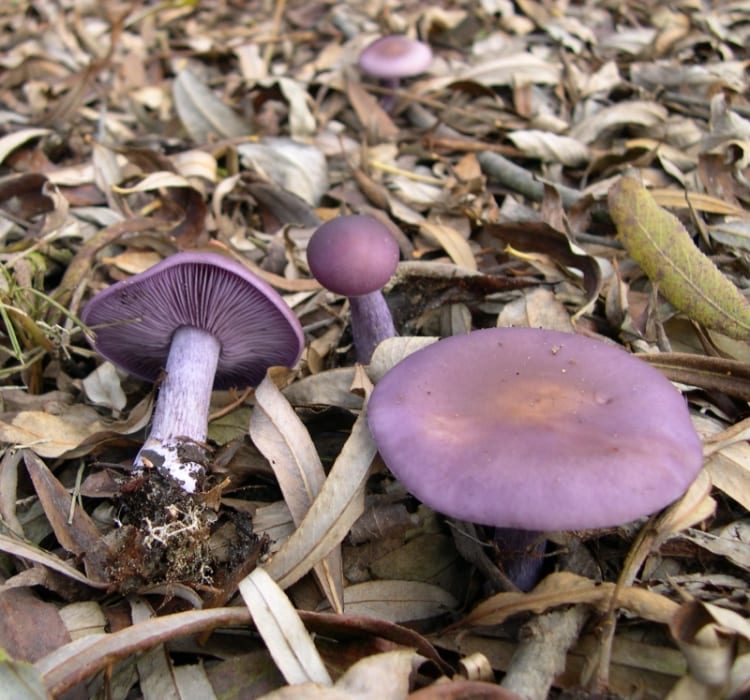 Wood blewit
Lepista nuda
September–November
Woolly milkcap (pink fringe)
Lactarius torminosus
June–October
Yellow milkcap (podskryobnik)
Lactarius scrobiculatus
July–October
Wood blewit
Lepista nuda
September–November
Woolly milkcap (pink fringe)
Lactarius torminosus
June–October
Yellow milkcap (podskryobnik)
Lactarius scrobiculatus
July–October
Medicinal 3
Birch polypore (Ötzi's mushroom)
Fomitopsis betulina
August–October, persisting into winter
Cordyceps militaris
Cordyceps militaris
Year-round in culture
Lion's mane
Hericium erinaceus
Late summer–autumn; year-round in culture
Dangerous — do not pick 25
These mushrooms grow at the same time and in the same places. Some are deadly and cooking does not help.
Bitter bolete (bilious bolete)
Tylopilus felleus
June–October
Brown roll-rim
Paxillus involutus
July–October
Common earthball (false puffball)
Scleroderma citrinum
July–November
Common scalycap
Pholiota squarrosa
May–November
Deadly fibercap (blushing fibercap)
Inocybe erubescens
May–September
Death cap
Amanita phalloides
Late summer to autumn, usually August–October
False chanterelle
Hygrophoropsis aurantiaca
July–November
Fatal dapperling
Lepiota brunneoincarnata
July–October
Fly agaric
Amanita muscaria
July–October
Fool's funnel (bleached funnel)
Clitocybe rivulosa
June–October
Fool's webcap
Cortinarius orellanus
July–October
Funeral bell (deadly galerina)
Galerina marginata
August–November, the same time as honey fungi
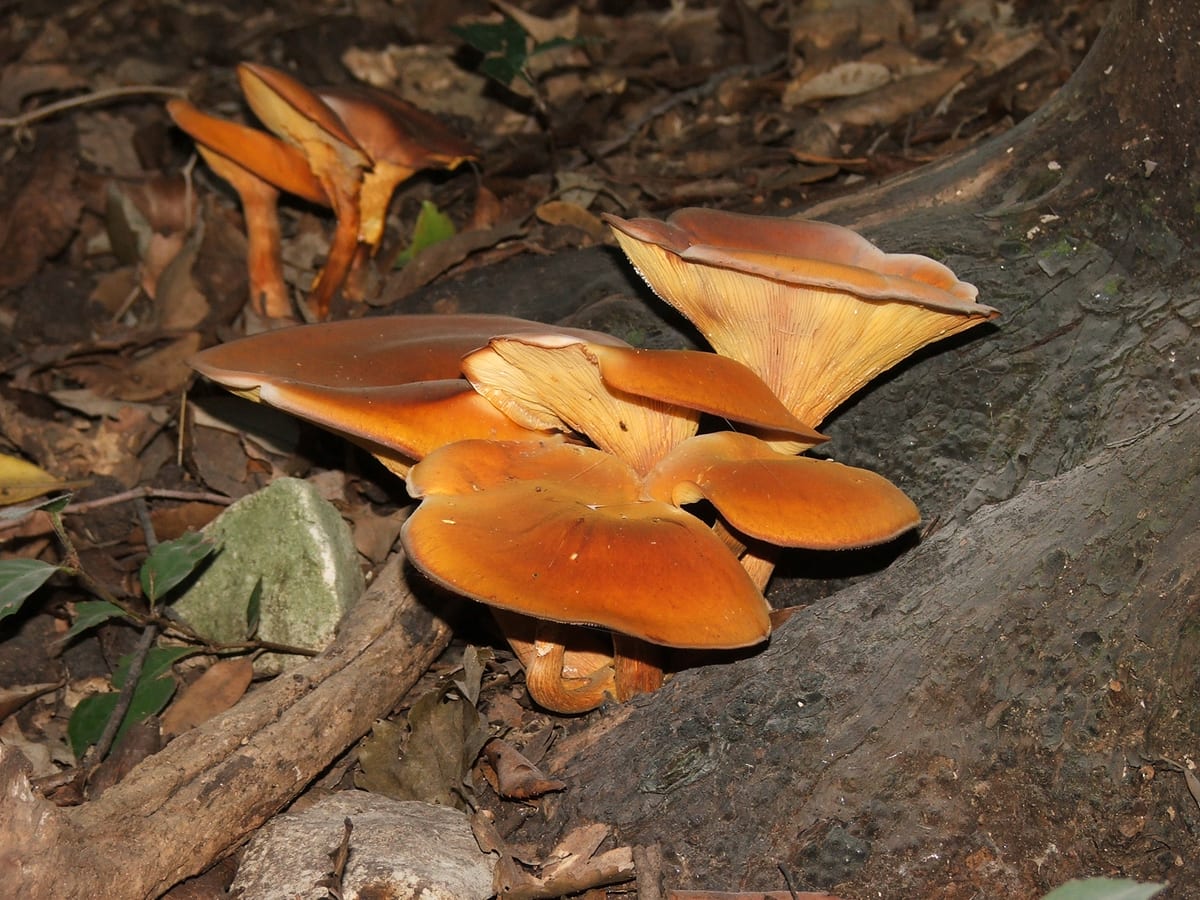 Jack-o'-lantern (olive omphalotus)
Omphalotus olearius
Summer–autumn
Livid entoloma
Entoloma sinuatum
May–October
Jack-o'-lantern (olive omphalotus)
Omphalotus olearius
Summer–autumn
Livid entoloma
Entoloma sinuatum
May–October
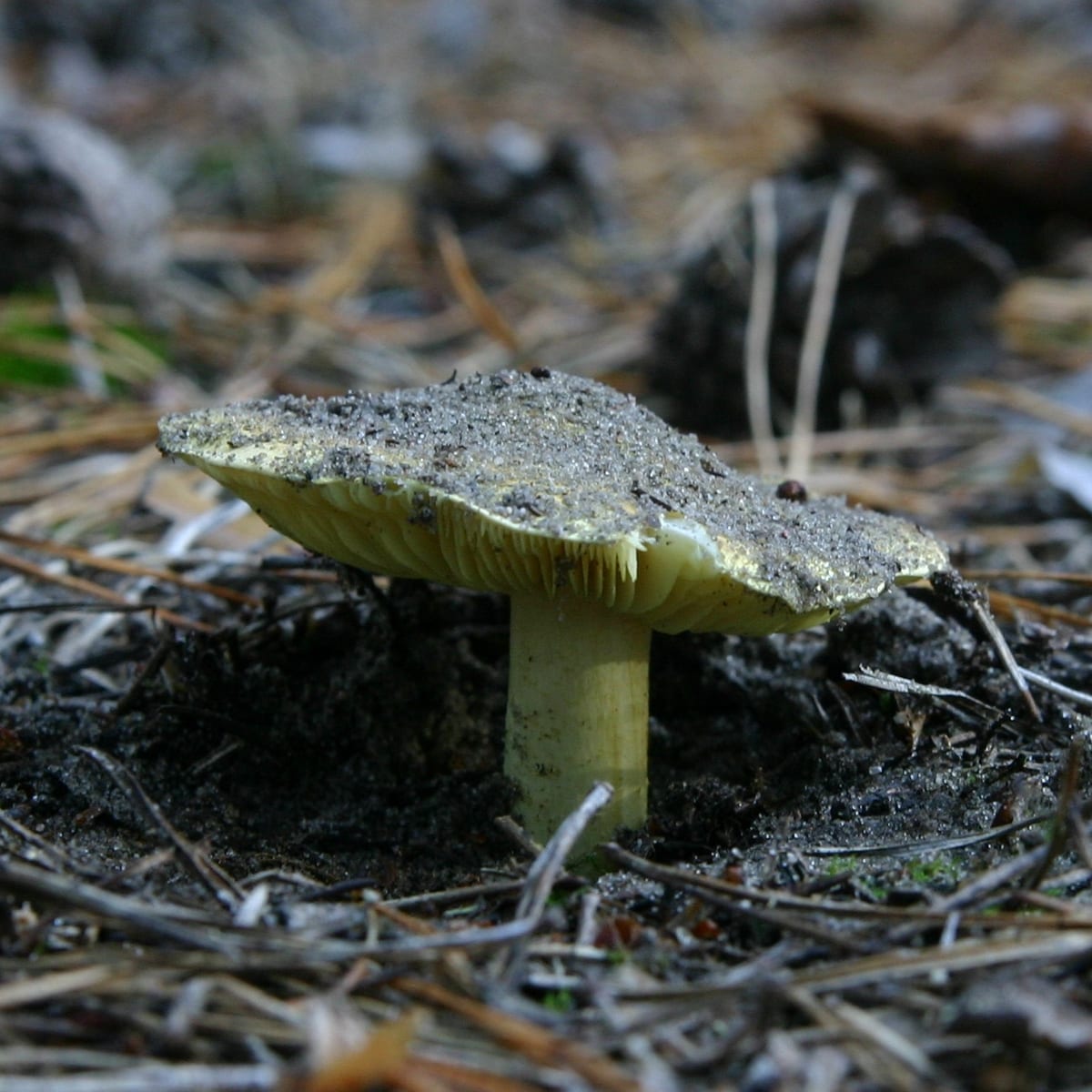 Man on horseback (yellow knight)
Tricholoma equestre
September–November
Panther cap
Amanita pantherina
July–October
Poison pie (crusted hebeloma)
Hebeloma crustuliniforme
July–October
Satan's bolete
Rubroboletus satanas
June–October
Spectacular rustgill (Gymnopilus junonius)
Gymnopilus junonius
July–November
Stinking amanita (destroying angel group)
Amanita virosa
July–October
Sulphur tuft
Hypholoma fasciculare
May–November
The sickener (vomiting russula)
Russula emetica
Summer–autumn
Tiger tricholoma (tiger sawgill)
Tricholoma pardinum
August–October
Yellow-staining / lemon amanita (Amanita citrina)
Amanita citrina
July–October
Yellow-staining mushroom
Agaricus xanthodermus
June–October
Man on horseback (yellow knight)
Tricholoma equestre
September–November
Panther cap
Amanita pantherina
July–October
Poison pie (crusted hebeloma)
Hebeloma crustuliniforme
July–October
Satan's bolete
Rubroboletus satanas
June–October
Spectacular rustgill (Gymnopilus junonius)
Gymnopilus junonius
July–November
Stinking amanita (destroying angel group)
Amanita virosa
July–October
Sulphur tuft
Hypholoma fasciculare
May–November
The sickener (vomiting russula)
Russula emetica
Summer–autumn
Tiger tricholoma (tiger sawgill)
Tricholoma pardinum
August–October
Yellow-staining / lemon amanita (Amanita citrina)
Amanita citrina
July–October
Yellow-staining mushroom
Agaricus xanthodermus
June–October
Late autumn October — November
In season now
The season winds down: oyster mushrooms, blewits, late honey fungi remain. Many mushrooms turn soft and unusable after frosts.
Edible 35
Bay bolete ('Polish mushroom')
Imleria badia
July–October
Beefsteak fungus
Fistulina hepatica
August–October
Black poplar mushroom (pioppino)
Cyclocybe aegerita
July–October
Bovine bolete (Jersey cow mushroom)
Suillus bovinus
July–October
Brown birch bolete
Leccinum scabrum
June–October
Button mushroom (cultivated agaricus)
Agaricus bisporus
Year-round in culture
Caesar's mushroom
Amanita caesarea
June–October
Cauliflower fungus
Sparassis crispa
August–October
Chanterelle (golden chanterelle)
Cantharellus cibarius
June–October
Conifer tuft (gray-gilled false honey fungus)
Hypholoma capnoides
August–November
Enoki (velvet shank)
Flammulina velutipes
Late autumn–winter, to early spring
Fairy ring mushroom (scotch bonnet)
Marasmius oreades
May–October
Field mushroom (meadow agaricus)
Agaricus campestris
May–October
Giant puffball
Calvatia gigantea
August–October
Green cracking bolete (suede bolete)
Xerocomus subtomentosus
June–October
Grey tricholoma
Tricholoma portentosum
August–November
Horn of plenty (black chanterelle)
Craterellus cornucopioides
July–October
Maitake (hen of the woods)
Grifola frondosa
August–October
Oyster mushroom
Pleurotus ostreatus
September–December; in mild winters to spring
Parasol mushroom
Macrolepiota procera
June–October
Pear-shaped puffball
Lycoperdon pyriforme
July–November
Pine bolete
Boletus pinophilus
May–October, the first of the porcini group
Porcini (king bolete)
Boletus edulis
June–October
Red-capped scaber stalk (aspen bolete)
Leccinum aurantiacum
June–October
Saffron milkcap
Lactarius deliciosus
June–October
Shaggy inkcap (lawyer's wig)
Coprinus comatus
June–October
Slippery jacks (Suillus)
Suillus
June–October
Summer honey fungus (two-toned pholiota)
Kuehneromyces mutabilis
May–October
Summer truffle
Tuber aestivum
June–November
The deceiver (pink laccaria)
Laccaria laccata
June–November
The flirt (russula vesca)
Russula vesca
June–October
The miller (purple-stalked webcap)
Cortinarius caperatus
June–October
Weeping bolete (grainy suillus)
Suillus granulatus
May–November
Winter chanterelle (yellowfoot)
Craterellus tubaeformis
August–November, to the frosts
Wood ear (Judas' ear)
Auricularia auricula-judae
Year-round, peak in autumn and winter
Conditionally edible requires processing: boiling, soaking, salting 18
Autumn honey fungus
Armillaria mellea
August–November
Brick cap (false honey fungus)
Hypholoma sublateritium
August–November
Common inkcap
Coprinopsis atramentaria
May–October
Common stinkhorn
Phallus impudicus
July–October
Fleecy milkcap
Lactarius vellereus
July–October
Golden scalycap
Pholiota aurivella
August–October
Green russula (green-cracking)
Russula aeruginea
July–October
Milk-white brittlegill
Russula delica
July–October
Peppery milkcap
Lactarius piperatus
July–October
Puffball (Lycoperdon group)
Lycoperdon
July–October
Rufous milkcap
Lactarius rufus
July–October
Silky volvariella
Volvariella bombycina
July–September
Stinking russula
Russula foetens
July–October
Sulphur shelf (chicken of the woods)
Laetiporus sulphureus
May–October
The blusher (amanita rubescens)
Amanita rubescens
June–October
Wood blewit
Lepista nuda
September–November
Woolly milkcap (pink fringe)
Lactarius torminosus
June–October
Yellow milkcap (podskryobnik)
Lactarius scrobiculatus
July–October
Medicinal 3
Birch polypore (Ötzi's mushroom)
Fomitopsis betulina
August–October, persisting into winter
Cordyceps militaris
Cordyceps militaris
Year-round in culture
Lion's mane
Hericium erinaceus
Late summer–autumn; year-round in culture
Dangerous — do not pick 23
These mushrooms grow at the same time and in the same places. Some are deadly and cooking does not help.
Bitter bolete (bilious bolete)
Tylopilus felleus
June–October
Brown roll-rim
Paxillus involutus
July–October
Common earthball (false puffball)
Scleroderma citrinum
July–November
Common scalycap
Pholiota squarrosa
May–November
Death cap
Amanita phalloides
Late summer to autumn, usually August–October
False chanterelle
Hygrophoropsis aurantiaca
July–November
Fatal dapperling
Lepiota brunneoincarnata
July–October
Fly agaric
Amanita muscaria
July–October
Fool's funnel (bleached funnel)
Clitocybe rivulosa
June–October
Fool's webcap
Cortinarius orellanus
July–October
Funeral bell (deadly galerina)
Galerina marginata
August–November, the same time as honey fungi
Jack-o'-lantern (olive omphalotus)
Omphalotus olearius
Summer–autumn
Livid entoloma
Entoloma sinuatum
May–October
Man on horseback (yellow knight)
Tricholoma equestre
September–November
Panther cap
Amanita pantherina
July–October
Poison pie (crusted hebeloma)
Hebeloma crustuliniforme
July–October
Spectacular rustgill (Gymnopilus junonius)
Gymnopilus junonius
July–November
Stinking amanita (destroying angel group)
Amanita virosa
July–October
Sulphur tuft
Hypholoma fasciculare
May–November
The sickener (vomiting russula)
Russula emetica
Summer–autumn
Tiger tricholoma (tiger sawgill)
Tricholoma pardinum
August–October
Yellow-staining / lemon amanita (Amanita citrina)
Amanita citrina
July–October
Yellow-staining mushroom
Agaricus xanthodermus
June–October
Winter December — February
In season now
Almost nothing except oyster mushrooms in a thaw and velvet shank. Chaga and polypores can be found year-round.
Edible 3
Enoki (velvet shank)
Flammulina velutipes
Late autumn–winter, to early spring
Oyster mushroom
Pleurotus ostreatus
September–December; in mild winters to spring
Wood ear (Judas' ear)
Auricularia auricula-judae
Year-round, peak in autumn and winter
Dangerous — do not pick 1
These mushrooms grow at the same time and in the same places. Some are deadly and cooking does not help.
All year perennials
Perennial bracket fungi and the chaga conk can be found at any time of year. These are medicinal, not culinary mushrooms.
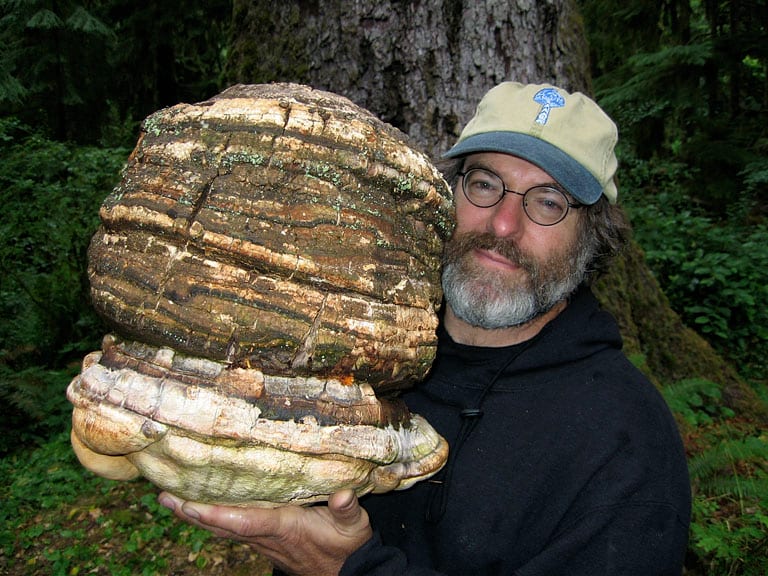 Agarikon (Fomitopsis officinalis)
Laricifomes officinalis
Perennial conk
Agarikon (Fomitopsis officinalis)
Laricifomes officinalis
Perennial conk
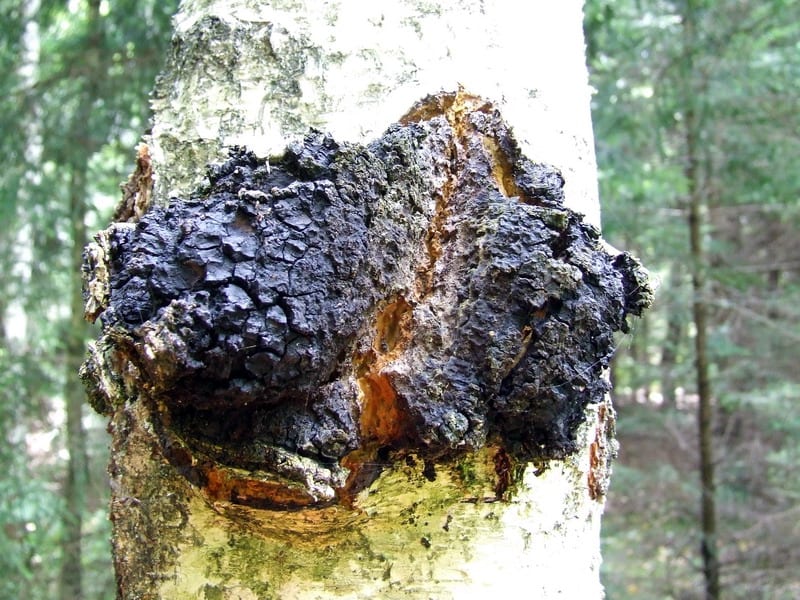 Chaga
Inonotus obliquus
Harvested year-round; best late autumn–early spring
Chaga
Inonotus obliquus
Harvested year-round; best late autumn–early spring
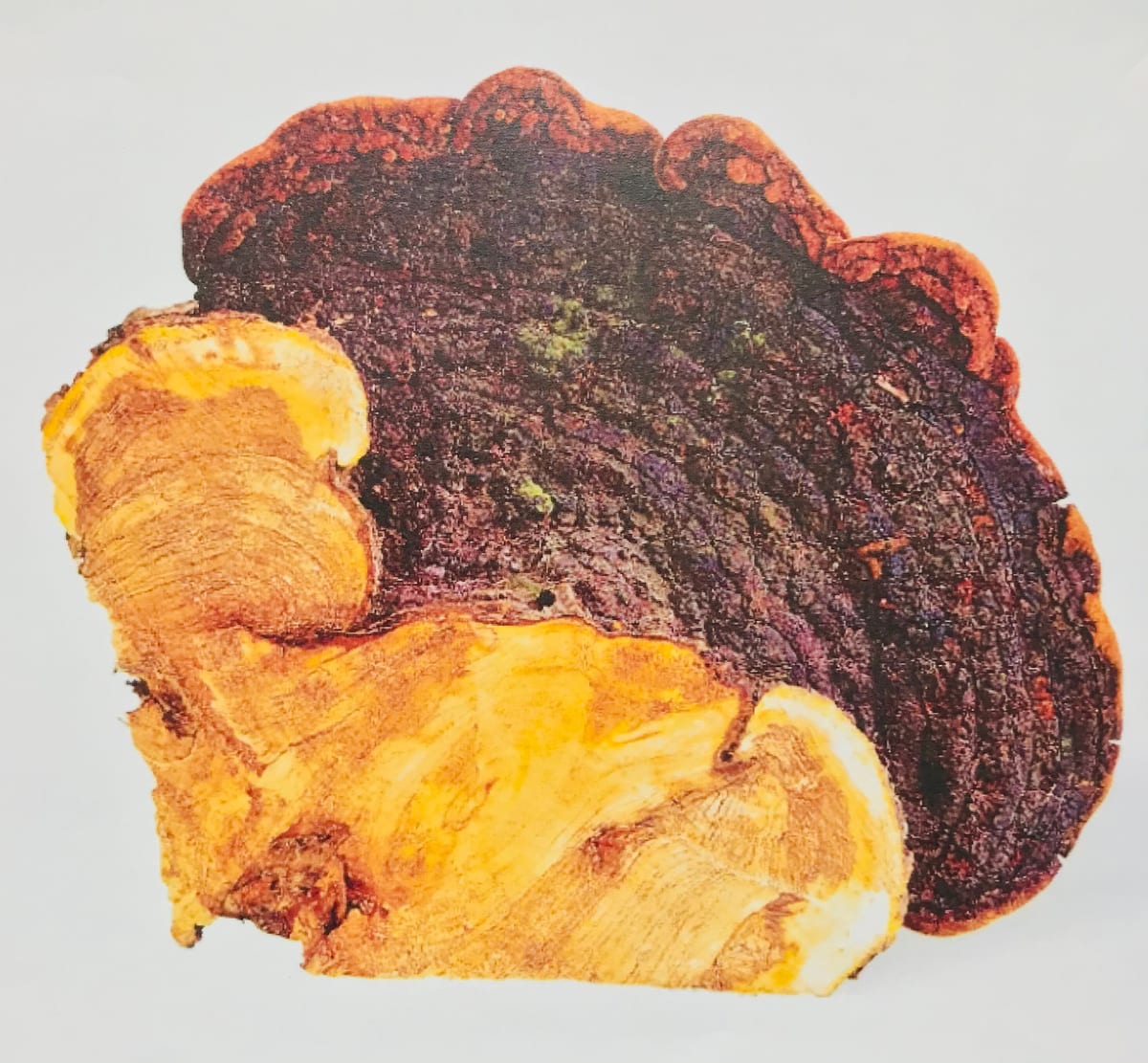 Mesima (black hoof mushroom)
Phellinus linteus
Perennial conk
Mesima (black hoof mushroom)
Phellinus linteus
Perennial conk
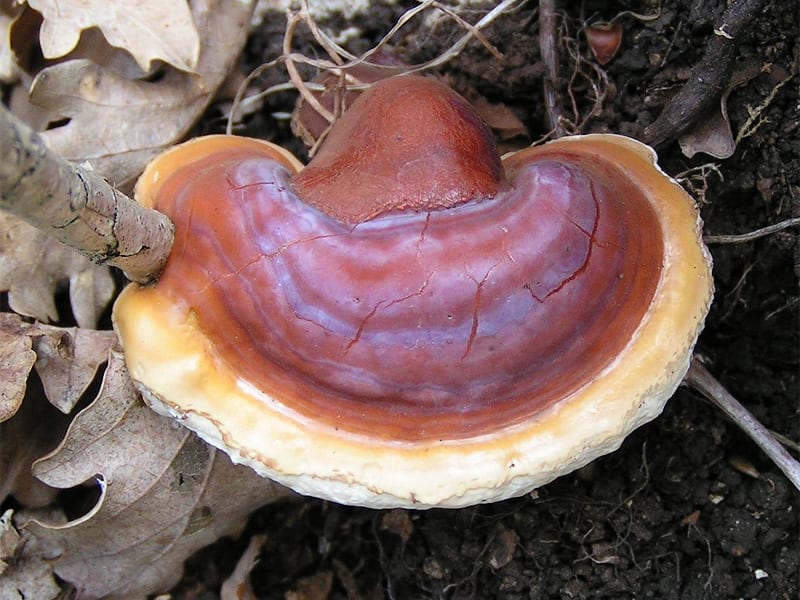 Reishi (lingzhi, lacquered polypore)
Ganoderma lucidum
Summer–autumn; year-round in culture
Reishi (lingzhi, lacquered polypore)
Ganoderma lucidum
Summer–autumn; year-round in culture
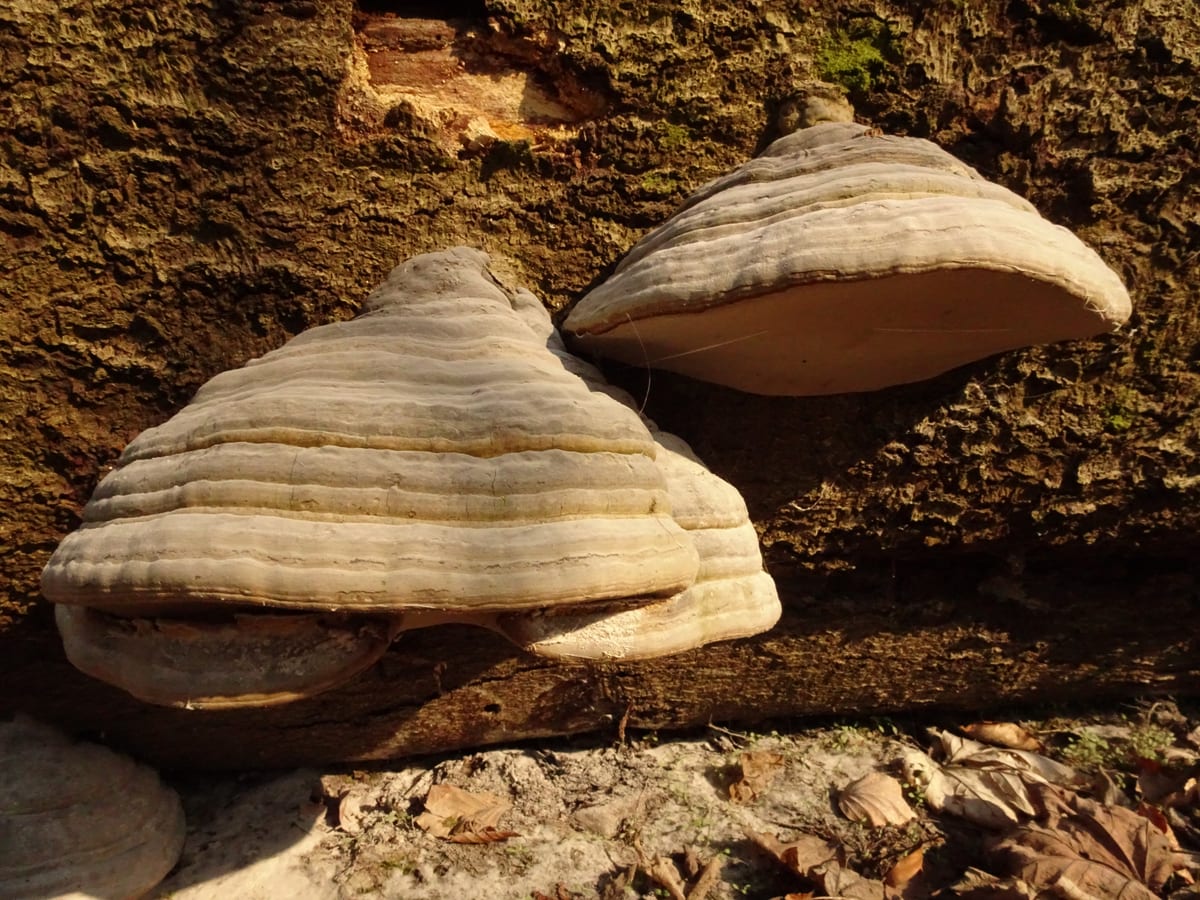 Tinder fungus (true tinder polypore)
Fomes fomentarius
Perennial
Tinder fungus (true tinder polypore)
Fomes fomentarius
Perennial
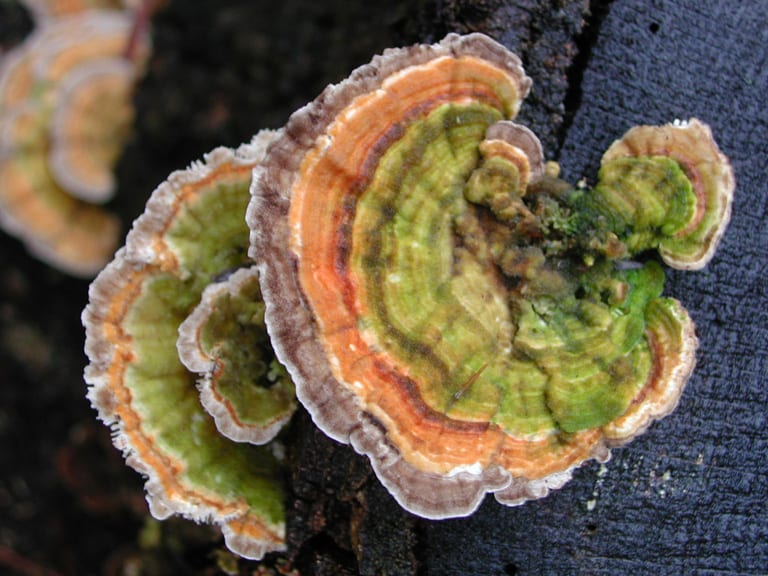 Turkey tail
Trametes versicolor
Year-round; perennial shelves
Turkey tail
Trametes versicolor
Year-round; perennial shelves