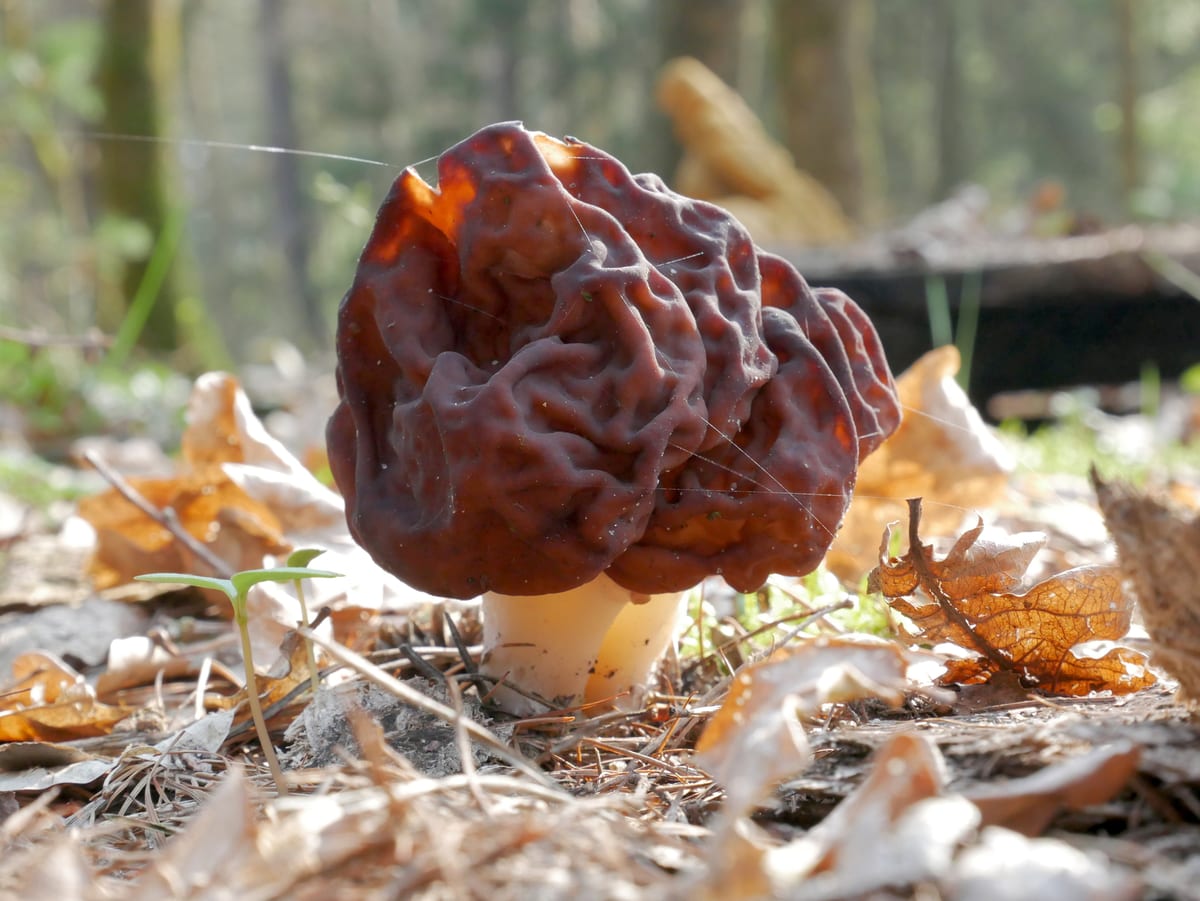
Identification
The cap is reddish-brown, folded, "brain-like"; the stem whitish. False morels appear at the same time as true morels and are confused with them (see the morel card). The difference: a morel's cap is hollow and pitted, the false morel's is convoluted with swollen gyri.
Why it is dangerous
The toxin is gyromitrin, which the body converts to monomethylhydrazine (MMH). Per StatPearls and the Michelot review (J Appl Toxicol 1991):
- gastrointestinal symptoms 5+ hours after the meal;
- acute liver damage within two days; sometimes kidneys;
- neurotoxicity: confusion, in severe cases seizures from pyridoxal-phosphate and GABA depletion;
- human sensitivity varies, so countries classify it differently — but processing gives no reliable safety guarantee, and cooking vapors are toxic too.
A 2020 review (PMC7472412) recommends treating other "false morels" such as Verpa bohemica as inedible as well.
In practice
Do not pick false morels and do not buy dried "morels" without exact identification. Nausea and vomiting more than 5–6 hours after spring mushrooms — call an ambulance.