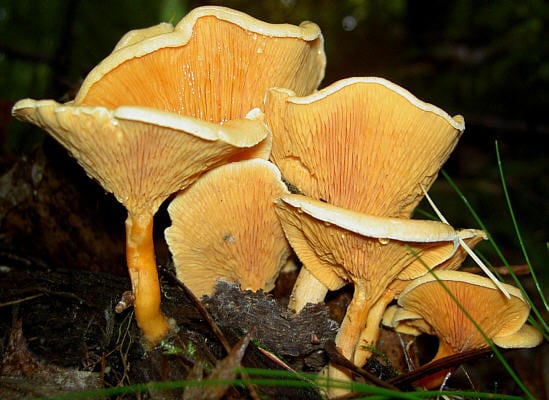
Identification
Orange funnel-shaped cap with a darker margin; underneath — thin, repeatedly forked true gills, orange-red. Flesh soft, smell faint. Grows on wood debris, real chanterelles grow on soil.
Why it is dangerous
Guides now class it as poisonous: gastrointestinal upset after eating. It lacks the fruity aroma and dense flesh of a real chanterelle.
How not to confuse it
| Feature | Chanterelle | False chanterelle |
|---|---|---|
| Underside | blunt ridges, decurrent | thin sharp true gills, forked |
| Color | egg-yellow | orange to orange-brown |
| Substrate | soil, mycorrhizal | rotting wood |
| Flesh | dense, apricot smell | soft, no aroma |