Identification
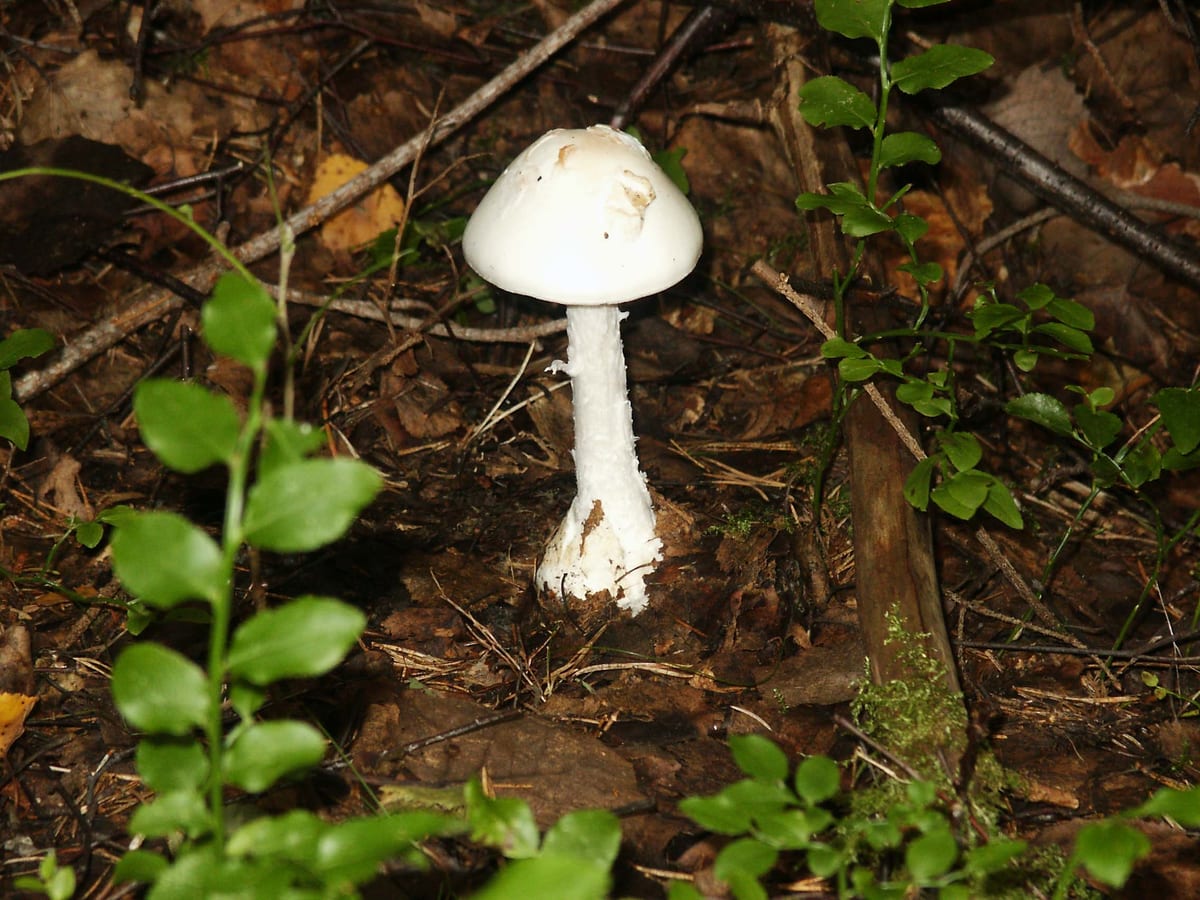
White cap, white gills, ring and volva; the smell is faintly unpleasant in mature specimens. A member of the white-amanita ("destroying angel") group together with A. verna and A. bisporigera.
Why it is dangerous
Contains amatoxins — the same mechanism as the death cap: delayed onset 6–18 h, gastrointestinal phase, false recovery, liver failure. Deaths are documented.
In practice
- All-white amanitas = do not pick at all.
- The champignon check: champignon gills turn brown, never have a volva.